

If you've been exploring high-performance botanical ingredients, broccoli seed extract keeps coming up - and for good reason. This concentrated extract delivers sulforaphane and its stable precursor glucoraphanin, two compounds backed by thousands of peer-reviewed studies. Whether you're a supplement formulator, a procurement manager, or a brand developer, understanding what broccoli seed extract is genuinely good for can sharpen your next product decision. Let's walk through the science, the applications, and what separates a quality extract from a commodity one.
What Exactly Is Broccoli Seed Extract?
Broccoli seed extract comes from the seeds of Brassica oleracea - the same plant family that gives us broccoli, kale, and Brussels sprouts. Seeds are used rather than florets because they carry a far higher concentration of glucosinolates, particularly glucoraphanin.
Here's how the chemistry works:
● Glucoraphanin is the thermally stable precursor compound stored in broccoli seeds
● When ingested, gut microbiota convert glucoraphanin into sulforaphane via myrosinase-like enzyme activity
● Sulforaphane then activates the Nrf2 pathway - the body's master switch for antioxidant and detoxification gene expression
This conversion pathway is why broccoli seed extract outperforms fresh broccoli for supplement use. Glucoraphanin survives heat, processing, and standard manufacturing conditions. Sulforaphane alone does not.
Jiuyuan Biotech's broccoli seed extract achieves an in vivo conversion rate of 55.8% within 120 minutes of gastric digestion - 5 to 8 times higher than enzyme-free extracts on the market. That figure comes from accelerated stability testing, not marketing copy.

The Core Benefits of Broccoli Seed Extract
The research base here is unusually robust. Sulforaphane has been the subject of over 3,000 SCI-indexed papers and 130+ clinical trials globally. Here's what the evidence actually shows.
Liver Detoxification and Phase II Enzyme Induction
This is one of the most well-documented benefits. Sulforaphane activates Nrf2, which upregulates a battery of Phase II detoxification enzymes including:
● NQO1 (NAD(P)H quinone oxidoreductase 1) - reduces harmful quinones
● HO-1 (Heme oxygenase-1) - anti-inflammatory and cytoprotective
● GST (Glutathione S-transferase) - neutralizes electrophilic toxins
A study published in Frontiers in Pharmacology confirmed that broccoli sprout extract induces detoxification-related gene expression and attenuates acute liver injury in preclinical models.
Research published in Foods (MDPI) showed that broccoli seed extract pretreatment significantly prevented inflammatory responses and increased antioxidant capacity in liver injury models.
Anti-Inflammatory Action
Chronic inflammation sits at the root of most modern metabolic diseases. Broccoli seed extract addresses this through two mechanisms:
● Nrf2 activation - reduces oxidative stress markers upstream of inflammatory cascades
● NF-κB inhibition - sulforaphane suppresses this key pro-inflammatory transcription factor
A clinical trial showed that high-sulforaphane broccoli sprout supplementation attenuated overproduction of nitric oxide (NO) in Helicobacter pylori-infected patients - a meaningful anti-inflammatory outcome in a real clinical setting.
For supplement formulators, this positions broccoli seed extract as a credible ingredient in joint health, metabolic wellness, and gut health product lines.
Antioxidant Defense
Sulforaphane doesn't act as a direct antioxidant the way Vitamin C does. Its mechanism is more sophisticated - and more durable.
It induces the body's own antioxidant enzyme production rather than providing a one-time antioxidant hit. This means a single dose triggers a protective response that lasts 48 to 72 hours.
That sustained effect makes it particularly attractive for:
● Daily supplement formulations where consistent protection matters
● Sports nutrition products targeting oxidative stress from exercise
● Anti-aging formulas focused on cellular longevity
Skin Health and Photoprotection
Topical and oral applications both show promise here. Research published in PMC/NIH confirmed that sulforaphane application effectively mitigates skin erythema, inflammation, and photocarcinogenesis in limited clinical settings.
Key skin-related benefits supported by research include:
● UV damage mitigation - reduces sunburn cell formation
● Anti-inflammatory skin calming - relevant for rosacea and eczema formulations
● Collagen protection - antioxidant enzyme induction protects dermal matrix integrity
This opens a clear path for cosmetic and topical product developers sourcing broccoli seed extract.
Neurological and Cognitive Support
This is an emerging but fast-growing application area. Sulforaphane has shown measurable effects in:
● Autism spectrum disorder (ASD) - multiple clinical trials have explored behavioral improvements
● Schizophrenia - ongoing RCTs at institutions including Johns Hopkins are investigating sulforaphane's role in oxidative stress reduction
● Neuroprotection - Nrf2 activation in neural tissue reduces neuroinflammation markers
The "Chinese Dietary Reference Intakes 2023" established a Tolerable Upper Intake Level (TUL) for sulforaphane at 30 mg/day - the first time a national dietary authority has set a quantified sulforaphane reference value. This milestone enables precise, milligram-level formulation for cognitive health products.
Cancer Chemoprotection
MD Anderson Cancer Center notes that sulforaphane has been shown to block DNA mutations linked to cancer development and may slow tumor growth.
The mechanism involves:
● Phase II enzyme induction - accelerates carcinogen elimination
● Apoptosis promotion - triggers programmed cell death in abnormal cells
● Histone deacetylase (HDAC) inhibition - epigenetic regulation of tumor suppressor genes
It's worth noting: these findings come from preclinical and observational studies. No regulatory body has approved sulforaphane as a cancer treatment. Formulators should position this benefit carefully within applicable health claim guidelines.
Broccoli Seed Extract vs. Broccoli Powder: What's the Difference?
Many buyers ask this question. Here's a clean comparison:
|
Feature |
Broccoli Seed Extract |
Broccoli Powder |
|
Source |
Seeds (highest glucosinolate density) |
Whole florets or whole plant |
|
Active compound |
Glucoraphanin + Sulforaphane (standardized) |
Mixed nutrients, lower glucosinolate % |
|
Potency |
Up to 13–20% glucoraphanin |
Trace levels, non-standardized |
|
Processing stability |
High (glucoraphanin is heat-stable) |
Moderate |
|
Best for |
Supplements, functional formulas, clinical use |
Food products, greens blends |
|
Verification method |
HPLC against certified reference standards |
General nutritional assay |
The key distinction is standardization. Broccoli seed extract delivers a verified, consistent dose of active compounds. Broccoli powder delivers broad nutrition but without guaranteed sulforaphane potency.
How to Use Broccoli Seed Extract in Formulations
For B2B buyers and product developers, here are the practical integration points:
Supplement formats:
● Capsules and tablets - most common; 200mg–500mg per serving is standard
● Stick packs and sachets - single-serve greens or detox blends
● Functional gummies - water-soluble format required
Functional food and beverage:
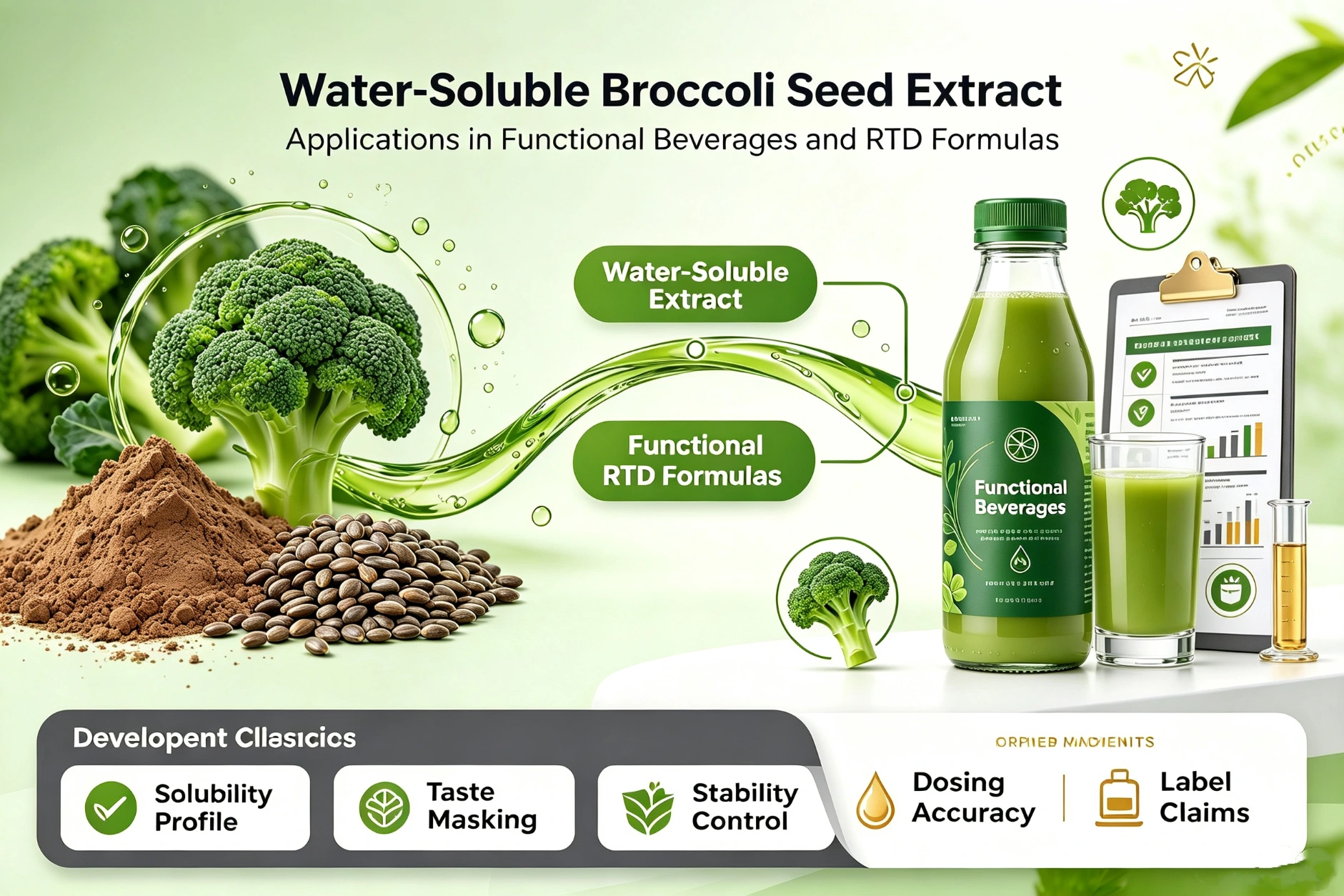
● Ready-to-drink liquids - water-soluble version achieves ≥98% clarity
● Infant and maternal formula - requires certified organic, allergen-free sourcing
● Foods for Special Medical Purposes (FSMPs) - clinical-grade specifications needed
Cosmetic and topical:
● Face serums and masks - 0.5–2% inclusion rate
● Suncare products - photoprotection positioning
● Hair care - scalp antioxidant formulas
Sports nutrition:
● Pre-workout and recovery blends - pairs well with adaptogens
● Protein powders - adds functional depth to standard macro formulas
Dosage reference:
● Research-supported range: 10–30 mg sulforaphane equivalent per day
● Chinese DRI 2023 TUL: 30 mg/day sulforaphane
● Glucoraphanin-based products: 100–200 mg glucoraphanin per serving is common in clinical trials
What to Look for When Sourcing Broccoli Seed Extract
Not every supplier delivers what their spec sheet claims. Here's what procurement teams should verify:
Assay method matters most:
● Demand HPLC verification against certified reference standards
● Avoid suppliers using colorimetric assays - these inflate glucosinolate readings
Specifications to request:
● Glucoraphanin: 1%, 10%, 13%–20%
● Sulforaphane: 0.1%–1%, 5%, 10%
● Combined specs: Glucoraphanin 13% + Sulforaphane 1%
Certifications to confirm:
✅ ISO 22000 and FSSC 22000
✅ Halal and Kosher
✅ cGMP compliance
✅ HACCP
✅ Heavy metals and pesticide residual COA
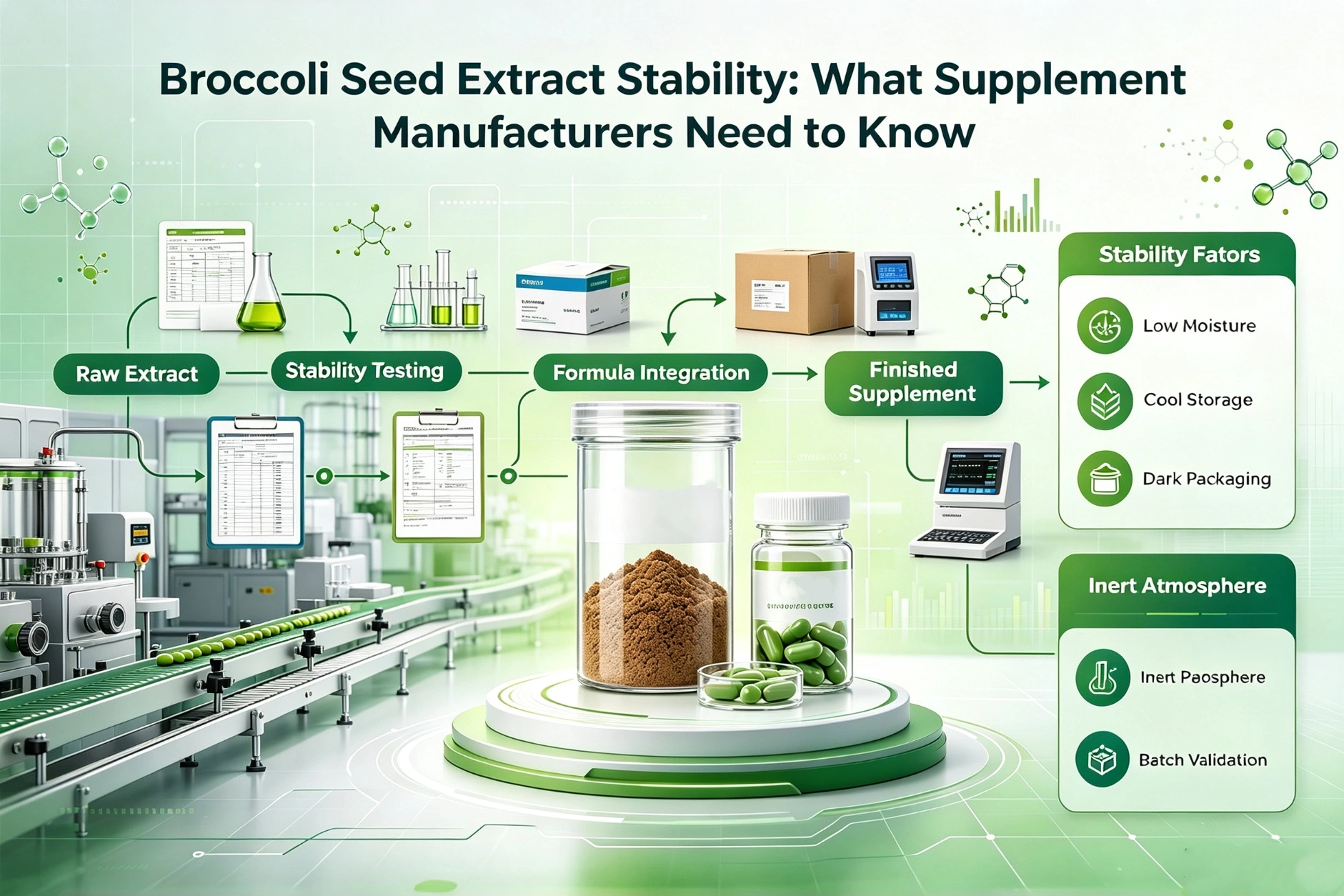
Stability data:
Request accelerated stability testing results (37°C / 75% RH for 90 days)
Jiuyuan Biotech's dual-patent "Myrosinase + Stabilization" platform shows >95% potency retention after 90-day accelerated testing
References
1.Fahey, J.W., Wehage, S.L., Holtzclaw, W.D., et al. (2012). Protection of humans by plant glucosinolates: Efficiency of conversion of glucosinolates to isothiocyanates by the gastrointestinal microflora. Cancer Prevention Research, 5(4), 603–611.
2.Vanduchova, A., Anzenbacher, P., & Anzenbacherova, E. (2019). Isothiocyanate from Broccoli, Sulforaphane, and Its Properties. Journal of Medicinal Food, 22(2), 121–126.
3.Tortorella, S.M., Royce, S.G., Licciardi, P.V., & Karagiannis, T.C. (2015). Dietary Sulforaphane in Cancer Chemoprevention: The Role of Epigenetic Regulation and HDAC Inhibition. Antioxidants & Redox Signaling, 22(16), 1382–1424.
4.Shapiro, T.A., Fahey, J.W., Wade, K.L., Stephenson, K.K., & Talalay, P. (2001). Chemoprotective glucosinolates and isothiocyanates of broccoli sprouts: metabolism and excretion in humans. Cancer Epidemiology, Biomarkers & Prevention, 10(5), 501–508.
5.Bahadoran, Z., Mirmiran, P., Hosseinpanah, F., & Azizi, F. (2012). Broccoli sprouts powder could improve serum triglyceride and oxidized LDL/LDL-cholesterol ratio in type 2 diabetic patients. Diabetes Research and Clinical Practice, 96(3), 348–354.
6.Houghton, C.A., Fassett, R.G., & Coombes, J.S. (2016). Sulforaphane and Other Nutrigenomic Nrf2 Activators: Can the Clinician's Expectation Be Matched by the Reality? Oxidative Medicine and Cellular Longevity, 2016, Article 7857186.
Ready to Source High-Potency Broccoli Seed Extract?
Jiuyuan Biotech supplies standardized broccoli seed extract - verified by HPLC, backed by clinical trial data, and trusted by formulators across 30+ countries.
Our extract has been used as the active intervention ingredient in 130+ clinical trials and 3,000+ SCI-indexed papers globally. Current ongoing RCTs span institutions including Johns Hopkins, Imperial College London, and Karolinska Institutet.
Available specifications:
● Sulforaphane: 0.1%, 1%, 5%, 10%
● Glucoraphanin: 1%, 10%, 13%–20%
● Combined: Glucoraphanin 13% + Sulforaphane 1%
Both water-soluble and oil-soluble formats available. OEM capsule and sachet formats supported.
🌐 View Product Specifications 📧 Contact us: info@jiuybiotech.com