

Your Professional Natural Food Ingredients Supplier - Natural, Functional and Science-Driven
Established in 2012, Shaanxi JiuYuan Biotechnology Co., Ltd. is a science-oriented manufacturer specializing in natural ingredients, functional food additives, and global supply chain solutions. With a strong focus on botanical extraction and plant-based functionality, we supply natural sweeteners, colors, antioxidants, thickeners, and seasonings to the global food, beverage, and nutraceutical industries.
Over the last decade, we have built a scalable infrastructure enabling industrialized production, consistent quality, and worldwide regulatory compliance.
Our capabilities include:
► 13+ years of industry expertise
► 70,000 m² industrial park
► 6,000 MT annual capacity
► 6 workshops with 10 dedicated production lines
► Modern R&D center and pilot facilities
► Full international certificates: cGMP, EU/USDA Organic, HACCP, FSSC22000, ISO22000, ISO9001, Kosher, Halal, FDA.

We believe the future of food requires:
• More natural, safer, and sustainable ingredients
• Clean label and reduced additive systems
• Higher functional performance with lower processing cost
• Faster innovation cycles with global compliance
Our mission is simple yet ambitious:
◆ To provide foundational ingredient solutions that drive global food innovation.
◆ We do not simply manufacture ingredients. We empower formulation, quality, and market success.

-
![Purple Carrot Powder]() Purple Carrot Powder
Purple Carrot PowderBotanical Source:Daucus carota L. subsp. sativus (purple cultivars)
Plant Part Used:Whole root (peeled)
Appearance:Deep purple to reddish-purple fine powder
Primary... -
![Gardenia Powder]() Gardenia Powder
Gardenia PowderHigh-purity Gardenia Blue Color (water-soluble natural pigment) for food, beverage, cosmetics, and nutraceuticals. Stable color performance, clean-label, non-GMO, halal, kosher, organic certified....
-
![Yellow Powder Turmeric]() Yellow Powder Turmeric
Yellow Powder TurmericCAS No.:458-37-7
Latin Source:Curcuma longa L.
Other Names: Acid Yellow
Part Used:Roots
Appearance:Orange yellow powder
MOQ: 1kg
Features:Lowering blood... -
![Sodium Copper Chlorophyllin Powder]() Sodium Copper Chlorophyllin Powder
Sodium Copper Chlorophyllin Powder* Botanical Source: Leaf-derived Chlorophyll /Silkworm Droppings
* 100% plant-based, natural-origin pigment
* Excellent water solubility & color stability
* Clean-label...


2. Jiuyuan Biotech's Product Portfolio: Five Natural Ingredient Categories
Our portfolio is built around four functional pillars and nine standardized ingredient lines that support multifunctional performance, cross-category compatibility, and regulatory-ready commercialization for modern food systems.
Engineered for clean-label innovation, nutritional enhancement, and sensory optimization.
| Items | Our Position |
|
Natural Sweeteners |
In a market driven by health and wellness, natural sweeteners are no longer optional—they are strategic. |
|
Natural Colors |
We help brands achieve visual distinction and clean-label positioning through color innovation. |
|
Natural Antioxidants |
Modern consumers demand products that are clean, natural, and durable. Our natural antioxidants deliver on all three. |
|
Natural Thickeners & Functional Agents |
Our ingredients bridge sensory experience and functional nutrition. |
|
Natural Seasonings |
Sensory performance is not accidental. We engineer it. |
2.1 Natural Sweeteners
|
Product Highlights Low- or zero-calorie nutritive profile High sweetness potency and purity Clean taste with minimal off-notes Excellent heat and pH stability GRAS-listed; widely compliant across regions Suitable for sugar reduction, keto, and low-GI systems |
Key Products (Standardized) Monk Fruit Extract (Mogroside V ≥ 50%, 80%, 90%) Stevia Extract (Reb A ≥ 40%–98%) Erythritol (≥99.5% purity) Xylitol (≥99.5% purity) |
Functional Benefits Reduced energy density Lower glycemic impact Suitable for diabetic and weight management foods Formulation-compatible with bulking agents and fibers |
|
Mechanism of Action & Sensory Performance High-intensity glycosides interact with sweet taste receptors (T1R2/T1R3), replacing sucrose without caloric contribution. Advanced purification and deodorization remove bitterness and metallic aftertastes. |
Regulatory & Safety Approved by FDA, EFSA, GB, JECFA ADI established for stevia and monk fruit extracts Non-GMO, allergen-free, vegan |
Technical Performance Heat stability: stable up to 210°C pH tolerance: 2.0–9.0 High solubility with synergistic sweetening effects |
|
Application Areas Beverages, RTD Confectionery Bakery Functional nutrition products Plant-based beverages Zero sugar/keto snacks |
Processing Recommendations Often combined with erythritol to provide bulk Use bitterness blockers for high Reb A formulations Calibrate sweetness intensity across temperature curves |
Specification Example Appearance: crystalline powder Purity: ≥99.5% Heavy metals: <1 ppm Microbiological: compliant to FCC/GB |
2.2 Natural Colors
| Product Features |
100% botanical origin Clean-label compliance across major markets High chroma, high tinting strength Oxidation-resistant and heat-stable formulations Free of synthetic dyes, titanium dioxide, and preservatives Allergen-free, vegan |
| Key Products |
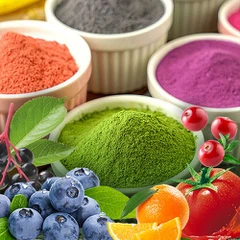
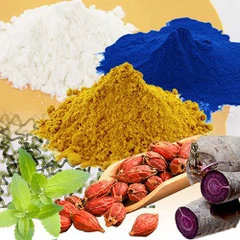
Chlorella Powder (Green) Phycocyanin (Blue) Gardenia Blue and Yellow Beetroot Red (Betanin) Curcumin Anthocyanins (Grape, Elderberry, Purple Carrot) |
| Technical Strengths |
Advanced membrane filtration for pigment purity Encapsulation and emulsification for stability Controlled particle size for opacity and dispersion Customized shade development based on Pantone CC |
| Mechanism of Action |
Pigment stability is achieved via hydrogen bonding, metal chelation, and microencapsulation, protecting against oxidative and thermal degradation. |
| Regulatory Profile |
EU color additive approval (E-number classification) FDA color exemption status where applicable Non-GMO, allergen-free, natural source claims |
| Application Scenarios |
Beverages, juices Confectionery Ice cream, dairy Plant-based analogs RTD functional products |
| Processing Tips |
Most natural pigments are pH sensitive Stabilize with antioxidants and buffering agents Emulsion-based colors improve opacity in dairy |
| Specification Example |
Purity: pigment-dependent Solubility: water/lipid Heat stability: 85–140°C, type-dependent |

Communication Needs
We can provide customization based on our customers' specific needs, including different concentrations, extract forms, and packaging specifications.

Production Execution
Following the confirmed design, we implement meticulous production processes with strict quality control at every stage, ensuring consistency and precision before proceeding to mass production.

Quality Inspection and Packaging
Upon completion of the product, a comprehensive three-stage inspection process is conducted to ensure quality standards are met. Subsequently, the products are packaged in accordance with your specified requirements.

Delivery Assurance
We ensure timely delivery of the products within the agreed timeframe as per the contract terms.
2.3 Natural Antioxidants
As preservatives face regulatory pressure, natural antioxidants are now a cost-effective, consumer-friendly preservation strategy.
| Functional Benefits |
Inhibit lipid oxidation Protect color, aroma, and nutrients Extend shelf life across categories Reduce formulation cost by stabilizing base ingredients |
| Scientific Characteristics |
High purity & standardized active compounds Broad polarity range improves solubility flexibility Synergistic performance with chelating agents |
| Mechanism of Action |
Radical scavenging Metal ion chelation Termination of oxidative chain reactions |
| Regulatory & Safety |
GRAS-approved Approved as antioxidants in food across markets Natural preservative positioning |
| Core Products |
Anthocyanins Tea Polyphenols (EGCG) Rosemary Extract (Carnosic Acid/Carnosol) Vitamin E (Mixed Tocopherols) |
| Application Value |
Shelf-life extension Flavor stabilization Nutrient retention Clean-label preservative strategy |
| Application Areas |
Fats & oils Bakery Drinks Meat analogs Ready-to-eat foods |
| Specification Example |
Active content: 20–90% Solubility: water/oil miscibility available Heat stability: up to 180°C |
2.4 Natural Thickeners & Functional Agentss
Our ingredients bridge sensory experience, nutritional enhancement, and functional performance.
| Product Advantages |
Plant-derived texturizers Functional + nutritional benefits Improve viscosity, stability, water-holding, mouthfeel Act as fat mimetics for calorie reduction |
| Core Categories |
Plant proteins (pea, rice, fava) Soluble dietary fibers (inulin, β-glucan) Resistant starch |
| Technical Mechanism |
Gelation via protein denaturation and intermolecular crosslinking Water-binding capacity increases viscosity and reduces syneresis Rheology can be engineered to mimic dairy/fat textures |
| Functional Benefits |
Texture optimization Fat reduction Fiber enrichment Protein fortification |
| Processing Considerations |
Shear sensitivity varies by material Best dispersed via hydration pre-mixes pH and thermal processing influence viscosity building |
| Application Areas |
Bakery Beverages Sauces and spreads Dairy analogues High-protein functional foods |
| Specification Example |
Particle size: 80–200 mesh Bulk density: 0.3–0.6 g/ml Solubility: high |
2.5 Natural Seasonings
Sensory performance is not random—we design flavor outcomes through raw material science and process control.
| Main Product Range |
Sichuan Pepper Powder Star Anise Powder Ginger Powder Cinnamon Powder Chili Powder |
| Attributes |
High volatile content Controlled oil fraction Standardized color and flavor intensity Free of artificial additives, irradiation optional |
| Technical Strengths |
Steam sterilization and low-temperature drying Retention of essential oils and bioactives |
| Application Areas |
Snacks Seasoning blends RTM/RTC foods Foodservice manufacturing |
| Specification Example |
Mesh size: 40–80 Volatile content: standardized by GC |
3. R&D Infrastructure and Scientific Capabilities
At Jiuyuan Biotechnology, research is not a department—it is the core operating system.
Our work is driven by science, validated by data, and informed by real-world industrial applications.
We approach food ingredients not as commodities, but as functional systems that enable taste, nutrition, and performance in modern formulations.
3.1 Facilities and Technical Resources
We maintain a dedicated 500 m² R&D center equipped with advanced analytical, extraction, and application testing platforms.
Approximately 500 square meters (sqm), including the Physical & Chemical Analysis Lab, Microbiology Lab, Pilot Plant/Small-Scale Workshop, and Formulation/Sensory Evaluation Rooms. This infrastructure enables us to conduct full-cycle product development, from raw material selection to pilot-scale validation.

| Equipment | Description / Function |
| HPLC (High-Performance Liquid Chromatography) (equipped with PDA / RID Detectors) | Quantitative analysis of active ingredients and impurity profiling. |
| GC-MS (Gas Chromatography–Mass Spectrometry) | Analysis of volatile components and aroma profile characterization. |
| UV-Vis Spectrophotometer | Detection of pigments, total polyphenols, and antioxidant capacity. |
| ICP-MS (Inductively Coupled Plasma – Mass Spectrometry) / Atomic Absorption (AA) Spectrometer | Trace heavy metal detection and elemental analysis. |
| Centrifuge, High-Pressure Homogenizer, Spray Dryer, Freeze Dryer (Pilot-Scale/Small-Scale) | Validation of extraction and granulation process technologies. |
| Particle Size Analyzer, Sieve Testing Equipment, Specific Surface Area Analyzer | Physical characterization and powder morphology analysis. |
| Microbiological Incubator, Rapid Detection Platform (for ATP, Quantitative PCR prep.) | Microbiological control and product challenge testing. |
| Viscometer, Texture Analyzer | Characterization of texture, consistency, and mouthfeel properties. |
| Sensory Evaluation Booths (with independent soundproofing and climate control) | Conducting triangular/paired comparison and 5-point hedonic scale sensory tests. |
Our team includes a 12-member multidisciplinary research group, combining expertise in:
◆ Natural product chemistry
◆ Food science and nutrition
◆ Process engineering
◆ Quality assurance
◆ Sensory evaluation
Cross-Functional Collaboration
Cross-functional Collaboration: Deep cooperation with Production, Quality Assurance (QA), Supply Chain, and Marketing teams to establish a closed-loop process spanning "from sample request to scale-up production."
External Partnerships
External Partnerships: Maintaining a strategic cooperation pool with universities, third-party testing organizations, and industry labs to conduct necessary toxicological or regulatory-level third-party validation when required.

3.2 Core Scientific Capabilities
Our platform integrates fundamental research, process optimization, and application testing.
Core competencies include:
3.2.1 Botanical Sourcing & Screening
◆ Taxonomy-based raw material identification(covering Origin/Variety/Harvest Season/Primary Processing Method/Physico-chemical Specifications).
◆ Bioactive compound mapping(HPLC/GC fingerprinting) for source identification and adulteration detection.
◆ Regional sourcing network development SOP(Standard Operating Procedures) (covering Pesticide Residues, Heavy Metals, Solvent Residues, Microbiology, and Post-harvest Handling).
3.2.2 Extraction, Purification & Stabilization
◆ Prioritize Green Solvents (Aqueous Phase, Ethanol) and utilize Low-Temperature / Short-Duration Processing to maximize the retention of active substances.
◆ Employ Combined Technologies of Membrane Separation (Nanofiltration / Reverse Osmosis), Chromatography (Adsorption / Separation), and Crystallization / Recrystallization to enhance purity and batch consistency.
◆ Utilize Microencapsulation / Entrapment Technologies for improved stability and controlled release of pigments/antioxidants within food matrices.
3.2.3 Functional Evaluation
◆ Antioxidant Capacity Quantification (DPPH, ABTS, ORAC):
Quantifying the ingredient's free radical scavenging efficacy using standardized assays (DPPH, ABTS, and ORAC) to provide a comprehensive measure of its protective power against oxidative degradation in food and beverage products.
◆ Stability Profile Determination (Thermal, Photochemical, and pH):
Developing detailed stability curves across wide ranges of temperature gradients, light exposure (photochemical stability), and pH gradients (acid/alkaline). This ensures reliable performance and maximum shelf-life retention across various processing conditions and final product environments.
◆ Solubility and Dissolution Rate Testing:
Evaluating the ingredient’s solubility and dissolution kinetics across different solvent systems (aqueous, organic, and mixed). This is crucial for optimizing the preparation of premixes, maximizing bioavailability, and ensuring effortless integration into liquid and powdered formulations.
◆ Emulsifying, Foaming, and Gelling Property Assessment:
Specialized evaluation of interface-active ingredients (e.g., hydrocolloids and proteins). This includes assessing their capability for emulsification efficiency, foam stabilization capacity, and specific viscoelastic/rheological properties (gelling characteristics), which are vital for formulating textured foods and beverages.
3.2.4 Application Testing & Pilot Trials
◆ Prototype Formulation and Adjustment:
Developing initial prototypes across diverse matrices (e.g., beverages, baked goods, dairy alternatives). This involves iterative testing to determine the Minimum Effective Concentration (MEC) and to address formulation challenges such as ingredient interaction, potential off-notes, and solubility issues under real-world processing conditions.
◆ Pilot-Scale Processing Simulation:
Simulating commercial manufacturing processes (e.g., high-shear mixing, UHT sterilization, high-pressure processing, or baking cycles) in our pilot plant. This validates the ingredient's performance and stability (process stability) under large-scale stress, ensuring a smooth and predictable transition to full production scale without yield loss or quality deviation.
◆ Texture, Color, and Flavor Optimization:
Systematic adjustment of the ingredient dosage to achieve optimal sensorial profiles. This involves using instruments (Texture Analyzer, Colorimeter) and the Sensory Evaluation team to fine-tune mouthfeel (viscosity, chewiness), color impact, and mask any inherent off-flavors, thereby maximizing consumer appeal and functional consistency in the final application.
◆ Shelf-Life and Packaging Compatibility Testing:
Conducting accelerated and real-time shelf-life studies on finished prototypes to establish reliable Best-Before Dates. This also assesses potential migration or reaction between the ingredient and various primary packaging materials to prevent leaching or degradation over time.
◆ Cost-in-Use Analysis:
Determining the final "Cost-in-Use" of the ingredient within the specific product formulation. This economic evaluation guides our partners in achieving targeted product positioning while maintaining high performance standards.
We do more than derive ingredients— we engineer solutions that perform in real industrial environments.
3.3 Innovation Focus
Our R&D strategy is tightly aligned with current global food industry mega-trends, focusing on clean-label solutions, nutritional optimization, and sustainable food systems.
3.3.1. Clean-Label Formulation Design
Developing natural alternatives and synergistic systems to replace synthetic food additives.
This includes the advanced study of Combinatorial Synergy, such as pairing potent natural antioxidants (e.g., rosemary extract, tocopherols) with trace chelating agents (e.g., organic acids) to achieve broad-spectrum antimicrobial efficacy and oxidative stability, providing a robust, natural substitute for synthetic preservatives like BHA/BHT or potassium sorbate. We focus on enhancing the Inherent Shelf Stability of the finished product.
3.3.2. Low-Sugar / Sugar Reduction Systems
Creating integrated systems for effective sugar replacement without compromising sensory quality.
Our approach utilizes the synergistic potential of High-Intensity Sweeteners (e.g., Stevia, Monk Fruit) with Bulking/Mouthfeel Enhancers (e.g., specialized fibers, polyols) and Acidity Regulators. This is essential to manage the functional deficits (viscosity, texture, browning) left by removed sugar, achieving optimal Sensory Parity and fullness perception that closely mimics the performance of sucrose.
3.3.3. Plant-Based Food Systems
Focusing on technical breakthroughs required for high-quality, plant-derived alternatives.
We concentrate on Protein Modification and Functionalization (e.g., texturization via extrusion) to improve solubility, emulsification, and water-holding capacity. Key efforts involve Textural Mimicry to accurately replicate the chewiness and mouthfeel of animal-based products (dairy, meat), alongside optimizing Stabilizer Compatibility (e.g., hydrocolloid blends) to prevent phase separation and maintain emulsion stability in complex plant matrices.
3.3.4. Functional Nutrition & Delivery
Ensuring stability and bioavailability of sensitive bioactive compounds.
Our innovation addresses the challenge of stabilizing sensitive Trace Bioactive Compounds (e.g., anthocyanins, polyphenols, vitamins) against degradation from heat, light, and oxidation. We utilize advanced High-Bioavailability Delivery Systems such as Nanocarriers, Liposomal Encapsulation, and Solid Lipid Nanoparticles. This ensures the protection of the active substance, controls its release profile in the gastrointestinal tract, and significantly enhances its bioavailability for maximum nutritional impact.
Our development philosophy is simple:
◆ Better performance, better nutrition, cleaner labels—simultaneously.
3.4 R&D Process & Governances
Our R&D framework is built on a foundation of scientific rigor and standardized governance, ensuring traceability, data integrity, and efficient innovation throughout the entire product development lifecycle.
3.4.1. Standard Operating Procedure (SOP) Management & Data Integrity:
Implementing full SOP standardization for all critical processes, from Raw Material Reception and Sample Numbering to Experimental Documentation and Equipment Calibration.
All records are meticulously documented and tracked within our Laboratory Information Management System (LIMS) or internal governance platform. This ensures complete audit trails, data traceability, and compliance with regulatory expectations for quality and safety throughout the entire development pipeline.
3.4.2. Analytical Method Validation & Reliability:
Ensuring the scientific integrity and reliability of all analytical results.
All in-house analytical methods strictly adhere to rigorous validation protocols, specifically assessing key parameters: Linearity, Precision (Repeatability and Reproducibility), Accuracy (Recovery Rate), and the establishment of robust Limits of Detection (LOD) / Limits of Quantitation (LOQ). This guarantees that our data accurately reflects the composition and quality of our ingredients.
3.4.3. Intellectual Property (IP) Management & Protection:
Systematically identifying and protecting the proprietary innovations generated by our team.
We have established a defined Patent Evaluation and Protection Procedure for all patentable formulations, novel uses, and proprietary process technologies. This proactive approach includes continuous Freedom-to-Operate (FTO) analysis and strategic filing to secure our competitive advantage and safeguard our partners' long-term interests in the marketplace.
3.4.4. Sample Responsiveness and Delivery Cycle:
Defining clear turnaround times for development stages to maintain project momentum.
Standard Sample Cycle:
Concept Samples: 7–10 Business Days
Functional Validation Prototypes: 2–4 Weeks
Pilot-Scale (Scale-up) Batches: 6–8 Weeks
This rapid, structured cycle ensures efficient progress while accommodating the necessary rigor for complex formulations and scale-up feasibility studies.
4. Quality Assurance & Certifications — Deep Dive
We view our Quality System as the "Operating System" of our entire enterprise—not merely for compliance, but primarily for client risk minimization and long-term supply reliability. Below, we detail quantifiable and demonstrable measures across systems, testing, supply chain, and post-sales support.
4.1 Quality Management System (QMS) & Governance
Integrated System Coverage: Our QMS integrates requirements for Quality (ISO 9001), Food Safety (ISO 22000, FSSC 22000), Current Good Manufacturing Practices (cGMP) Execution, and HACCP (Hazard Analysis and Critical Control Points) risk management.
Document Control & Data Integrity: Strict control over documentation including SOPs (Standard Operating Procedures), Work Instructions, Change Control procedures, and meticulous recording of CAPA (Corrective and Preventive Actions) logs.
Audit Protocol & Traceability: Conducting scheduled internal audits and annual third-party audits. All audit findings and subsequent corrective action records are made transparent and fully traceable for client review and verification.
| Documentation Control: | Audits: |
|
e-QMS (MasterControl) | Validation Package ID: V-2024-04 1,247 SOPs / 2,830 Work Instructions Change control closure time: 6.2 days (KPI ≤ 10 days) CAPA closure rate (L12M): 97.8% (Target ≥ 95%) |
Internal audits: every 6 months Third-party audits: 2 per year (SGS + BRCGS) 2023 results: Major = 0, Minor = 3 (closed within 30 days) Corrective evidence uploaded to customer platform (Annex 4-A) |

4.2 Certifications & Legal Compliance
Specific Certifications: Holds active certifications including cGMP, Organic Certification, HACCP, FSSC 22000, ISO 22000, ISO 9001, Kosher, and Halal.
Transparency & Verification: Every certificate explicitly states the Audit Scope (products, facility, process), Certificate Number, and Validity Period on our official website or in the data package, allowing clients to easily verify.
Market-Specific Compliance: Providing necessary Regulatory Compliance Statements and Limit Citations (e.g., maximum permitted dosage, E/INS codes) tailored for major export markets (e.g., EU, US FDA, Japan).
Export Compliance:
Pre-built templates for EU 1924/2006, US FD&C, CN GB (70 sets)
Regulatory updates within 48h
2024 proactive alerts: 6 limit changes (e.g., EU 2023/1372 anthocyanin)
4.3 Incoming Material Control & Supplier Management
Supplier Qualification Program: Utilizing a structured Tiered Management System (A/B/C) that includes mandatory On-site Audits, COA (Certificate of Analysis) Review, evaluation of historical non-conformance records, and assessment of Environmental and Social Responsibility (ESG) practices.
Raw Material Inspection: Every incoming batch undergoes mandatory testing for Organoleptic properties (appearance), Physico-chemical specifications, Active Component Content, Multi-residue Pesticides, Heavy Metals, and Microbiological load. Non-conforming batches are rigorously rejected and documented.
Retention Sample Program: A robust system requiring that a retention sample from every production batch is securely stored for a minimum of 12–24 months, facilitating swift traceability and dispute resolution.
|
Supplier Management: |
A/B/C evaluation model 2024 on-site audits: 92 audits | Avg. score 87.4 (threshold ≥ 80) ESG scoring via EcoVadis; Gold-rated suppliers: 46% |
| Incoming Testing: |
Per batch: 24-parameter panel Pesticides: 500 items Heavy metals: 4 items Solvents: 36 items Microbiology: 8 items 2023 rejections: 122 lots (0.34%), value USD 1.8M All with 8D reporting and supplier performance tracking |
| Retention Samples: |
≥ 200 g per lot | stored −18°C for 24 months Retrieval time ≤ 5 min (barcode + LIMS) |
4.4 Manufacturing Process Control & CCPs
Critical Control Point (CCP) Monitoring: Defining and rigorously monitoring Critical Control Points throughout the production line (e.g., Temperature, pH, Solvent Residual Limits, Final Drying Moisture Content, and Microbial Limits). Monitoring is executed via In-Line Sensors or detailed Batch Production Records.
Digital Traceability Linkage: Utilizing Batch Numbers integrated with our MES (Manufacturing Execution System) / ERP platform to digitally link all production data (Formulation Used, Operating Parameters, QC Results) with the final finished goods and logistics records.
| Critical Control Points: |
|
| Digital Systems: |
|
4.5 Analytical Testing & Certificate of Analysis (COA)
Standard Analytical Scope:
Physico-chemical: Appearance, Active Component Content, pH, Moisture/Ash Content, Solubility.
Microbiology: Total Plate Count, Yeast and Mold, Coliforms/E. coli, Salmonella, Shigella (varies based on product category).
Chemical Contaminants: Multi-residue pesticide screening, Heavy Metals (Pb, As, Hg, Cd), and Solvent Residues (via GC).
Functional Metrics: Specific quantification of actives (e.g., Anthocyanin Content in mg/g, Total Polyphenols in mg GAE/g, ORAC Antioxidant Value).
COA Template Standardization: Typical fields include Product Name, Batch Number, Manufacturing Date, Active Content, Test Item/Result, Method Reference (e.g., USP/EP/AOAC), Analyst Signature, and Laboratory Seal.
Turnaround Time (TAT) & Capabilities: Preliminary reports for routine analysis are provided within 48–72 hours. Complex or regulatory-mandated tests (e.g., full pesticide spectrum, toxicology) requiring third-party labs are managed within 7–21 days.
| Testing Statistics (L12M): | COA Standards: |
|
Physicochemical: 38 tests | TAT 36h Microbiology: 8 tests | TAT 48h | Detect rate 0.15% Pesticides: 524 items | TAT 7 days | LOD ≤ 0.01 mg/kg Heavy metals: ICP-MS | TAT 24h | RSD < 3% Functional actives: Anthocyanins RSD < 1.5% | ORAC uncertainty ≤ 5% |
ISO 17025 structure with uncertainty, method traceability, QR tracking Auto-delivery rate: 100% Zero delay complaints in 24 months |
4.6 Microbial Control Strategy (Non-Irradiation)
We achieve microbial safety without relying on Irradiation by focusing on multi-barrier strategies:
Source Control & Water Activity (aw) Management: Strict control over raw material sourcing and standardized drying processes to lower water activity (aw) below the microbial growth threshold.
Thermal Treatments: Utilizing Low-Temperature / Short-Time (LTST/HTST) pasteurization for liquid intermediates and optimizing thermal parameters for spray drying powders.
Physical Purification & Air Management: Employing Physical Purification methods (ee.g., sieving, air classification) and rigorous Air Cleanliness Control within critical GMP risk zones.
Challenge Testing: Establishing final product microbial limits, validated through internal Challenge Testing to ensure stability against contamination over the shelf life.
| Engineering Controls: | Product Data (2024): |
|
Water activity: aw ≤ 0.60 (safety margin 0.05) HTST: 72°C / 15s | log-reduction ≥ 4.2 Dual filtration 0.22 µm | ASTM F838 challenge passed |
1,862 finished batches TPC: 320 CFU/g (Industry avg. 4,200 CFU/g) Mold & yeast: < 10 CFU/g Pathogens: Not detected |
4.7 End-to-End Batch Traceability & Transparency
Traceability System: Implementing End-to-End Traceability from Raw Material Lot Number $\to$ Production Batch Number $\to$ Packaging Lot $\to$ Shipment Lot. All data is securely housed in the ERP/LIMS system, supporting rapid product recall and client inquiry.
Digital Transparency Tools: Providing key customers with a Batch QR code/link to access a secure, centralized file containing the COA, a summary of QC inspection, de-identified production records, and shipment details.
| Speed: | Customer Access: |
|
End-to-end traceability < 2 hours Mock recall (2024-Q1): 1h 47m | accuracy 99.7% |
COA, sanitized batch records, temperature logs, carbon data 1,200 monthly queries | Satisfaction: 98% |
4.8 Customer QA Support & After-Sales Service
Technical Documentation: Providing comprehensive technical documentation, including Samples/Trials, Technical Data Sheets (TDS), Safety Data Sheets (MSDS), Regulatory Compliance Declarations, and Usage Guidelines.
Complaint Resolution KPI: Establishing clear Customer Complaint Resolution KPIs: 48-hour initial response and completion of Root Cause Analysis (RCA) and corrective action plans within 10 business days.
| Complaint Handling: | Custom Documentation: |
|
First response: 100% within 48h (avg. 16h) RCA + CAPA closure: 7 days (target 10 days) Complaint rate: 38 ppm (industry ~300 ppm) |
11 strategic accounts New COA parameters configured in 3 days Quarterly quality reviews: 100% on schedule |
4.9 Performance Validation & Stability Studies
Stability Testing: Conducting Standard Stability Studies (Room Temperature, Accelerated, Refrigerated) alongside Application Matrix Stability Studies (testing in the final food product). We provide validated Recommended Storage Conditions and Shelf-Life Claims.
Sensory and Functional Validation: Performing Sensory Triangular/Paired Blind Tests in standardized formulations, along with objective analysis of Physical Performance (Viscosity, Syneresis, Water Holding Capacity), and Accelerated Oxidation Tests.
| Stability Studies: | Sensory Performance: |
|
3 batches | 36-month real-time + 6-month accelerated Anthocyanin retention: 97.8% (95% CI) |
Triangle test: n=60, α=0.05, p>0.05 Viscosity & WHC variation: < 5% |
4.10 Continuous Improvement & Compliance Maintenance
Quality Metric Monitoring: Monthly/Quarterly review of key quality metrics, including Non-Conformance Rate, Customer Return Rate, and Batch Deviation Rate.
Regulatory Watchlist: Integrating regulatory changes and market trends (e.g., new EU restrictions on specific additives) into a Regulatory Watchlist. This facilitates proactive Compliance Adjustment and the pre-emptive development of alternative/replacement formulations.
Monthly KPI Review:
Non-conformance rate: 0.18%
Customer return rate: 52 ppm
Batch deviation rate: 0.21%
All metrics outperform NSF 2023 benchmarks by > 60%.
5. Sustainability & Environmental Responsibility
As a supplier of plant-derived food ingredients, we fundamentally understand two principles:
Natural components must be produced in a natural, responsible manner.
Sustainability is not a trend; it is the definitive measure of long-term production competitiveness.
5.1 Plant-Based Supply Chain Sourcing
We establish a global network for botanical ingredient sourcing, prioritizing:
Renewable Resources: Selecting raw materials derived from managed, sustainable, and regenerative agricultural practices.
Non-GMO Compliance: Committing to sourcing Non-Genetically Modified Organisms (Non-GMO), except where regulatory mandates or specific client needs necessitate otherwise.
Ecological Adaptation: Selecting plant varieties with high regional adaptability and a low ecological footprint (minimal impact on local biodiversity and soil health).
△ 92% renewable sourcing (USD 86M, 2023)
△ 100% suppliers sign GMO-negative declarations
△ Random testing of 10% of batches: qPCR <0.1%
△ SAFA audit with Rainforest Alliance: 87/100 (industry 65)
5.2 Low-Solvent Extraction & Green Chemistry
We continuously optimize our processes to achieve maximum efficiency and minimal environmental impact:
Green Solvent Prioritization: Implementing low-solvent or solvent-free extraction methodologies, favoring aqueous (water-based) and ethanol-based processes.
Solvent Recycling & Reuse: Maximizing solvent recovery and recycling rates through advanced distillation and filtration systems to reduce chemical waste.
Controlled Residuality: Rigorous control over residual solvents to ensure product safety while simultaneously reducing resource consumption and minimizing environmental discharge.
△ Solvent usage: 0.35 L/kg (vs. 0.57 baseline)
△ Annual reduction: 480 tons of solvent; 1,260 t CO₂e
△ Solvent recovery: 96.8%; waste cut 74%
△ 2025 target: 30% capacity via supercritical CO₂, -18% solvent use
5.3 Energy and Water Resource Management
We invest strategically in resource management to reduce our environmental burden:
Energy Optimization: Implementing energy-efficient production line upgrades and smart monitoring to reduce overall energy intensity.
Heat Recovery Systems: Utilizing waste heat recovery systems to pre-heat inputs, significantly lowering our reliance on external energy sources.
Water Recirculation: Developing and expanding closed-loop circulating water systems with advanced filtration to minimize total water withdrawal and consumption, thereby lowering our carbon footprint and water stress.
△ 1.2 MW rooftop solar, 18% renewable mix
△ Annual carbon reduction: 950 t
△ Heat recovery reduces gas use by 28,000 m³/year
△ Water use: 2.1 m³/t (industry 4.3 m³/t)
5.4 Green Supply Chain Governance
Our supply chain management system proactively addresses environmental accountability:
Environmental Risk Identification: Continuous identification and mitigation of environmental risks across our sourcing and logistics chains.
Packaging Optimization: Focusing on reduced-material, recyclable, and biodegradable packaging solutions to minimize landfill contribution.
Transport Efficiency: Optimizing logistics and freight density to enhance transport efficiency and reduce Scope 3 emissions.
Product Life Cycle Assessment (LCA): Conducting preliminary assessments of the full ecological impact of our ingredients. We firmly believe the future of the industry belongs to supply chains that are safe, transparent, and environmentally responsible.
△ Paper pallets + 30% recycled liners
△ Packaging weight: -12%; backhaul utilization 93%
△ Transport emissions: 0.086 kg CO₂e/unit (–9% YoY)
△ LCA with ifeu (Germany): 1.9 kg CO₂e/kg anthocyanin (–41% vs. industry)
6. OEM / ODM Solution Partner
Shaanxi Jiuyuan Biotech goes beyond supplying food ingredients; we deliver end-to-end, integrated solutions from formulation design to final product delivery. We position ourselves not merely as a supplier, but as a Strategic Partner in Brand Development and Innovation.
6.1 Full-Service Contract Manufacturing (OEM/ODM)
We offer a complete development pipeline for food and nutrition products:
Formulation Design & Optimization: Expert formulation development tailored to functional claims, cost targets, and regulatory requirements.
Pilot & Scale-Up Validation: Conducting Pilot Testing and Scale-Up Trials to ensure the feasibility and reproducibility of the product manufacturing process.
Functional & Sensory Enhancement: Dedicated service focused on improving bioavailability, organoleptic properties, and overall consumer acceptance.
Contract Manufacturing & Production: Full-scale Contract Manufacturing (OEM/ODM) using our certified facilities.
Packaging Solutions: Offering comprehensive Packaging Design and Supply services, including material sourcing and structural integrity testing.
△ 12-person cross-functional R&D team
△ Concept-to-formula in ≤10 days
△ Pilot scale from 2–1,000 L; yield loss <1%
△ GMP capacity: solids 3,800 t/year; liquids 18,000 t/year
△ MOQ 50 kg; lead time 15–20 days
△ 8 automated packaging lines (stick, sachet, can, bottle)
△ Fill accuracy ±0.05 g; mono-material recyclable pouches available
Our engineering capabilities span multiple delivery formats:
Solid Powders (Blends/Premixes)
Liquid Beverages (Ready-to-Drink/RTD)
Advanced Functional Nutrition Products
6.2 Application Focus & Product Categories
We support the development of various finished product types, with a strong focus on high-growth segments:
△ Functional Beverages & Shots: 63 commercial SKUs; 3 >10M units/year;
△ Nutritional Bars & Solid Food Applications: anthocyanin retention 96% at 12-week accelerated;
△ Instant Drink Powders & Meal Replacements: hot/cold soluble ≤5 s; dust <30 mg/m³;
△ Innovation for DTC (Direct-to-Consumer) and Emerging Food Brands: MOQ 500 boxes; launch-to-fulfillment 45 days;
We provide technical and manufacturing support across all project stages: from Concept Generation and R&D Validation to Market Launch and Commercialization.
6.3 Value Commitment to Brands
We commit to delivering tangible value that accelerates your market success:
Accelerated Time-to-Market:
Significantly shortening the R&D cycle through streamlined processes and validated ingredient libraries.
30% faster development using 500+ validated formulas + AI flavor modeling.
Reduced Iteration Costs:
Lowering the expense associated with trial-and-error by leveraging our process and formulation expertise.
20% lower cost via shared stability & sensory data.
Enhanced Functional Efficacy:
Improving the performance and stability of active ingredients in the final product matrix.
Elevated Consumer Experience: bitterness -42%; repurchase +12%
Optimizing taste, texture, and stability to enhance end-user perception.
Rapid Commercialization: Facilitating a smooth and rapid transition from prototype to mass market readiness.
Faster market entry with regulatory packages for CN/US/EU/ASEAN
Saves 6–8 months per market.
We understand that brands require not just raw materials, but implementable solutions. We help clients transform ideas into viable products, and products into measurable market success.
Shipping and Payment Terms
|
Shipping |
It can be delivered by truck, train, sea, or air. |
|
Terms Of Payment |
We usually accept T/T, L/C, Paypal, Credit card, etc. If you prefer other payment terms, please feel free to discuss with us. |
Additional Information
Storage
Keep in a cool, dry, and clean place. Protect from moisture and direct light.
Bulk Package
25kg/drum.
Lead Time
7 Days after your order.
Shelf Life
2 Years.
FAQ
We're professional food ingredients manufacturers and suppliers in China, providing high quality customized service and OEM service. We warmly welcome you to wholesale bulk food ingredients at competitive price from our factory. For free sample, contact us now.