

The functional beverage category is no longer just about energy or hydration. Today's B2B buyers - from contract manufacturers to private label brands - are hunting for ingredients with three qualities: proven bioactivity, processing stability, and a clean sensory profile. Water-soluble broccoli seed extract checks all three boxes, and the clinical evidence behind it is deeper than almost any other botanical on the market right now. This guide breaks down exactly how this ingredient works, why it outperforms most alternatives in RTD applications, and what procurement teams need to verify before signing a supply agreement.
Why Broccoli Seed Extract Belongs in Your Beverage Formula
Most botanical extracts offer broad, loosely defined antioxidant activity. Broccoli seed extract is built differently. Its bioactivity runs through a single, well-mapped biochemical pathway - and that mechanistic precision is what makes it both scientifically credible and commercially defensible.
The active compound chain works like this:
- Glucoraphanin (4-methylsulfinylbutyl glucosinolate) is the thermally stable precursor stored in broccoli seeds
- After ingestion, gut microbiota expressing myrosinase-like activity cleave the thioglucose bond
- This releases sulforaphane - an electrophilic isothiocyanate that activates the Nrf2 pathway inside target cells
Why does this matter for beverage formulators specifically?
- Sulforaphane itself is volatile and degrades under heat, UV exposure, and standard processing conditions
- Glucoraphanin survives pasteurization and standard RTD manufacturing intact
- Urinary dithiocarbamate recovery reaches 70%–90%, confirming reliable oral bioavailability in human subjects
This stability-to-bioavailability profile is the core reason glucoraphanin-standardized extracts have become the preferred format for functional beverage and RTD applications.
The Nrf2 Mechanism: What the Science Actually Shows
Sulforaphane's mechanism centers on Nrf2 (Nuclear factor erythroid 2-related factor 2) pathway activation. When sulforaphane reaches target cells, it reacts with cysteine residues on the Keap1 repressor protein. This releases Nrf2 to translocate to the nucleus, where it upregulates the antioxidant response element (ARE) and triggers transcription of cytoprotective enzymes.
The downstream effects are measurable, reproducible, and well-documented across peer-reviewed literature:
|
Induced Enzyme |
Primary Function |
|
NQO1 (NAD(P)H quinone oxidoreductase 1) |
Phase II detoxification, quinone reduction |
|
HO-1 (Heme oxygenase-1) |
Anti-inflammatory, cytoprotective signaling |
|
GST (Glutathione S-transferases) |
Carcinogen conjugation, xenobiotic detoxification |
|
GCL (Glutamate-cysteine ligase) |
Glutathione biosynthesis rate-limiting step |
|
Thioredoxin reductase |
Redox homeostasis, oxidative stress buffering |
Human clinical trials consistently show sulforaphane increases the elimination of environmental toxins by 23–61%, specifically enhancing clearance of airborne pollutants and carcinogens through Phase II enzyme induction.
The ingredient has been used as the active intervention in over 3,000 SCI-indexed papers and 130+ clinical trials globally, including ongoing RCTs at Johns Hopkins, Imperial College London, Karolinska Institutet, and the University of Tokyo. For a beverage brand, that clinical depth translates directly into label claims you can defend - and brand stories your customers will trust.
Water Solubility: The Non-Negotiable for RTD Applications
Here's the formulation reality most ingredient suppliers avoid discussing openly: not all broccoli seed extracts are beverage-ready.
Standard oil-soluble extracts create cloudiness, sedimentation, and off-notes in aqueous systems. They perform well in softgels and oil-based capsules. In a clear RTD drink or functional water, they're a liability.
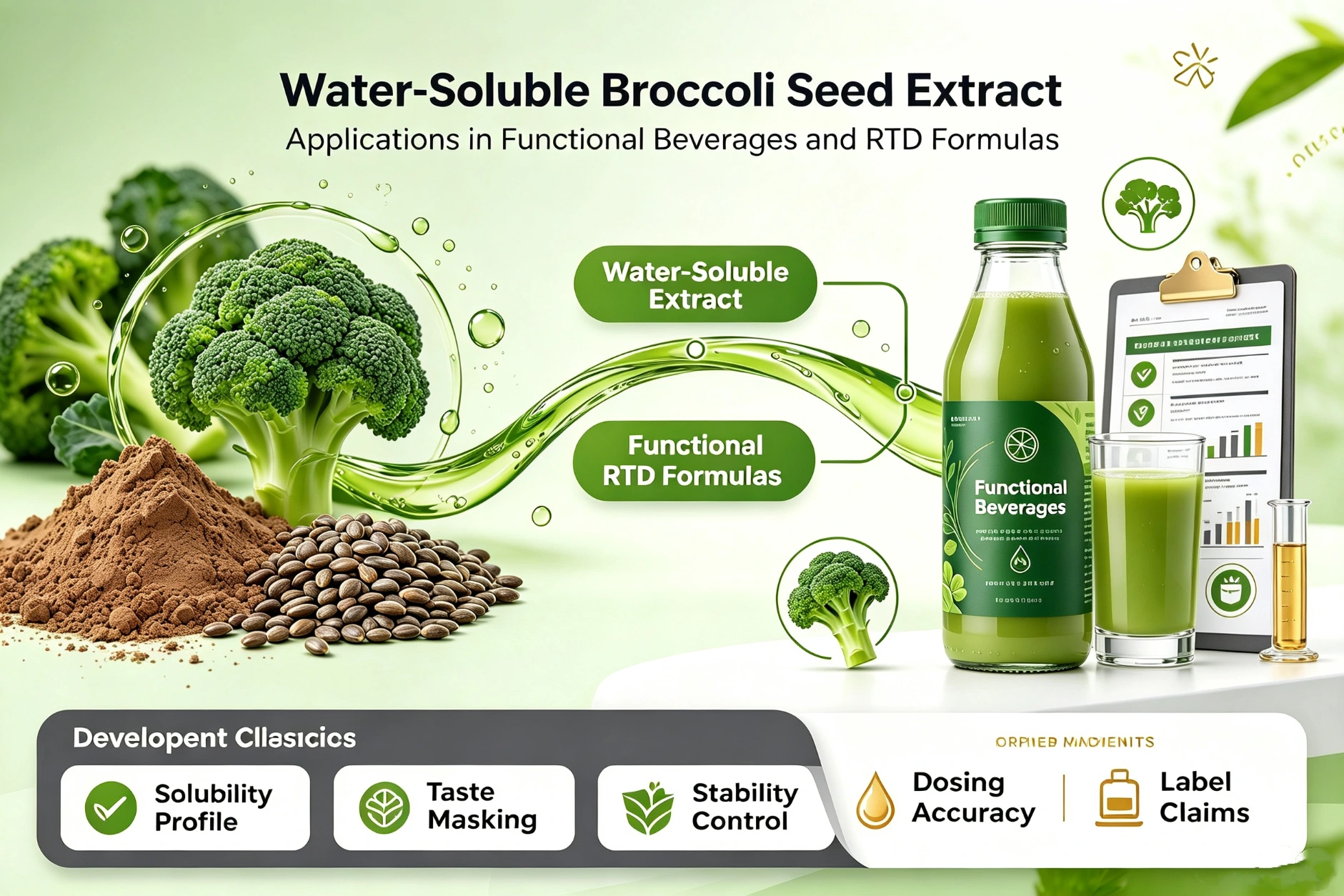
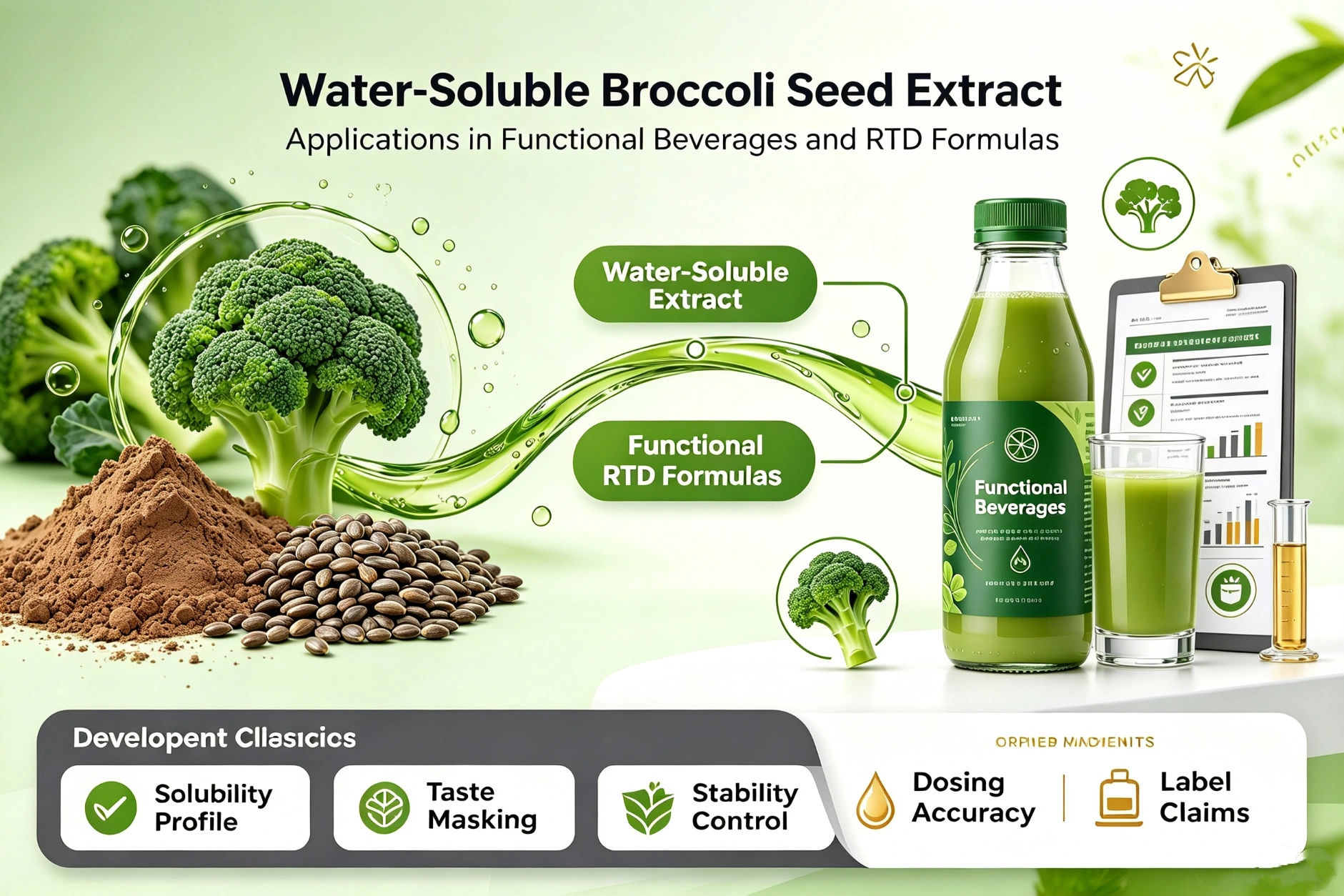
Water-soluble broccoli seed extract resolves this at the specification level. The performance benchmarks that matter for beverage manufacturing:
- Aqueous clarity ≥98% - suitable for transparent beverages, functional waters, and clear shots
- Mild flavor profile - no pungent cruciferous aftertaste; blends cleanly with fruit, botanical, and neutral bases
- Pasteurization-compatible - glucoraphanin format retains potency through thermal processing
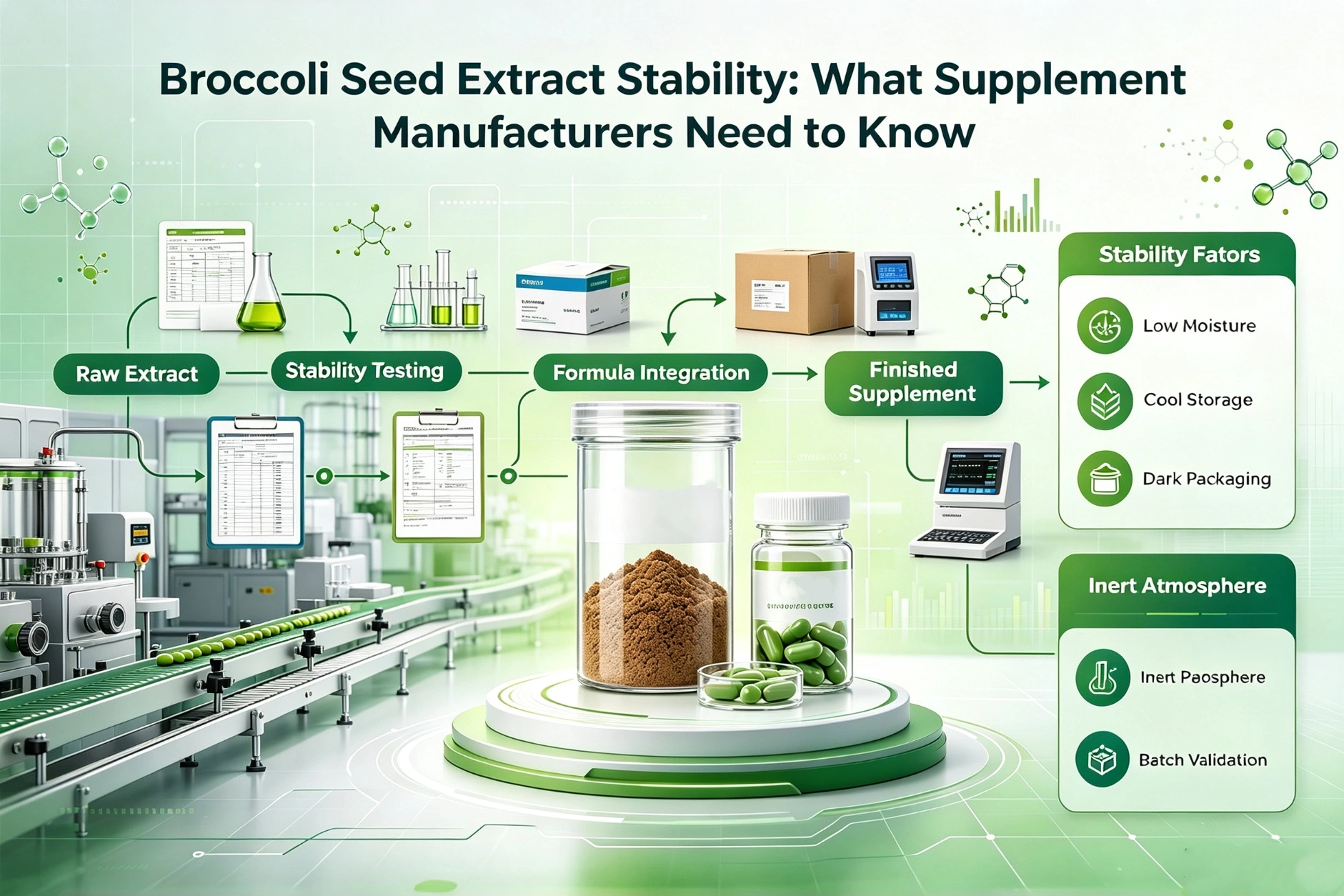
- Accelerated stability: ≥95% potency retention after 90 days at 37°C/75% RH
- In vivo conversion rate of 55.8% sulforaphane within 120 minutes of simulated gastric digestion - 5 to 8 times higher than standard enzyme-free extracts
These aren't marketing claims. They're batch-verifiable specification checkpoints that protect your product quality from development through commercial scale.
RTD Formulation Guidance: Grade Selection, Dosage, and Application Formats
Getting broccoli seed extract into a beverage formula requires decisions at three levels: grade selection, dosage calibration, and product positioning.
Grade Selection by Application
|
Specification |
Format |
Best Fit Application |
|
Glucoraphanin 1%–10% |
Water-soluble powder |
Mainstream functional beverages, enhanced water |
|
Glucoraphanin 13%–20% |
Water-soluble powder |
Premium RTD shots, FSMPs, clinical nutrition |
|
Sulforaphane 0.1%–1% |
Water-soluble powder |
Direct delivery formats, sports recovery drinks |
|
Glucoraphanin 13% + Sulforaphane 1% |
Combination grade |
High-potency dual-pathway formulas |
For most RTD products, glucoraphanin-standardized grades offer the best combination of shelf stability, bioavailability, and regulatory defensibility across major markets.
Dosage Reference Framework
The 2023 Chinese Dietary Reference Intakes established a Tolerable Upper Intake Level (TUL) for sulforaphane at 30 mg/day - the first time a national dietary reference body has set a quantified upper limit for this compound. This gives formulators a clear, milligram-level dosage framework that supports both product safety documentation and label claim substantiation.
Beverage Application Formats
Water-soluble broccoli seed extract integrates cleanly across the full RTD spectrum:
- Functional water and enhanced water - low-dose, clear-format positioning
- RTD wellness shots (30–60 mL) - high-potency, concentrated delivery with measurable active content
- Sports and recovery drinks - Nrf2-based oxidative stress support post-exercise
- Protein and meal replacement shakes - cellular defense as a secondary benefit claim
- Infant and maternal nutrition liquids - where purity, taste neutrality, and traceability are non-negotiable
- Foods for Special Medical Purposes (FSMPs) - clinical-grade applications requiring documented bioavailability
What Procurement Teams Must Verify Before Sourcing
Ingredient procurement decisions carry real downstream risk. A specification that looks right on a datasheet can fail in a third-party audit if the underlying analytical method is weak or the supply chain is opaque. Here are the non-negotiable checkpoints:
Analytical Verification
- Demand HPLC-verified potency against certified reference standards
- Reject suppliers using non-specific colorimetric assays - these inflate declared glucosinolate content and cannot withstand regulatory scrutiny
- Request batch-specific COA covering assay, heavy metals, residual solvents, and microbiology
Certification Stack
- Core minimum: ISO 9001, FSSC 22000, cGMP
- US market: FDA-registered and inspected facility
- EU market: EU Organic or EFSA-compliant documentation
- Global reach: Halal and Kosher certification for Middle East, Southeast Asia, and Jewish market access
Stability Documentation
- Request accelerated stability data: 37°C/75% RH, minimum 90 days
- Confirm potency retention figures are batch-specific, not generic category claims
- Ask for real-time stability data at 12 and 24 months where available
Bioavailability Evidence
- Request in-vivo or simulated gastric digestion conversion rate data
- Best-in-class water-soluble extracts achieve 55.8% sulforaphane conversion within 120 minutes - benchmark this against any competing supplier's data
Supply Chain Traceability
- Full field-to-COA traceability: cultivar origin, harvest lot, extraction batch, finished product release
- Confirm whether you're dealing with a manufacturer or a broker - this distinction determines your audit rights and quality escalation path
Competitive Positioning: How to Differentiate Your Beverage Product
The functional beverage space is crowded. Water-soluble broccoli seed extract gives your product a differentiation angle that most competitors haven't claimed yet - and one that's grounded in published science, not marketing invention.
Positioning angles with proven consumer resonance:
- "Cellular defense you can drink" - Nrf2 activation as a premium, science-backed benefit claim
- "Phase II detox support" - enzyme induction language that outperforms vague "cleanse" messaging
- "130+ clinical trials. One ingredient." - clinical credibility as a direct marketing asset
- "Clean label, clear formula" - water-soluble, taste-neutral, no artificial masking agents required
- "Precision dosing at 30 mg/day" - quantified, reference-backed dosage that builds consumer trust
These angles work across retail, DTC, foodservice, and B2B private label channels. Each one is substantiated by peer-reviewed research and regulatory reference data.
Why Vertical Integration Matters for Long-Term Supply Reliability
For beverage brands and contract manufacturers, supply chain risk is real. Single-source dependency, inconsistent potency across batches, and undisclosed broker intermediaries create quality gaps that surface at the worst possible moment - during a customer complaint, a regulatory inspection, or a product recall.
A vertically integrated manufacturer controls every critical node:
- Raw material cultivation - cultivar selection, soil management, harvest timing, pre-extraction lot verification
- Extraction and standardization - in-house HPLC, GC, UV, AAS, and microbiology testing at every stage
- Finished product release - batch-specific COA issued before shipment, not after
- OEM/ODM capability - custom blends, sachets, liquid concentrates, and capsule formats supported
- Dual-patent platform - "Myrosinase + Stabilization" technology delivering zero activity loss in vitro over 2 years
This end-to-end control is what separates a reliable long-term ingredient partner from a commodity trader. It also means your audit team can trace any quality issue back to its origin - and resolve it.
Partner With a Certified Broccoli Seed Extract Manufacturer
Jiuyuan Biotech has supplied certified botanical extracts to clients across 30+ countries since 2012. Our water-soluble broccoli seed extract line covers glucoraphanin specifications from 1% to 20%, plus sulforaphane-standardized grades from 0.1% to 10%, with a combination grade (Glucoraphanin 13% + Sulforaphane 1%) available for high-potency dual-pathway formulas.
Every batch ships with:
✅ HPLC-verified potency against certified reference standards
✅ Full traceability COA: assay, heavy metals, residual solvents, microbiology
✅ FSSC 22000, ISO 9001, cGMP, Halal, Kosher, USDA Organic, EU Organic certification
✅ Accelerated stability data: ≥95% retention at 37°C/75% RH / 90 days
✅ OEM/ODM support: sachets, capsules, liquid formats, custom blends
Whether you're qualifying a new ingredient supplier, scaling an existing beverage line, or developing a first-to-market RTD formula, our technical team supports your project from sample request to commercial batch.
📧 Contact our technical team: info@jiuybiotech.com 🌐 Full product specifications: Broccoli Seed Extract - Jiuyuan Biotech
References
- Fahey, J. W., Zhang, Y., & Talalay, P. (1997). Broccoli sprouts: An exceptionally rich source of inducers of enzymes that protect against chemical carcinogens. Proceedings of the National Academy of Sciences, 94(19), 10367–10372.
- Shapiro, T. A., Fahey, J. W., Wade, K. L., Stephenson, K. K., & Talalay, P. (2001). Chemoprotective glucosinolates and isothiocyanates of broccoli sprouts: Metabolism and excretion in humans. Cancer Epidemiology, Biomarkers & Prevention, 10(5), 501–508.
- Dinkova-Kostova, A. T., & Kostov, R. V. (2012). Glucosinolates and isothiocyanates in health and disease. Trends in Molecular Medicine, 18(6), 337–347.
- Houghton, C. A. (2019). Sulforaphane: Its "coming of age" as a clinically relevant nutraceutical in the prevention and treatment of chronic disease. Oxidative Medicine and Cellular Longevity, 2019, Article 2716870.
- Vanduchova, A., Anzenbacher, P., & Anzenbacherova, E. (2019). Isothiocyanate from broccoli, sulforaphane, and its properties. Journal of Medicinal Food, 22(2), 121–126.
- Bahadoran, Z., Mirmiran, P., & Azizi, F. (2013). Broccoli sprouts powder could improve serum triglyceride and oxidized LDL/LDL-cholesterol ratio in type 2 diabetic patients. Diabetes Research and Clinical Practice, 96(3), 348–354.