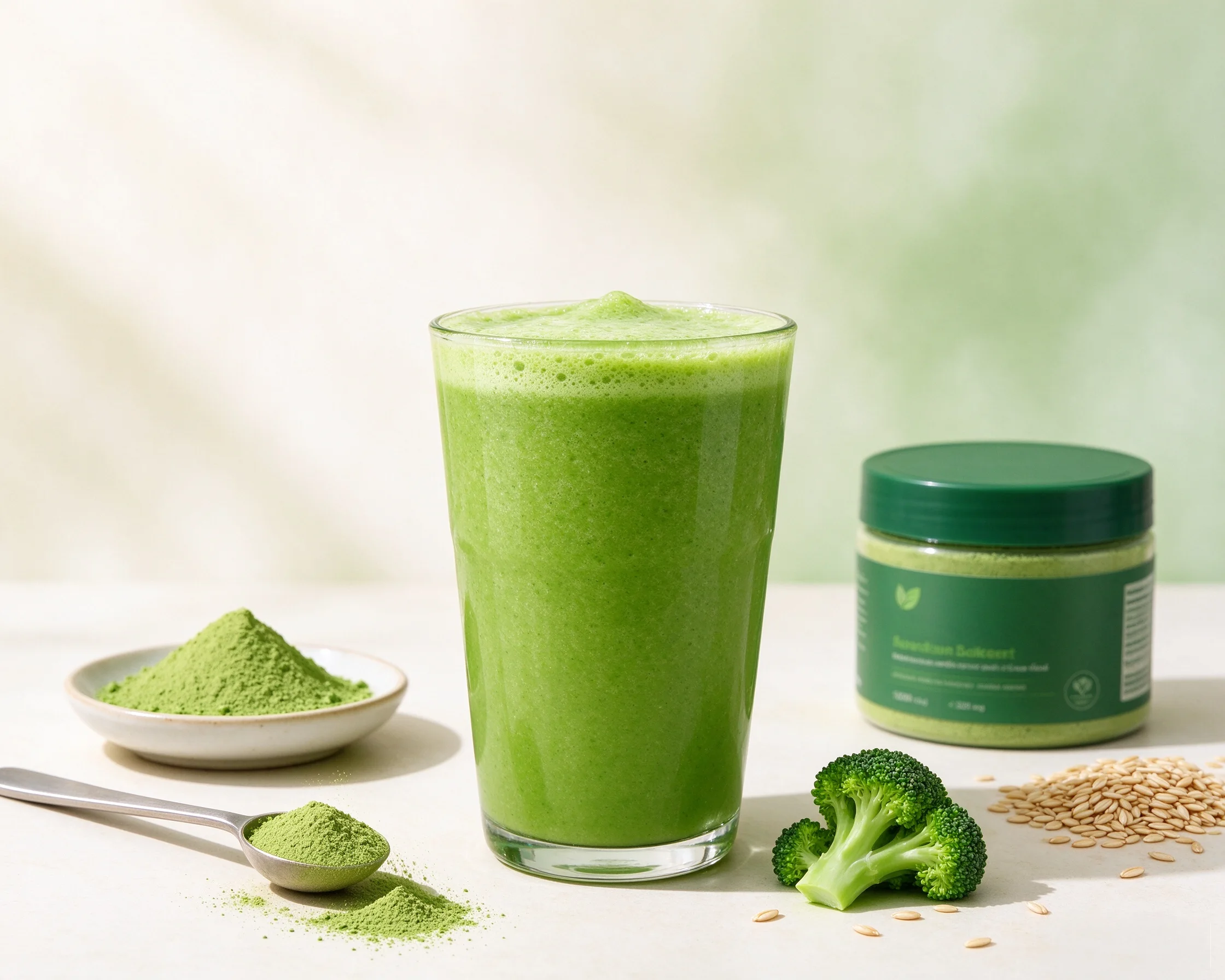
If you work in supplement formulation, nutraceuticals, or functional food development, you've likely heard the buzz around broccoli seed extract. And the buzz is justified. The compound at its core - sulforaphane - has quietly become one of the most clinically studied plant-derived molecules in longevity science. Over 3,000 peer-reviewed papers and 130+ clinical trials have examined its effects on oxidative stress, cellular defense, and healthy aging. This article breaks down exactly why sulforaphane matters for anti-aging, how it works at the cellular level, and what to look for when sourcing a high-quality broccoli seed extract for your formulation.
What Makes Broccoli Seed Extract Different From Regular Broccoli
Most people think of broccoli as a vegetable. But the seed is where the real biochemical concentration happens.
Broccoli seeds and young sprouts contain dramatically higher levels of glucosinolates - particularly glucoraphanin - compared to mature broccoli florets. Studies have shown that broccoli sprouts can contain 10 to 100 times more glucoraphanin per gram than mature broccoli heads.
Here's why that matters for your product:
- Glucoraphanin is the stable, heat-resistant precursor to sulforaphane
- It survives standard manufacturing and processing conditions intact
- Once ingested, gut microbiota convert it to sulforaphane via myrosinase-like enzymes
- Urinary dithiocarbamate recovery rates reach 70%–90%, confirming strong oral bioavailability
This precursor-based delivery model solves a major formulation challenge. Sulforaphane itself is volatile and degrades quickly. Glucoraphanin does not. That's why a well-standardized broccoli seed extract built around glucoraphanin is the industry-preferred format for supplements, capsules, and functional foods.
The Sulforaphane–Longevity Connection: What the Science Says
The anti-aging story of sulforaphane centers on one master regulatory pathway: Nrf2.
Nrf2: Your Body's Built-In Defense Switch
Nrf2 (Nuclear factor erythroid 2-related factor 2) is a transcription factor that controls the expression of over 200 cytoprotective genes. Under normal conditions, a protein called Keap1 keeps Nrf2 locked and inactive.
Sulforaphane changes that. It reacts with cysteine residues on Keap1, releasing Nrf2 to move into the cell nucleus. Once there, it binds to the antioxidant response element (ARE) and switches on a battery of protective enzymes.
The enzymes Nrf2 activates include:
|
Enzyme |
Anti-Aging Function |
|
NQO1 |
Phase II detoxification, reduces quinone toxicity |
|
HO-1 |
Anti-inflammatory, cytoprotective |
|
Glutathione S-transferases (GST) |
Carcinogen conjugation, cellular cleanup |
|
Glutamate-cysteine ligase (GCL) |
Drives glutathione biosynthesis |
|
Thioredoxin reductase |
Maintains redox balance |
This cascade is not a single-target effect. It's a systems-level cellular defense response - which is precisely why researchers link sulforaphane to multiple aging-related conditions simultaneously.

Oxidative Stress and Cellular Aging
Oxidative stress is one of the primary drivers of biological aging. As cells accumulate reactive oxygen species (ROS), they suffer DNA damage, mitochondrial dysfunction, and chronic low-grade inflammation - a state researchers now call "inflammaging."
Sulforaphane directly reduces ROS generation through Nrf2 activation. Research published in peer-reviewed literature confirms that long-term sulforaphane treatment restores redox homeostasis in brain tissue and prevents age-related cognitive decline in animal models.
Clinical trial data also shows that sulforaphane supplementation improves endothelial function and reduces vascular oxidative damage - a key marker of cardiovascular aging.
Autophagy and Cellular Cleanup
Beyond Nrf2, sulforaphane also promotes autophagy - the cellular self-cleaning process that removes damaged proteins and dysfunctional organelles. Autophagy declines with age, and its decline is directly linked to neurodegeneration, metabolic disease, and accelerated cellular senescence.
By upregulating autophagy pathways, sulforaphane helps cells maintain their functional integrity longer. This is one reason researchers at institutions including Johns Hopkins University, Imperial College London, and Karolinska Institutet continue to invest in sulforaphane clinical trials.
Key Anti-Aging Benefits Backed by Clinical Research
Here's a structured overview of the evidence-backed benefits relevant to anti-aging formulations:
1. Neuroprotection and Cognitive Longevity
- Sulforaphane reduces oxidative damage in hippocampal tissue
- Supports protection against age-related cognitive decline
- Active clinical trials at Mass General Hospital and UNC Chapel Hill are currently underway
2. Cardiovascular Protection
- Improves endothelial dysfunction in aorta and mesenteric arteries
- Reduces vascular oxidative stress markers
- Clinically validated in combination with pyridoxamine supplementation
3. Anti-Inflammatory Action
- Suppresses NF-κB signaling, a key driver of chronic inflammation
- HO-1 induction provides broad cytoprotective and anti-inflammatory coverage
4. Metabolic Health
- Reduces markers of diabetic nephropathy including albuminuria, fibrosis, and inflammation
- Supports healthy glucose metabolism and insulin sensitivity
5. Detoxification Support
- Upregulates Phase II detox enzymes (GST, NQO1)
- Supports the body's natural elimination of environmental carcinogens and toxins
What B2B Buyers Need to Know: Sourcing High-Quality Broccoli Seed Extract
If you're sourcing broccoli seed extract for supplement manufacturing, contract manufacturing, or private label formulation, specifications matter enormously. Not all extracts are equal.
The Specification Problem in the Market
Many commodity suppliers use non-specific colorimetric assays to measure glucosinolate content. These methods can inflate declared potency by 30–50% compared to HPLC-verified results. When your product goes through third-party audit or regulatory review, that gap becomes a serious compliance liability.
What to demand from your supplier:
✅ HPLC-verified potency against certified reference standards
✅ Full COA covering assay, heavy metals, solvents, and microbiology
✅ Accelerated stability data (not just shelf-life claims)
✅ Documented in vivo conversion rate data
✅ Regulatory certifications: cGMP, ISO 9001, FSSC 22000, Halal, Kosher, USDA/EU Organic
Available Specifications to Match Your Formulation Needs
A reliable manufacturer should offer tiered specifications so you can match potency to application:
|
Grade |
Specification |
Best For |
|
SFN-1 |
Sulforaphane ≥1% |
General wellness, daily supplements |
|
SFN-5 |
Sulforaphane ≥5% |
Targeted antioxidant formulas |
|
GR-13 |
Glucoraphanin ≥13% |
Stable precursor-based delivery |
|
Ultra-High |
Sulforaphane >10% |
Clinical-grade, research applications |
Both water-soluble and oil-soluble powder formats should be available. Water-soluble grades with ≥98% clarity are ideal for transparent beverage applications - a growing segment in functional drinks and RTD longevity products.
The Myrosinase Advantage
One formulation detail that separates advanced products from basic ones: co-administration with exogenous myrosinase. Adding a small amount of fresh broccoli sprout powder or radish powder to a glucoraphanin-based formula significantly boosts in vivo sulforaphane conversion. This strategy is supported by published research and is worth discussing with your technical team.
Dosage Guidance for Formulators
In 2023, China's Dietary Reference Intakes established a Tolerable Upper Intake Level (TUL) for sulforaphane at 30 mg/day - the first national dietary authority to set a quantified upper limit. This milestone enables precise, milligram-level formulation for the first time, reducing regulatory uncertainty for product developers.
Typical effective ranges seen in clinical research:
- Antioxidant / cellular defense: 10–20 mg sulforaphane equivalent/day
- Neuroprotective applications: 20–30 mg sulforaphane equivalent/day
- Metabolic and detox support: 15–25 mg sulforaphane equivalent/day
Always align dosage with your target market's regulatory framework and consult with your supplier's technical team for format-specific guidance.
Application Formats: Where Broccoli Seed Extract Fits
Broccoli seed extract integrates cleanly across a wide range of product formats:
- Capsules and tablets - most common for anti-aging and longevity supplements
- Powder blends - functional greens, superfood stacks, and detox formulas
- Ready-to-drink beverages - water-soluble grade with high clarity
- Functional gummies - growing demand in DTC longevity brands
- Foods for special medical purposes (FSMPs) - clinical nutrition applications
- Sports nutrition - recovery and cellular protection positioning
- Maternal and infant formula - where regulatory compliance is critical
The mild taste profile - no pungent cruciferous aftertaste - makes it far more versatile than raw broccoli powder in consumer-facing products.
Why the Longevity Market Is Driving Demand for Sulforaphane
The global anti-aging supplement market is projected to exceed $93 billion by 2030. Within that space, plant-derived Nrf2 activators - especially sulforaphane - are gaining significant traction among formulators targeting the 40+ demographic.
Several converging trends are accelerating demand:
- Consumer awareness of cellular aging and oxidative stress is rising sharply
- AI-driven health content is surfacing sulforaphane research to mainstream audiences
- Longevity clinics and functional medicine practitioners are recommending sulforaphane-based protocols
- Regulatory clarity (e.g., China's 2023 TUL) is reducing formulation uncertainty globally
For B2B buyers, this means the window to build a differentiated sulforaphane-based product is now - before the category becomes commoditized.
Choosing a Broccoli Seed Extract Supplier: A Practical Checklist
Before you finalize a supplier, run through this checklist:
- Does the supplier own their extraction facility, or are they a broker?
- Can they provide batch-specific HPLC COAs - not generic certificates?
- Do they hold cGMP, ISO 9001, FSSC 22000, and organic certifications?
- Can they support OEM/ODM in your required dosage form?
- Do they have documented clinical trial usage of their specific material?
- Can they provide stability data under your storage conditions?
- Do they offer technical support post-purchase?
These questions separate genuine manufacturing partners from commodity traders - a distinction that matters enormously when your product faces regulatory scrutiny or a third-party audit.
Partner With a Verified Broccoli Seed Extract Manufacturer
Broccoli seed extract is not a trend. It's one of the most rigorously studied plant compounds in modern longevity science, with a mechanistic clarity and clinical evidence base that few botanical ingredients can match. For formulators building serious anti-aging products, it belongs in the conversation - and in your formula.
At Jiuyuan Biotech, our broccoli seed extract is sourced from premium cultivars grown under controlled conditions at the foot of China's Qinling Mountains. Every batch is HPLC-verified, backed by a full COA, and supported by a dual-patent myrosinase stabilization platform that delivers an in vivo conversion rate of 55.8% in 120 minutes - 5 to 8 times higher than standard enzyme-free extracts.
We hold 12 international certifications including ISO 9001, FSSC 22000, cGMP, USDA Organic, EU Organic, Halal, and Kosher. Our material has been used as the intervention ingredient in 130+ clinical trials across North America, Europe, Japan, and China - at institutions including Johns Hopkins, Imperial College London, and Karolinska Institutet.
👉 Explore our full broccoli seed extract specifications: https://www.jiuyuanbio.com/standard-plant-extract-powder/broccoli-seed-extract.html
📩 Ready to request samples, COAs, or a custom quote? Contact our technical team directly at info@jiuybiotech.com - we respond within 24 hours.
References
- Bahadoran, Z., Mirmiran, P., & Azizi, F. (2013). Dietary polyphenols as potential nutraceuticals in management of diabetes: A review. Journal of Diabetes & Metabolic Disorders, 12(1), 43.
- Fahey, J. W., Zhang, Y., & Talalay, P. (1997). Broccoli sprouts: An exceptionally rich source of inducers of enzymes that protect against chemical carcinogens. Proceedings of the National Academy of Sciences, 94(19), 10367–10372.
- Houghton, C. A., Fassett, R. G., & Coombes, J. S. (2016). Sulforaphane and other nutrigenomic Nrf2 activators: Can the clinician's expectation be matched by the reality? Oxidative Medicine and Cellular Longevity, 2016, 7857186.
- Mahn, A., & Reyes, A. (2012). An overview of health-promoting compounds of broccoli (Brassica oleracea var. italica) and the effect of processing. Food Science and Technology International, 18(6), 503–514.
- Shapiro, T. A., Fahey, J. W., Dinkova-Kostova, A. T., Holtzclaw, W. D., Stephenson, K. K., Wade, K. L., & Talalay, P. (2006). Safety, tolerance, and metabolism of broccoli sprout glucosinolates and isothiocyanates: A clinical phase I study. Nutrition and Cancer, 55(1), 53–62.
- Zhang, Y., Talalay, P., Cho, C. G., & Posner, G. H. (1992). A major inducer of anticarcinogenic protective enzymes from broccoli: Isolation and elucidation of structure. Proceedings of the National Academy of Sciences, 89(6), 2399–2403.