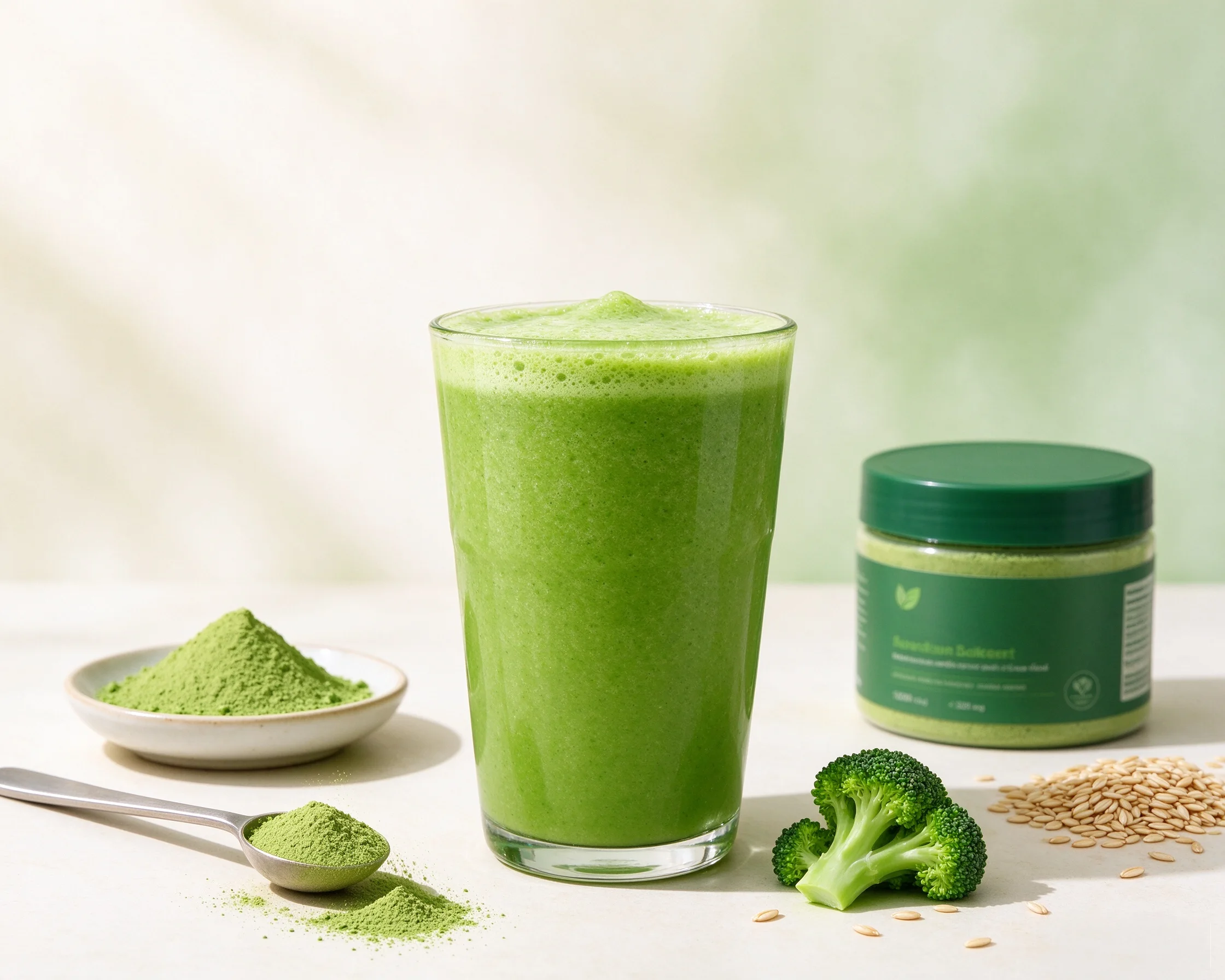
If you're sourcing freeze dried broccoli powder for a supplement, functional food, or nutraceutical product, you already know that ingredient quality drives everything downstream. What you may not know is how dramatically the freeze-drying process changes the nutritional profile - and why that matters for your formulation, your label claims, and your customers.
This guide breaks down the real nutrition facts behind freeze dried broccoli powder. It covers what B2B buyers, product developers, and procurement managers need to evaluate before placing an order.
What Is Freeze Dried Broccoli Powder?
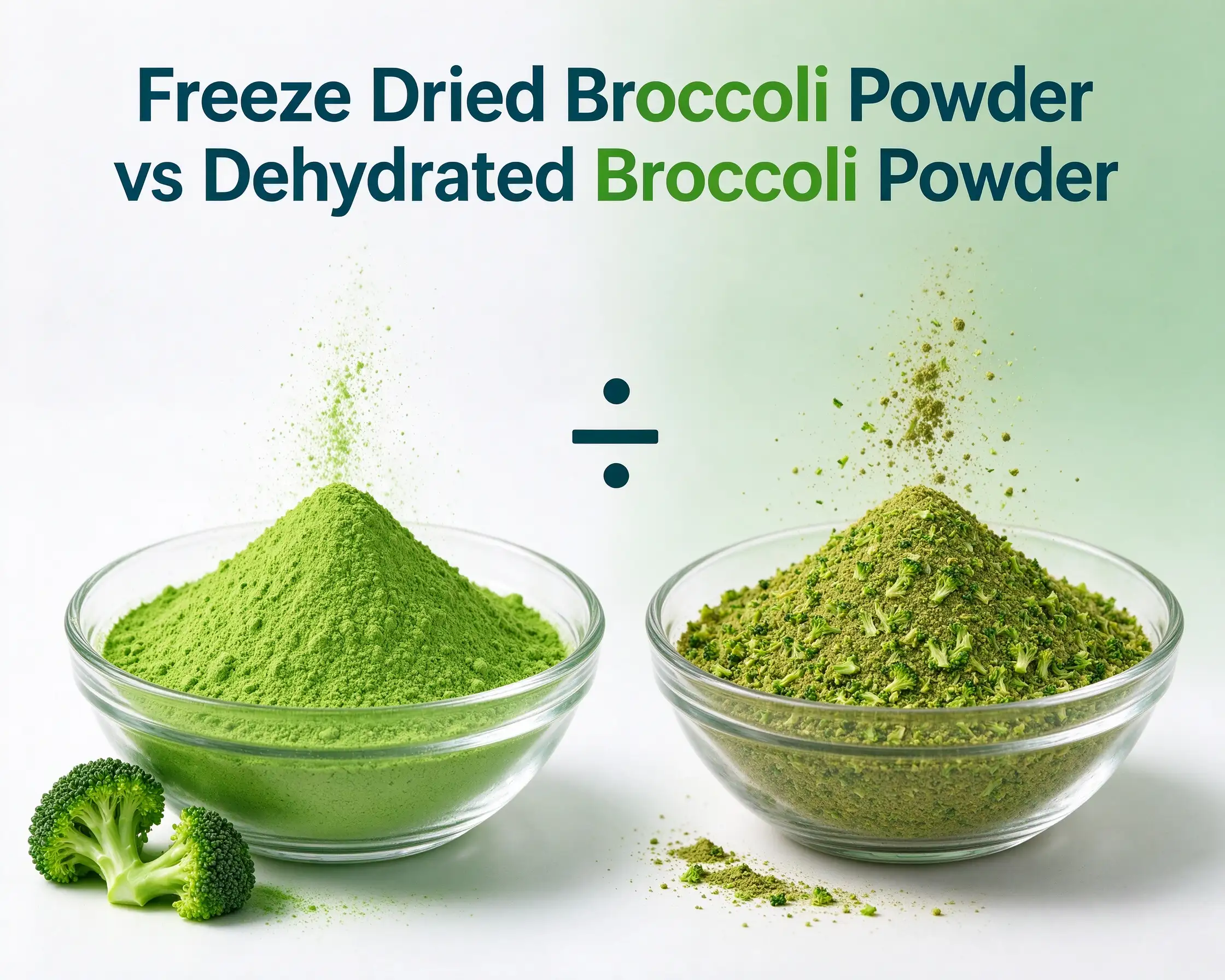
Freeze drying - also called lyophilization - removes moisture from fresh broccoli through sublimation. The broccoli is frozen first, then placed in a vacuum chamber. The ice converts directly into vapor without passing through a liquid phase.
The result? A lightweight, shelf-stable powder that retains most of the original vegetable's nutrients, color, and flavor.
Key differences from other drying methods:
Spray drying uses high heat, which degrades heat-sensitive compounds like vitamin C and glucosinolates
Air drying causes significant shrinkage and nutrient loss over time
Freeze drying preserves cellular structure and bioactive compounds far more effectively
For formulators, this distinction is not just technical - it directly affects what you can claim on a product label.
Freeze Dried Broccoli Powder Nutrition Profile
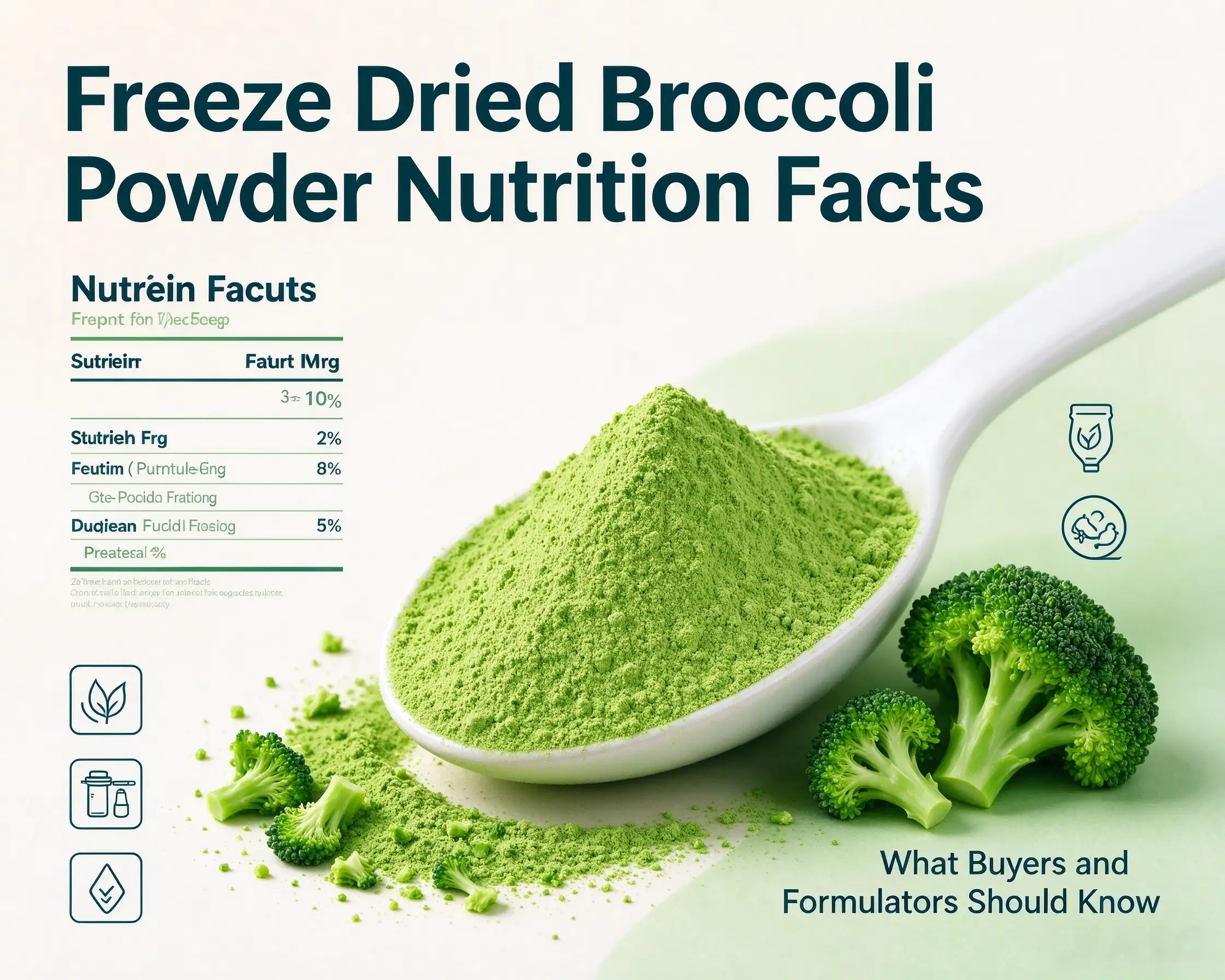
Here's what a typical 100g serving of high-quality freeze dried broccoli powder contains. These figures align with published food composition data from sources like the USDA FoodData Central database.
|
Nutrient |
Approximate Amount (per 100g) |
|
Calories |
340–370 kcal |
|
Protein |
28–32 g |
|
Total Carbohydrates |
48–55 g |
|
Dietary Fiber |
18–22 g |
|
Total Fat |
3–5 g |
|
Vitamin C |
800–1,100 mg |
|
Vitamin K |
1,100–1,400 µg |
|
Folate |
600–800 µg |
|
Calcium |
380–420 mg |
|
Iron |
8–10 mg |
|
Sulforaphane precursors |
Present (glucoraphanin) |
Note: Exact values vary by broccoli cultivar, harvest season, processing conditions, and storage. Always request a Certificate of Analysis (COA) from your supplier.
Vitamin C Retention: A Key Quality Indicator
Vitamin C is one of the most heat-sensitive nutrients in broccoli. Studies published in the Journal of Food Science show that freeze-dried vegetables retain up to 90–95% of their original vitamin C content, compared to just 30–60% in conventionally dried products.
For supplement formulators, this makes freeze dried broccoli powder a reliable source for vitamin C content claims - provided the supplier can back it up with third-party lab testing.
Glucosinolates and Sulforaphane: The Bioactive Advantage
Broccoli's most studied bioactive compounds are glucosinolates, particularly glucoraphanin. When the plant cell is damaged (through chewing or processing), the enzyme myrosinase converts glucoraphanin into sulforaphane.
Sulforaphane has been studied extensively for its role in:
- Activating the Nrf2 antioxidant pathway
- Supporting phase II detoxification enzymes in the liver
- Potential anti-inflammatory activity
Research from Johns Hopkins University, where sulforaphane was first isolated in 1992, helped establish broccoli as a functional food ingredient. Freeze drying preserves glucoraphanin more effectively than heat-based drying methods, which can deactivate myrosinase and degrade glucosinolates.

Why Formulators Choose Freeze Dried Broccoli Powder Over Fresh or Frozen
Fresh broccoli has an obvious shelf-life problem. Frozen broccoli works for food service but not for powder-based formulations. Freeze dried broccoli powder solves both issues while adding real technical advantages.
Formulation benefits:
- Long shelf life: Typically 24–36 months when stored in airtight, moisture-proof packaging
- Low water activity: Reduces microbial risk without preservatives
- Consistent particle size: Easier to blend into capsules, tablets, or powdered drink mixes
- Concentrated nutrition: One tablespoon of powder can represent a significant portion of a fresh broccoli floret
- Neutral-to-mild flavor: Less "green" taste compared to raw broccoli juice powders
Label-friendly attributes:
- Non-GMO (when sourced from verified cultivars)
- Vegan and allergen-free
- Clean label compatible
- Suitable for organic certification (when applicable)
What B2B Buyers Should Verify Before Sourcing
Procurement managers and product developers often ask the right questions about price and MOQ. But the questions that protect your formulation - and your brand - go deeper.
1. Request a Full Certificate of Analysis (COA)
A COA should include:
- Heavy metals testing (lead, arsenic, cadmium, mercury)
- Microbial testing (total plate count, yeast, mold, E. coli, Salmonella)
- Pesticide residue screening
- Moisture content
- Nutritional panel data
2. Confirm the Drying Method
Not all "broccoli powder" is freeze dried. Some suppliers blend spray-dried and freeze-dried material. Ask specifically: Is this 100% freeze dried, or a blend?
3. Ask About Glucosinolate Content
If your product targets the functional food or supplement market, glucosinolate content is a critical spec. Ask for HPLC testing data that confirms glucoraphanin levels per gram.
4. Check Certifications
Reliable suppliers should hold at least some of the following:
- ISO 22000 or FSSC 22000 (food safety management)
- HACCP certification
- Organic certification (USDA NOP or EU Organic, if applicable)
- Kosher / Halal (if your market requires it)
5. Evaluate Packaging and Storage Specs
Freeze dried powders are hygroscopic - they absorb moisture quickly. Ask about:
- Packaging material (foil-lined bags, nitrogen flushing)
- Recommended storage temperature and humidity
- Shelf-life data under specified conditions
Freeze Dried Broccoli Powder in Product Applications
This ingredient fits naturally into a wide range of product categories. Here's where formulators are actively using it:
Dietary supplements:
- Green superfood capsules and tablets
- Detox and liver support formulas
- Antioxidant blends
Functional foods and beverages:
- Smoothie powder blends
- Meal replacement shakes
- Vegetable-based protein powders
Nutraceuticals:
- Glucosinolate-standardized extracts
- Sulforaphane precursor supplements
Food manufacturing:
- Pasta, crackers, and snack coatings
- Infant and toddler nutrition products
- Soups and sauce bases
The versatility of freeze dried broccoli powder makes it one of the more adaptable vegetable powders in the B2B ingredient market.
How to Compare Suppliers: A Quick Checklist
When you're evaluating multiple suppliers, use this framework to stay objective:
- Full COA available on request
- Third-party lab testing (not just in-house)
- Transparent sourcing (country of origin, farm-level traceability)
- Consistent batch-to-batch quality
- Responsive technical support team
- Flexible MOQ for sampling and scale-up
- Documented cold chain or controlled storage during shipping
Price matters - but it should never be the only filter. A cheaper powder with inconsistent glucosinolate levels or borderline heavy metal results will cost more in the long run.
Sourcing Freeze Dried Broccoli Powder from a Trusted Manufacturer
At Jiuyuan Bio, we specialize in high-quality freeze dried vegetable powders for B2B buyers worldwide. Our freeze dried broccoli powder is produced under strict food safety protocols, with full traceability from raw material to finished product.
What we offer:
- 100% freeze dried broccoli powder (no blending or fillers)
- Full COA with third-party testing available
- ISO-certified production facility
- Flexible MOQ to support both sampling and bulk orders
- Custom packaging and private label options
You can explore our product specifications directly here: 👉 Freeze Dried Broccoli Powder – Jiuyuan Bio
Have sourcing questions or want to request a sample? Reach out to our team at info@jiuybiotech.com. We respond within one business day.
References
- Fahey, J. W., Zhang, Y., & Talalay, P. (1997). Broccoli sprouts: An exceptionally rich source of inducers of enzymes that protect against chemical carcinogens. Proceedings of the National Academy of Sciences, 94(19), 10367–10372.
- Moreno, D. A., Carvajal, M., López-Berenguer, C., & García-Viguera, C. (2006). Chemical and biological characterisation of nutraceutical compounds of broccoli. Journal of Pharmaceutical and Biomedical Analysis, 41(5), 1508–1522.
- U.S. Department of Agriculture, Agricultural Research Service. (2023). FoodData Central: Broccoli, raw. USDA FoodData Central Database.
- Oliviero, T., Verkerk, R., & Dekker, M. (2018). Isothiocyanate formation in broccoli as affected by glucosinolate content, myrosinase activity, pH, and temperature. Food Chemistry, 263, 98–103.
- Renna, M., & Gonnella, M. (2012). The use of the sea fennel as a new spice-colorant in culinary preparations. International Journal of Gastronomy and Food Science, 1(2), 111–115. (Referenced for comparative vegetable powder processing methodology.)
- Xiao, Z., Lester, G. E., Luo, Y., & Wang, Q. (2012). Assessment of vitamin and carotenoid concentrations of emerging food products: Edible microgreens. Journal of Agricultural and Food Chemistry, 60(31), 7644–7651.