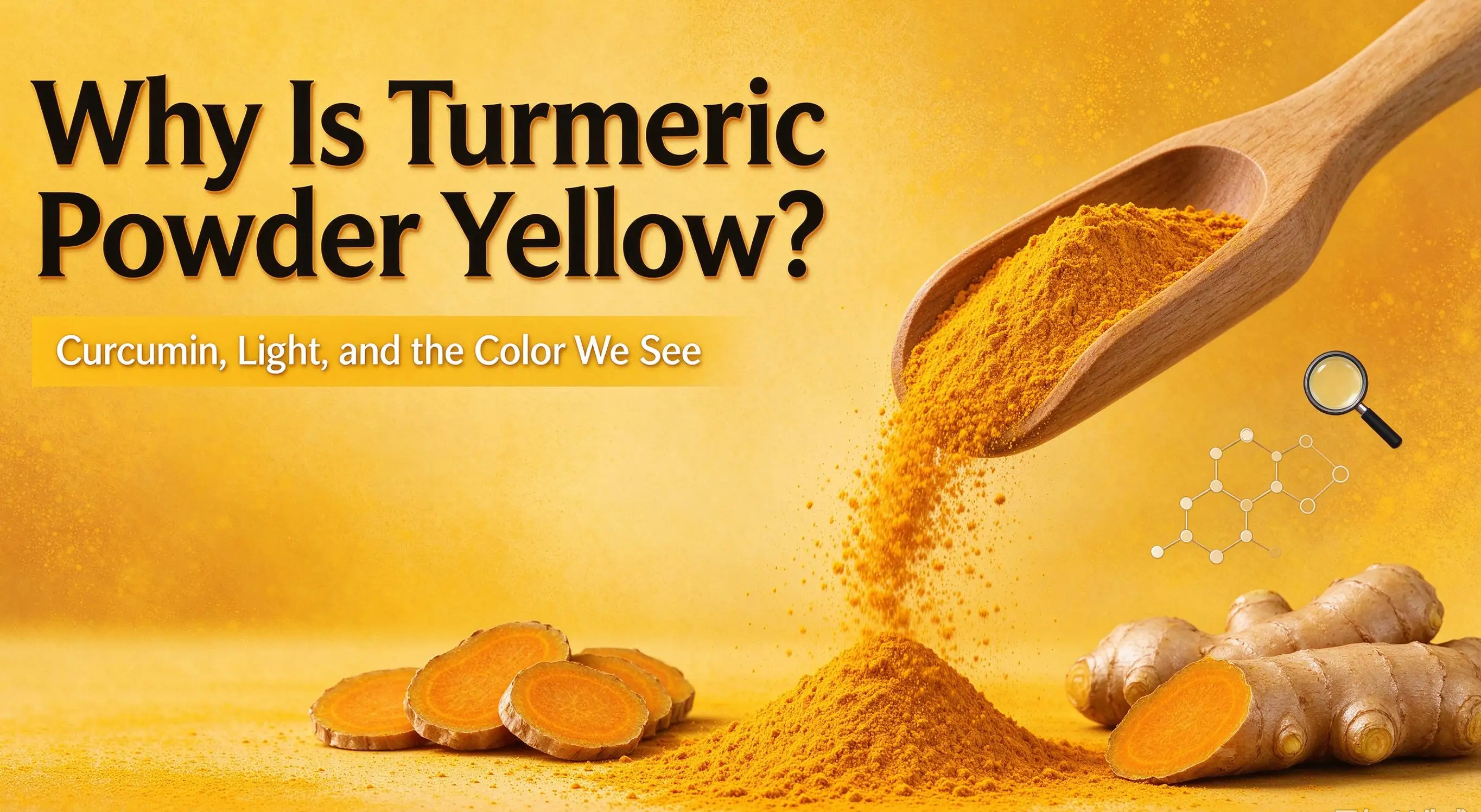
When you source yellow powder turmeric in bulk, one question comes up fast: organic or regular? The answer isn't as simple as "organic is better." For B2B buyers, the real question is which option aligns with your product requirements, target market, regulatory obligations, and cost structure. This guide breaks down the key differences - from farming practices and certification requirements to curcumin content, pricing, and supplier evaluation - so you can make a confident, informed sourcing decision.
What Actually Separates Organic From Regular Turmeric Powder
The difference starts in the field, not the factory.
Organic yellow turmeric powder comes from turmeric rhizomes grown without synthetic pesticides, chemical fertilizers, or genetically modified organisms. The entire supply chain - from soil management to processing and packaging - must meet certified organic standards.
Regular (conventional) turmeric powder is grown using standard agricultural practices, which may include synthetic inputs. It still meets food safety standards, but it isn't subject to the same farming restrictions.
Here's a side-by-side comparison of the core differences:
|
Factor |
Organic Yellow Turmeric Powder |
Regular Turmeric Powder |
|
Farming inputs |
No synthetic pesticides or fertilizers |
Conventional agricultural inputs permitted |
|
Certification required |
Yes - USDA Organic, EU Organic, or equivalent |
Not required |
|
Pesticide residue risk |
Lower |
Higher without proper testing |
|
Price point |
20%–40% premium over conventional |
More cost-accessible |
|
Market positioning |
Clean-label, premium, natural |
Mainstream food manufacturing |
|
Traceability requirements |
Stricter - full chain of custody |
Standard supplier documentation |
|
Curcumin content |
Comparable when properly grown |
Comparable |
One thing worth noting: organic certification does not automatically mean higher curcumin content. Curcumin levels depend on the turmeric variety (Curcuma longa cultivar), growing region, harvest timing, and processing method - not solely on whether synthetic inputs were used.
Curcumin Content: Does Organic Make a Difference?
This is one of the most common misconceptions in turmeric sourcing.
Buyers sometimes assume organic turmeric powder carries higher curcumin levels. The data doesn't consistently support that assumption.
What actually drives curcumin content:
- Cultivar selection - Varieties like Alleppey finger turmeric from Kerala, India, are known for higher curcumin yields (typically 3%–5%) regardless of organic status.
- Harvest maturity - Turmeric harvested at 8–9 months post-planting generally yields higher curcumin than early-harvested crops.
- Post-harvest processing - Proper curing, drying temperature, and milling method preserve curcumin integrity.
- Storage conditions - Exposure to light, heat, and moisture degrades curcumin over time.
A well-grown conventional turmeric from a reputable origin can carry 3%–5% curcumin - the same range as organic. Always request HPLC-verified curcumin data from your supplier, regardless of organic status.
Certification Requirements: What B2B Buyers Must Verify
If you're sourcing organic yellow powder turmeric for a product that carries an organic claim, certification isn't optional - it's a legal requirement in most markets.
Key Organic Certifications by Market
United States:
- USDA National Organic Program (NOP) certification is required for any product sold as "organic" in the US market.
- The supplier's processing facility must also hold organic handling certification - not just the farm.
European Union:
- EU Organic Regulation (EC) No 834/2007 and its successor (EU) 2018/848 govern organic labeling.
- Products imported into the EU must carry documentation from an accredited control body.
Other Markets:
- JAS (Japan Agricultural Standard) for Japan
- Canada Organic Regime (COR) for Canadian market entry
- NPOP (National Programme for Organic Production) - India's domestic organic standard, often used as a baseline by Indian suppliers
What to verify from your supplier:
- Valid organic certificate with current expiry date
- Certificate covers both farming AND processing/handling
- Certifying body is accredited in your target market
- Transaction certificates (TCs) available for each shipment
- Organic integrity maintained through segregated storage and processing
A supplier holding a USDA Organic certificate for farming but not for processing cannot legally supply you with certified organic product for US market use.
Pesticide Residue Testing: Where Regular Turmeric Carries More Risk
Pesticide residue is one area where organic turmeric holds a clear, documented advantage.
The European Food Safety Authority (EFSA) and the U.S. FDA both conduct routine monitoring of imported spices. Turmeric has appeared in residue monitoring reports with detectable levels of pesticides including chlorpyrifos, carbendazim, and ethylene oxide - particularly in samples from certain South Asian origins.
For conventional turmeric buyers, this means:
- Always request multi-residue pesticide screening from an accredited third-party lab (SGS, Eurofins, Intertek).
- Align your maximum residue limits (MRLs) with your destination market - EU MRLs are generally stricter than US limits.
- Confirm your supplier conducts incoming raw material testing, not just finished product testing.
For organic turmeric buyers:
- Organic certification reduces - but does not eliminate - residue risk. Cross-contamination from neighboring conventional farms or shared equipment can occur.
- Request residue test results alongside organic certificates for high-stakes applications.
Price Differences and What Drives Them
Organic yellow powder turmeric consistently commands a price premium over conventional. Understanding what drives that premium helps you negotiate more effectively and evaluate whether the cost is justified for your application.
Cost drivers for organic turmeric:
- Lower crop yields - Organic farming typically produces 15%–25% lower yields per hectare due to the absence of synthetic inputs.
- Certification and audit costs - Annual third-party audits, transaction certificates, and documentation add operational overhead for suppliers.
- Segregated handling - Organic product must be stored, processed, and transported separately from conventional product to maintain integrity.
- Smaller supply base - Fewer certified organic turmeric farms means less competitive pricing pressure.
Typical price premium: 20%–40% above comparable conventional turmeric powder, depending on origin, curcumin content, and order volume.
When the premium is worth it:
- Your finished product carries an organic label claim
- Your target market (natural foods, premium retail, EU market) demands organic ingredients
- Your brand positioning is built around clean-label or certified natural ingredients
When conventional may serve you better:
- You're manufacturing for mainstream food service or industrial applications
- Your formulation requires high-volume, cost-sensitive sourcing
- Your product doesn't carry an organic claim and your market doesn't demand it
Sensory Profile: Color, Aroma, and Flavor Differences
For food manufacturers, sensory consistency matters as much as chemical specifications.
Color:
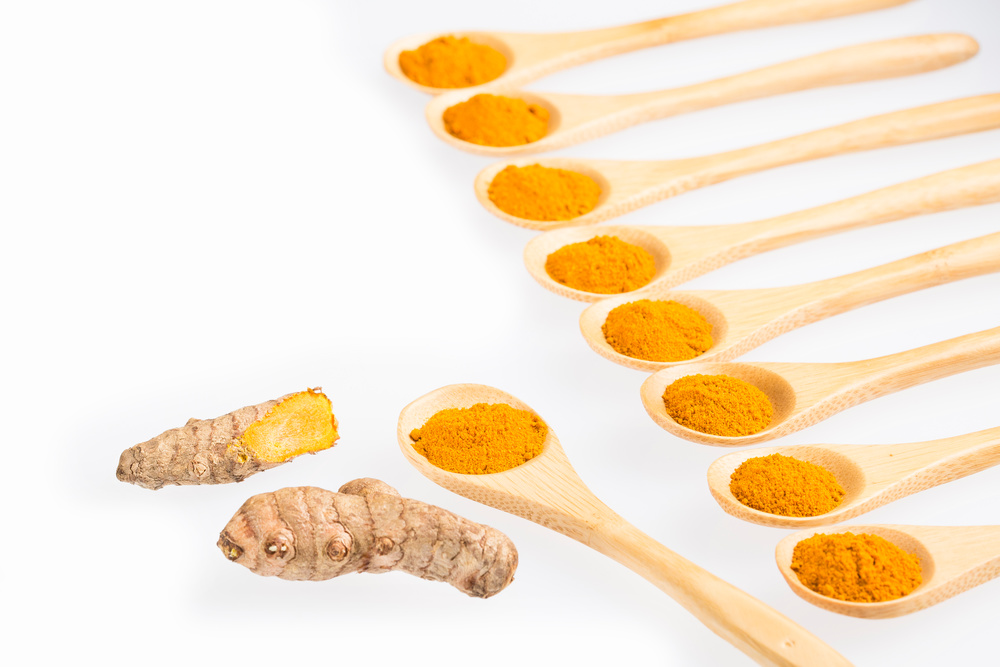
Both organic and conventional yellow turmeric powder derive their color from curcuminoids. At equivalent curcumin content, the color value (E1%1cm at 425 nm) should be comparable. The key variable is processing method - steam sterilization, spray drying, and milling technique all affect final color intensity.
Aroma and Flavor:
Turmeric's characteristic earthy, slightly bitter, peppery aroma comes from its volatile oil content - primarily turmerone, atlantone, and zingiberene. Organic turmeric grown in mineral-rich soils with traditional farming methods sometimes shows a more pronounced volatile oil profile, though this varies significantly by origin and cultivar.
Practical implication: Request sensory evaluation samples from at least two production batches before committing to a bulk order - for both organic and conventional product.
Regulatory Compliance for Your Target Market
Beyond organic certification, both product types must meet food safety regulations in your destination market.
United States (FDA):
- Both organic and conventional turmeric must comply with FDA food additive and GRAS (Generally Recognized as Safe) status requirements.
- Turmeric oleoresin and turmeric extract are listed as permitted color additives under 21 CFR Part 73.
European Union:
- Turmeric (curcumin) as a food color is regulated under E100 in Regulation (EC) No 1333/2008.
- Maximum use levels vary by food category - confirm compliance for your specific application.
China (GB Standards):
- Turmeric powder used as a food additive in China must comply with GB 2760 (National Food Safety Standard for Food Additives).
Confirm your supplier can provide market-specific compliance documentation - not just a generic COA.
How to Choose the Right Supplier for Either Type
Whether you're sourcing organic or conventional yellow powder turmeric, supplier evaluation follows the same core framework - with a few organic-specific additions.
For both organic and conventional suppliers, verify:
- Full COA with HPLC-verified curcumin content
- Third-party heavy metal and pesticide residue testing
- ISO 22000 or FSSC 22000 food safety certification
- Microbial testing results (Salmonella negative, E. coli negative)
- Batch-to-batch color consistency data
- Traceability to origin region or farm
Additional checks for organic suppliers:
- Valid organic certificate covering both farm and processing facility
- Transaction certificates available per shipment
- Documented segregation procedures for organic product
- Audit history with certifying body
Red flags to watch for:
- Organic certificates that cover farming but not processing
- Inability to provide transaction certificates
- No third-party residue testing - only internal lab data
- Significant price variation between batches without explanation
Quick Decision Guide: Organic vs Regular Turmeric Powder
Use this framework to match your sourcing choice to your business needs:
Choose organic yellow turmeric powder if:
- Your product carries an organic label claim
- You sell into premium natural food, EU, or Japanese markets
- Your brand positioning centers on clean-label or certified natural
- Your customers or retail partners require organic ingredient documentation
Choose regular turmeric powder if:
- Your application is food service, industrial, or mainstream manufacturing
- Cost efficiency is a primary sourcing driver
- Your product doesn't carry an organic claim
- You can ensure pesticide residue compliance through third-party testing
Source Your Yellow Powder Turmeric With Confidence
Whether your formulation calls for certified organic or high-quality conventional yellow turmeric powder, the sourcing decision comes down to specifications, certifications, and supplier reliability - not just price.
At Jiuyuan Bio, we supply both food-grade conventional and organic-compliant turmeric yellow color powder to manufacturers, distributors, and food brands worldwide. Our products are produced under ISO 22000-certified conditions, verified by accredited third-party laboratories, and supported by complete traceability documentation.
Explore detailed product specifications on our Turmeric Yellow Color product page, or contact our technical team directly to discuss your application requirements, request samples, or obtain a full technical dossier.
📩 Get in touch: info@jiuybiotech.com
We respond to all B2B inquiries within one business day.
References
- European Food Safety Authority (EFSA). (2022). Monitoring of Pesticide Residues in Products of Plant Origin in the European Union - Annual Report. EFSA Journal.
- U.S. Food and Drug Administration. (2023). Color Additives Permitted for Use in Human Food: 21 CFR Part 73 - Turmeric and Turmeric Oleoresin. U.S. Department of Health and Human Services.
- European Parliament and Council. (2018). Regulation (EU) 2018/848 on Organic Production and Labelling of Organic Products. Official Journal of the European Union.
- Chattopadhyay, I., Biswas, K., Bandyopadhyay, U., & Banerjee, R. K. (2004). Turmeric and Curcumin: Biological Actions and Medicinal Applications. Current Science, 87(1), 44–53.
- National Organic Program, USDA Agricultural Marketing Service. (2023). Organic Regulations: Handling and Processing Requirements for Certified Operations. United States Department of Agriculture.
- Prasad, S., & Aggarwal, B. B. (2011). Turmeric, the Golden Spice: From Traditional Medicine to Modern Medicine. In I. F. F. Benzie & S. Wachtel-Galor (Eds.), Herbal Medicine: Biomolecular and Clinical Aspects (2nd ed.). CRC Press/Taylor & Francis.