

If you're formulating a liver health product, broccoli seed extract deserves a serious look. The science behind it is unusually solid. Its primary bioactive - sulforaphane - activates one of the most well-studied cellular defense pathways in nutritional biochemistry. And unlike many botanical ingredients, its mechanism of action is specific, measurable, and backed by hundreds of published clinical studies. Here's a structured breakdown of what the research actually shows, how to dose it correctly, and what formulators need to know before sourcing.
🌿 What Makes Broccoli Seed Extract Different from Regular Broccoli
Not all broccoli-derived ingredients are equal. Whole broccoli powder, broccoli sprout powder, and broccoli seed extract each carry different phytochemical profiles - and for liver health applications, the distinction matters enormously.
Broccoli seed extract is standardized for two key compounds:
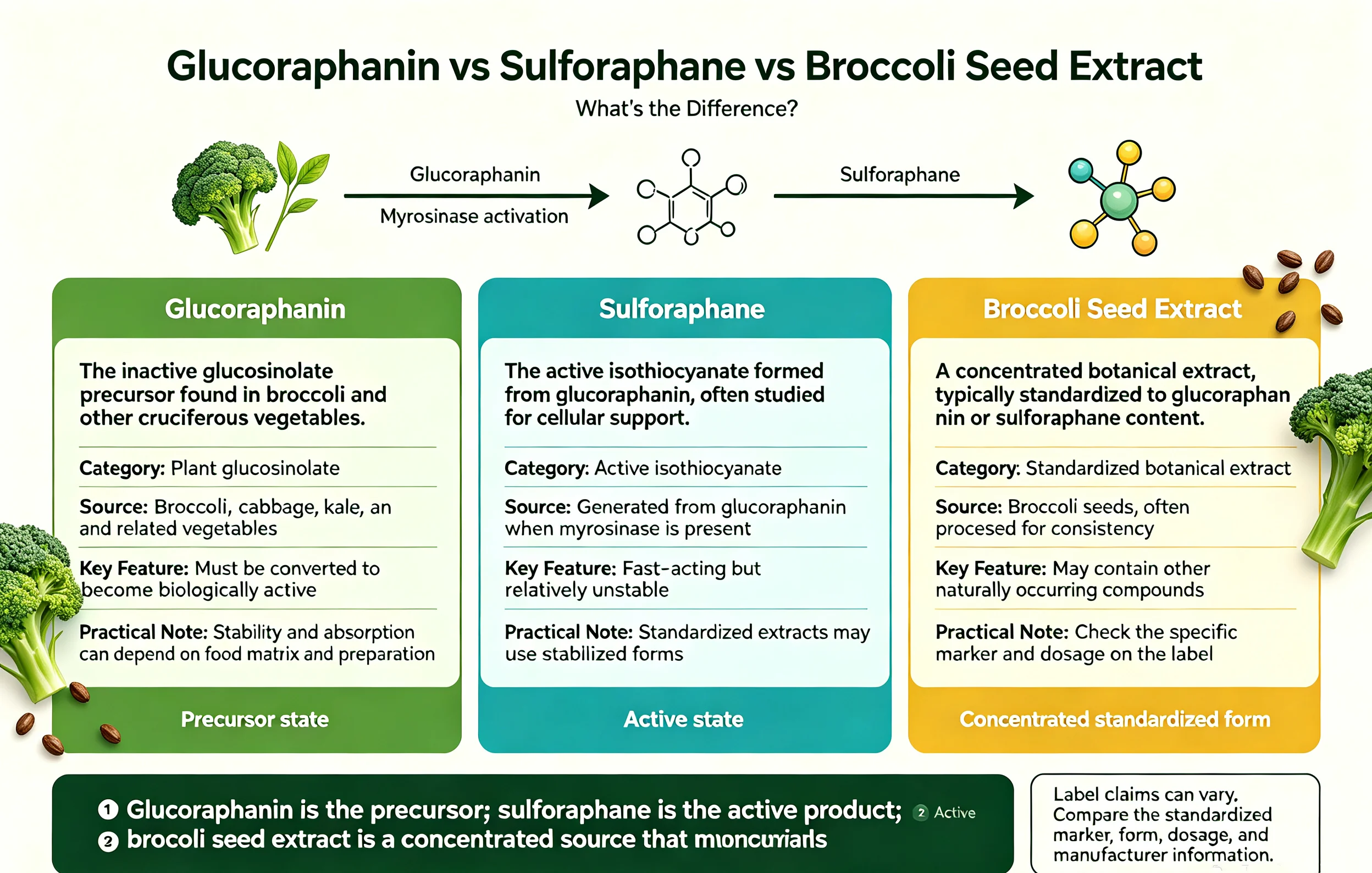
- Glucoraphanin - the stable, heat-resistant precursor to sulforaphane
- Sulforaphane (SFN) - the active isothiocyanate that drives biological activity
Sulforaphane itself is volatile. It degrades rapidly under heat, moisture, and standard manufacturing conditions. That's why high-quality broccoli seed extract is typically standardized to glucoraphanin, which survives processing intact and converts to sulforaphane in vivo through gut microbial myrosinase activity.
Urinary dithiocarbamate recovery studies confirm that 70%–90% of an oral glucoraphanin dose is successfully converted and absorbed - a bioavailability profile that rivals many synthetic compounds.
🔬 The Liver Science: How Sulforaphane Actually Works
The liver connection isn't speculative. Sulforaphane's hepatoprotective effects operate through a clearly defined biochemical cascade, and multiple clinical trials have confirmed meaningful outcomes in human subjects.
The Nrf2 Pathway: The Core Mechanism
Sulforaphane is one of the most potent known activators of Nrf2 (Nuclear factor erythroid 2-related factor 2) - a transcription factor that controls the body's antioxidant and detoxification response.
Here's how it works:
- Sulforaphane reacts with cysteine residues on the Keap1 repressor protein
- This releases Nrf2 to translocate into the cell nucleus
- Nrf2 then binds to the Antioxidant Response Element (ARE)
- This triggers transcription of a battery of cytoprotective liver enzymes
The key liver-protective enzymes induced include:
|
Enzyme |
Liver Function |
|
NQO1 |
Phase II detoxification, quinone reduction |
|
HO-1 |
Anti-inflammatory, cytoprotective |
|
GST (Glutathione S-transferases) |
Carcinogen conjugation and clearance |
|
GCL |
Rate-limiting enzyme in glutathione synthesis |
|
Thioredoxin reductase |
Redox homeostasis |
This enzyme induction profile explains why sulforaphane has been studied extensively in the context of liver detoxification, NAFLD, hepatic inflammation, and chemoprevention.
Phase II Detoxification: Why It Matters for Liver Health
The liver processes thousands of compounds daily - environmental toxins, metabolic byproducts, pharmaceutical residues, and dietary carcinogens. Phase II detoxification is the step where these compounds get conjugated and made water-soluble for excretion.
Sulforaphane directly upregulates glutathione S-transferase (GST) and NQO1 - two of the most critical Phase II enzymes. In practical terms, this means the liver gains greater capacity to neutralize and eliminate harmful compounds before they cause oxidative damage.
Clinical Evidence in Fatty Liver and Hepatic Abnormalities
The clinical data is compelling. A published study in the World Journal of Gastroenterology found that sulforaphane-rich broccoli sprout extract significantly improved hepatic abnormalities in male subjects with fatty liver disease. Liver enzyme markers - including ALT and AST - showed measurable improvement after supplementation.
A 2022 study published in Frontiers in Nutrition further confirmed that daily glucoraphanin supplementation helped maintain liver health in healthy, middle-aged adults with high-normal serum liver enzymes. The researchers concluded that glucoraphanin-enriched broccoli sprout supplements are beneficial for liver function maintenance - not just therapeutic intervention.
A comprehensive 2023 review in Frontiers in Pharmacology summarized the therapeutic potential of sulforaphane across multiple liver disease models, noting its activity against NAFLD, hepatic fibrosis, liver injury, and hepatocellular carcinoma in preclinical and clinical settings.
💊 Dosage: What the Research Supports
Getting the dose right is critical - both for efficacy and for regulatory compliance. Here's what the published literature and current guidelines indicate.
Sulforaphane Dosage Ranges
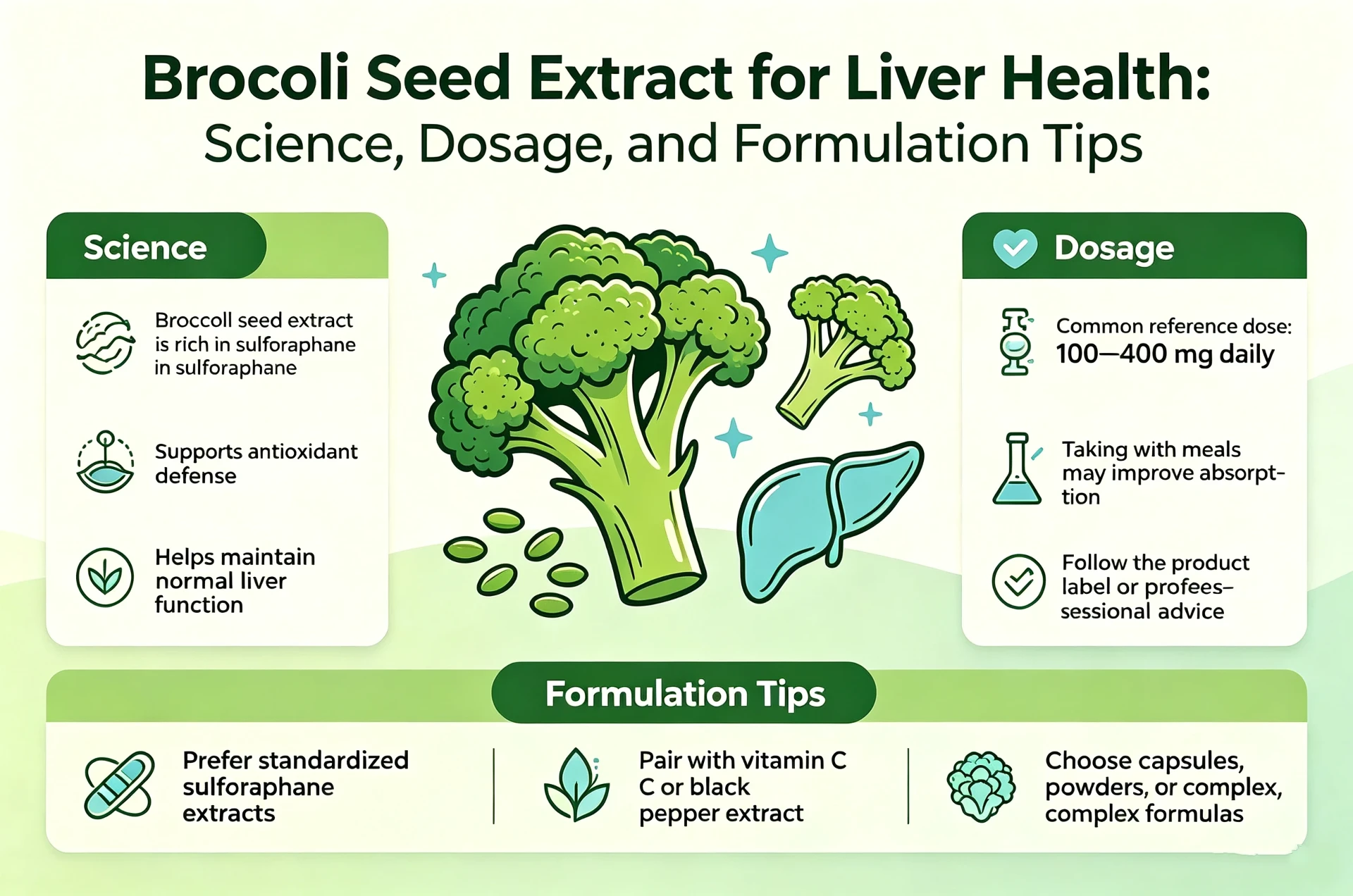
- General liver support / antioxidant: 10–20 mg sulforaphane equivalent per day
- Therapeutic / clinical range: 20–40 mg sulforaphane equivalent per day
- Tolerable Upper Intake Level (TUL): The Chinese Dietary Reference Intakes 2023 established a TUL of 30 mg/day for sulforaphane - the first official regulatory benchmark for this compound
For glucoraphanin-standardized extracts, dosing is calculated based on conversion efficiency. With a 70%–90% in vivo conversion rate, a glucoraphanin 13% extract at a standard 300–500 mg capsule dose delivers a clinically relevant sulforaphane equivalent.
Dosage by Application Type
|
Application |
Recommended Daily Dose |
Suggested Format |
|
Liver detox support |
10–20 mg SFN equivalent |
Capsule, softgel |
|
NAFLD / fatty liver |
20–40 mg SFN equivalent |
Capsule, tablet |
|
Antioxidant / cellular defense |
10–15 mg SFN equivalent |
Powder blend, RTD |
|
Functional food / beverage |
5–10 mg SFN equivalent |
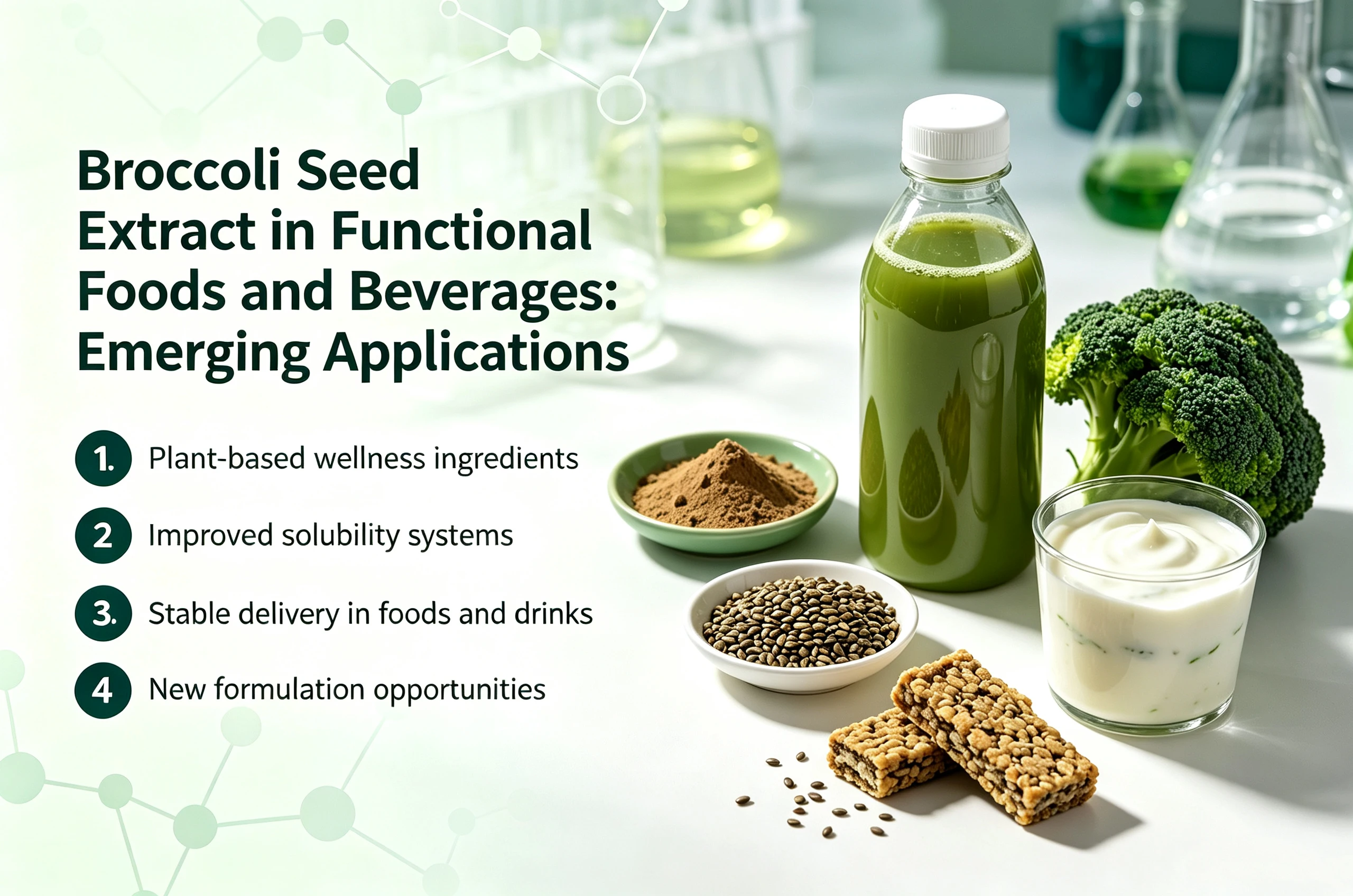
Water-soluble powder |
⚗️ Formulation Tips for B2B Buyers and Product Developers
Sulforaphane's instability is the central formulation challenge. These practical strategies help you protect potency from manufacturing through to shelf life.
Choose Glucoraphanin Over Free Sulforaphane
Free sulforaphane degrades quickly. Glucoraphanin is thermally stable and survives tablet compression, encapsulation, and standard storage conditions. For most finished product formats, a glucoraphanin-standardized extract is the technically superior choice.
Co-Formulate with Myrosinase Sources
Glucoraphanin conversion to sulforaphane depends on gut microbial myrosinase. You can enhance conversion efficiency by co-formulating with small amounts of:
- Fresh broccoli sprout powder (contains active myrosinase)
- Radish seed powder (high myrosinase activity)
- Mustard seed powder
Published research supports this co-administration strategy as a reliable way to boost bioavailability without increasing the glucoraphanin dose.
Stability and Packaging Considerations
- Store bulk extract at cool, dry conditions (below 25°C, <60% RH)
- Use nitrogen-flushed, moisture-barrier packaging (foil-lined pouches or vacuum aluminum containers)
- Accelerated stability testing at 37°C / 75% RH for 90 days should show >95% potency retention for quality-grade material
- Water-soluble grades (clarity ≥98%) are suitable for transparent beverage applications without cloudiness
Avoid These Common Formulation Mistakes
- High-heat processing (above 60°C) destroys both sulforaphane and myrosinase activity
- Colorimetric assay reliance - always demand HPLC-verified certificates of analysis; colorimetric methods overestimate glucosinolate content
- Ignoring gut microbiome variability - consider myrosinase co-formulation for populations with compromised gut flora (elderly, post-antibiotic users)
📋 What to Look for When Sourcing Broccoli Seed Extract
For procurement managers and product developers, ingredient quality varies widely in this category. These are the non-negotiable checkpoints:
- HPLC-verified specifications - not UV or colorimetric assay
- Dual standardization - glucoraphanin AND sulforaphane declared separately
- Accelerated stability data - 90-day minimum, with potency retention figures
- cGMP manufacturing - essential for US and EU market compliance
- Third-party heavy metal and solvent testing - batch-level COA, not generic certificates
- Clinical use track record - has the extract been used in published human trials?
Ingredients used as intervention materials in peer-reviewed clinical trials carry a significantly higher level of scientific credibility - and that credibility transfers directly to your product's marketing claims.
🏭 Why Jiuyuan Bio's Broccoli Seed Extract Stands Out
At Jiuyuan Bio, our broccoli seed extract is manufactured at our 70,000 m² facility at the foot of China's Qinling Mountains - a region with ideal conditions for high-glucosinolate cultivar production.
Our product line covers three HPLC-verified specifications:
- SFN-1 - Sulforaphane ≥1%
- SFN-5 - Sulforaphane ≥5%
- GR-13 - Glucoraphanin ≥13%
- Custom ultra-high potency grades above 10% available on request
Our extract has been used as the intervention ingredient in over 3,000 global SCI papers and 130+ clinical trials, including ongoing RCTs at institutions such as Johns Hopkins, Imperial College London, and Karolinska Institutet.
We hold 12 international certifications - including ISO 9001, FSSC 22000, cGMP, USDA/EU Organic, Halal, and Kosher - covering every major market your finished product may enter.
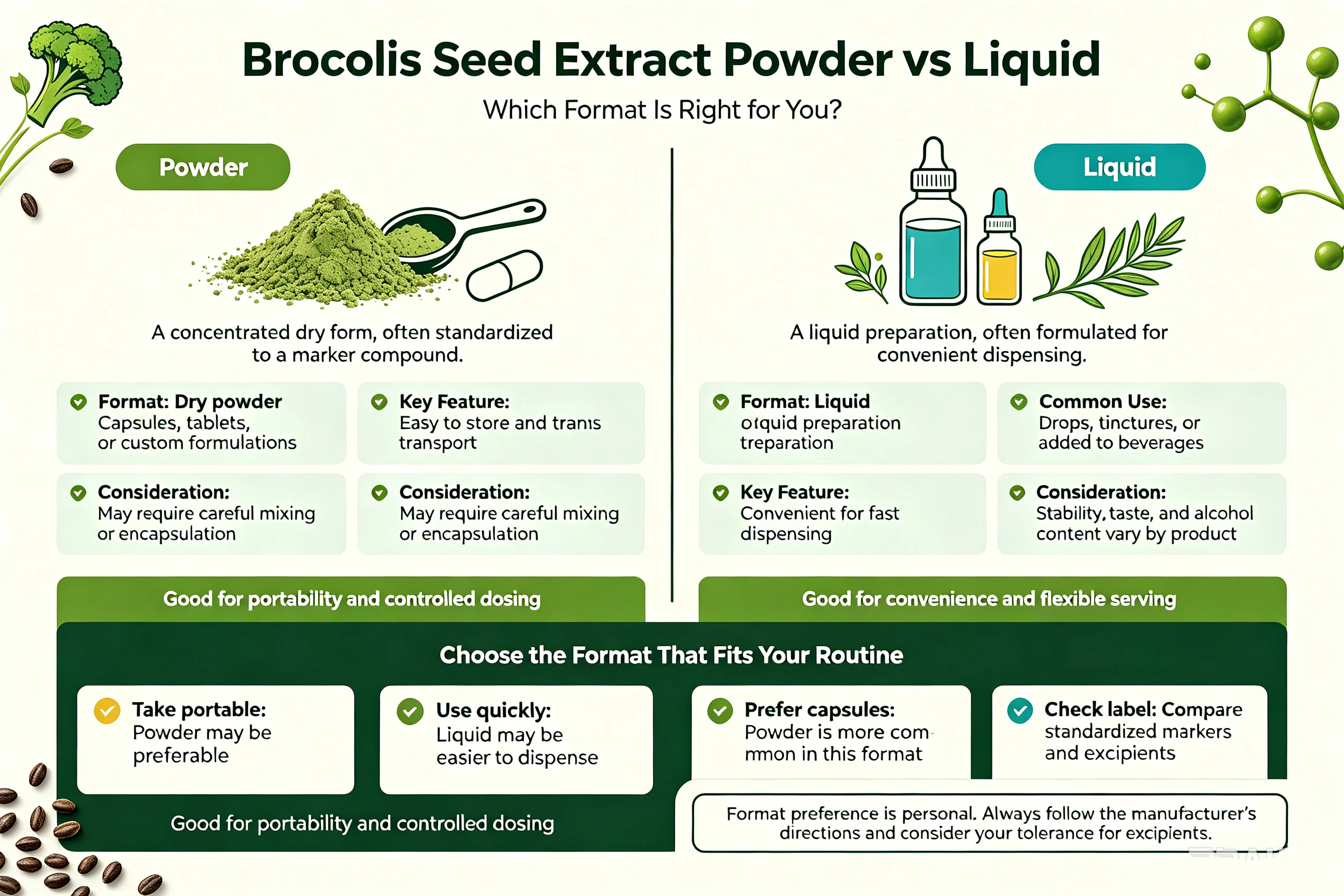
Both water-soluble and oil-soluble formats are available, with packaging from 1 kg foil-lined tin canisters to 25 kg vacuum aluminum buckets. OEM capsule and sachet formats are fully supported.
💡 Key Takeaways for Formulators and Buyers
- Broccoli seed extract delivers liver health benefits through a well-defined Nrf2 → Phase II enzyme induction pathway
- Glucoraphanin is the preferred form for stable finished products; it converts efficiently to sulforaphane in vivo
- Clinical evidence supports use in fatty liver, hepatic enzyme normalization, and liver detoxification
- Effective dosing ranges from 10–40 mg sulforaphane equivalent per day, depending on the application
- Always demand HPLC-verified COAs and accelerated stability data from your supplier
- Co-formulation with myrosinase sources meaningfully boosts bioavailability
Ready to source pharmaceutical-grade broccoli seed extract for your next liver health formulation?
Visit our product page at jiuyuanbio.com or reach out directly to our technical team at info@jiuybiotech.com. We provide batch-specific COAs, sample requests, and full formulation support - backed by 13 years of botanical extract manufacturing experience.
📚 References
- Kikuchi, M., Ushida, Y., Shiozawa, H., et al. (2015). Sulforaphane-rich broccoli sprout extract improves hepatic abnormalities in male subjects. World Journal of Gastroenterology, 21(43), 12457–12467.
- Murakami, A., & Ohigashi, H. (2022). Effects of broccoli sprout supplements enriched in glucoraphanin on liver health in middle-aged adults. Frontiers in Nutrition, 9, 1077271.
- Fahey, J. W., Zhang, Y., & Talalay, P. (1997). Broccoli sprouts: An exceptionally rich source of inducers of enzymes that protect against chemical carcinogens. Proceedings of the National Academy of Sciences, 94(19), 10367–10372.
- Gao, J., Xu, W., Lu, J., et al. (2023). Therapeutic potential of sulforaphane in liver diseases: A review. Frontiers in Pharmacology, 14, 1256029.
- Shapiro, T. A., Fahey, J. W., Dinkova-Kostova, A. T., et al. (2006). Safety, tolerance, and metabolism of broccoli sprout glucosinolates and isothiocyanates: A clinical phase I study. Nutrition and Cancer, 55(1), 53–62.
- Chinese Nutrition Society. (2023). Chinese Dietary Reference Intakes 2023. Sulforaphane Tolerable Upper Intake Level (TUL) Specification. People's Medical Publishing House.