If you've been watching the gut health ingredient space, you've probably noticed broccoli seed extract showing up more frequently in serious formulations. And for good reason. The compound it delivers - sulforaphane - has quietly accumulated one of the most compelling research profiles of any phytochemical in the nutraceutical toolkit. We're not talking about vague "digestive support" claims. We're talking about documented, mechanism-identified activity in the gut that formulators and procurement teams need to understand before their competitors do.
What Exactly Is Broccoli Seed Extract?
Broccoli seed extract comes from the seeds of Brassica oleracea var. italica. The seeds are significantly richer in glucoraphanin - the sulforaphane precursor - than mature broccoli florets or sprouts.
Here's how the chemistry works:
- Seeds contain glucoraphanin, a glucosinolate stored in plant vacuoles
- The enzyme myrosinase is stored separately in the same tissue
- When the seed is disrupted (chewing, grinding, or enzymatic processing), myrosinase hydrolyzes glucoraphanin into sulforaphane
- Sulforaphane is the bioactive compound responsible for the observed health effects
This conversion is not automatic. It depends on myrosinase activity - which is why the extraction and standardization method matters enormously for final product efficacy.
Standardized broccoli seed extract is typically expressed as a percentage of glucoraphanin (the stable precursor) rather than sulforaphane itself, because sulforaphane is chemically unstable and degrades rapidly post-conversion. A well-manufactured extract standardized to 0.5%–13% glucoraphanin, with verified myrosinase activity or co-delivered myrosinase, gives formulators a reliable and measurable bioactive input.
Why the Gut? Understanding Sulforaphane's Digestive Terrain
You might associate sulforaphane primarily with liver detoxification or cancer chemoprotection. Those associations are well-documented. But the gut is where sulforaphane's story gets particularly interesting - and where the most actionable formulation opportunities exist right now.
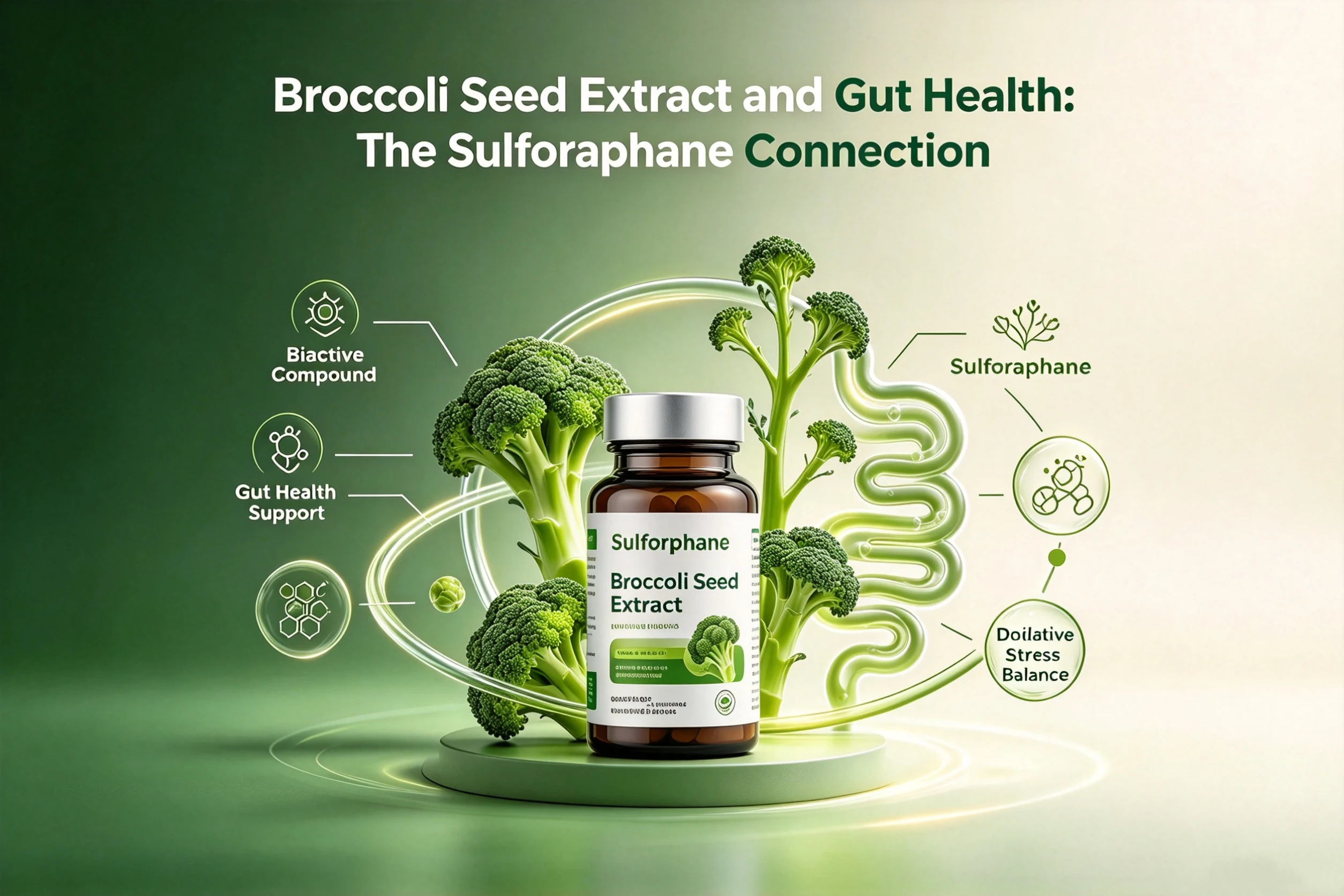
The gastrointestinal tract is sulforaphane's primary absorption site and, critically, its first site of biological action. Before sulforaphane reaches systemic circulation, it interacts directly with:
- Intestinal epithelial cells lining the gut wall
- Gut-resident bacteria that can both produce and metabolize sulforaphane
- Mucosal immune cells concentrated in gut-associated lymphoid tissue (GALT)
This means the gut is not just a transit route for sulforaphane - it is an active target tissue.
Sulforaphane and H. pylori: The Most Clinically Documented Gut Connection
Helicobacter pylori infects an estimated 44% of the global population. It is the primary causative agent of peptic ulcers and a classified Group 1 carcinogen for gastric cancer. Standard triple antibiotic therapy achieves eradication rates of 70–85%, but antibiotic resistance is eroding those numbers in many regions.
This is where sulforaphane's clinical record becomes commercially relevant.
A meta-analysis examining eight clinical trials found that sulforaphane - consumed as broccoli sprouts or standardized extract - demonstrated statistically significant suppressive activity against H. pylori infection. The proposed mechanisms include:
- Direct bacteriostatic activity against H. pylori strains, including antibiotic-resistant isolates
- Nrf2 pathway activation in gastric epithelial cells, upregulating cytoprotective enzymes
- Reduction of gastric mucosal inflammation via NF-κB pathway modulation
These are not theoretical mechanisms. They have been observed in human gastric biopsy tissue following broccoli sprout consumption in controlled clinical settings.
For formulators developing gut health products, digestive support supplements, or functional food ingredients targeting the growing H. pylori awareness market - this is a differentiated, evidence-backed positioning angle that most plant extracts simply cannot match.
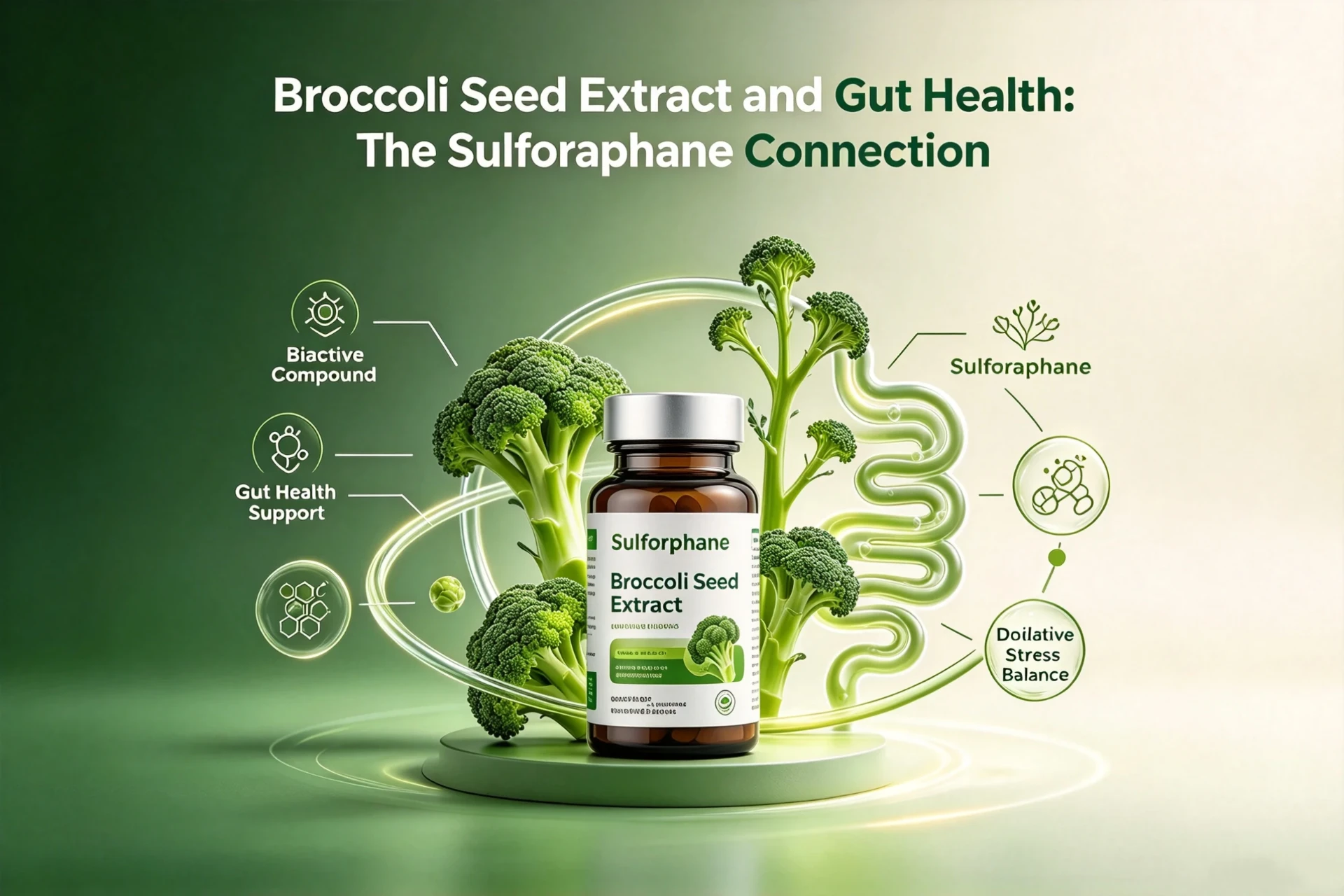
The Nrf2 Pathway: Sulforaphane's Master Switch for Gut Protection
One mechanism deserves particular attention because it explains so much of sulforaphane's broad gut-protective activity: Nrf2 activation.
Nrf2 (Nuclear factor erythroid 2-related factor 2) is a transcription factor that acts as the cell's master regulator of antioxidant and cytoprotective gene expression. When sulforaphane enters intestinal cells, it modifies the Keap1 protein that normally keeps Nrf2 inactive. This releases Nrf2 to migrate to the nucleus and switch on a battery of protective genes.
The downstream effects in gut tissue include:
- Upregulation of glutathione S-transferases - detoxification enzymes that neutralize reactive oxygen species
- Induction of heme oxygenase-1 (HO-1) - an anti-inflammatory enzyme with mucosal protective properties
- Enhancement of tight junction protein expression - supporting intestinal barrier integrity
- Reduction of pro-inflammatory cytokine production (IL-6, TNF-α, IL-1β) in intestinal epithelial cells
Intestinal barrier dysfunction - sometimes called "leaky gut" - is an upstream driver of conditions ranging from irritable bowel syndrome (IBS) to inflammatory bowel disease (IBD). Sulforaphane's ability to reinforce tight junction integrity makes broccoli seed extract a scientifically credible ingredient for barrier-support formulations.
Sulforaphane and the Gut Microbiome: An Emerging Research Frontier
The relationship between sulforaphane and the gut microbiome is more nuanced than a simple "prebiotic" narrative. Here's what the current evidence actually shows:
Gut bacteria influence sulforaphane bioavailability. Myrosinase-like enzymes produced by certain gut bacteria - including Lactobacillus and Bifidobacterium species - can convert glucoraphanin to sulforaphane in the colon. This means individuals with healthier, more diverse microbiomes may extract more sulforaphane from a given dose of broccoli seed extract.
Sulforaphane selectively modulates microbial populations. Early research suggests sulforaphane may exert mild antimicrobial pressure that preferentially targets pathogenic bacteria over commensal species - though this area requires more human clinical data before definitive formulation claims can be made responsibly.
The bidirectional relationship matters for dosing strategy. A new human clinical trial with glucoraphanin-rich broccoli seed extract demonstrated that co-delivering active myrosinase (from mustard seed) doubled sulforaphane bioavailability compared to glucoraphanin alone - a finding with direct implications for how you specify and dose this ingredient in finished products.
Bioavailability: The Variable That Separates Good Formulations from Great Ones
Here's a practical reality that procurement teams and formulators need to internalize: not all broccoli seed extracts deliver equivalent sulforaphane bioavailability.
The key variables are:
|
Factor |
Impact on Bioavailability |
|
Glucoraphanin content (% standardization) |
Determines the theoretical maximum sulforaphane yield |
|
Myrosinase activity (intact vs. heat-inactivated) |
Heat processing destroys myrosinase; co-delivered enzyme needed |
|
Particle size of extract |
Finer particle size increases surface area for enzymatic conversion |
|
Gut microbiome composition (end consumer) |
Variable; individual differences in colonic conversion |
|
Co-administration with myrosinase source |
Mustard seed powder doubles bioavailability in clinical data |
The clinical trial published via EIN Presswire confirmed that a glucoraphanin-rich broccoli seed extract co-delivered with active myrosinase achieved a 2× increase in sulforaphane plasma levels compared to glucoraphanin extract alone.
This has direct implications for product specification. When sourcing broccoli seed extract, always clarify:
- Is the extract standardized by glucoraphanin content (HPLC-verified)?
- Has myrosinase been preserved or inactivated during processing?
- Is the supplier able to provide bioavailability data or reference clinical studies?
What B2B Buyers Should Know Before Sourcing Broccoli Seed Extract
If you're an ingredient buyer, product developer, or formulation manager evaluating broccoli seed extract for a gut health product line, here are the non-negotiable checkpoints:
Standardization method matters more than the number on the label. A "10% sulforaphane" claim on a spec sheet is almost always misleading - sulforaphane degrades within hours of formation. Reputable suppliers standardize to glucoraphanin content (stable, measurable by HPLC) and provide conversion data.
Ask for third-party HPLC verification. In-house COA data is a starting point, not a finish line. Request third-party lab verification of glucoraphanin content, especially for high-potency grades.
Understand the extraction method. Solvent extraction, supercritical CO₂, and aqueous extraction each produce different glucosinolate profiles and myrosinase activity levels. Know what you're buying.
Verify allergen and contaminant status. Broccoli seed extract should be free of common allergens. Pesticide residue compliance (EU MRL panel) is essential for European market supply. Heavy metals testing (ICP-MS) is non-negotiable for any reputable supplier.
Request stability data. Glucoraphanin is relatively stable, but the extract's overall quality can degrade under heat, light, and humidity. Ask for 12-month or 24-month stability data before committing to a production run.
Formulation Applications for Broccoli Seed Extract in Gut Health Products
The versatility of broccoli seed extract makes it a strong candidate across multiple product formats:
- Capsules and softgels - Most common delivery format; protects glucoraphanin from premature conversion
- Sachets and stick packs - Gut health powders for direct dissolution; pair well with prebiotic fibers
- Functional beverages - Requires water-dispersible grade; pH stability testing recommended
- Combination gut health formulas - Pairs effectively with probiotics, digestive enzymes, and zinc carnosine for comprehensive mucosal support
- Medical nutrition products - Relevant for IBD-adjacent formulations where mucosal barrier support is a clinical objective
The ingredient's clean label profile - plant-derived, non-GMO, free of major allergens - aligns well with the premium gut health positioning that commands higher retail price points in the current market.
The Gut Health Market Opportunity: Why This Ingredient Deserves a Closer Look
The global gut health supplement market was valued at over $15 billion and continues to expand. Consumer awareness of the gut-brain axis, intestinal permeability, and microbiome diversity has moved from niche wellness communities into mainstream health consciousness.
Within this market, evidence-differentiated ingredients - those with peer-reviewed clinical support rather than generic "digestive wellness" positioning - command premium pricing and stronger retailer acceptance.
Broccoli seed extract with documented sulforaphane activity sits squarely in this category. Its H. pylori suppression data, Nrf2-mediated barrier protection mechanism, and emerging microbiome interaction research give it a multi-angle clinical narrative that most gut health ingredients lack.
For B2B buyers building product lines that need to stand up to regulatory scrutiny, retail buyer due diligence, and increasingly sophisticated consumer questions - this is an ingredient worth serious evaluation.
Why Source Broccoli Seed Extract from Jiuyuan Biotech?
At Jiuyuan Biotech, we manufacture standardized broccoli seed extract with verified glucoraphanin content, full traceability from raw material to finished goods, and a complete regulatory documentation package for US and EU market supply.
Our broccoli seed extract is:
- HPLC-standardized to verified glucoraphanin content
- Non-GMO, Kosher, and Halal certified
- Tested for pesticide residues (EU MRL panel, 200+ compounds)
- Supported by batch-specific COA, MSDS, and heavy metals reports
- Available in multiple potency grades to match your formulation requirements
Explore our full product specification at jiuyuanbio.com/standard-plant-extract-powder/broccoli-seed-extract.html.
Ready to request a sample or discuss your formulation requirements? Reach out to our technical team directly at info@jiuybiotech.com. We respond to all ingredient inquiries within one business day.
References
- Fahey, J. W., Haristoy, X., Dolan, P. M., Kensler, T. W., Scholtus, I., Stephenson, K. K., Talalay, P., & Lozniewski, A. (2002). Sulforaphane inhibits extracellular, intracellular, and antibiotic-resistant strains of Helicobacter pylori and prevents benzo[a]pyrene-induced stomach tumors. Proceedings of the National Academy of Sciences, 99(11), 7610–7615.
- Yanaka, A. (2018). Daily intake of broccoli sprouts normalizes bowel habits in human healthy subjects. Journal of Clinical Biochemistry and Nutrition, 62(1), 75–82.
- Vermeulen, M., Klöpping-Ketelaars, I. W. A. A., van den Berg, R., & Vaes, W. H. J. (2008). Bioavailability and kinetics of sulforaphane in humans after consumption of cooked versus raw broccoli. Journal of Agricultural and Food Chemistry, 56(22), 10505–10509.
- Houghton, C. A. (2019). Sulforaphane: Its "coming of age" as a clinically relevant nutraceutical in the prevention and treatment of chronic disease. Oxidative Medicine and Cellular Longevity, 2019, Article 2716870.
- Dinkova-Kostova, A. T., & Kostov, R. V. (2012). Glucosinolates and isothiocyanates in health and disease. Trends in Molecular Medicine, 18(6), 337–347.
- Shapiro, T. A., Fahey, J. W., Wade, K. L., Stephenson, K. K., & Talalay, P. (2001). Chemoprotective glucosinolates and isothiocyanates of broccoli sprouts: Metabolism and excretion in humans. Cancer Epidemiology, Biomarkers & Prevention, 10(5), 501–508.