Walk through any premium skincare trade show today, and you'll notice something shifting. The ingredients generating the most serious conversations among cosmetic chemists and product developers are no longer the familiar retinol-and-hyaluronic-acid staples. Broccoli seed extract has entered those conversations - and it's staying there. Not because of clever marketing, but because the science behind its active compound, sulforaphane, has been quietly building a case for skin health that is difficult to ignore.
This article breaks down what the research actually shows, how sulforaphane works at the cellular level, and why cosmetic formulators and B2B ingredient buyers are paying closer attention to this extract than ever before.
What Makes Broccoli Seed Extract Different from Other Plant Extracts?
Most botanical extracts deliver antioxidants passively - they donate electrons to neutralize free radicals and then they're done. Broccoli seed extract operates differently.
Its primary bioactive, sulforaphane, is an isothiocyanate that activates the body's own internal antioxidant machinery rather than simply acting as an external scavenger. This distinction matters enormously in skin applications.
Here's the core mechanism:
- Broccoli seeds contain glucoraphanin, a stable glucosinolate precursor
- Contact with the enzyme myrosinase (present in the seed or gut bacteria) converts glucoraphanin to sulforaphane
- Sulforaphane penetrates skin cells and modifies Keap1, a protein that normally suppresses Nrf2
- Nrf2 (Nuclear factor erythroid 2-related factor 2) is released and migrates to the cell nucleus
- Nrf2 activates a cascade of cytoprotective and antioxidant genes - including glutathione S-transferases, heme oxygenase-1, and NAD(P)H quinone oxidoreductase 1
The result is a sustained, amplified antioxidant response that outlasts the presence of sulforaphane itself. A single topical application can upregulate protective gene expression for 48–72 hours - a durability that no direct-acting antioxidant can match.
This is why cosmetic scientists describe sulforaphane as an indirect antioxidant - and why broccoli seed extract occupies a mechanistically distinct tier from vitamin C serums or green tea polyphenols.
UV Protection: The Most Clinically Documented Skin Benefit
If there is one area where broccoli seed extract's skin credentials are unambiguous, it is photoprotection.
Researchers at Johns Hopkins University conducted a landmark study applying broccoli sprout-derived extract topically to human skin before UV exposure. At the highest doses tested, UV-induced redness and inflammation were reduced by an average of 37%. Critically, the extract was protective even when applied after UV exposure had already occurred - suggesting both preventive and reactive protective mechanisms.
The mechanisms behind this photoprotection include:
- Nrf2-mediated upregulation of phase II detoxification enzymes that neutralize UV-generated reactive oxygen species (ROS)
- Inhibition of AP-1 protein pathways that drive UV-induced carcinogenic signaling in keratinocytes
- Reduction of cyclobutane pyrimidine dimer (CPD) formation - a direct marker of UV-induced DNA damage in skin cells
- Suppression of NF-κB inflammatory signaling triggered by UV irradiation
What makes this particularly relevant for cosmetic formulators is the nature of the protection. Sulforaphane does not absorb UV radiation the way a chemical sunscreen does. It works at the cellular level, protecting the machinery inside skin cells from the downstream consequences of UV exposure. This positions broccoli seed extract as a compelling adjunct to SPF formulations - not a replacement, but a meaningful enhancement to photoprotective product lines.
A phase I clinical study involving healthy volunteers confirmed that topically applied broccoli sprout extracts containing glucoraphanin and sulforaphane were safe and well-tolerated on human skin, with no significant adverse reactions reported.
Anti-Aging Applications: Where Sulforaphane Meets Skin Longevity
The connection between oxidative stress and skin aging is well-established. Chronic UV exposure, environmental pollution, and metabolic byproducts generate ROS that damage collagen fibers, degrade elastin, and accelerate cellular senescence. Sulforaphane addresses this at the source.
Collagen protection via Nrf2 activation
Nrf2 activation in dermal fibroblasts upregulates antioxidant defenses that protect the collagen synthesis machinery from oxidative disruption. Fibroblasts exposed to sulforaphane in laboratory settings show improved survival under oxidative stress conditions and maintained collagen production capacity.
Keratin expression modulation
A clinical study at Johns Hopkins investigated the expression of keratin proteins in skin before and after sulforaphane application. Keratins are structural proteins essential for skin barrier integrity and mechanical resilience. Altered keratin expression patterns are associated with premature skin aging and compromised barrier function. The study examined whether sulforaphane could normalize these expression patterns - a finding with direct implications for barrier-repair and anti-aging formulations.
Melanogenesis regulation
Emerging research suggests sulforaphane may modulate melanin synthesis pathways, with potential applications in brightening and hyperpigmentation formulations. While this area requires more human clinical data, the mechanistic basis - Nrf2 interaction with melanocyte signaling - is scientifically plausible and actively being investigated.
Pollution defense
Urban skin aging driven by particulate matter (PM2.5) and polycyclic aromatic hydrocarbons (PAHs) is a growing formulation category. Sulforaphane's ability to upregulate phase II detoxification enzymes that metabolize PAHs makes broccoli seed extract a scientifically credible ingredient for urban defense and anti-pollution product positioning.
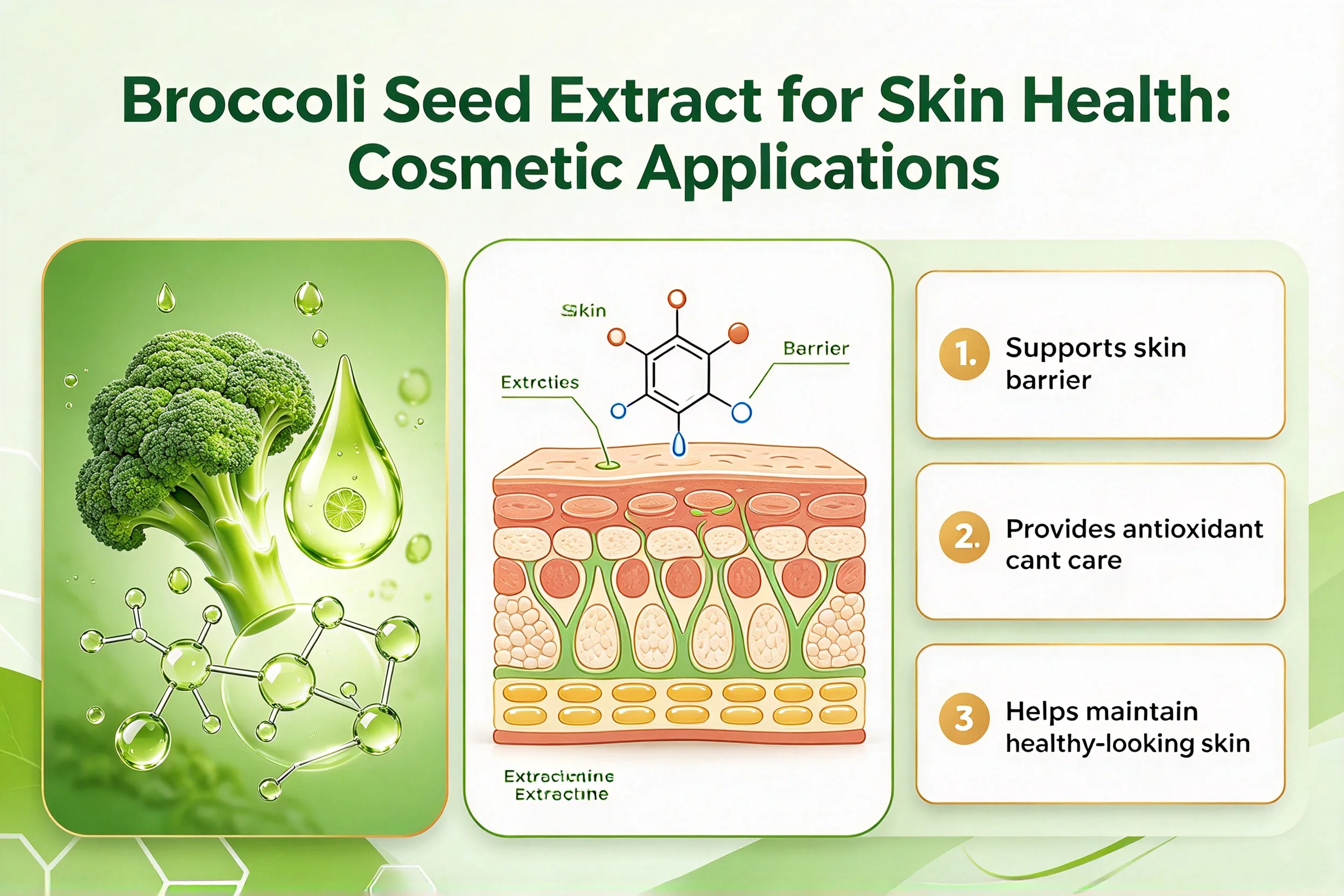
Skin Barrier Support: The Structural Argument
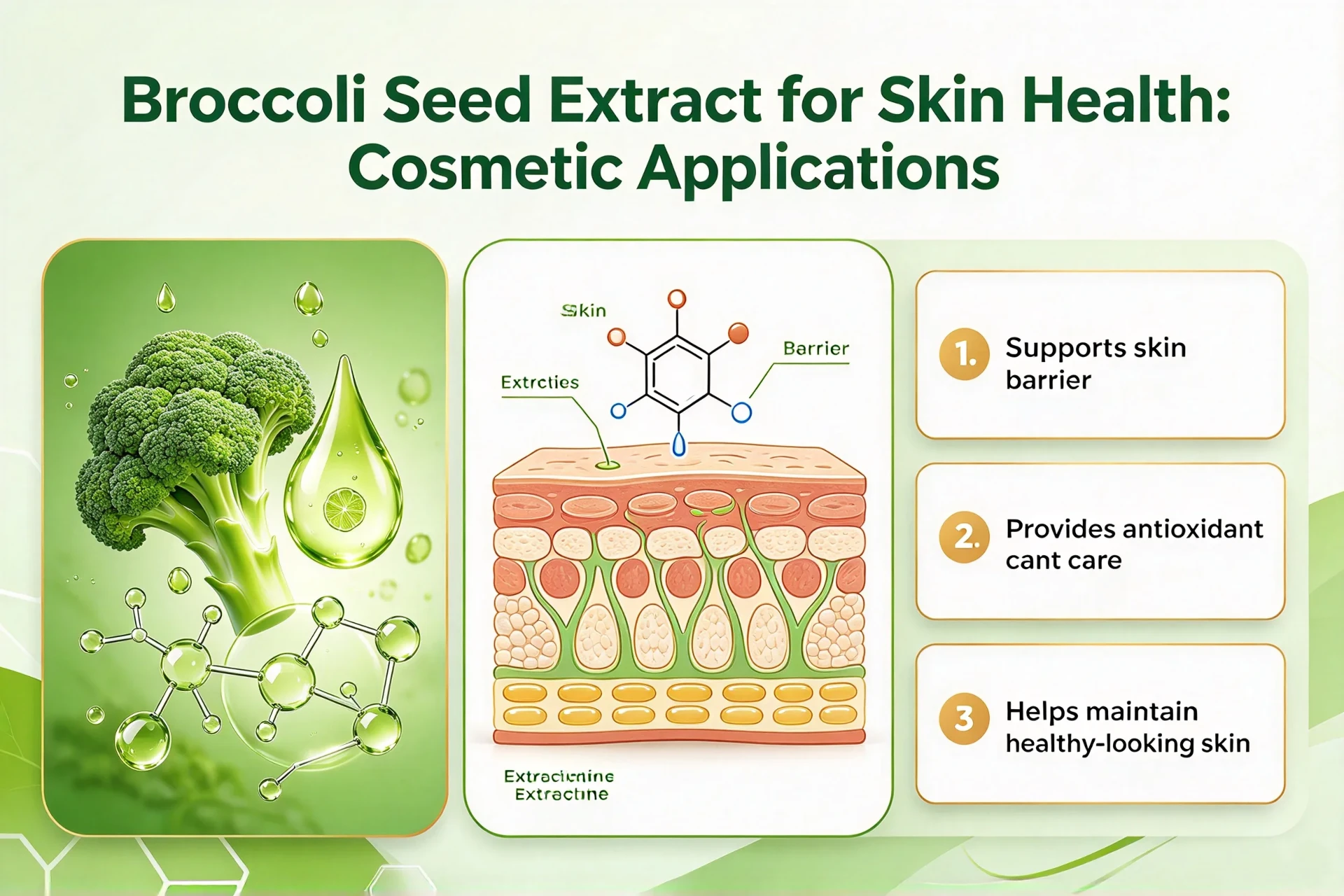
Healthy skin barrier function depends on the integrity of the stratum corneum - the outermost layer of the epidermis - and the tight junction network beneath it. Barrier disruption is the upstream driver of conditions including atopic dermatitis, contact dermatitis, and chronic dry skin.
Sulforaphane supports barrier integrity through several converging mechanisms:
- Tight junction protein upregulation - claudin and occludin expression is enhanced under Nrf2 activation, reinforcing the paracellular barrier
- Ceramide synthesis support - Nrf2-regulated pathways intersect with sphingolipid metabolism, supporting the lipid matrix of the stratum corneum
- Anti-inflammatory activity - reduction of IL-6, TNF-α, and IL-1β in keratinocytes reduces the inflammatory disruption of barrier architecture
- Antimicrobial peptide induction - sulforaphane has been shown to upregulate defensin expression in skin cells, supporting the skin's innate immune defense layer
For formulators developing products targeting sensitive skin, eczema-prone skin, or post-procedure recovery, this multi-mechanism barrier support profile is a meaningful formulation asset.
Skin Cancer Chemoprotection: Understanding the Research Boundaries
New research indicates that sulforaphane may help prevent certain forms of skin cancer - specifically by inhibiting cancer-causing pathways and activating protective cellular responses in UV-exposed keratinocytes.
The mechanisms identified include:
- AP-1 pathway inhibition - AP-1 is a transcription factor that promotes tumor progression in UV-damaged skin cells
- Nrf2-mediated cytoprotection - protecting keratinocytes from the genotoxic consequences of UV exposure
- Induction of apoptosis in pre-malignant cells while sparing normal keratinocytes
It is important to be precise about what this means for cosmetic applications. These findings come from preclinical and early clinical research contexts. Cosmetic products cannot carry disease-prevention claims in most regulatory jurisdictions. However, this research base strengthens the scientific credibility of broccoli seed extract as a premium cosmetic ingredient and supports its use in products positioned around photoprotection and skin resilience.
Formulators and brand owners should work with their regulatory teams to identify appropriate claim language within their target market's framework.
Formulation Considerations for Cosmetic Applications
Getting sulforaphane activity into a finished cosmetic product is not as straightforward as adding a plant extract to a formula. Here are the practical realities:
Stability is the primary challenge.
Sulforaphane itself is chemically unstable - it degrades within hours of formation. The preferred approach is to formulate with glucoraphanin-standardized broccoli seed extract and include a myrosinase source (or rely on skin microbiome myrosinase activity) for in-situ conversion. Some advanced delivery systems encapsulate glucoraphanin and myrosinase separately to prevent premature conversion during shelf life.
pH sensitivity matters.
Myrosinase activity is optimal at mildly acidic pH (5.5–6.5) - which conveniently aligns with skin's natural pH range. This makes topical application a favorable environment for glucoraphanin-to-sulforaphane conversion.
Penetration depth affects efficacy.
Sulforaphane's relatively low molecular weight (~177 Da) supports reasonable skin penetration into the viable epidermis and upper dermis - the layers where Nrf2 activation produces the most relevant cosmetic outcomes.
Recommended formulation formats:
- Serums and ampoules - High-concentration delivery; ideal for anti-aging and photoprotection positioning
- Day creams with SPF - Synergistic combination with UV filters for comprehensive photoprotection
- Post-sun recovery products - Leverages the documented post-UV protective activity
- Barrier repair creams - Pairs well with ceramides, niacinamide, and panthenol
- Anti-pollution urban defense products - Strong positioning for city-dwelling consumer demographics
- Eye contour treatments - Thin skin around the eye is particularly vulnerable to oxidative aging
What Cosmetic Ingredient Buyers Should Verify Before Sourcing
If you're evaluating broccoli seed extract for a cosmetic application, these are the specification points that separate a well-manufactured ingredient from a commodity powder:
Glucoraphanin standardization (HPLC-verified)
This is the non-negotiable baseline. Any supplier who cannot provide HPLC data for glucoraphanin content is not operating at a professional cosmetic ingredient standard.
Myrosinase activity status
Is myrosinase preserved or heat-inactivated? This determines whether the extract can generate sulforaphane in-situ or requires a co-delivered enzyme system.
Heavy metals and pesticide residue compliance
Brassica crops are susceptible to cadmium accumulation. ICP-MS heavy metals testing and EU MRL-compliant pesticide residue screening are essential for any cosmetic-grade ingredient.
Microbial testing
Cosmetic-grade extracts should meet USP <61>/<62> or equivalent microbial limits. Total aerobic count, yeast/mold, and absence of specified pathogens should be documented per batch.
Skin safety data
Request any available dermal safety data, irritation testing results, or references to published safety assessments for the specific extract grade you're evaluating.
The Market Opportunity: Why Now Is the Right Time
The global cosmeceutical market is projected to continue strong growth, driven by consumer demand for science-backed, ingredient-transparent skincare. Within this market, several converging trends favor broccoli seed extract:
- Clean beauty - plant-derived, non-GMO, free of synthetic actives
- Bioactive skincare - consumers and retailers increasingly demand mechanism-identified claims
- Anti-pollution positioning - one of the fastest-growing skincare categories in urban markets
- Ingestible beauty - broccoli seed extract works in both topical and oral beauty supplement formats, enabling dual-channel product strategies
Brands that build formulations around broccoli seed extract today are positioning ahead of a category that is moving from early-adopter to mainstream. The clinical evidence base is already there. The formulation science is maturing. The market timing is favorable.
Source Broccoli Seed Extract from Jiuyuan Biotech
At Jiuyuan Biotech, we supply cosmetic and nutraceutical-grade broccoli seed extract standardized to verified glucoraphanin content, with full batch documentation for US and EU market compliance.
Our broccoli seed extract delivers:
- HPLC-verified glucoraphanin standardization across multiple potency grades
- Heavy metals testing (ICP-MS, full panel)
- EU MRL-compliant pesticide residue screening
- Batch-specific COA, MSDS, and microbiological reports
- Non-GMO, Kosher, and Halal certification
- Responsive technical support for formulation and regulatory queries
View the full product specification: 👉 jiuyuanbio.com/standard-plant-extract-powder/broccoli-seed-extract.html
Have a formulation question or ready to request a sample? Contact our team at info@jiuybiotech.com. We respond to all cosmetic ingredient inquiries within one business day.
References
- Talalay, P., Fahey, J. W., Healy, Z. R., Wehage, S. L., Benedict, A. L., Min, C., & Dinkova-Kostova, A. T. (2007). Sulforaphane mobilizes cellular defenses that protect skin against damage by UV radiation. Proceedings of the National Academy of Sciences, 104(44), 17500–17505.
- Dinkova-Kostova, A. T., Jenkins, S. N., Fahey, J. W., Ye, L., Wehage, S. L., Liby, K. T., Stephenson, K. K., Wade, K. L., & Talalay, P. (2006). Protection against UV-light-induced skin carcinogenesis in SKH-1 high-risk mice by sulforaphane-containing broccoli sprout extracts. Cancer Letters, 240(2), 243–252.
- Egner, P. A., Chen, J. G., Zarth, A. T., Ng, D. K., Wang, J. B., Kensler, K. H., Jacobson, L. P., Muñoz, A., Johnson, J. L., Groopman, J. D., Fahey, J. W., Talalay, P., Zhu, J., Chen, T. Y., Qian, G. S., Carmella, S. G., Hecht, S. S., & Kensler, T. W. (2014). Rapid and sustainable detoxication of airborne pollutants by broccoli sprout beverage: Results of a randomized clinical trial in China. Cancer Prevention Research, 7(8), 813–823.
- Houghton, C. A. (2019). Sulforaphane: Its "coming of age" as a clinically relevant nutraceutical in the prevention and treatment of chronic disease. Oxidative Medicine and Cellular Longevity, 2019, Article 2716870.
- Dinkova-Kostova, A. T., & Talalay, P. (2008). Direct and indirect antioxidant properties of inducers of cytoprotective proteins. Molecular Nutrition & Food Research, 52(S1), S128–S138.
- Nair, S., Doh, S. T., Chan, J. Y., Kong, A. N., & Cai, L. (2008). Regulatory potential for concerted modulation of Nrf2- and Nfkb1-mediated gene expression in inflammation and carcinogenesis. British Journal of Cancer, 99(12), 2070–2082.