Broccoli has earned its reputation as a nutritional powerhouse. But here is a question most people never think to ask: is eating broccoli actually the best way to get broccoli's benefits?
When you look at the research on broccoli seed extract, the answer might surprise you. The seed - not the floret - is where the real concentration of bioactive compounds lives. And the difference is not marginal. It is dramatic enough to change how supplement formulators, nutritionists, and health-conscious brands think about this ingredient entirely.
Let's break down what the science actually shows.
What Makes Broccoli Healthy in the First Place?
Most people credit broccoli's health benefits to its vitamins and fiber. Those matter. But the compound that has attracted the most serious scientific attention is sulforaphane - an isothiocyanate with documented effects on cellular defense, detoxification, and inflammation.
Here is the catch: broccoli does not actually contain sulforaphane directly.
It contains glucoraphanin - a stable precursor compound. When you chew raw broccoli, an enzyme called myrosinase converts glucoraphanin into sulforaphane. That conversion is what drives the biological activity researchers have been studying for decades.
So the real question is not "how much broccoli did you eat?" It is:
- How much glucoraphanin was in that broccoli?
- Was the myrosinase still active?
- How much sulforaphane actually made it into your bloodstream?
Those three variables explain why eating broccoli and taking a standardized extract are not the same thing at all.
The Glucoraphanin Gap: Seeds vs. Florets
Here is where the numbers get interesting.
Glucoraphanin does not distribute evenly across the broccoli plant. It accumulates at its highest concentration during the seed and early sprout stages - then declines sharply as the plant matures into the florets you find in grocery stores.
Studies on glucoraphanin distribution across the broccoli plant lifecycle show that mature florets contain roughly 0.1–0.5% glucoraphanin on a dry weight basis. High-quality broccoli seed extracts, by contrast, can be standardized to 10–20% glucoraphanin by HPLC analysis.
That is a concentration difference of 20 to 100 times - not a rounding error.
To put it practically: a single 400 mg capsule of a 13% glucoraphanin seed extract delivers more glucoraphanin than you would get from eating 80–100 grams of raw broccoli florets. And that is before accounting for the cooking problem.
Why Cooking Broccoli Undermines the Whole Point
This is the part that frustrates a lot of nutrition-minded people when they first hear it.
Myrosinase is heat-sensitive. The enzyme begins to denature around 60°C and is largely inactivated by the time broccoli reaches typical cooking temperatures. Steaming, boiling, roasting - all of them compromise myrosinase activity to varying degrees.
A crossover trial measuring sulforaphane bioavailability found that raw broccoli delivered approximately 37% sulforaphane bioavailability from its glucoraphanin content. Cooked broccoli dropped to just 3.4%.
That is a tenfold reduction - from a single cooking step.
Without active myrosinase, your gut microbiome becomes the fallback conversion route. Some bacteria in the colon can perform a limited version of this conversion. But the efficiency is inconsistent, varies significantly between individuals, and is generally far lower than enzymatic conversion in the upper digestive tract.
So if you are eating steamed broccoli three times a week hoping to get meaningful sulforaphane exposure - you are likely getting a fraction of what you think.
What Broccoli Seed Extract Does Differently
A well-manufactured broccoli seed extract addresses both problems at once:
High glucoraphanin concentration - standardized by HPLC to a verified percentage, so you know exactly what you are working with.
Preserved myrosinase activity - when processed at low temperatures (below 45°C), the native myrosinase enzyme remains active in the finished powder, enabling efficient in-vivo sulforaphane generation.
Consistent dosing - unlike whole vegetables, where glucoraphanin content varies by variety, season, soil conditions, and storage time, a standardized extract delivers the same active compound concentration in every batch.
For supplement formulators and product developers, this consistency is not a luxury. It is a regulatory and commercial necessity. You cannot build a structure/function claim around an ingredient whose active content you cannot measure or control.
The Myrosinase Co-Administration Breakthrough
One of the most compelling recent developments in this space involves a formulation strategy that pushes sulforaphane bioavailability even higher.
A randomized crossover clinical trial published in Nature Scientific Reports (2025) tested what happens when you combine a glucoraphanin-rich broccoli seed extract with exogenous myrosinase from mustard seed powder. The results were striking.
Sulforaphane bioavailability - measured by urinary metabolite excretion - increased from 19% to 40% when exogenous myrosinase was added. That is a doubling of conversion efficiency in a human clinical setting.
This finding has practical implications for formulators. A myrosinase-inactivated glucoraphanin extract (which is more shelf-stable) combined with a small amount of mustard seed myrosinase can outperform a standard active-enzyme extract in terms of actual sulforaphane delivery.
It also reinforces a broader point: the science of broccoli-derived ingredients is still actively evolving, and suppliers who track this research can give their customers a genuine formulation edge.
How NRF2 Activation Connects Everything
You cannot talk about sulforaphane without talking about NRF2 - the transcription factor that sits at the center of this ingredient's documented health effects.
NRF2 (Nuclear Factor Erythroid 2-Related Factor 2) is sometimes called the "master regulator of cellular defense." When sulforaphane activates NRF2, it triggers the expression of over 200 cytoprotective genes - including enzymes involved in:
- Antioxidant defense (glutathione synthesis, superoxide dismutase upregulation)
- Phase II detoxification (glutathione S-transferases, NQO1)
- Anti-inflammatory signaling (HO-1 induction, NF-κB suppression)
- Neuroprotection (reduction of neuroinflammatory markers)
This is why sulforaphane research spans such a wide range of health applications - from liver health and cardiovascular support to cognitive function and skin protection. The NRF2 pathway is active in virtually every tissue type.
Eating a bowl of cooked broccoli activates this pathway to some degree. A standardized broccoli seed extract, properly dosed, activates it with far greater precision and reproducibility.
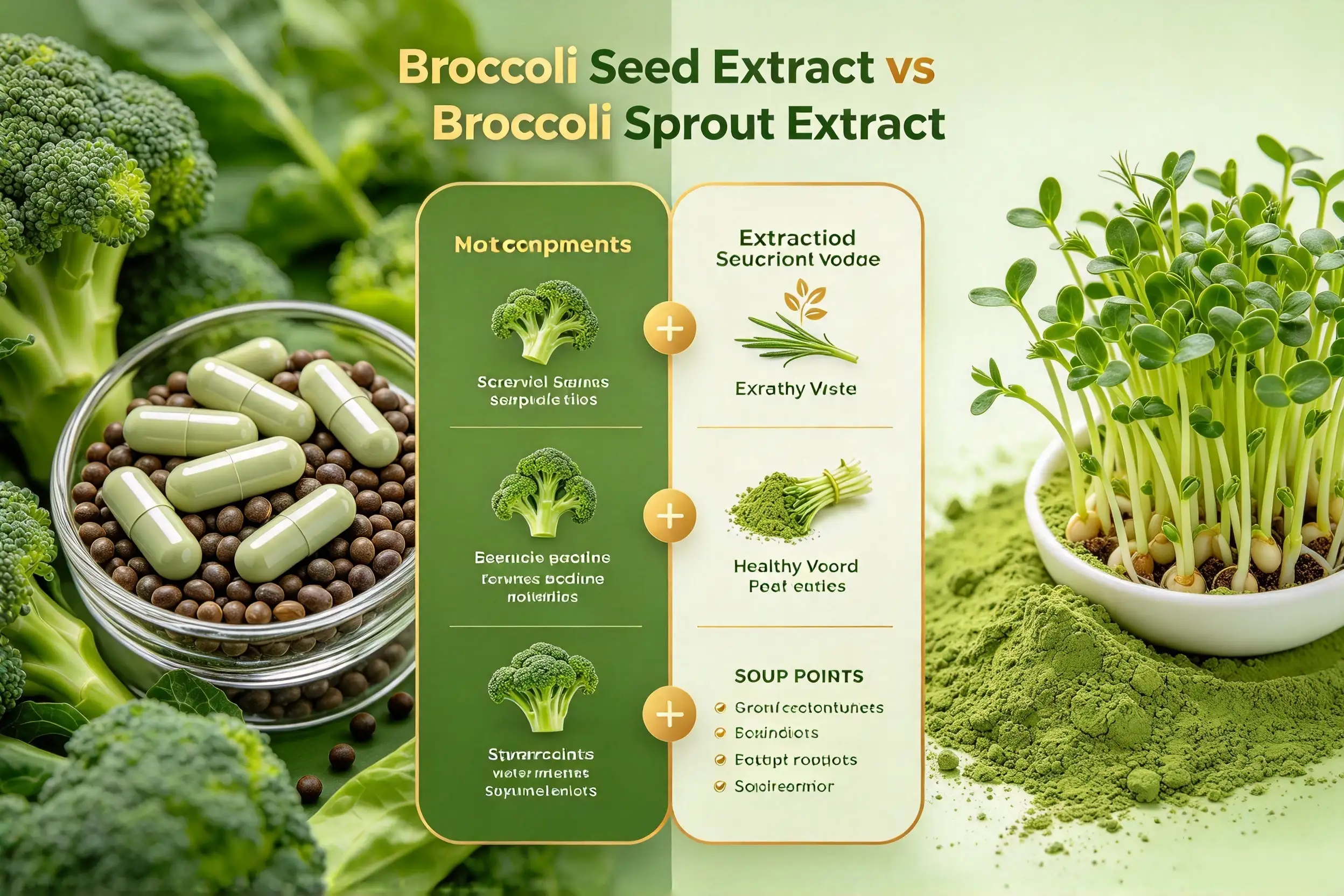
Broccoli Seed Extract vs. Broccoli Sprout Extract: A Quick Distinction
Buyers sometimes ask whether broccoli sprout extract is equivalent to seed extract. They are related but not identical.
|
Seed Extract |
Sprout Extract |
|
|
Glucoraphanin level |
Highest (10–20% in extract) |
High, but harder to standardize |
|
Myrosinase |
Preserved (low-temp processing) |
Present in raw sprouts |
|
Commercial scalability |
✅ High |
⚠️ More variable |
|
Shelf stability |
✅ 24 months |
⚠️ 12–18 months |
|
Sensory profile |
Mild, manageable |
Pungent, sulfurous |
Sprout extract is a credible ingredient with its own research base. But seed extract offers more consistent standardization, better shelf stability, and a more manageable flavor profile for most supplement and functional food applications.
What B2B Buyers Should Look for in a Supplier
If you are sourcing broccoli seed extract for a supplement or functional food formulation, these are the non-negotiable checkpoints:
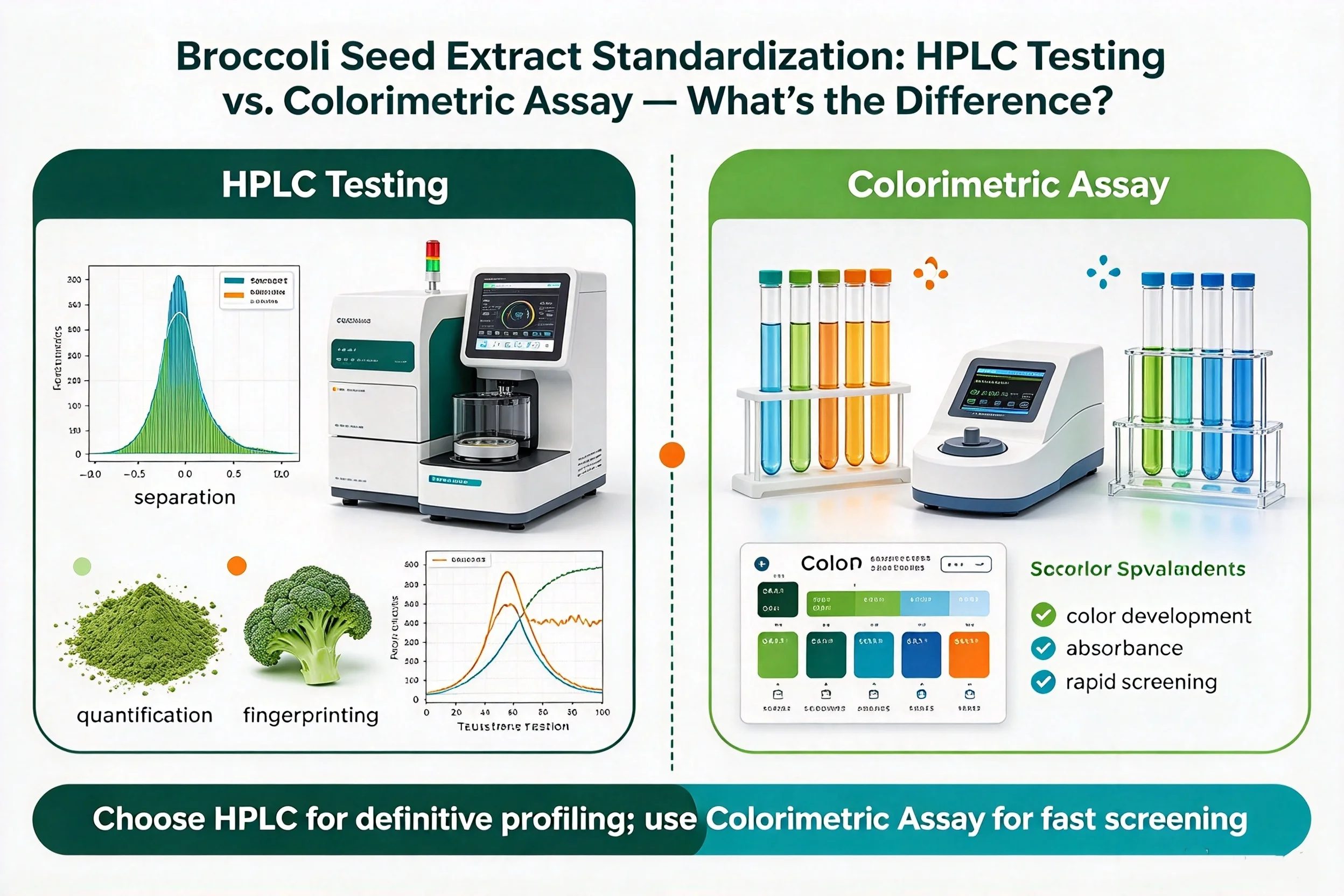
1. HPLC glucoraphanin assay - not UV total glucosinolates. UV methods measure all glucosinolates collectively. A product showing "20% total glucosinolates" by UV may contain only 8–10% glucoraphanin by HPLC. The HPLC figure is the only one that correlates directly to sulforaphane-generating potential.
2. Myrosinase activity documentation. If sulforaphane bioavailability matters to your formulation, you need a myrosinase activity report (expressed in units per gram) - not just a processing temperature claim.
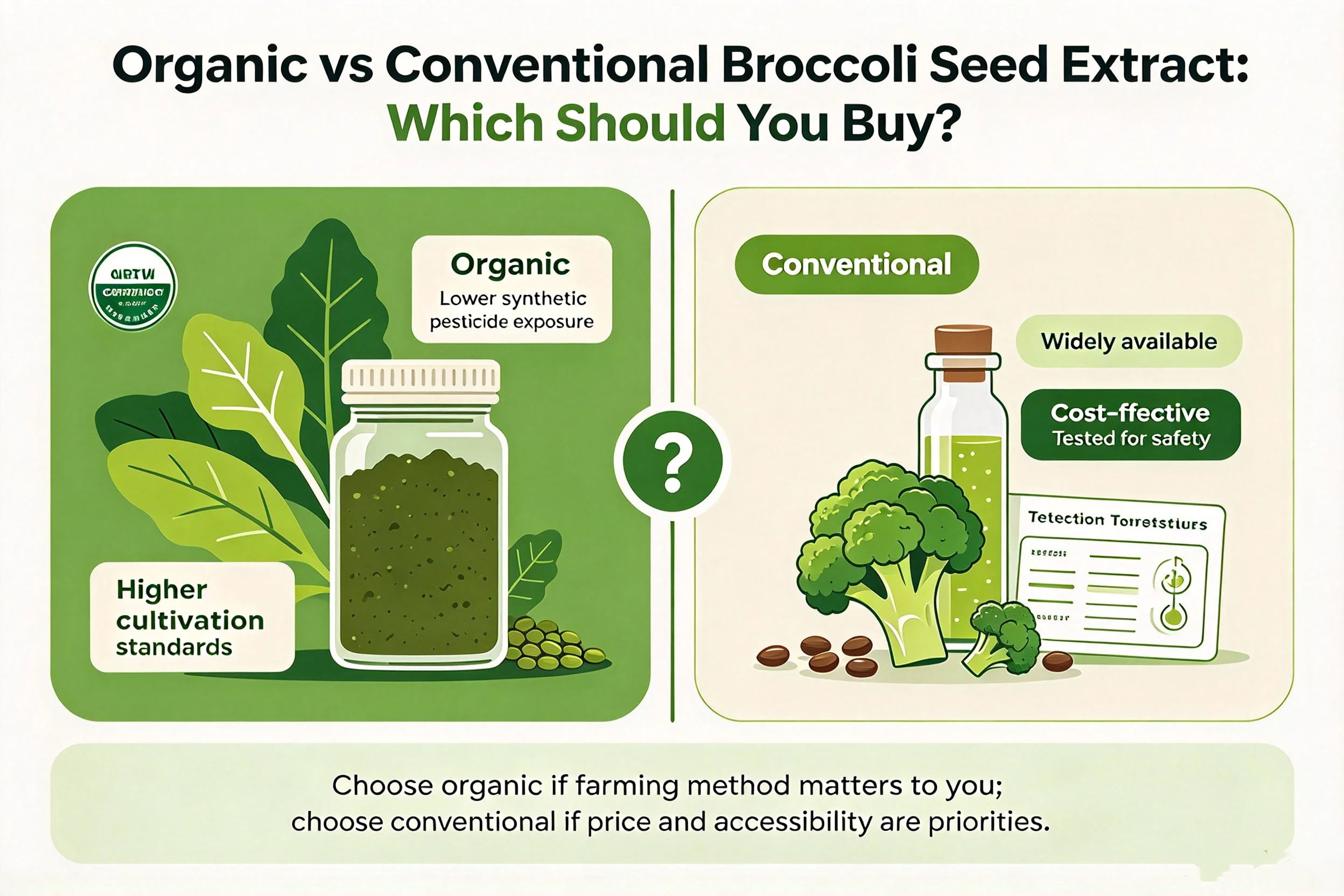
3. Organic certification with farm-level traceability. Brassica crops carry significant pesticide residue risk. An EU Reg. 396/2005-compliant pesticide panel from a third-party accredited laboratory is the verification standard - not the certificate alone.
4. Erucic acid declaration. Broccoli seeds contain erucic acid. Proper cold-press pre-treatment reduces it to acceptable levels, but EU buyers in particular should request erucic acid data for regulatory compliance.
5. Nitrogen-flushed packaging. Glucosinolates degrade under oxidative conditions. Any supplier shipping broccoli seed extract in non-nitrogen-flushed packaging is compromising the active content before it reaches your facility.
The Honest Answer
So - is broccoli seed extract better than eating broccoli?
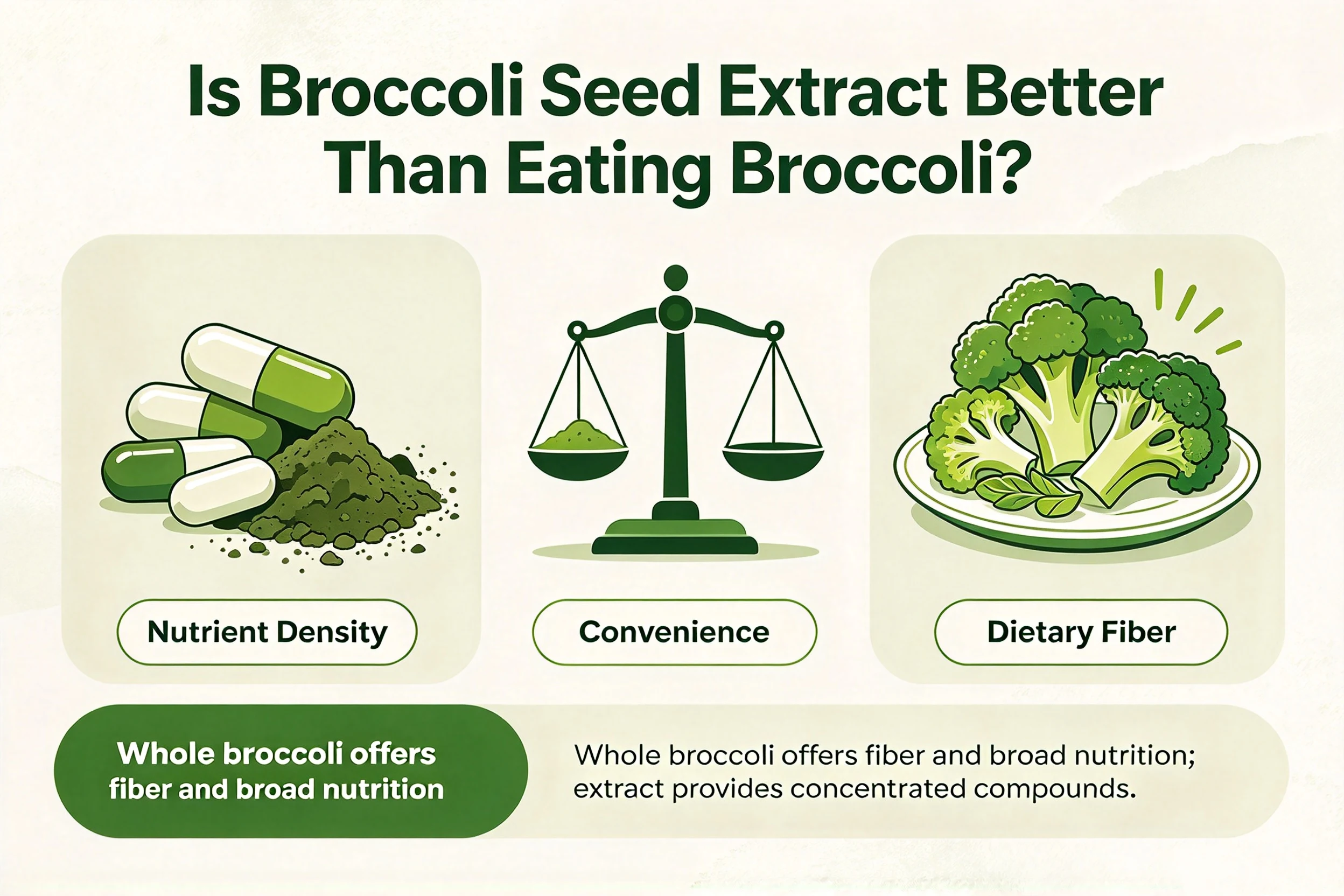
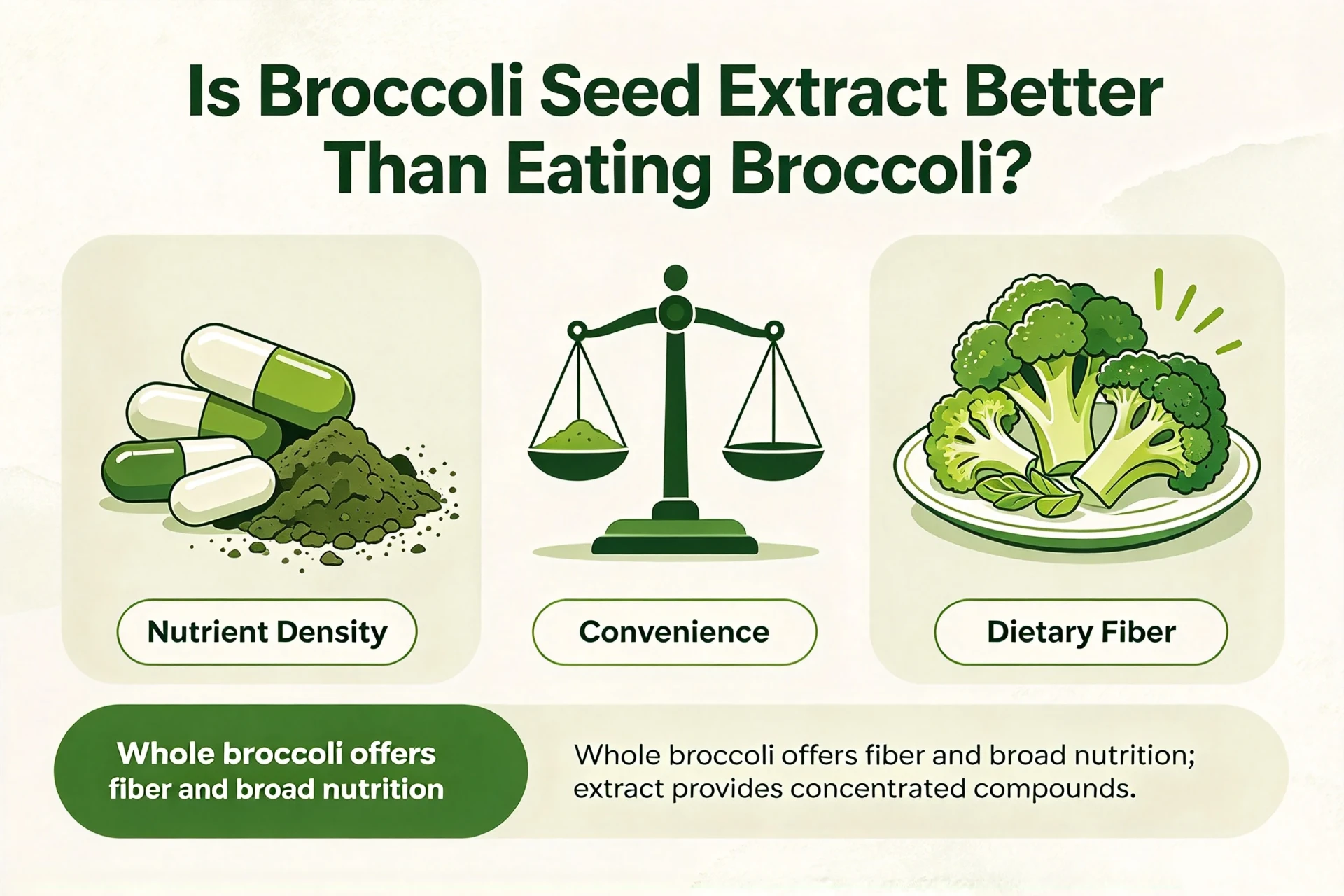
For general nutrition: Whole broccoli wins. It delivers fiber, vitamins, minerals, and a broad phytochemical matrix that no extract fully replicates.
For targeted sulforaphane delivery: Seed extract wins - and it is not particularly close. The glucoraphanin concentration advantage, combined with consistent myrosinase activity and precise dosing, makes standardized seed extract categorically more effective for supplement applications.
The two are not competing products. They serve different purposes. But if your goal is to build a supplement formulation around the NRF2 pathway, glucoraphanin-standardized broccoli seed extract is the only format that gives you the control and consistency to do it properly.
Work With a Supplier Who Understands the Science
At Jiuyuan Biotech, we supply certified organic Broccoli Seed Extract standardized to verified HPLC glucoraphanin content (10%, 13%, and 20% grades), with active-myrosinase and myrosinase-inactivated formats available for different formulation strategies.
Our extract is USDA Organic and EU Organic certified, ISO 9001 and FSSC 22000 compliant, and backed by full batch documentation - COA, heavy metal reports, pesticide residue panels, and myrosinase activity data - for every commercial shipment.
If you are developing a product in the antioxidant, detox, hormonal health, or cognitive wellness space and want an ingredient that holds up under regulatory scrutiny, we would be glad to send samples and documentation.
📧 Reach our technical sales team at info@jiuybiotech.com
🌐 Learn more at www.jiuyuanbio.com
References
- Fahey, J. W., Zhang, Y., & Talalay, P. (1997). Broccoli sprouts: An exceptionally rich source of inducers of enzymes that protect against chemical carcinogens. Proceedings of the National Academy of Sciences, 94(19), 10367–10372.
- Shapiro, T. A., Fahey, J. W., Wade, K. L., Stephenson, K. K., & Talalay, P. (2001). Chemoprotective glucosinolates and isothiocyanates of broccoli sprouts: Metabolism and excretion in humans. Cancer Epidemiology, Biomarkers & Prevention, 10(5), 501–508.
- Vermeulen, M., Klöpping-Ketelaars, I. W., van den Berg, R., & Vaes, W. H. (2008). Bioavailability and kinetics of sulforaphane in humans after consumption of cooked versus raw broccoli. Journal of Agricultural and Food Chemistry, 56(22), 10505–10509.
- Dinkova-Kostova, A. T., & Talalay, P. (2008). Direct and indirect antioxidant properties of inducers of cytoprotective proteins. Molecular Nutrition & Food Research, 52(S1), S128–S138.
- Angeloni, C., Leoncini, E., Bevilacqua, M., Maurizio, S., Hrelia, P., & Hrelia, S. (2009). Modulation of phase II enzymes by sulforaphane: Implications for its cardioprotective potential. Journal of Agricultural and Food Chemistry, 57(12), 5615–5622.
- Bahadoran, Z., Mirmiran, P., & Azizi, F. (2013). Dietary polyphenols as potential nutraceuticals in management of diabetes: A review. Journal of Diabetes & Metabolic Disorders, 12(1), 43. (Includes glucosinolate-rich crucifer extracts in metabolic health context.)