If you source ingredients for food, supplement, or cosmetic manufacturing, you've likely seen both yellow turmeric powder and turmeric extract powder listed as options. They share the same botanical origin - Curcuma longa - but they are fundamentally different ingredients. Confusing the two leads to wrong specifications, failed label claims, and costly reformulations. This guide breaks down every key difference so your procurement team can make the right call from the start.
What Exactly Is Yellow Turmeric Powder?
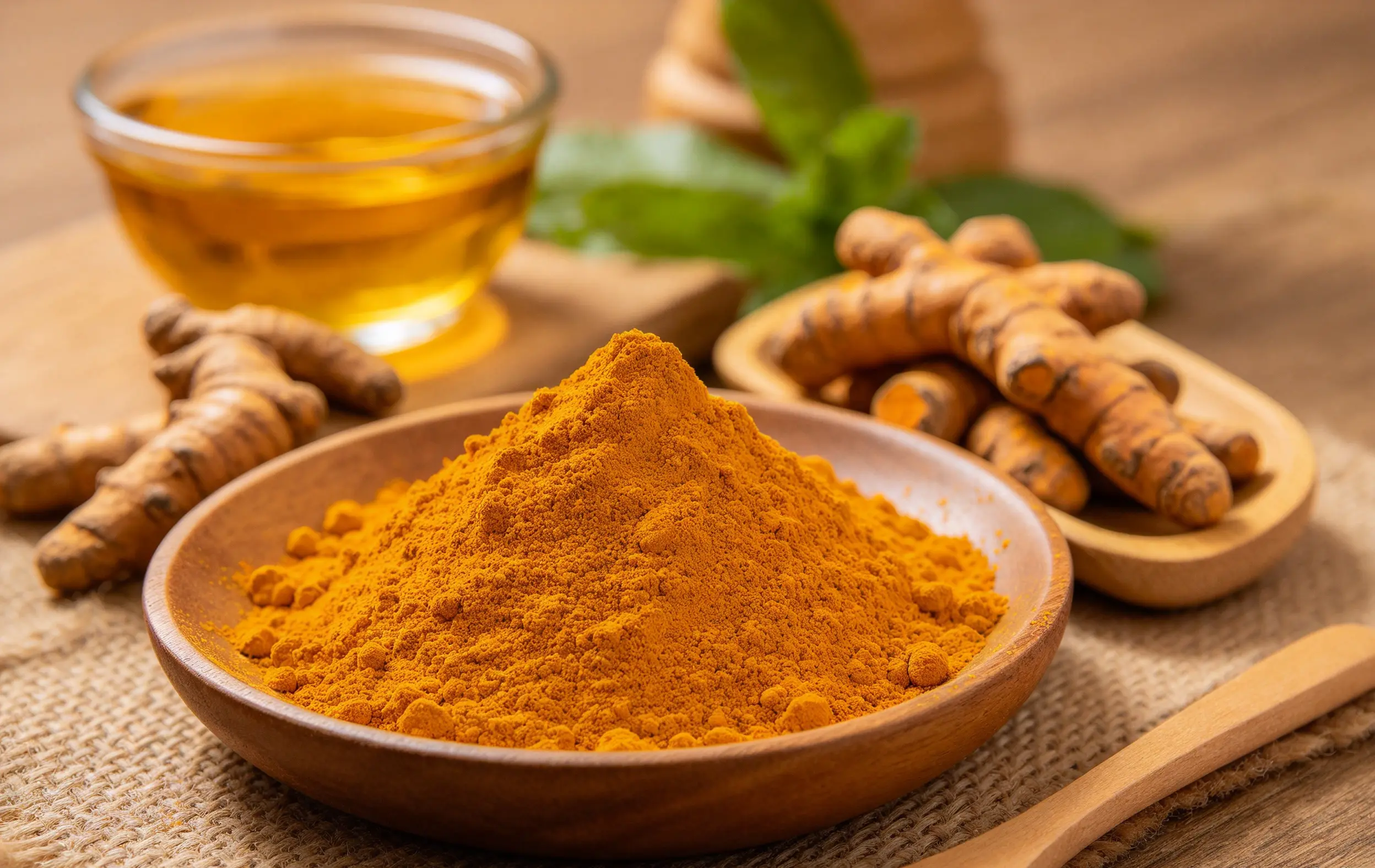
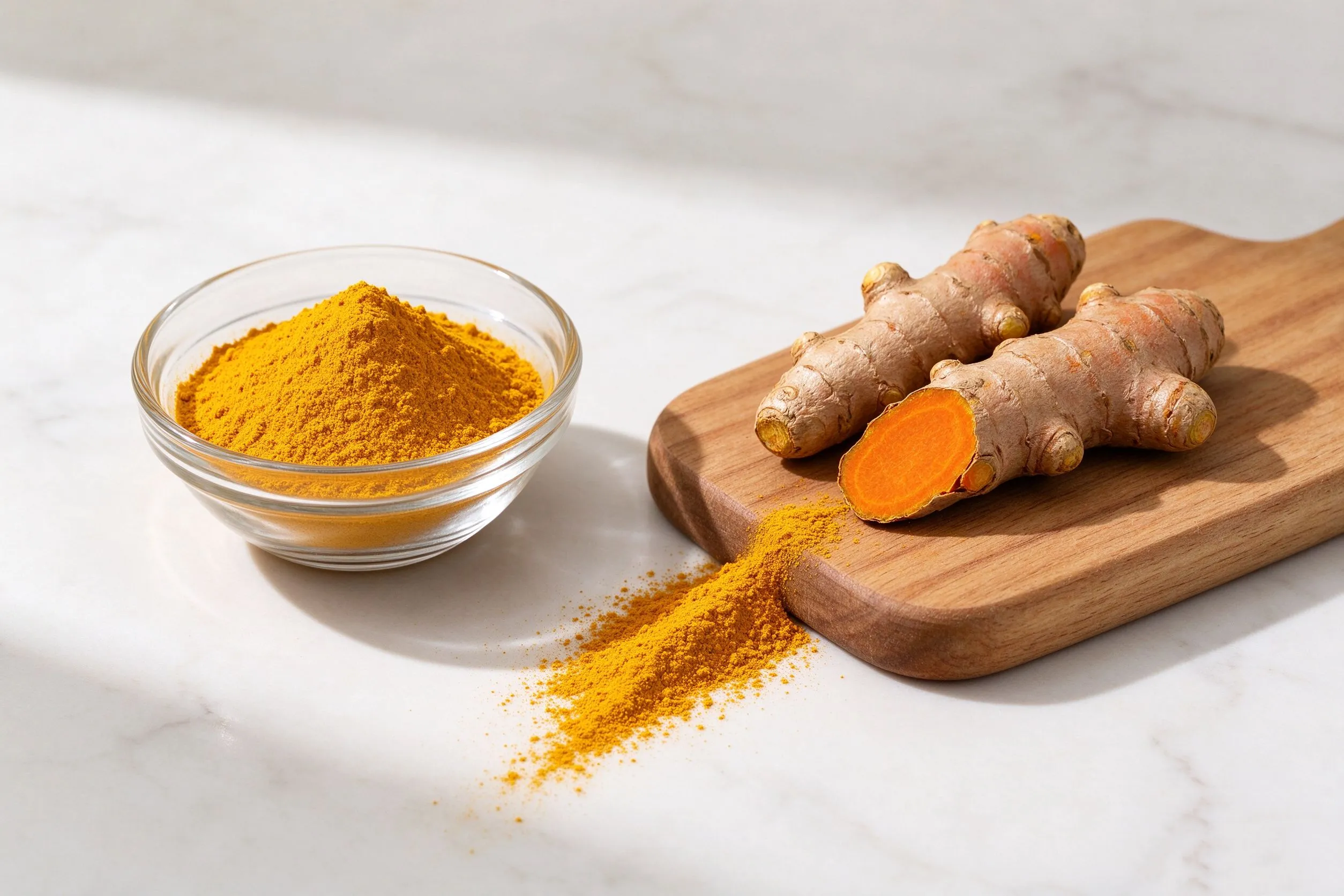
Yellow turmeric powder is the simplest form of turmeric you can buy. Dried Curcuma longa rhizomes are cleaned, low-temperature dried, and milled into a fine powder - nothing more. No solvent. No concentration step. No standardization.
Because the whole rhizome matrix is preserved, the powder retains:
- Curcuminoids (curcumin, demethoxycurcumin, bisdemethoxycurcumin) - naturally occurring at 2–8% by dry weight, depending on origin and harvest timing
- Essential oils - responsible for the warm, earthy aroma and flavor profile
- Dietary fiber - contributes to the natural food matrix
- Starch and polysaccharides - present in the rhizome cell structure
- Minerals and trace elements - naturally embedded in the plant matrix
The vivid orange-yellow color comes from curcuminoid pigments. This color intensity is what makes yellow turmeric powder a go-to natural colorant in food manufacturing - used in curry blends, mustard sauces, rice seasonings, snack coatings, and dairy-adjacent products.
Historical context matters here. Turmeric yellow color was first isolated in 1870 as a low-molecular-weight polyphenol. Scientists elucidated the chemical structure of diferuloylmethane in 1910. In medieval Europe, turmeric replaced saffron as an affordable natural colorant - a role it still plays in global food manufacturing today.
What Exactly Is Turmeric Extract Powder?
Turmeric extract powder is a processed, concentrated, and standardized ingredient. The extraction process isolates the curcuminoid fraction from the whole rhizome matrix, removing fiber, starch, essential oils, and most other plant compounds.
The result is a powder with a declared, verified curcuminoid concentration - typically 95% curcuminoids by HPLC - roughly 12–25x more concentrated than whole turmeric powder.
Key characteristics:
- Curcuminoid content: Standardized to 95% (or other declared levels such as 80%, 90%)
- Flavor: Near-neutral - volatile oils are removed during extraction
- Color: Deep orange, more intense than whole powder per gram
- Processing: Solvent extraction (typically ethanol-based), filtration, precipitation, drying
- Application: Dietary supplements, nutraceuticals, pharmaceutical actives, cosmetic formulations
The critical distinction for B2B buyers: turmeric extract is an active ingredient with a declared potency. Yellow turmeric powder is a whole-food or spice-format ingredient with natural compositional variation. These two products serve different formulation purposes and carry different regulatory implications.

Full Side-by-Side Comparison
Here's a comprehensive comparison across every dimension that matters to procurement managers, R&D teams, and quality assurance professionals:
|
Attribute |
Yellow Turmeric Powder |
Turmeric Extract Powder |
|
Botanical Source |
Curcuma longa rhizome |
Curcuma longa rhizome |
|
Processing Level |
Minimal (dried + milled) |
High (solvent extraction) |
|
Curcuminoid Content |
2–8% (natural variation) |
95% (HPLC standardized) |
|
Curcumin Concentration |
~1.5–5% typical |
~75–80% of total curcuminoids |
|
Essential Oils |
Retained |
Largely removed |
|
Dietary Fiber |
Present |
Absent |
|
Flavor Profile |
Earthy, warm, spiced |
Neutral to mild |
|
Color Intensity |
Moderate yellow-orange |
Deep orange per gram |
|
Particle Size |
80 mesh standard |
80–100 mesh typical |
|
Moisture |
<5.0% |
<5.0% |
|
Primary Application |
Food, coloring, spice blends |
Supplements, pharma, cosmetics |
|
Label Claim Type |
Whole food / spice ingredient |
Standardized active (% curcuminoids) |
|
COA Key Test |
Assay + organoleptic |
HPLC curcuminoid assay (mandatory) |
|
Regulatory Category |
GRAS (food ingredient) |
Supplement / pharmaceutical active |
|
Cost per kg |
Lower |
Significantly higher |
|
MOQ Flexibility |
High (sample from 1 kg) |
Moderate |
|
Shelf Life |
24 months (sealed, cool, dry) |
24 months (sealed, cool, dry) |
The right product depends on your formulation goal, target market, and the label claims your product needs to support.
The Three Curcuminoids: What Your COA Should Show
Both yellow turmeric powder and turmeric extract contain a family of curcuminoids - not just curcumin alone. Many buyers overlook this when reviewing COAs, which leads to specification mismatches.
The three primary curcuminoids are:
- Curcumin (diferuloylmethane): The dominant compound. First isolated in 1870, structurally characterized in 1910. Accounts for approximately 75–80% of total curcuminoids in a well-standardized extract.
- Demethoxycurcumin: A mono-methoxy analog. Accounts for roughly 15–20% of total curcuminoids. Has its own distinct biological activity profile.
- Bisdemethoxycurcumin: The least abundant - typically 2–6% of total curcuminoids. Structurally distinct and increasingly studied independently.
What this means for your purchasing decision:
- A "95% curcuminoids" extract contains all three in a natural ratio - it is not 95% pure curcumin.
- If your formulation requires a specific curcumin-only potency, you must request individual compound assay data, not just total curcuminoids.
- For whole yellow turmeric powder, curcuminoid content varies by origin, harvest season, and drying method - always request a batch-specific COA with HPLC assay results.
Extraction Methods: How Turmeric Extract Is Produced
Understanding production methods helps you evaluate supplier quality, process integrity, and potential residue risks. Three commercial extraction methods exist:
Alcohol Extraction (Industry Standard)
Ethanol at 70–80% concentration extracts curcuminoids efficiently at room or elevated temperatures. Methods include immersion and percolation. This approach offers:
- High extraction yield
- Simple, scalable process
- Residual solvent levels manageable within regulatory limits
- Widely accepted in food-grade and supplement-grade applications
Acid-Base Extraction
Based on the principle that curcumin's phenolic hydroxyl groups dissolve in alkali. Sodium hydroxide solution extracts the curcuminoids; dilute hydrochloric acid then adjusts pH to precipitate them. The limitation: curcumin degrades under strongly alkaline conditions, resulting in lower final yield and potential quality concerns. Less preferred for premium-grade production.
Enzyme-Assisted Extraction
Cellulase and pectinase enzymes degrade the cell wall of turmeric rhizomes, releasing curcuminoids more efficiently. This method increases extraction rate without harsh solvents - but enzymatic reaction conditions are difficult to control at scale, making large-volume commercial production more complex and costly.
Supplier evaluation tip: Always ask which extraction method your supplier uses, what solvent residue testing they perform, and whether their process is validated under cGMP conditions.
Bioavailability: The Factor Most Buyers Underestimate
Bioavailability - how much active compound reaches systemic circulation after ingestion - is one of the most commercially significant differences between these two ingredients. It directly affects your product's efficacy claims and formulation strategy.
What the research shows:
- Whole turmeric powder consumed as part of a meal raises blood curcuminoid levels meaningfully. The natural food matrix - including fat and fiber - provides modest absorption support.
- Isolated curcumin extract at 95% purity has inherently poor bioavailability in standard powder form. Research shows less than 1% of curcuminoids reach systemic circulation without bioavailability enhancement.
- Rapid metabolism and elimination further limit curcumin's systemic exposure - it is metabolized quickly in the gut and liver.
Bioavailability enhancement technologies for extract-based formulations:
|
Technology |
Mechanism |
Relative Absorption Increase |
|
Piperine co-administration |
Inhibits glucuronidation in gut |
Up to 20x vs. standard extract |
|
Phospholipid complex (Phytosome) |
Lipid-based carrier system |
29x vs. standard extract (published data) |
|
Nanoparticle / nanoemulsion |
Reduced particle size, increased surface area |
Variable, up to 40x reported |
|
Lipid-based delivery (SNEDDS) |
Self-nanoemulsifying system |
High, formulation-dependent |
|
Micellar solubilization |
Aqueous dispersion of lipophilic curcumin |
Significant improvement |
Practical implication for formulators:
- For food and beverage applications - yellow turmeric powder delivers natural color, authentic flavor, and a clean-label whole-food positioning. Bioavailability is a secondary concern.
- For dietary supplements with curcuminoid dose claims - standardized extract is required, and bioavailability enhancement technology should be evaluated alongside raw extract purity.
Active Compounds Beyond Curcuminoids
Yellow turmeric powder contains a broader phytochemical profile than extract powder. This matters for formulators targeting whole-food or synergistic ingredient positioning.
Additional bioactive compounds in whole turmeric powder:
- Turmerones (ar-turmerone, α-turmerone, β-turmerone): Sesquiterpene ketones found in turmeric essential oil. Studied for their own biological activity and potential role in enhancing curcumin absorption.
- Zingiberene: A sesquiterpene shared with ginger, contributing to the characteristic aroma.
- Polysaccharides (turmerin): Water-soluble peptide with antioxidant properties.
- Minerals: Manganese, iron, potassium, and vitamin B6 present in meaningful amounts in whole powder.
When your product positioning emphasizes whole-food integrity, natural synergy, or clean-label authenticity, yellow turmeric powder's full phytochemical matrix is a genuine formulation advantage - not just a marketing angle.
Regulatory and Certification Landscape for B2B Buyers
Compliance documentation is non-negotiable for cross-border ingredient trade. The regulatory status of these two ingredients differs in important ways.
Yellow Turmeric Powder
- USA: GRAS (Generally Recognized as Safe) as a spice and natural colorant under 21 CFR
- EU: Approved natural food color (E100) under Regulation (EC) No 1333/2008
- China: Listed in GB 2760 as a permitted natural food additive
- Global: Widely accepted in Halal and Kosher frameworks
Turmeric Extract / Curcumin Extract
- USA: Sold as a dietary supplement ingredient under DSHEA; requires cGMP compliance
- EU: Novel Food status for some extract formats - market-specific review required
- Pharmaceutical applications: Subject to pharmacopoeial standards (USP, EP) where applicable
Certifications to Verify from Any Supplier
|
Certification |
Relevance |
|
ISO 9001 |
Quality management system |
|
ISO 22000 / FSSC 22000 |
Food safety management |
|
HACCP |
Hazard analysis and critical control points |
|
cGMP |
Required for supplement-grade ingredients |
|
FDA Registration |
Mandatory for US market entry |
|
Halal / Kosher |
Middle Eastern and Jewish market segments |
|
USDA / EU Organic |
Clean-label and organic-certified product lines |
|
Heavy metals testing |
As, Pb, Cd, Hg - critical for botanical ingredients |
Quality Specifications: What a Reliable COA Must Include
Whether you're buying yellow turmeric powder or turmeric extract, a credible supplier provides a batch-specific Certificate of Analysis - not a generic template. Here's what every COA should cover:
For Yellow Turmeric Powder:
- Latin name confirmation (Curcuma longa L.)
- Part of plant used (roots/rhizomes)
- Country of origin
- Curcumin assay by HPLC (>95% for extract-grade; natural range for whole powder)
- Appearance, color, odor (organoleptic)
- Particle size (80 mesh: 95% pass)
- Moisture (<5.0%)
- Ash content (<5.0%)
- Heavy metals: Total (<10 ppm), As (<2.0 ppm), Pb (<2.0 ppm), Cd (<1.0 ppm), Hg (<0.01 ppm)
- Microbiology: Total Plate Count (<1,000 cfu/g), Yeast & Mold (<100 cfu/g), E. coli (Negative), Salmonella (Negative)
For Turmeric Extract Powder:
All of the above, plus:
- Individual curcuminoid breakdown (curcumin, demethoxycurcumin, bisdemethoxycurcumin)
- Residual solvent testing (if ethanol extraction)
- Pesticide residue screening
- Identity verification (HPTLC or IR fingerprint)
Application Guide: Which Form Fits Your Product?
Here's a practical decision matrix for product developers and procurement managers:
Choose Yellow Turmeric Powder When:
- Your product needs natural yellow-orange color from a whole-food source
- You're formulating curry blends, spice mixes, mustard sauces, rice seasonings, or snack coatings
- Your label requires clean-label, whole-food, or spice ingredient positioning
- You're producing functional beverages or food products with mild turmeric flavor
- Cost efficiency is a priority for large-volume food applications
- Your market requires E100 natural colorant compliance (EU)
Choose Turmeric Extract Powder When:
- Your product carries a declared curcuminoid potency (e.g., "500 mg, 95% curcuminoids")
- You're manufacturing dietary supplements, capsules, tablets, or softgels
- Your formulation targets cosmetic actives with defined concentration
- You need batch-to-batch consistency for clinical or functional efficacy claims
- Your application is pharmaceutical-grade or requires pharmacopoeial compliance
- You're developing sports nutrition or anti-inflammatory functional products
Common Sourcing Mistakes B2B Buyers Make
After years of working with procurement teams across 30+ countries, these are the most frequent and costly mistakes we see:
1. Treating "turmeric powder" and "turmeric extract" as interchangeable They are not. Substituting one for the other in a formula changes potency, color intensity, flavor, and regulatory status simultaneously.
2. Accepting a generic COA without batch-specific data A COA dated years ago tells you nothing about the batch you're receiving. Always request a batch-specific COA tied to the lot number on your shipment.
3. Not specifying the curcuminoid assay method "95% curcuminoids" measured by UV spectrophotometry and by HPLC are not equivalent. HPLC is the industry-standard method and gives more accurate individual compound data.
4. Ignoring bioavailability when making supplement formulations A 95% curcuminoids extract with no bioavailability enhancement may deliver less systemic curcumin than a well-formulated lower-potency product. Potency on the label is not the same as potency in the body.
5. Qualifying a supplier on price alone Certification gaps, inconsistent heavy metal results, and undisclosed solvent residues create downstream regulatory exposure that costs far more than any per-kg savings.
Why Source from Jiuyuan Biotech?
At Jiuyuan Biotech, we manufacture both yellow turmeric powder and standardized turmeric extract from our 70,000 m² facility at the foot of China's Qinling Mountains. Founded in 2012, we have 13 years of botanical extract manufacturing experience - with zero reliance on brokers or traders.
Our yellow turmeric powder specifications:
- CAS No.: 458-37-7
- Latin Source: Curcuma longa L.
- Part Used: Roots
- Appearance: Orange-yellow fine powder
- Curcumin Assay: >95% by HPLC
- Particle Size: 95% pass 80 mesh
- Moisture: <5.0% | Ash: <5.0%
- Heavy Metals: Total <10 ppm
- Microbiology: E. coli Negative | Salmonella Negative
- MOQ: 1 kg (sampling) | Bulk pricing available
What sets us apart:
- 12 international certifications - ISO 9001, ISO 22000, FSSC 22000, HACCP, cGMP, FDA, Halal, Kosher, USDA Organic, EU Organic
- In-house lab - HPLC, GC, UV, AAS, and full microbiology testing on every batch
- Batch-specific COA - tied to your lot number, not a template
- 10 production lines with 6,000+ tons annual capacity
- 30+ countries served across dietary supplement, functional food, cosmetic, and pharmaceutical industries
- OEM/ODM support - custom blends, formulation development, and after-sales technical support included
Ready to source yellow turmeric powder for your supplement or food brand? Contact the Jiuyuan Biotech team at info@jiuybiotech.com - we respond to all qualified inquiries within 24 hours and can provide samples, COAs, and full specification sheets on request. Visit us at www.jiuyuanbio.com.
References
- Hewlings, S. J., & Kalman, D. S. (2017). Curcumin: A review of its effects on human health. Foods, 6(10), 92.
- Anand, P., Kunnumakkara, A. B., Newman, R. A., & Aggarwal, B. B. (2007). Bioavailability of curcumin: Problems and promises. Molecular Pharmaceutics, 4(6), 807–818.
- Prasad, S., Tyagi, A. K., & Aggarwal, B. B. (2014). Recent developments in delivery, bioavailability, absorption and metabolism of curcumin: The golden pigment from golden spice. Cancer Research and Treatment, 46(1), 2–18.
- Tayyem, R. F., Heath, D. D., Al-Delaimy, W. K., & Rock, C. L. (2006). Curcumin content of turmeric and curry powders. Nutrition and Cancer, 55(2), 126–131.
- Nelson, K. M., Dahlin, J. L., Bisson, J., Graham, J., Pauli, G. F., & Walters, M. A. (2017). The essential medicinal chemistry of curcumin. Journal of Medicinal Chemistry, 60(5), 1620–1637.
- Gupta, S. C., Patchva, S., & Aggarwal, B. B. (2013). Therapeutic roles of curcumin: Lessons learned from clinical trials. The AAPS Journal, 15(1), 195–218.