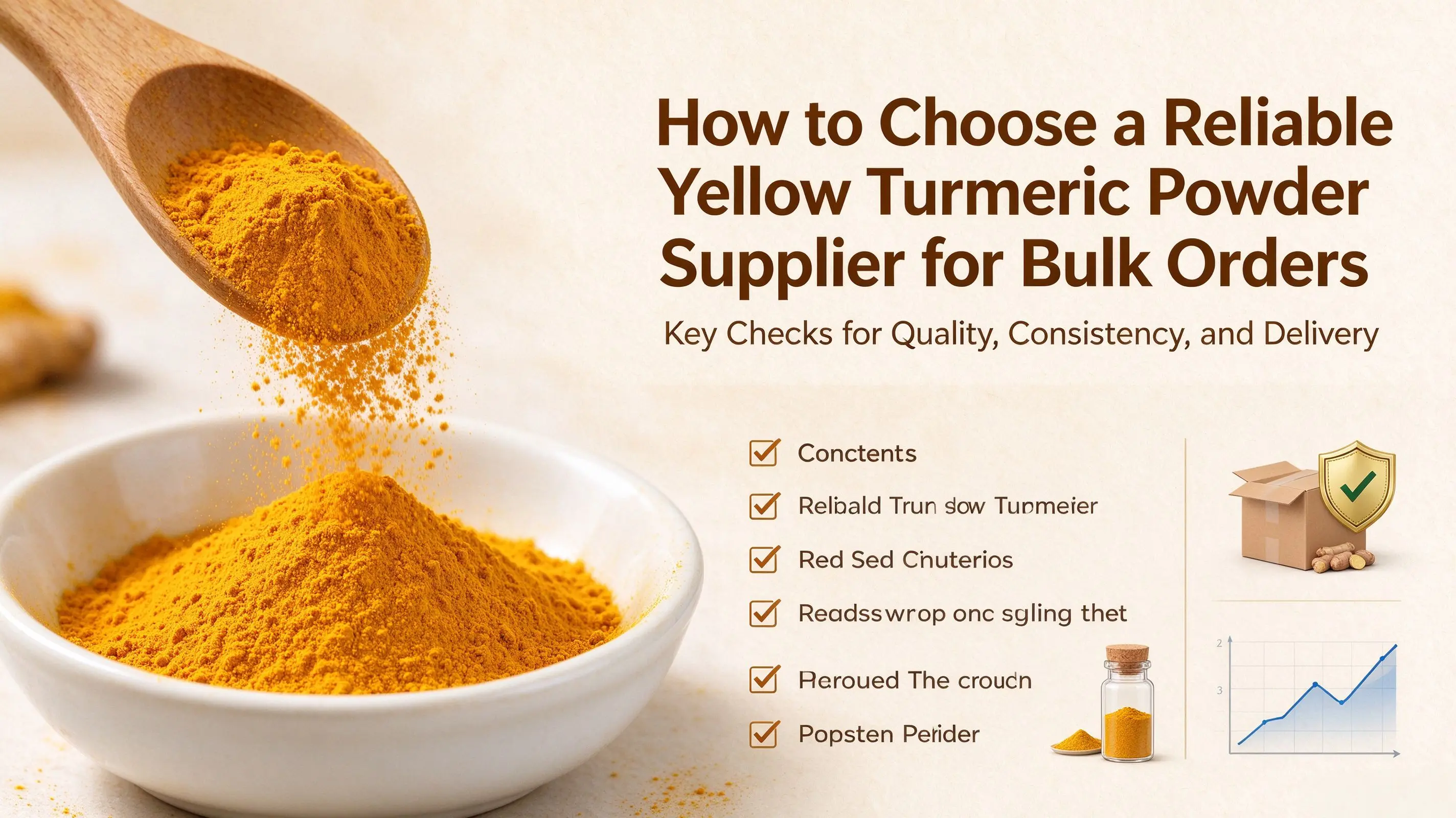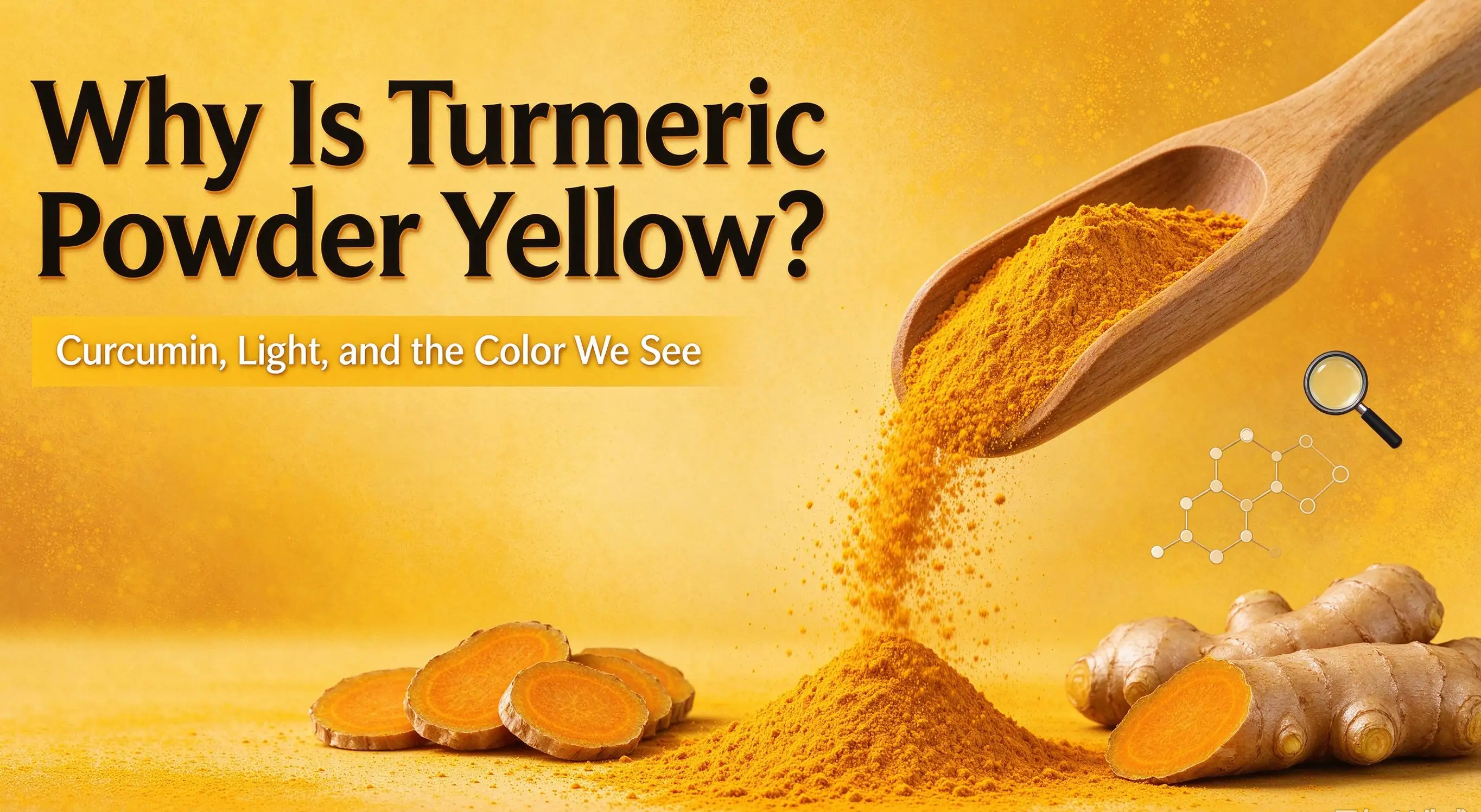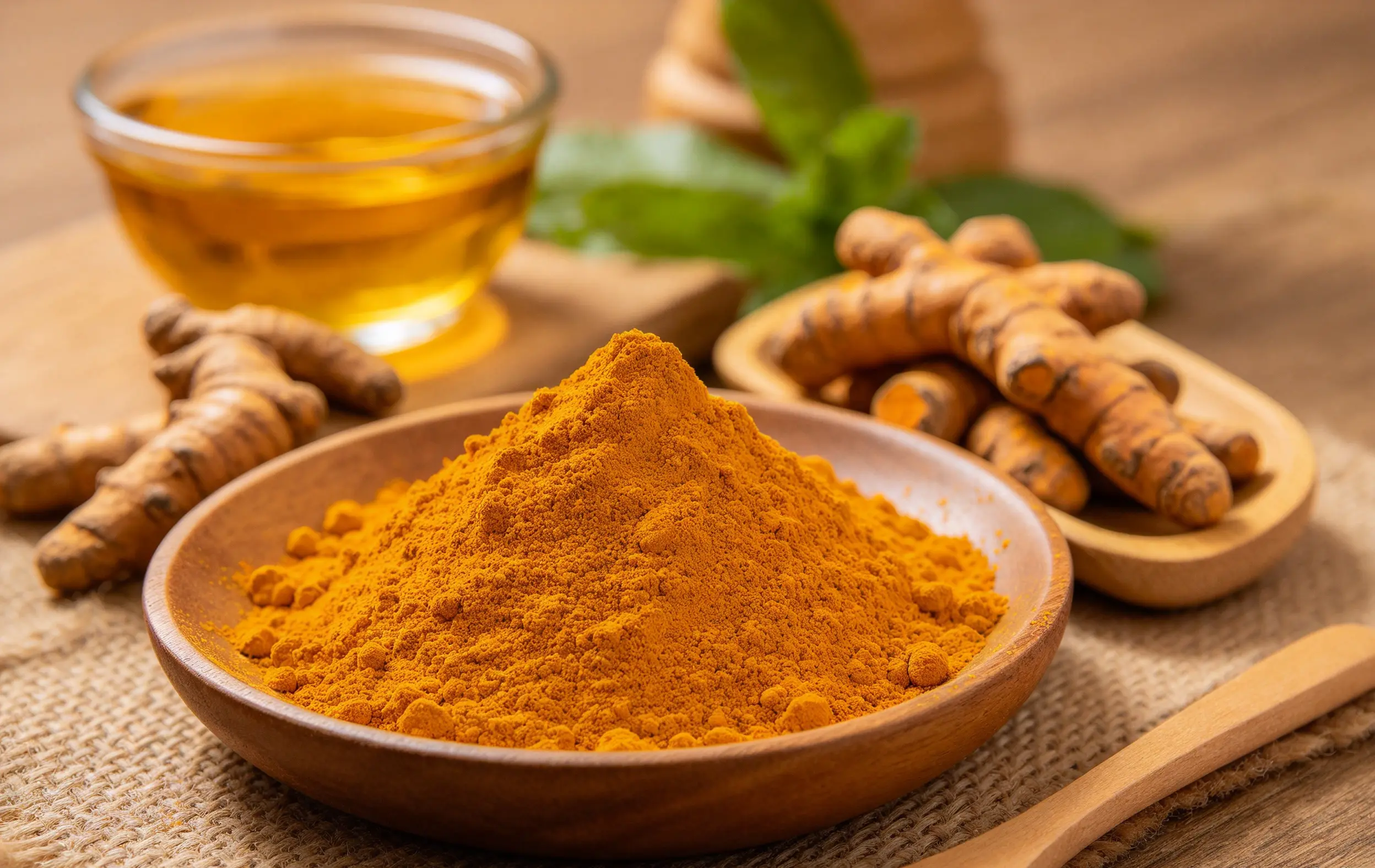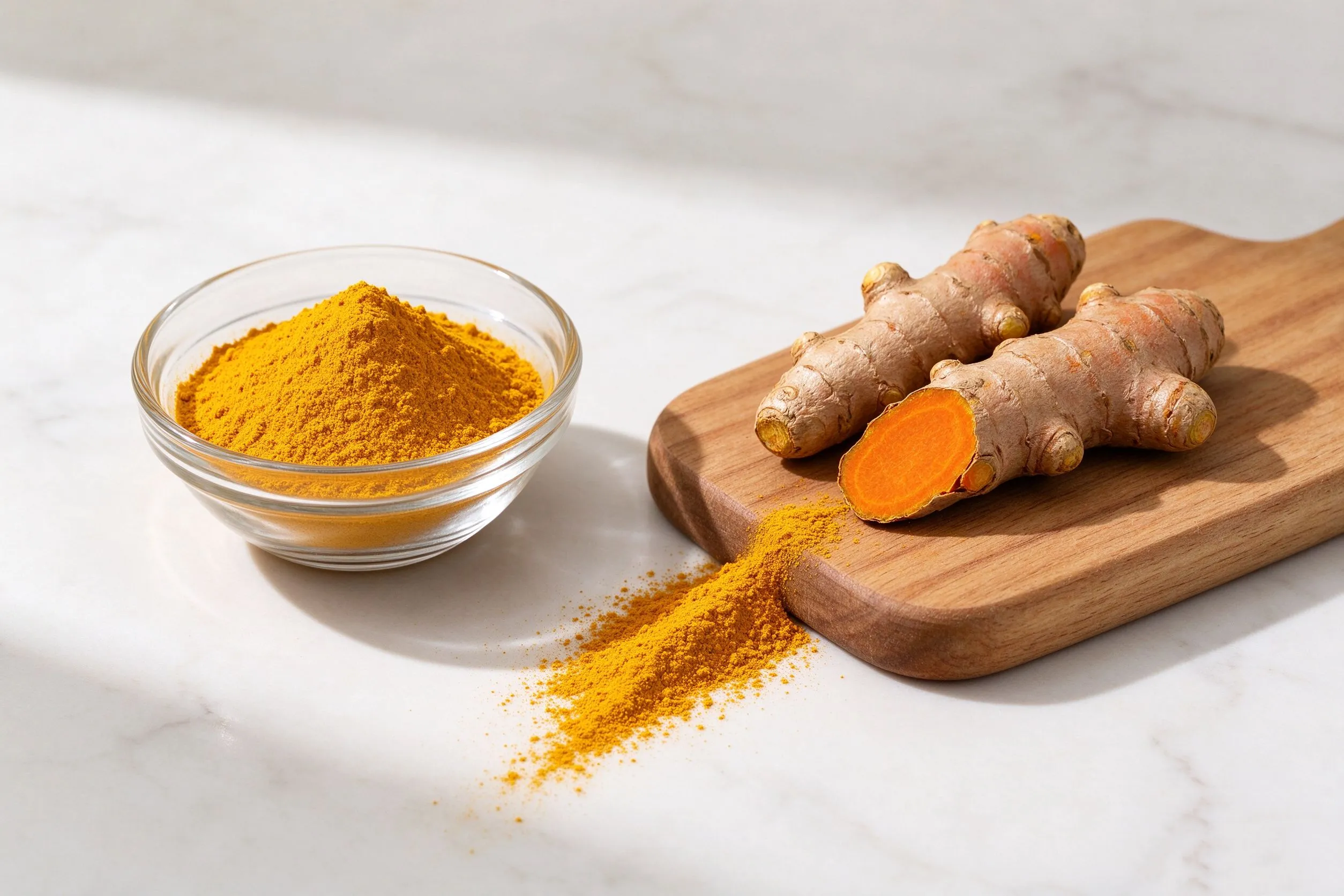
If you source ingredients for supplement formulations or functional food products, yellow turmeric powder has almost certainly crossed your radar. It is one of the most widely used botanical ingredients in the global market - and for good reason. Behind that vivid golden color sits a phytochemical profile that has generated thousands of peer-reviewed studies, a consumer recognition rate that few botanicals can match, and a supply chain mature enough to support commercial-scale procurement with consistent quality.
This guide breaks down everything a B2B buyer needs to know - from what yellow turmeric powder actually is, to how curcumin content is standardized, to what questions you should be asking your supplier before placing a commercial order.
What Exactly Is Yellow Turmeric Powder?
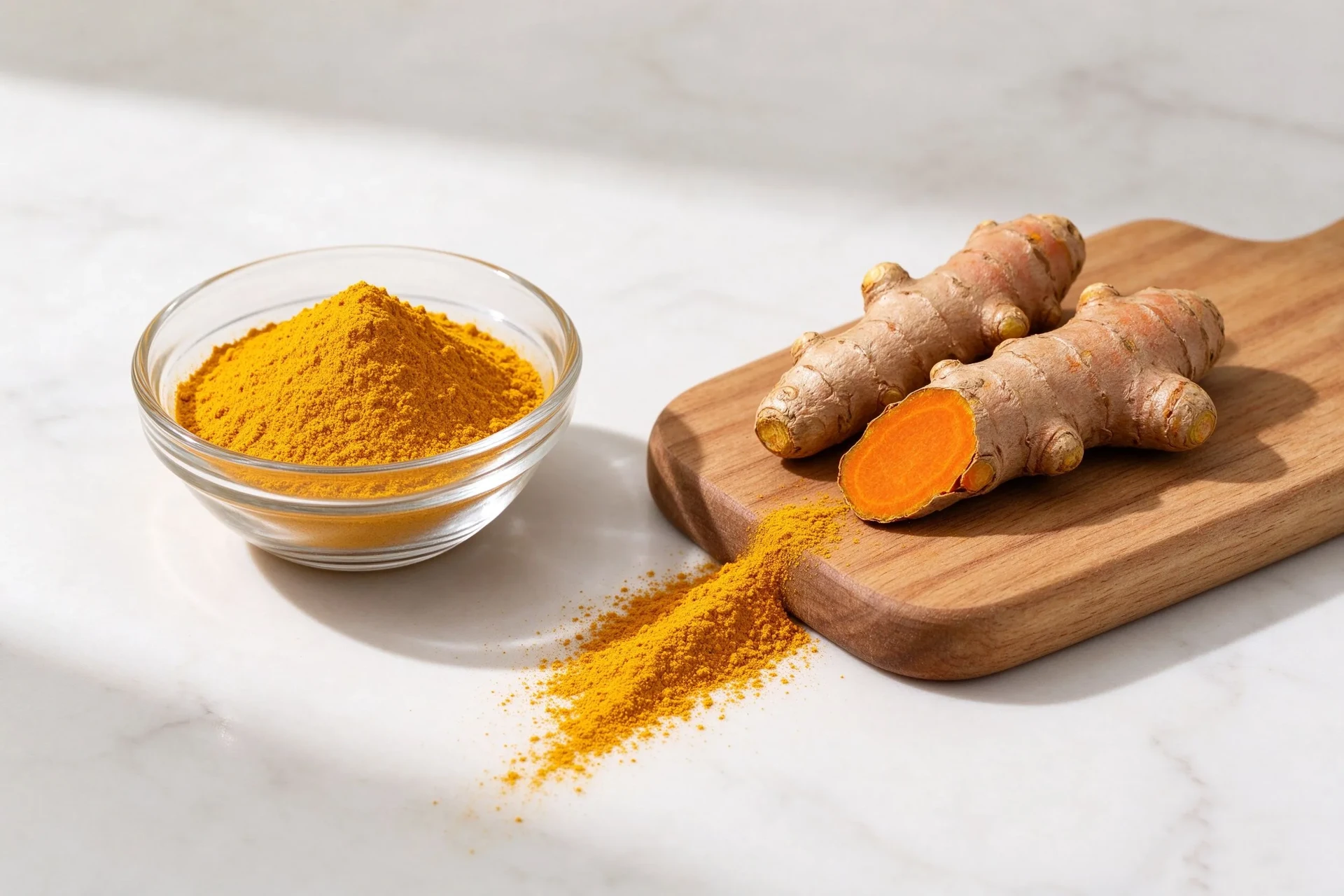
Yellow turmeric powder comes from the dried, ground rhizome of Curcuma longa L., a flowering plant in the ginger family (Zingiberaceae) native to South and Southeast Asia. The powder's characteristic deep golden-yellow color comes from a group of polyphenolic pigments called curcuminoids - primarily curcumin, demethoxycurcumin, and bisdemethoxycurcumin.
When people refer to "turmeric powder" in a B2B ingredient context, they typically mean one of two distinct product types:
- Whole turmeric powder - dried and milled rhizome, typically containing 2–6% curcuminoids naturally
- Turmeric extract powder - a concentrated, standardized extract with curcuminoid content ranging from 95% down to specific lower concentrations depending on application
Understanding which product type you need is the first decision point in any procurement process.
The two are not interchangeable on a label or in a formula. Whole turmeric powder carries a food-native identity and works well in functional food, beverage, and spice applications. Standardized turmeric extract is the appropriate choice when you need a guaranteed curcuminoid dose for supplement label claims.
Why Curcumin Content Is the Number That Matters Most
Curcumin is the primary curcuminoid in turmeric - typically comprising 70–80% of the total curcuminoid fraction - and it is the compound responsible for the majority of the documented bioactivity.
The Linus Pauling Institute at Oregon State University summarizes the research clearly: curcumin modulates numerous molecular targets and exerts antioxidant, anti-inflammatory, and other biological effects across multiple preclinical models.
For B2B buyers, curcumin content matters for three practical reasons:
- Label claim accuracy - If your finished product label states a curcumin dose, your raw material must consistently deliver that dose
- Batch-to-batch consistency - Natural whole turmeric powder varies seasonally; standardized extract removes that variability
- Regulatory compliance - Structure/function claims in the US and EU require substantiation; a defined curcuminoid content is the foundation of that substantiation
A reliable supplier will always report curcuminoid content by HPLC - not UV spectrophotometry alone - because HPLC distinguishes between the three individual curcuminoids, while UV measures total color intensity and can overestimate actual curcumin content.
The Bioavailability Problem Every Formulator Needs to Know
Here is the practical challenge with curcumin that every supplement formulator eventually confronts: it is poorly absorbed on its own.
Curcumin has low aqueous solubility and undergoes rapid metabolism in the gut and liver. Studies have shown that oral bioavailability of unformulated curcumin is limited without a bioavailability-enhancing strategy.
The most widely studied solution is piperine co-administration. A landmark study by Shoba et al. demonstrated that combining curcumin with piperine (the active alkaloid in black pepper) increased curcumin bioavailability by approximately 2,000% in human subjects. A 2022 clinical study published in Frontiers in Nutrition further confirmed that turmeric supplementation with piperine was more effective than turmeric alone in attenuating oxidative stress and inflammation markers in hemodialysis patients.
Beyond piperine, the supplement industry has developed several additional bioavailability-enhancement approaches:
- Phospholipid complexes (e.g., Meriva®-style formulations)
- Nanoparticle encapsulation
- Lipid-based delivery systems
- CO₂ supercritical extraction - which preserves turmerones alongside curcuminoids, with turmerones themselves showing bioavailability-enhancing properties
For B2B buyers building supplement formulas, the choice of delivery format is as commercially important as the curcumin percentage on the COA.
Key Specifications to Request From Any Yellow Turmeric Powder Supplier
When you evaluate a supplier for yellow turmeric powder or standardized turmeric extract, these are the specification parameters that separate a reliable commercial ingredient from a commodity product:
For whole turmeric powder:
- Curcuminoid content (2–6% typical; verified by HPLC)
- Moisture content (≤ 10%)
- Volatile oil content (≥ 3% for high-quality material)
- Particle size (60–80 mesh standard)
- Heavy metals (Pb ≤ 2 ppm, As ≤ 1 ppm, Hg ≤ 0.1 ppm, Cd ≤ 0.5 ppm)
- Pesticide residues (per EU 396/2005 or equivalent)
- Microbiology (TPC ≤ 100,000 CFU/g; Salmonella absent)
For standardized turmeric extract:
- Total curcuminoids (95% standard grade; verified by HPLC)
- Individual curcuminoid profile (curcumin, demethoxycurcumin, bisdemethoxycurcumin ratios)
- Loss on drying (≤ 5%)
- Heavy metals (same as above, tighter limits for high-purity grades)
- Solvent residues (per ICH Q3C)
- Microbiology (TPC ≤ 10,000 CFU/g)
A trusted supplier provides turmeric that meets stringent specifications regarding curcumin content, moisture levels, and absence of contaminants. Any supplier unwilling to provide a full COA with HPLC data on request is not a supplier worth qualifying.
Application Areas: Where Yellow Turmeric Powder Fits in Your Product Line
The commercial versatility of yellow turmeric powder is one of its strongest selling points. Here is how it maps across product categories:
Dietary supplements
- Anti-inflammatory and joint health formulas (most common application)
- Antioxidant blends
- Liver support and detox products
- Cognitive health formulas (emerging, based on neuroinflammation research)
- Women's health and hormonal balance products
Functional food and beverage
- Golden milk powder blends and latte mixes
- Functional tea and herbal beverage formulations
- Protein powder blends with anti-inflammatory positioning
- Snack bars and baked goods with wellness claims
- Natural yellow/orange colorant in food products (clean-label alternative to synthetic dyes)
Cosmetics and personal care
- Anti-inflammatory skincare serums and creams
- Brightening and anti-pigmentation formulations
- Face mask powders
- Scalp and hair care products
The functional food and beverage segment deserves particular attention. Consumer demand for turmeric-based functional beverages has grown substantially over the past decade, driven by the golden milk trend and broader interest in anti-inflammatory nutrition. For food brands, whole turmeric powder's GRAS status in the US and its long history of food use in the EU makes it one of the most regulatory-friendly botanical ingredients available.
What B2B Buyers Get Wrong When Sourcing Turmeric Powder
After years of working with supplement and food brands, a few recurring procurement mistakes stand out:
Confusing curcumin percentage with dose
A product standardized to 95% curcuminoids sounds impressive. But if the serving size is 50 mg, the actual curcumin dose is 47.5 mg - which may or may not be sufficient depending on the intended application. Always calculate the per-serving curcumin dose, not just the extract percentage.
Ignoring the curcuminoid ratio
Not all 95% curcuminoid extracts are identical. The ratio of curcumin to demethoxycurcumin to bisdemethoxycurcumin varies between suppliers and production batches. For formulas where the full curcuminoid spectrum matters, request an individual curcuminoid breakdown on the COA.
Overlooking lead content
Turmeric has a documented history of lead contamination - particularly in South Asian supply chains where lead chromate has historically been used as an adulterant to enhance color intensity. Always request ICP-MS heavy metals testing, not just a general heavy metals declaration.
Choosing price over traceability
The cheapest turmeric powder on the market is cheap for a reason. Geographic origin, cultivation practices, and post-harvest handling all affect curcuminoid content and contaminant risk. A supplier who cannot tell you where their raw material was grown and when it was harvested is not a supplier who can support your quality system.
Certifications That Matter for Yellow Turmeric Powder Procurement
Depending on your target market and distribution channel, you may need one or more of the following:
|
Certification |
Why It Matters |
|
USDA Organic / EU Organic |
Required for organic-labeled finished products in US and EU markets |
|
Kosher |
Required for kosher-certified finished products |
|
Halal |
Required for halal-certified finished products and Middle East distribution |
|
ISO 9001 |
Baseline quality management system verification |
|
FSSC 22000 |
Food safety management - increasingly required by major retailers |
|
Non-GMO Declaration |
Required for non-GMO project verified products |
|
Heavy Metals COA (ICP-MS) |
Critical for supplement brands selling through Amazon, iHerb, or Whole Foods |
A supplier who holds multiple certifications and can produce current certificates on request is demonstrating something more valuable than the certificates themselves - they are demonstrating that their quality system is operational, not aspirational.
How to Evaluate a Yellow Turmeric Powder Supplier
Here is a practical qualification checklist for procurement teams:
- Request a current COA - not a template, but a lot-specific document with actual test results
- Verify HPLC curcuminoid data - confirm individual curcuminoid percentages, not just total curcuminoids
- Request ICP-MS heavy metals data - specifically for lead, arsenic, cadmium, and mercury
- Ask for pesticide residue testing - EU 396/2005 panel or equivalent
- Confirm origin traceability - country, region, and ideally farm-level sourcing documentation
- Request samples before committing - organoleptic evaluation (color, odor, taste) alongside analytical data
- Evaluate documentation responsiveness - a supplier who takes weeks to produce a COA will take weeks to resolve a quality issue post-shipment
Why Jiuyuan Biotech Supplies Yellow Turmeric Powder for Serious Brands
At Jiuyuan Biotech, we supply yellow turmeric powder in both whole powder and standardized extract grades - with curcuminoid content verified by HPLC on every commercial lot.
Our standard grades include:
- Whole turmeric powder - curcuminoids 2–6%, 60–80 mesh, food and supplement grade
- Turmeric extract - curcuminoids 95% (HPLC), individual curcuminoid ratio available
- Organic-certified grades - USDA NOP and EU organic, available on request
Every batch ships with a full COA, ICP-MS heavy metals report, pesticide residue report, and microbiological test report. We hold ISO 9001, FSSC 22000, Kosher, and Halal certifications, and we support third-party verification at SGS, Eurofins, or Intertek on request.
The Bottom Line on Yellow Turmeric Powder for B2B Buyers
Yellow turmeric powder is not a commodity ingredient - at least not when it is sourced and specified correctly. The difference between a well-specified turmeric extract and a poorly documented one can mean the difference between a supplement that delivers on its label claims and one that does not.
The questions worth asking before your next procurement decision:
- Do you have HPLC data showing individual curcuminoid percentages?
- Can you provide ICP-MS heavy metals results for this specific lot?
- What is the geographic origin of this raw material?
- What bioavailability enhancement options do you offer?
If a supplier cannot answer all four questions with documentation in hand, keep looking.
Ready to source yellow turmeric powder for your supplement or food brand? Contact the Jiuyuan Biotech team at info@jiuybiotech.com - we respond to all qualified inquiries within 24 hours and can provide samples, COAs, and full specification sheets on request. Visit us at www.jiuyuanbio.com.
References
- Hewlings SJ, Kalman DS. Curcumin: A Review of Its Effects on Human Health. Foods. 2017;6(10):92. doi:10.3390/foods6100092
- Prasad S, Aggarwal BB. Turmeric, the Golden Spice: From Traditional Medicine to Modern Medicine. In: Benzie IFF, Wachtel-Galor S, editors. Herbal Medicine: Biomolecular and Clinical Aspects. 2nd ed. CRC Press/Taylor & Francis; 2011. Chapter 13.
- Linus Pauling Institute, Oregon State University. Curcumin. Micronutrient Information Center. Updated 2016. Oregon State University, Corvallis, OR.
- Shoba G, Joy D, Joseph T, et al. Influence of Piperine on the Pharmacokinetics of Curcumin in Animals and Human Volunteers. Planta Medica. 1998;64(4):353–356. doi:10.1055/s-2006-957450
- Anand P, Kunnumakkara AB, Newman RA, Aggarwal BB. Bioavailability of Curcumin: Problems and Promises. Molecular Pharmaceutics. 2007;4(6):807–818. doi:10.1021/mp700113r
- Tayyem RF, Heath DD, Al-Delaimy WK, Rock CL. Curcumin Content of Turmeric and Curry Powders. Nutrition and Cancer. 2006;55(2):126–131. doi:10.1207/s15327914nc5502_2