

If you work in supplement formulation or nutraceutical sourcing, you've probably heard the buzz around broccoli seed extract. But here's what most people don't fully grasp: the seed and the vegetable are not even close to nutritional equals.
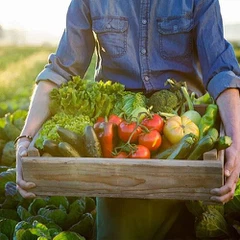
The mature broccoli floret on your plate is a decent source of fiber and vitamins. The seed it grew from, however, is a concentrated reservoir of glucoraphanin - the stable precursor to sulforaphane, one of the most studied phytonutrients in modern nutritional science. The gap between the two is not marginal. It's dramatic. And understanding that gap is exactly why ingredient buyers, formulators, and brand developers are increasingly turning to broccoli seed extract as their preferred sourcing form.
The Glucoraphanin Gap: Seeds vs. Mature Broccoli
Let's put the numbers on the table.
Broccoli sprouts - grown from the same seeds - contain 10 to 100 times higher concentrations of glucoraphanin than mature broccoli plants. The seeds themselves carry the highest glucoraphanin density of any stage in the plant's life cycle. As the plant matures and diverts energy into structural growth, flowering, and reproduction, that glucosinolate concentration drops significantly.
Published research confirms that glucoraphanin concentrations are highest in seeds, followed by young sprouts, with mature broccoli containing only a fraction of that level.
Here's why that matters for your formulation:
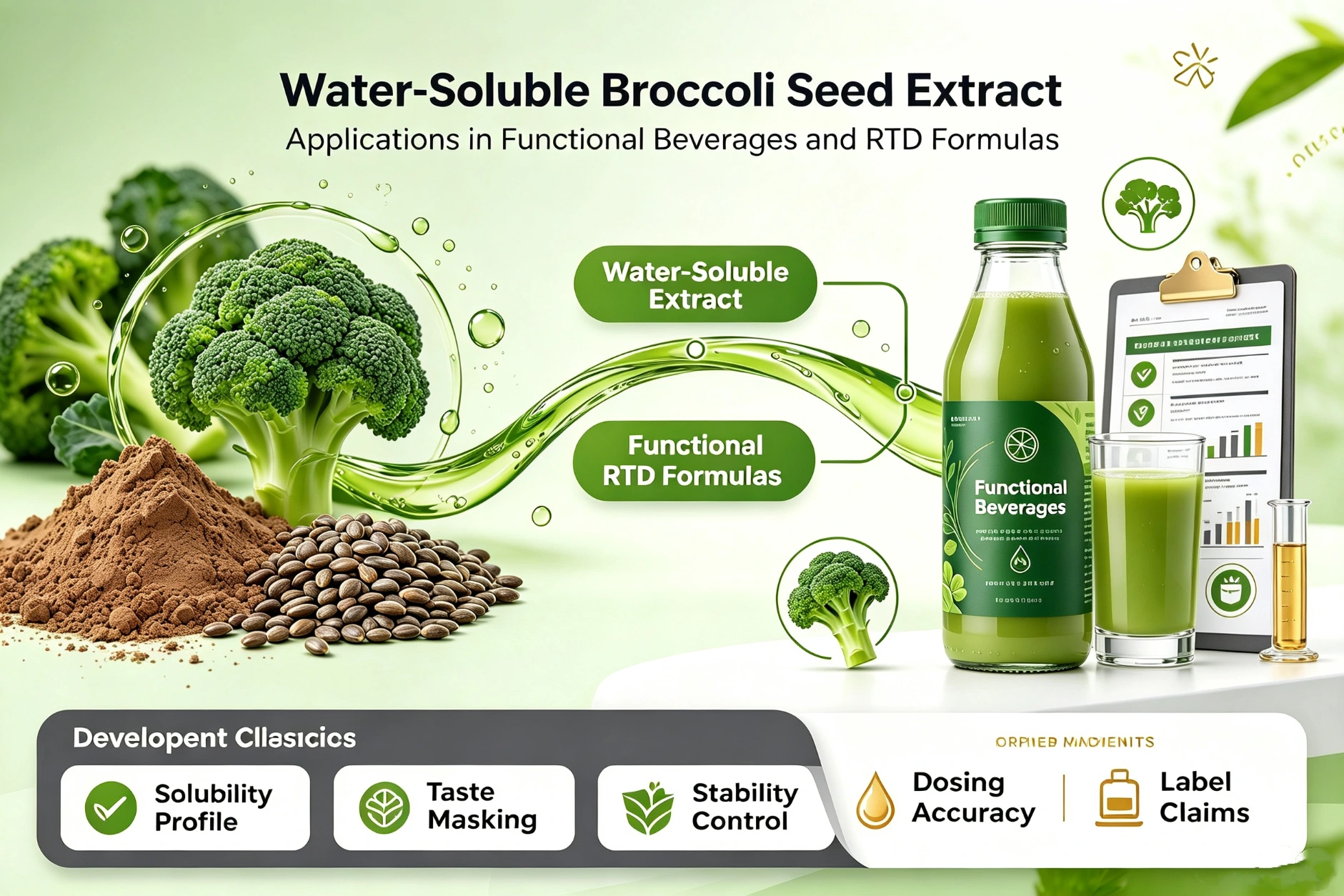
● Dosing precision - A standardized broccoli seed extract lets you deliver a consistent, measurable glucoraphanin dose in a single capsule. Achieving the same dose from mature broccoli powder would require an impractically large serving size.
● Label claim defensibility - Standardized extracts (e.g., ≥10% glucoraphanin by HPLC) give you verifiable, batch-consistent potency. Whole vegetable powder does not.
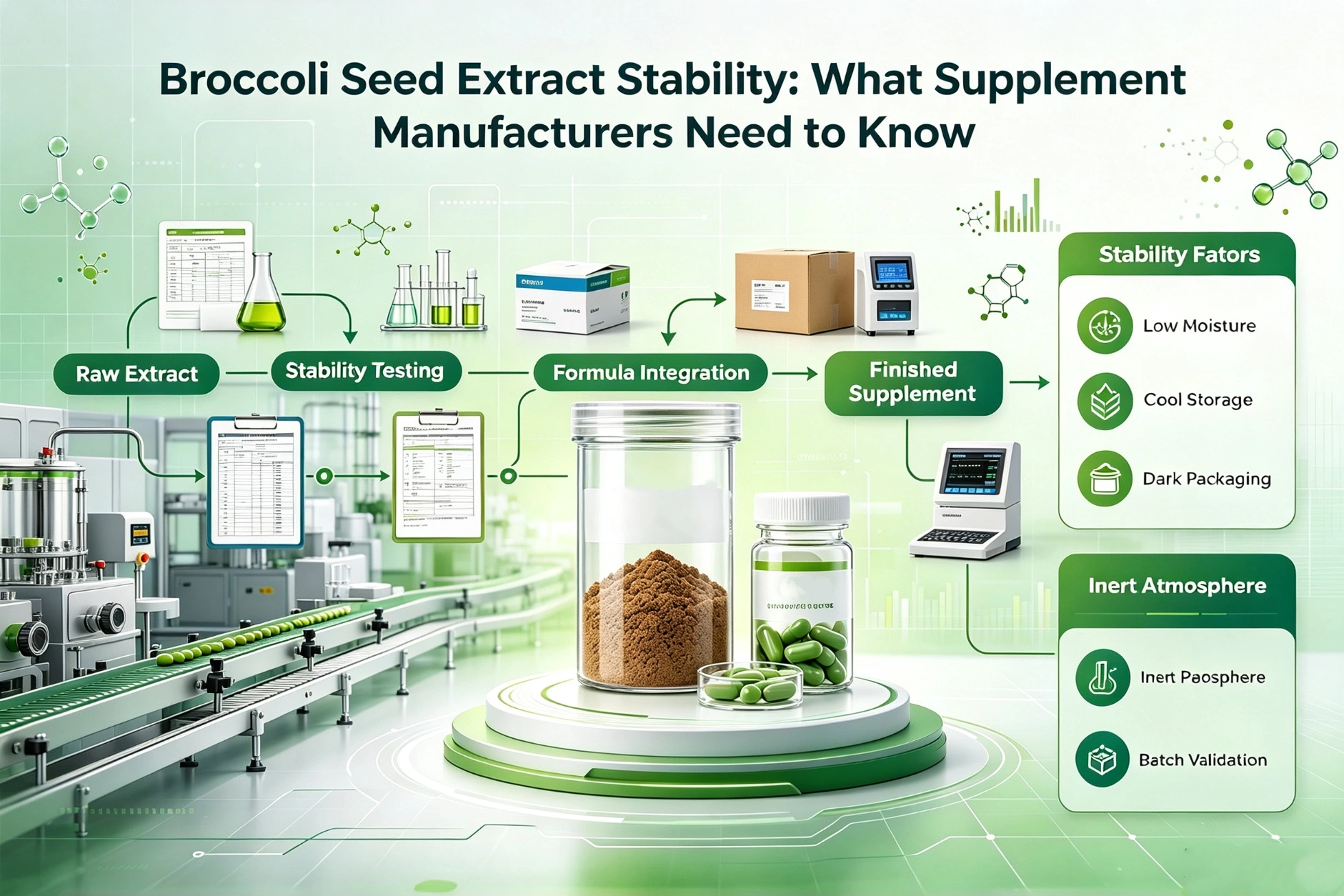
● Stability - Glucoraphanin is chemically stable. Sulforaphane itself is reactive and degrades rapidly. Delivering glucoraphanin - the precursor - and allowing endogenous myrosinase to complete the conversion in the gut is the more reliable strategy for bioavailability.
What Is Glucoraphanin, and Why Does It Matter?
Glucoraphanin is a glucosinolate - a sulfur-containing compound found naturally in cruciferous vegetables. On its own, it's relatively inert. The real action happens when it encounters myrosinase, an enzyme present in plant tissue and in the human gut microbiome.
That enzymatic reaction converts glucoraphanin into sulforaphane - an isothiocyanate with a remarkably well-documented biological profile.
Sulforaphane's primary mechanism of action is the activation of the Nrf2 (Nuclear factor erythroid 2-related factor 2) pathway - often described as the body's master regulator of cytoprotective gene expression. When Nrf2 is activated, it triggers the upregulation of a cascade of Phase II detoxification enzymes and antioxidant proteins, including:
● Heme oxygenase-1 (HO-1)
● NAD(P)H quinone oxidoreductase 1 (NQO1)
● Glutathione S-transferases (GSTs)
● Thioredoxin reductase
These enzymes collectively enhance the body's capacity to neutralize reactive oxygen species (ROS), facilitate xenobiotic detoxification, and suppress inflammatory signaling.
This is not a peripheral mechanism. Nrf2 activation is one of the most actively researched targets in preventive health, with published clinical investigations spanning neuroinflammation, metabolic health, cardiovascular function, and cellular protection.

Why Broccoli Seed Extract Outperforms Broccoli Sprout Powder
You might be wondering: if sprouts are so potent, why not just use broccoli sprout powder?
It's a fair question. Sprouts are indeed rich in glucoraphanin - and they also contain active myrosinase, which means sulforaphane conversion begins immediately upon consumption. That sounds like an advantage. In practice, it creates a stability problem.
● Active myrosinase in sprout powder begins converting glucoraphanin to sulforaphane during processing, storage, and even during encapsulation.
● Sulforaphane is thermally labile and chemically reactive - it degrades under heat, humidity, and prolonged storage.
● By the time a sprout-based product reaches the consumer, a significant portion of the sulforaphane may have already degraded or volatilized.
Broccoli seed extract standardized to glucoraphanin sidesteps this entirely. Glucoraphanin is water-soluble and chemically stable under standard storage conditions. It survives the manufacturing process, the supply chain, and the shelf life intact. Conversion to sulforaphane happens in the gut - where it's actually needed.
Published bioavailability research confirms that glucoraphanin from broccoli seed and sprout extracts shows comparable sulforaphane bioavailability to fresh sprout consumption, validating the seed extract approach as a reliable delivery vehicle.
The Nrf2 Connection: Why Supplement Brands Care
The Nrf2 pathway has become one of the most commercially compelling mechanisms in the supplement industry - and for good reason. It sits at the intersection of antioxidant defense, detoxification, and cellular resilience.
Sulforaphane is widely regarded as one of the most potent naturally occurring Nrf2 activators identified to date. That positioning opens doors across multiple product categories:
Antioxidant formulas - Sulforaphane's Nrf2-mediated induction of endogenous antioxidant enzymes offers a fundamentally different mechanism than direct antioxidants like vitamin C or vitamin E. Rather than scavenging free radicals directly, it upregulates the body's own production of antioxidant machinery - a mechanism sometimes described as "indirect antioxidation."
Detox and liver support - Phase II detoxification enzyme induction (NQO1, GSTs) is directly relevant to liver health and xenobiotic clearance positioning.
Cognitive and neurological health - Nrf2 activation has been investigated in the context of neuroinflammation and neuroprotection, with clinical studies examining sulforaphane's potential in conditions involving oxidative stress in neural tissue.
Sports recovery - Oxidative stress generated during intense exercise is a recognized driver of delayed-onset muscle soreness and impaired recovery. Nrf2 activators are increasingly appearing in premium recovery formulations.
What to Look for in a Broccoli Seed Extract Ingredient
Not all broccoli seed extracts are equal. Here's what experienced formulators and procurement teams consistently check:
1. Standardization method and marker compound
The gold standard is standardization to glucoraphanin by HPLC - not total glucosinolates by UV, which is a less specific method. Ask specifically: what compound, what method, what reference standard?
2. Glucoraphanin percentage
A minimum of 10% glucoraphanin (HPLC-verified) is the benchmark for supplement-grade material. Lower concentrations may indicate dilution with carriers or inadequate extraction.
3. Myrosinase status
Confirm whether the extract is myrosinase-active or myrosinase-inactivated. For stability-sensitive applications, myrosinase-inactivated glucoraphanin extract is the preferred form. For products designed for rapid conversion, myrosinase-active material may be appropriate - but requires careful handling.
4. Heavy metals and pesticide residue data
Brassica crops are known accumulators of heavy metals from soil. Batch-specific ICP-MS data for Pb, As, Hg, and Cd is non-negotiable. Multi-residue pesticide screening (GC-MS/LC-MS/MS) is equally important.
5. Batch-to-batch consistency
Request COAs from three or more consecutive production batches. Glucoraphanin variance greater than ±1.0% across batches signals inadequate process control.
How Jiuyuan Biotech Approaches Broccoli Seed Extract
At Jiuyuan Biotech, we supply pharmaceutical-grade broccoli seed extract standardized to ≥10% glucoraphanin by HPLC. Our production is based in Shaanxi, China - one of the primary cultivation regions for Brassica oleracea var. italica in Asia.
What sets our ingredient apart:
● In-house HPLC standardization - Every batch is verified against a certified glucoraphanin reference standard before release
● Myrosinase-inactivated processing - Ensuring glucoraphanin stability through the supply chain
● Full traceability - From contracted cultivation base to final COA
● Certifications - ISO 9001:2015, FSSC 22000, cGMP, FDA facility registration, Halal, Kosher
● Regulatory documentation support - For US (DSHEA / 21 CFR Part 111), EU food supplement, and other regulated markets
We work directly with supplement brands, contract manufacturers, and private label developers who need consistent, documented, specification-compliant material - not just a price and a spec sheet.
The Bottom Line for Formulators and Buyers
Mature broccoli is a nutritious vegetable. But if your goal is to deliver a meaningful, bioavailable dose of sulforaphane precursor in a supplement format - with a defensible label claim and batch-consistent potency - the vegetable is the wrong starting material.
Broccoli seed extract gives you concentrated glucoraphanin, chemical stability, HPLC-verifiable standardization, and a well-established Nrf2-activation mechanism that resonates with both scientific reviewers and health-conscious consumers. The seed was always the more potent form. The supplement industry is simply catching up to what the plant biology has always shown.
Looking to source bulk broccoli seed extract for your next formulation? Jiuyuan Biotech supplies standardized, cGMP-certified broccoli seed extract with full documentation support. Reach out to our ingredient specialists at info@jiuybiotech.com - we respond within one business day.
Learn more about our broccoli seed extract specifications at jiuyuanbio.com.
References
1.Fahey JW, Zhang Y, Talalay P. Broccoli sprouts: An exceptionally rich source of inducers of enzymes that protect against chemical carcinogens. Proceedings of the National Academy of Sciences USA. 1997;94(19):10367–10372.
2.Houghton CA, Fassett RG, Coombes JS. Sulforaphane and other nutrigenomic Nrf2 activators: Can the clinician's expectation be matched by the reality? Oxidative Medicine and Cellular Longevity. 2016;2016:7857186.
3.Pérez-Balibrea S, Moreno DA, García-Viguera C. Glucosinolates in broccoli (Brassica oleracea var. italica): Factors influencing their content and bioavailability. Journal of Functional Foods. 2014;(10):1–14.
4.Cramer JM, Teran-Garcia M, Bhagwat S. Sulforaphane bioavailability from glucoraphanin-rich broccoli: Control by active endogenous myrosinase. PLOS ONE. 2015;10(11):e0140963.
5.Vanduchova A, Anzenbacher P, Anzenbacherova E. Isothiocyanate from broccoli, sulforaphane, and its properties. Journal of Medicinal Food. 2019;22(2):121–126.
6.Traka MH, Mithen RF. Plant science and human nutrition: Challenges in assessing health-promoting properties of phytochemicals. Plant Cell. 2011;23(7):2483–2497.