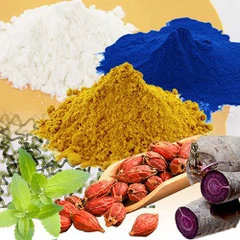


If you've been searching for a clean-label, science-backed ingredient for your next formulation, you've probably run into the term broccoli seed extract more than once. Maybe you're a procurement manager comparing suppliers. Maybe you're a formulator trying to figure out if this ingredient actually does what the marketing claims say. Either way, you're in the right place.
Let's break down what broccoli seed extract really is, why it's become one of the most talked-about botanical actives in the nutraceutical world, and how you can use it in your own product line.
What Is Broccoli Seed Extract, Exactly?
Broccoli seed extract comes from the seeds of Brassica oleracea var. italica - yes, the same plant that grows the broccoli you see at the grocery store. But the seeds carry something the florets don't have in nearly the same concentration: glucoraphanin.
Glucoraphanin is a glucosinolate. Think of it as a "storage form" that your body converts into a much more active compound called sulforaphane. This conversion happens with the help of an enzyme called myrosinase, either from the plant itself or from bacteria living in your gut .
Here's why that matters for your business:
- Broccoli seeds pack a higher glucosinolate density than sprouts or mature broccoli heads.
- This makes seed extract a more cost-efficient raw material for standardized production.
- Manufacturers can control potency far more precisely than with fresh produce.
That reliability is exactly why broccoli seed extract has moved from a niche ingredient to a mainstream one in supplements, functional foods, and even skincare formulations over the past decade.

The Science Behind It: How Glucoraphanin Becomes Sulforaphane
You don't need a biochemistry degree to understand this, but a little context helps when you're explaining the ingredient to your own customers or regulatory team.
When you eat glucoraphanin, it travels mostly intact through your stomach. Once it reaches your gut, resident bacteria with myrosinase-like activity break a chemical bond and release sulforaphane. Sulforaphane is an isothiocyanate - a reactive compound that triggers your body's own antioxidant defense system.
The key pathway here is called Nrf2 activation. Sulforaphane interacts with a protein called Keap1, which normally keeps Nrf2 locked down. Once released, Nrf2 moves into the cell nucleus and switches on genes that produce protective enzymes like NQO1 and heme oxygenase-1 . These enzymes help your cells manage oxidative stress and support detoxification pathways.
Researchers studying this pathway have noted that sulforaphane's effects go beyond simple antioxidant activity. Studies point to potential roles in metabolic health, cardiovascular support, and cellular protection against everyday oxidative damage .
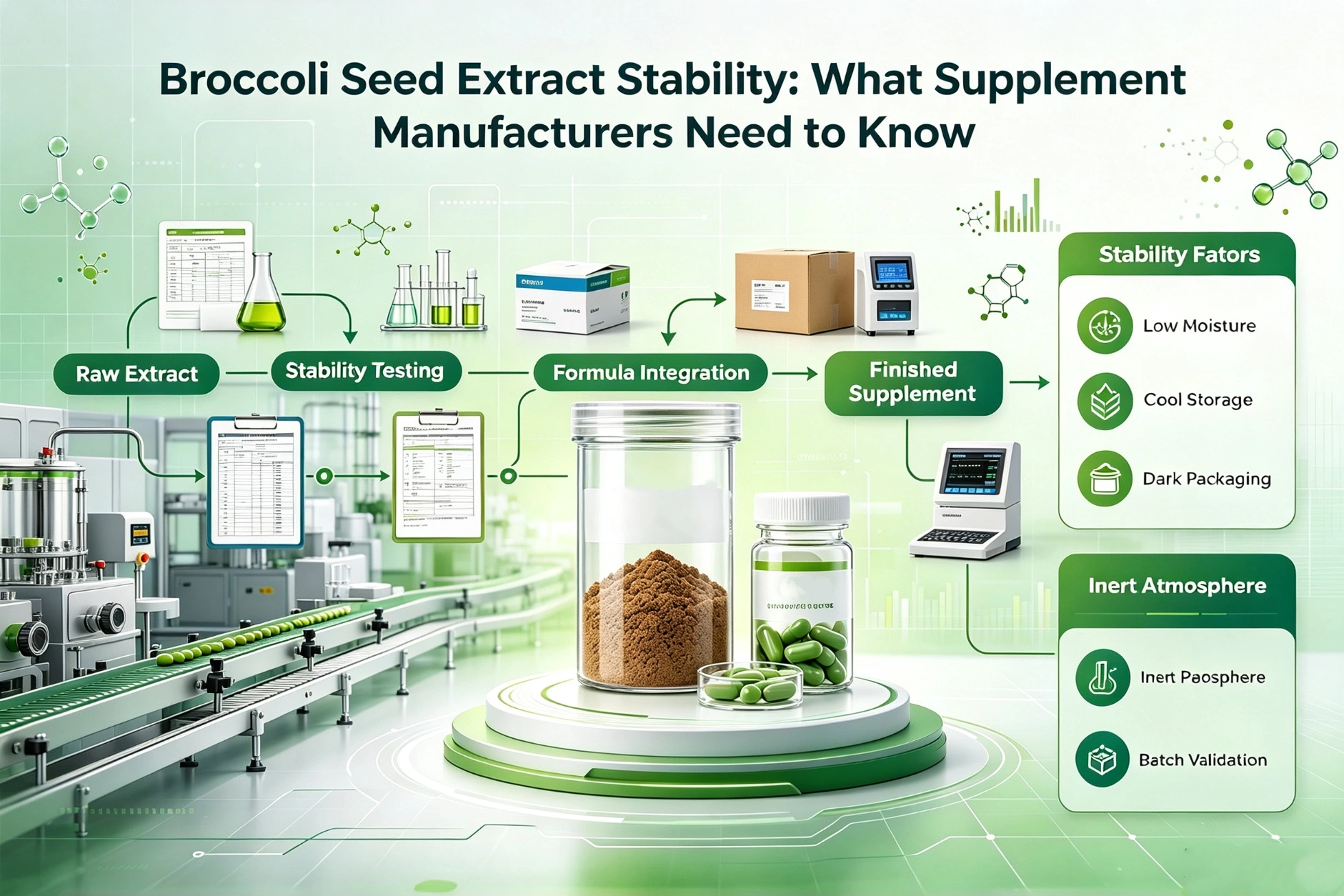
One challenge worth mentioning: sulforaphane itself is unstable. It's volatile and breaks down quickly under normal manufacturing conditions like heat and light exposure. That's exactly why the industry leans on glucoraphanin as the stable precursor form - it survives processing, storage, and shelf life far better than free sulforaphane does.
Key Active Compounds in Broccoli Seed Extract
Understanding the compound profile helps you choose the right grade for your product. Here's a simple breakdown:
|
Compound |
Role |
Stability |
|
Glucoraphanin |
Stable precursor, primary marker compound |
High - survives processing and storage well |
|
Sulforaphane |
Active isothiocyanate metabolite |
Low - reactive to heat, light, oxygen |
|
Myrosinase |
Enzyme that converts glucoraphanin to sulforaphane |
Moderate - often added separately for activation |
Most commercial broccoli seed extract powders are standardized to glucoraphanin content, typically ranging from 1% up to 20% or higher, depending on the intended application. Sulforaphane-forward grades exist too, but they generally require stabilization technology like microencapsulation to hold their potency over a reasonable shelf life.
If a supplier can't tell you clearly whether their spec sheet refers to glucoraphanin percentage or sulforaphane percentage, that's a red flag worth asking about before you commit to an order.
What Are the Benefits of Broccoli Seed Extract?
Let's talk about what actually matters to your customers - the benefits driving demand for this ingredient.
Antioxidant and Cellular Support
Sulforaphane's Nrf2-activating properties make it one of the more studied natural compounds in the antioxidant category. Research published in peer-reviewed journals has linked sulforaphane intake to reduced markers of oxidative stress in human and animal studies .
Metabolic and Cardiovascular Interest
Some clinical research has explored sulforaphane's role in supporting healthy blood sugar metabolism and lipid profiles. A widely cited overview on glucoraphanin notes experimental evidence showing antioxidant effects that may help reduce oxidative stress markers linked to metabolic dysfunction .
Skin and Anti-Aging Applications
Because sulforaphane supports cellular defense mechanisms, cosmetic formulators have started incorporating stabilized broccoli seed extract into serums and anti-aging creams. The compound's ability to support the skin's natural antioxidant response makes it an appealing addition to premium skincare lines.
A Concentrated, Practical Source
Compared to eating raw broccoli, standardized extract delivers a consistent, measurable dose. A 2019 review in the journal Molecules pointed out that both the source (broccoli vs. sprouts) and the dose matter significantly when it comes to achieving a therapeutic effect from isothiocyanates . That's precisely the problem standardized extract solves - you get a known quantity, batch after batch, instead of the variable levels found in fresh vegetables.
Common Uses and Applications for Manufacturers
If you're wondering where this ingredient actually fits in your product roadmap, here are the categories seeing the most demand right now:
- Nutraceutical capsules and tablets - direct-compression glucoraphanin powder is the most common format here.
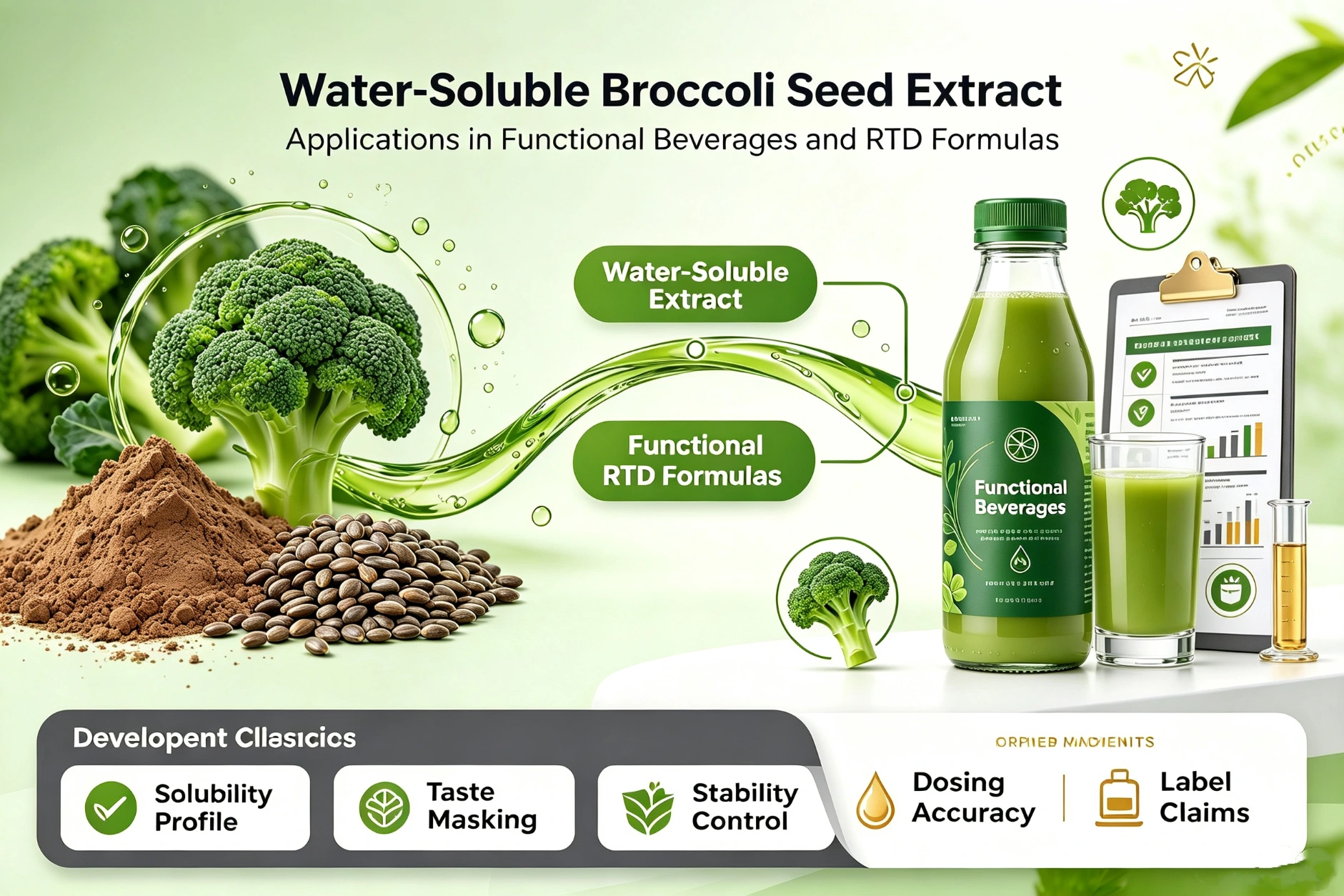
- Functional beverages - water-soluble glucoraphanin grades work well in clear or lightly colored drinks.
- Sports and detox formulations - often blended with mustard seed powder to supply active myrosinase for better conversion.
- Skincare and cosmetics - stabilized sulforaphane complexes are used in serums and creams targeting oxidative skin stress.
- Pet nutrition and animal feed additives - crude standardized powder grades are gaining traction in this growing segment.
One practical tip: broccoli-derived compounds carry a natural sulfur note. If you're formulating a beverage or gummy, ask your supplier about odor-masked or flavor-compatible grades before you lock in your formula. It'll save you a reformulation headache down the road.
How to Choose a Reliable Broccoli Seed Extract Supplier
This is where a lot of buyers get stuck. The ingredient looks similar on paper across different suppliers, but the quality gap between a well-made extract and a mediocre one can be significant. Here's what to check before you sign a purchase order:
Ask for HPLC-verified test results, not colorimetric assays. Colorimetric methods are less specific and can allow suppliers to inflate declared glucosinolate content. HPLC against certified reference standards gives you a defensible spec you can back up in an audit.
Confirm whether the spec refers to glucoraphanin or sulforaphane percentage. These numbers are not interchangeable, and mixing them up leads to dosing errors in your finished product.
Request stability data, not just a day-one Certificate of Analysis. A single-point assay tells you potency today. It doesn't tell you whether the material will still meet spec at month twelve sitting in your warehouse.
Check the extraction solvent. Water and ethanol extraction avoids solvent-residue compliance headaches later. Some lower-cost suppliers still use less desirable solvents to cut expenses.
Ask about documentation. A credible supplier should readily provide ISO certification, HACCP compliance records, a Certificate of Analysis per lot, and an MSDS without you having to chase them down.
Frequently Asked Questions
- Is broccoli seed extract the same as sulforaphane supplements? Not exactly. Broccoli seed extract is usually standardized around glucoraphanin, the stable precursor compound. Sulforaphane forms once myrosinase converts glucoraphanin, either in your gut or during specialized processing.
- Why use seed extract instead of broccoli sprout extract? Seeds generally carry a higher glucosinolate concentration per gram than sprouts, and they're more cost-efficient to source and process at commercial scale.
- Is this ingredient safe for daily use? Regulatory bodies in multiple regions have established intake guidance for sulforaphane. China's Dietary Reference Intakes, updated in 2023, set a tolerable upper intake level for sulforaphane at 30 mg per day, which allows for precise, milligram-level formulation.
- Does broccoli seed extract have a strong taste or smell? Standard grades carry a mild cruciferous note. Higher-quality water-soluble versions are formulated to minimize this, making them suitable for clear beverages and neutral-tasting capsules.
- How should I store broccoli seed extract powder? Keep it sealed, cool, and away from light and moisture. Glucoraphanin-standardized powder holds up considerably better in storage than free sulforaphane forms.
- What's the typical shelf life? Most standardized glucoraphanin powders carry a shelf life around 24 months when stored properly and kept sealed from oxygen exposure.
Ready to Source Broccoli Seed Extract for Your Brand?
Whether you're formulating a next-generation antioxidant supplement, a functional beverage, or a clean-label skincare serum, choosing a properly standardized broccoli seed extract remains one of the most important decisions in your entire product development timeline.
If you'd like to request a sample, review a Certificate of Analysis, or talk through custom standardization options for your next production run, reach out to our team directly at info@jiuybiotech.com. We're happy to walk through specification options, documentation, and lead times based on your target application.
References
- Fahey, J.W., Zhang, Y., & Talalay, P. (1997). Broccoli sprouts: An exceptionally rich source of inducers of enzymes that protect against chemical carcinogens. Proceedings of the National Academy of Sciences.
- Bahadoran, Z., Mirmiran, P., & Azizi, F. (2013). Potential efficacy of broccoli sprouts as a unique supplement for management of type 2 diabetes and its complications. Journal of Medicinal Food.
- Vermeulen, M., Klöpping-Ketelaars, I.W., van den Berg, R., & Vaes, W.H. (2008). Bioavailability and kinetics of sulforaphane in humans after consumption of cooked versus raw broccoli. Journal of Agricultural and Food Chemistry.
- Yagishita, Y., Fahey, J.W., Dinkova-Kostova, A.T., & Kensler, T.W. (2019). Broccoli or sulforaphane: Is it the source or dose that matters? Molecules.
- Clarke, J.D., Dashwood, R.H., & Ho, E. (2008). Multi-targeted prevention of cancer by sulforaphane. Cancer Letters.
- National Health Commission of China. (2023). Chinese Dietary Reference Intakes for Sulforaphane: Tolerable Upper Intake Level guidance.