

If you source mushroom ingredients for supplements, beverages, gummies, or functional foods, you may see two common options: Organic Shiitake Extract Powder and Shiitake Mushroom Powder. They sound similar, yet they serve different formulation goals.
One comes from extracted and concentrated shiitake mushroom material. The other comes from dried and milled mushroom. Both can fit clean-label products. Both can support mushroom-based formulas. Yet they differ in processing, active markers, beta-glucan testing, dosage, cost, and label positioning.
In this guide, I'll walk you through the difference in a clear B2B way. You'll learn how to compare specifications, read a COA, ask the right supplier questions, and choose the best shiitake ingredient for your product.
What Is Organic Shiitake Extract Powder?
Organic Shiitake Extract Powder is made from organic shiitake mushroom, usually the fruiting body of Lentinula edodes. The raw mushroom material goes through extraction, concentration, drying, sieving, and quality testing.
Most commercial shiitake extract powders use hot water extraction. Some formulas may use dual extraction, which combines water and ethanol extraction. The choice depends on the target compounds and the final application.
For B2B buyers, the key value of extract powder is simple:
- It is more concentrated than ordinary mushroom powder.
- It can be standardized for polysaccharides.
- It can be tested for beta-glucans.
- It works well in capsules, tablets, sachets, and powder blends.
- It gives formulators better control over active marker levels.
Shiitake contains several important compound groups. These include polysaccharides, beta-glucans, lentinan, proteins, minerals, and smaller mushroom metabolites. Scientific literature often discusses shiitake in relation to its polysaccharide profile and beta-glucan compounds, including lentinan.
A well-prepared Organic Shiitake Extract Powder should come with clear technical documents. You should ask for:
- Certificate of Analysis, COA
- Product specification sheet
- Organic certificate, based on certification scope
- Heavy metal test
- Microbiology test
- Pesticide residue data, when needed
- Allergen and non-GMO statements
- Test method for polysaccharides or beta-glucans
This is where a reliable supplier becomes important. A product name alone does not tell you enough. The real value sits in the specification and test method.
What Is Shiitake Mushroom Powder?
Shiitake Mushroom Powder is usually made by drying shiitake mushroom and milling it into powder. It is not normally extracted or concentrated.
That gives it a different role in product development.
Shiitake Mushroom Powder may work well in:
- Mushroom coffee
- Soup mixes
- Seasoning blends
- Functional food powders
- Nutrition blends
- Whole-food style products
- Culinary products
It often contains the natural profile of the mushroom. That may include fiber, proteins, minerals, carbohydrates, and mushroom flavor compounds. It may also deliver a stronger mushroom taste than extract powder.
Yet it may not provide the same active marker concentration as extract powder. If your formula needs a specific polysaccharide level or beta-glucan value, ordinary mushroom powder may not give enough control.
This does not make mushroom powder "bad." It just means it fits a different purpose.
You can think of it this way:
- Shiitake Mushroom Powder fits whole-food positioning.
- Organic Shiitake Extract Powder fits standardized supplement positioning.
Both can be useful. The better choice depends on your formula, label goals, dosage form, and target market.

Organic Shiitake Extract Powder vs Shiitake Mushroom Powder: Main Differences
When buyers compare these two ingredients, they often focus only on price. That can lead to a poor match.
You need to compare the full technical picture.
| Factor | Organic Shiitake Extract Powder | Shiitake Mushroom Powder |
|---|---|---|
| Processing | Extracted, concentrated, dried | Dried and milled |
| Source | Usually fruiting body | Fruiting body or mixed material |
| Concentration | Higher concentration | Whole mushroom profile |
| Common markers | Polysaccharides, beta-glucans, lentinan | General mushroom nutrients |
| Testing | UV, Megazyme assay, other validated methods | Basic physical and safety tests |
| Flavor | Usually milder than whole powder | More mushroom-like taste |
| Dose efficiency | Better for low-dose formats | May need higher inclusion rate |
| Common use | Capsules, tablets, gummies, sachets | Foods, drinks, soups, powders |
| Label positioning | Standardized mushroom extract | Whole mushroom powder |
This table gives you a quick view. Still, the best decision comes from your product target.
If you build a capsule with limited fill weight, extract powder often makes more sense. If you build a mushroom soup mix or coffee blend, mushroom powder may work better.
Why Fruiting Body Source Matters
Many B2B buyers now ask one key question:
Is the product made from fruiting body or mycelium?
The fruiting body is the visible mushroom structure. Mycelium is the root-like network. Both can contain useful compounds, but they differ in composition. Research comparing fungal fruiting bodies and mycelia shows that these two materials can vary in proteins, polysaccharides, minerals, and smaller metabolites.
For supplement brands, fruiting body extract often carries stronger market acceptance. Buyers may prefer it because:
- It matches traditional mushroom ingredient expectations.
- It avoids confusion with grain-grown mycelium products.
- It may support cleaner front-label messaging.
- It helps brands answer consumer questions more easily.
This matters in North America and Europe. Many consumers now read labels more carefully. They want to know if a mushroom product uses fruiting body, mycelium, or mycelium grown on grain.
When you source Organic Shiitake Extract Powder, ask your supplier to confirm:
- Part used: fruiting body
- Organic certification scope
- Extraction method
- Assay method
- Carrier or excipient status
- Country of origin
- COA for the shipped batch
A good supplier should answer these questions clearly.
Polysaccharides, Beta-Glucans, and Lentinan: What Buyers Need to Check
Shiitake extract specifications often mention polysaccharides, beta-glucans, and lentinan. These terms can overlap, but they are not identical.
Polysaccharides
Polysaccharides are large carbohydrate molecules. Mushroom extracts often use polysaccharide content as a common commercial marker.
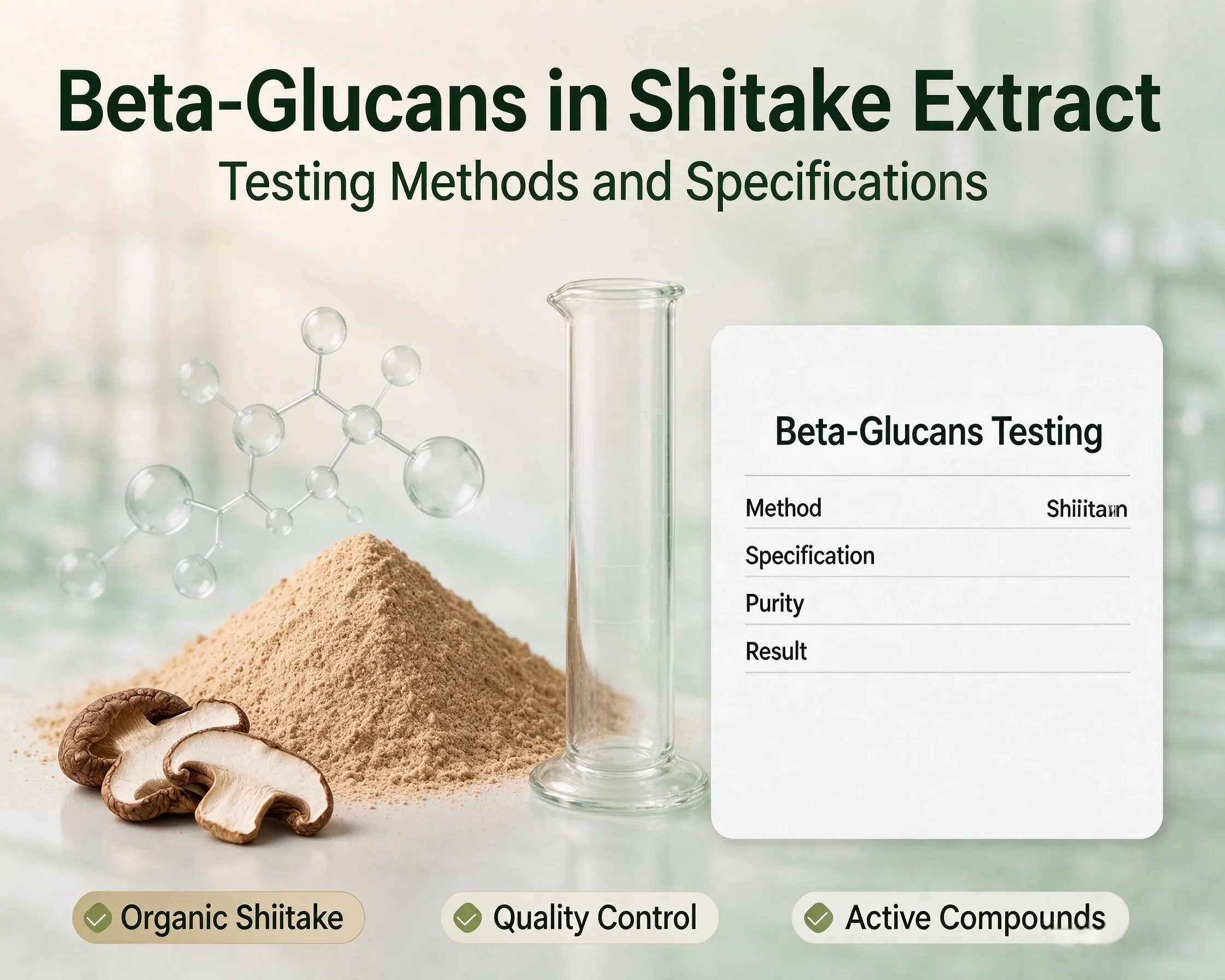
Many suppliers test polysaccharides by UV method. This method is common in the industry, but it may not separate beta-glucans from other carbohydrates. That is why polysaccharide data alone may not tell the full story.
Common shiitake extract specifications include:
- Polysaccharides 10%
- Polysaccharides 20%
- Polysaccharides 30%
- Polysaccharides 50%
These grades can support different price and formula targets.
Beta-Glucans
Beta-glucans are a specific group within mushroom polysaccharides. Many premium mushroom supplement brands care about beta-glucan testing.
The Megazyme enzymatic assay is widely used for beta-glucan analysis in mushroom products. Many high-quality mushroom extract brands and technical buyers prefer this method because it gives more specific beta-glucan data than broad polysaccharide testing.
When you ask for beta-glucan data, make sure the supplier states the test method.
Lentinan
Lentinan is a beta-glucan associated with shiitake mushroom. It has been widely studied in scientific literature. The CAS number 37339-90-5 refers to lentinan, not to whole shiitake extract powder.
This distinction matters. A whole extract does not have one single CAS number in the same way a purified compound does.
For a professional product page or COA, it is better to write:
Lentinan CAS No.: 37339-90-5
That avoids confusion and improves technical trust.
Extraction Method: Hot Water Extract vs Dual Extract
Extraction method affects the final ingredient profile.
Hot Water Extraction
Hot water extraction is common for mushroom extract powders. It targets water-soluble compounds, including many polysaccharides and beta-glucans.
This method works well for:
- Capsules
- Tablets
- Powder blends
- Immune-support-positioned formulas
- Mushroom complex products
Dual Extraction
Dual extraction uses water and ethanol. Brands may choose it when they want a broader compound profile.
This method may support formulas that include both water-soluble and alcohol-soluble mushroom compounds. The right choice depends on your target specification.
For Organic Shiitake Extract Powder, you should ask your supplier:
- Is it hot water extracted?
- Is dual extraction available?
- What solvent system was used?
- Are residual solvents tested?
- Is the drying method spray drying?
- Does the COA match the extraction claim?
These questions help you avoid vague product claims.
How to Choose Between Extract Powder and Mushroom Powder
You can choose the right ingredient by matching it to your product format.
Choose Organic Shiitake Extract Powder when you need:
- Standardized polysaccharide content
- Beta-glucan testing
- Lower inclusion level
- Better fit for capsules or tablets
- Cleaner technical specification
- Stronger supplement positioning
- COA-based quality control
Choose Shiitake Mushroom Powder when you need:
- Whole mushroom identity
- Food-style positioning
- Natural mushroom flavor
- Higher use level in food products
- Mushroom coffee or soup applications
- Simple dried mushroom ingredient
Your choice should not come from price alone. It should come from product design.
A capsule brand may need an extract. A soup brand may need mushroom powder. A beverage brand may need either one, depending on taste, solubility, and dosage.
What B2B Buyers Should Ask a Supplier
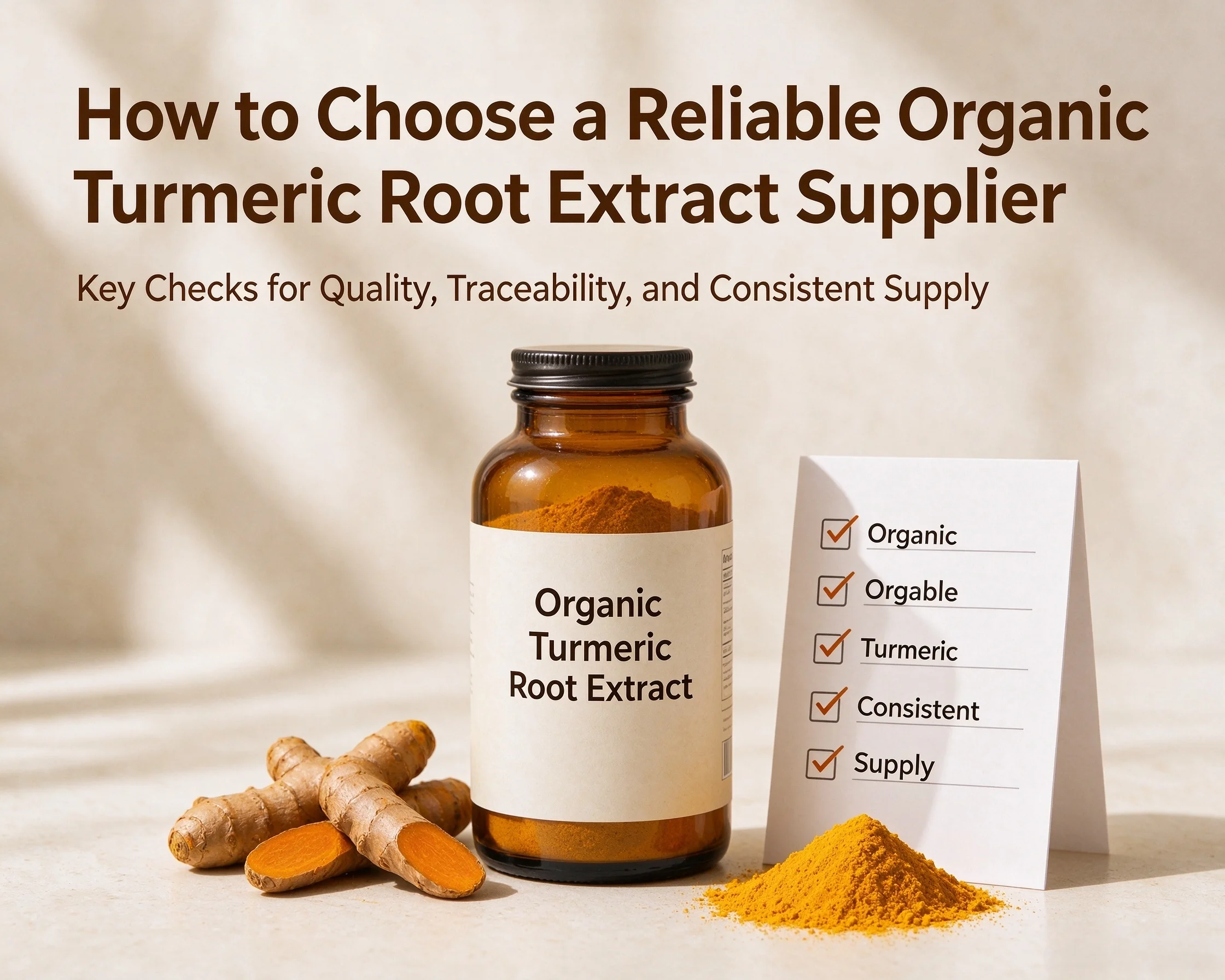
When you source Organic Shiitake Extract Powder, your supplier should provide clear answers. A low price means little if the documentation is weak.
Ask these questions before you place a bulk order:
- Is the material made from fruiting body or mycelium?
- What is the organic certification scope?
- What is the polysaccharide specification?
- Can you test beta-glucans by Megazyme assay?
- What is the extraction method?
- Is the powder spray-dried?
- What is the particle size?
- Are carriers or fillers used?
- Can you provide a current COA?
- Do you test heavy metals and microbiology?
- Can you provide pesticide residue testing?
- What is the MOQ?
- What is the lead time?
- Can you support custom packaging?
A good supplier should not avoid these questions. Clear answers protect your formulation, label, and brand reputation.
How to Read a Shiitake Extract COA
A COA should do more than list the product name. It should help you confirm quality.
Check these fields:
- Product Identity
- Product name
- Latin name: Lentinula edodes
- Part used: fruiting body
- Country of origin
- Batch number
Assay Data
- Polysaccharide content
- Beta-glucan content, when requested
- Test method
- Result, not only "conform"
Physical Data
- Appearance
- Color
- Odor
- Particle size
- Moisture
- Ash
Safety Data
- Lead
- Arsenic
- Cadmium
- Mercury
- Total plate count
- Yeast and mold
- E. coli
- Salmonella
For premium buyers, "conform" may not be enough. Numeric results give better transparency.
If a supplier claims polysaccharides 50%, the COA should show an assay result. If the product claims beta-glucans, the test method should be clear.
Common Applications for Organic Shiitake Extract Powder
Organic Shiitake Extract Powder fits many B2B product types.
Popular applications include:
- Mushroom supplement capsules
- Tablet formulas
- Functional mushroom blends
- Mushroom coffee powders
- Gummies and chewables
- Sachets and stick packs
- Instant beverage powders
- Plant-based nutrition products
- Immune-support-positioned supplements
- Clean-label functional foods
When formulating, test taste, color, solubility, and stability. Shiitake extract has a natural mushroom profile. It may affect flavor in drinks or gummies.
For capsules and tablets, particle size and flowability matter more. For beverages, dispersibility becomes more important.
FAQ
1. What is the main difference between Organic Shiitake Extract Powder and Shiitake Mushroom Powder?
Organic Shiitake Extract Powder is extracted and concentrated. Shiitake Mushroom Powder is usually dried and milled. Extract powder gives better control over polysaccharides and beta-glucans.
2. Is Organic Shiitake Extract Powder better than mushroom powder?
It depends on your product. Extract powder works better for standardized supplements. Mushroom powder works well for foods, soups, mushroom coffee, and whole-food blends.
3. What part of shiitake mushroom should I choose?
Many supplement brands prefer fruiting body extract. It offers a clear mushroom source and supports stronger label transparency.
4. What test method should I request for beta-glucans?
You should request the Megazyme enzymatic assay for beta-glucans. It provides more specific data than broad polysaccharide testing.
5. Can shiitake extract be used in gummies?
Yes. You can use shiitake extract in gummies, but you should test flavor, color, dosage, and heat stability during development.
6. What specification is common for Organic Shiitake Extract Powder?
Common specifications include polysaccharides 10% to 50%. Beta-glucan content can be customized and tested by Megazyme assay.
7. Does lentinan have a CAS number?
Yes. Lentinan CAS No. is 37339-90-5. This number refers to lentinan, not the whole shiitake extract powder.
8. What documents should I ask from a supplier?
Ask for COA, specification sheet, organic certificate, MSDS, allergen statement, non-GMO statement, heavy metal test, microbiology test, and pesticide residue data when needed.
Final Thoughts: Choosing the Right Shiitake Ingredient for Your Formula
Choosing between Organic Shiitake Extract Powder and Shiitake Mushroom Powder becomes easier when you focus on your product goal.
Choose extract powder when you need standardization, beta-glucan data, smaller dosage, and supplement-grade positioning. Choose mushroom powder when you need whole-food identity, mushroom flavor, and a simpler food ingredient.
At Jiuyuan Bio, we support B2B buyers with Organic Shiitake Extract Powder, mushroom extract customization, COA support, organic documentation, and bulk supply for supplements, functional foods, beverages, gummies, and powder blends.
For product specifications, sample requests, COA, or bulk quotation, contact us at: info@jiuybiotech.com
You can also visit our website: Jiuyuan Bio Official Website: https://www.jiuyuanbio.com/
References
- Wasser, S. P. "Medicinal Mushroom Science: History, Current Status, Future Trends, and Unsolved Problems." International Journal of Medicinal Mushrooms.
- Berger, R. G., et al. "Mycelium vs. Fruiting Bodies of Edible Fungi-A Comparison of Metabolites." Foods, 2022.
- Vetvicka, V., and Vetvickova, J. "Immune Enhancing Effects of Mushroom Beta-Glucans." International Journal of Medicinal Mushrooms.
- Wasser, S. P. "Current Findings, Future Trends, and Unsolved Problems in Studies of Medicinal Mushrooms." Applied Microbiology and Biotechnology.
- Ruthes, A. C., Smiderle, F. R., and Iacomini, M. "Mushroom Heteropolysaccharides: A Review on Their Sources, Structure and Biological Effects." Carbohydrate Polymers.
- McCleary, B. V., and Draga, A. "Measurement of β-Glucan in Mushrooms and Mycelial Products." Journal of AOAC International.