


When you buy Yellow Powder Turmeric for food, supplements, beverages, or natural color applications, color matters. A bright orange-yellow shade can make a formula look clean, natural, and attractive. But if the next batch looks slightly darker, lighter, or more brownish, you may start asking an important question: Is this still the same quality?
The short answer is: not always, but color variation should never be ignored.
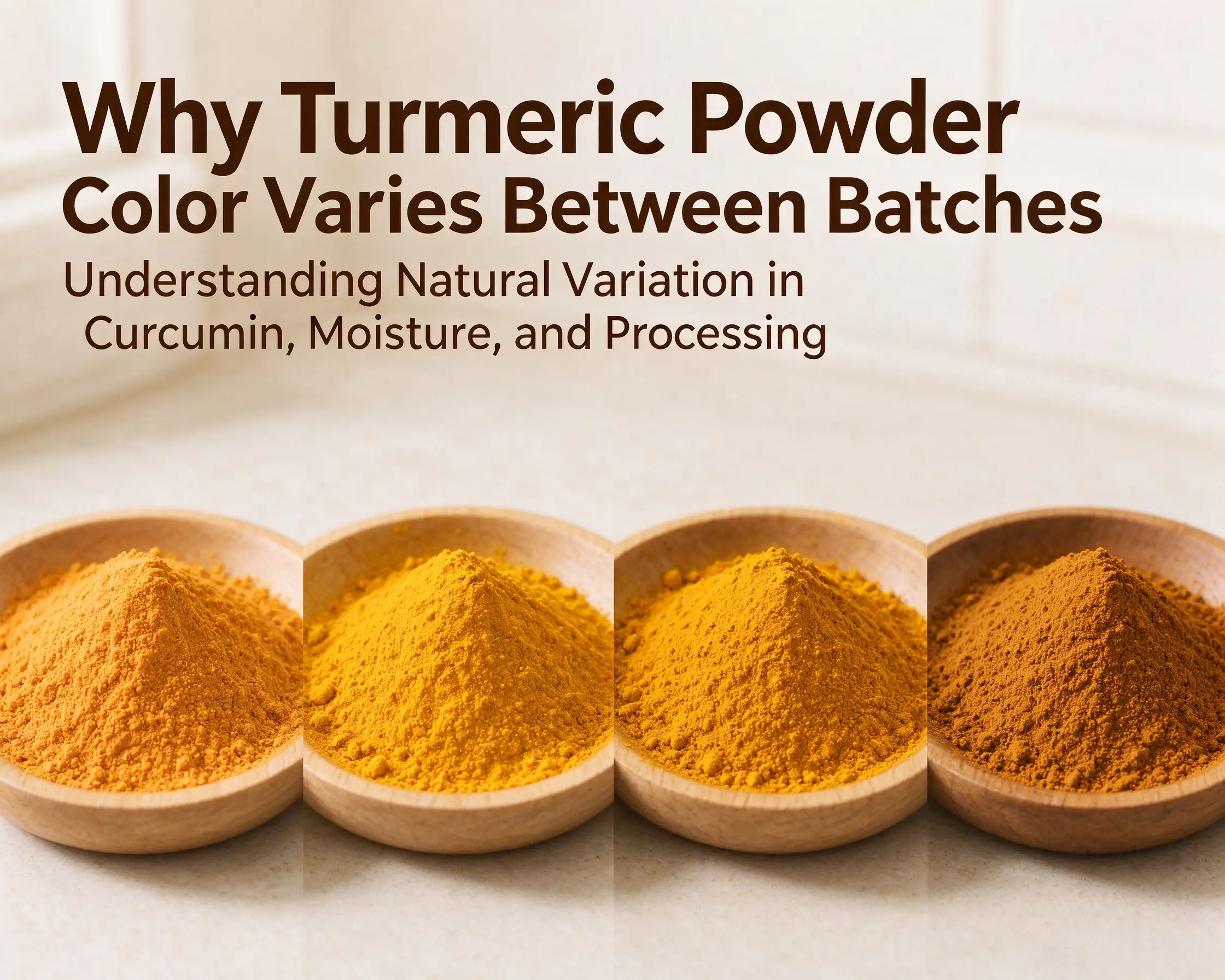
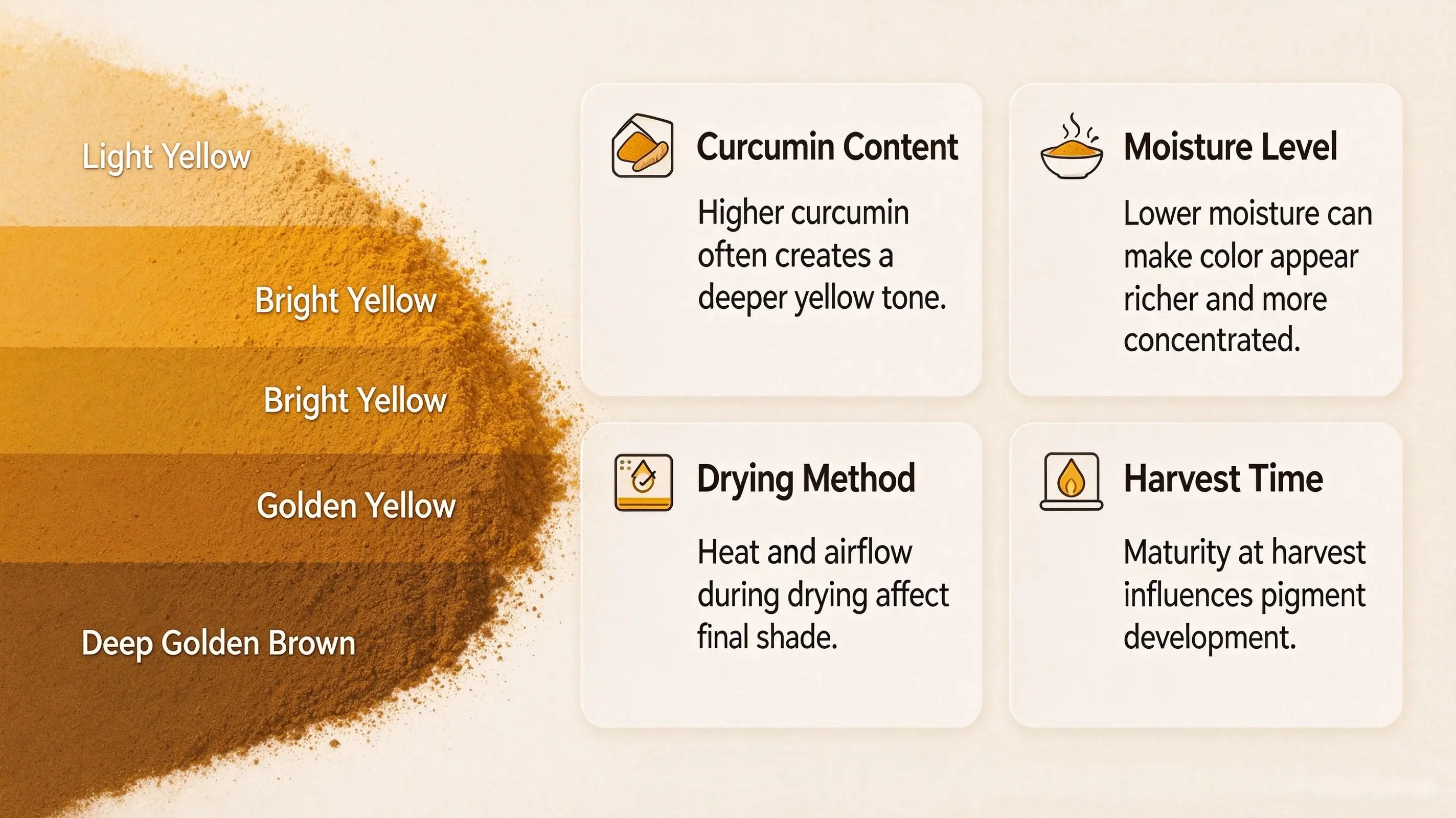
Turmeric is a natural botanical ingredient. Its color can change because of plant variety, harvest season, drying method, curcumin content, particle size, storage, and processing conditions. For B2B buyers, the goal is not to demand impossible "perfect sameness." The goal is to understand what causes color differences and how to evaluate each batch with data.
At Jiuyuan Biotech, I look at turmeric powder color through both eyes: visual performance and technical quality. A good supplier should help you understand both.
What Gives Yellow Powder Turmeric Its Color?
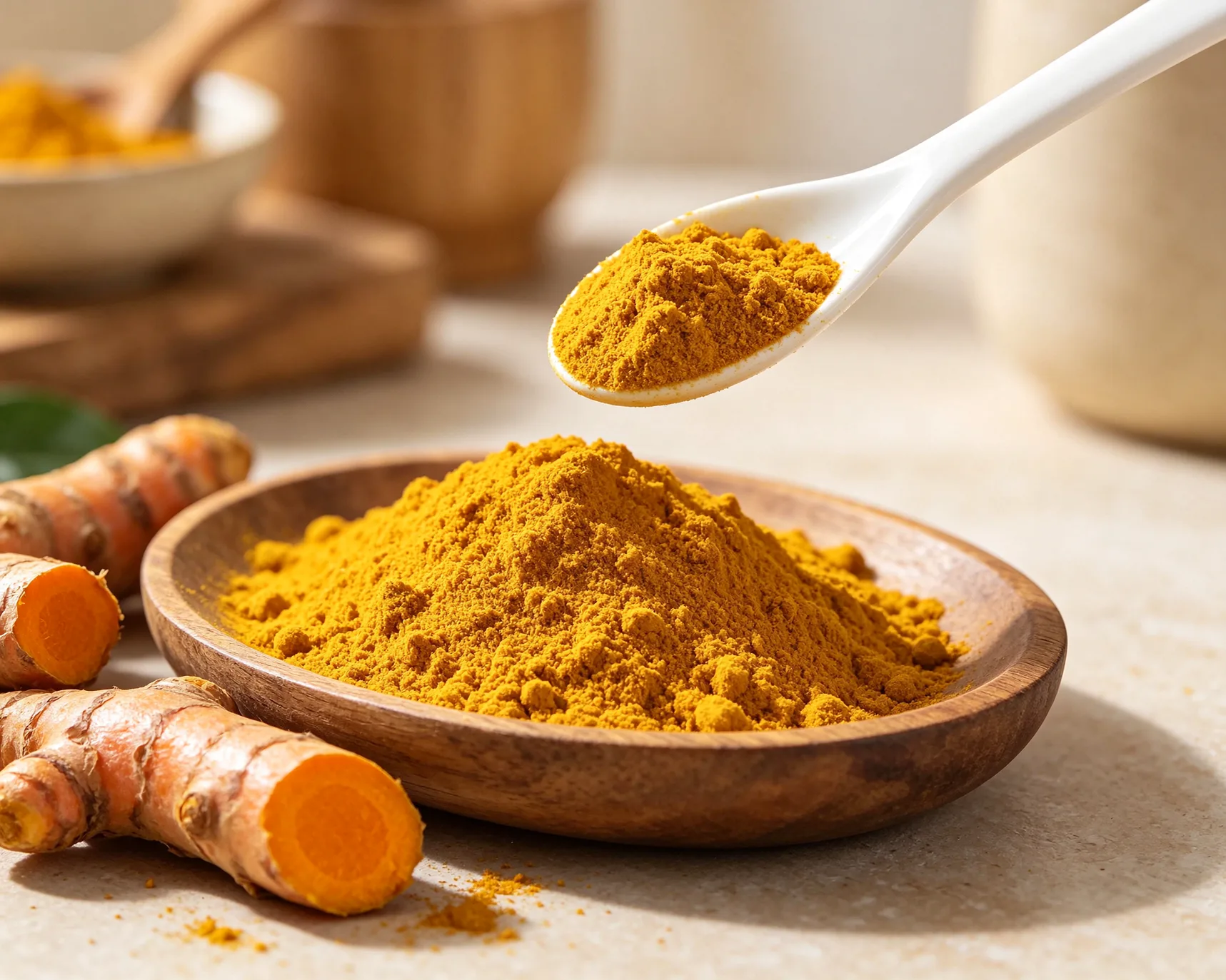
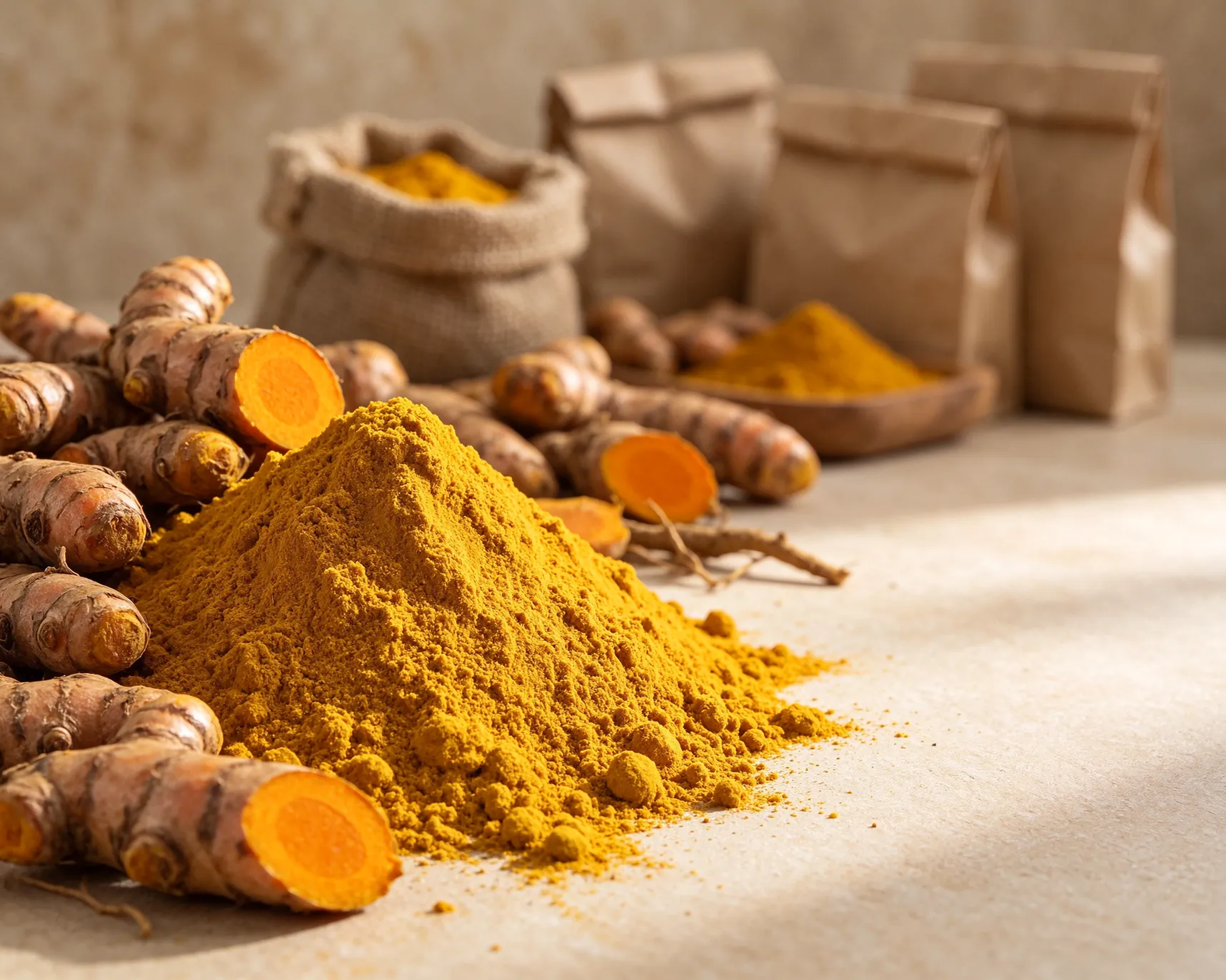
Turmeric comes from the rhizome of Curcuma longa L. Its famous yellow-orange color mainly comes from natural compounds called curcuminoids.
The most important curcuminoids include:
- Curcumin
- Demethoxycurcumin
- Bisdemethoxycurcumin
These compounds help create the warm yellow to orange shade that buyers expect from Yellow Powder Turmeric.
However, turmeric color does not come from curcumin alone. Whole turmeric powder also contains natural oils, fibers, starches, proteins, minerals, and other plant compounds. These parts can affect the final color, too.
That is why two turmeric powders may both meet specification but still look slightly different.
Turmeric Powder vs. Curcumin Extract
Many buyers mix up turmeric powder and curcumin extract. This can lead to wrong expectations.
|
Ingredient Type |
Main Feature |
Color Behavior |
|
Turmeric powder |
Whole rhizome powder |
Natural shade variation is common |
|
Turmeric extract |
Concentrated active compounds |
More controlled color and assay |
|
Curcumin |
One key curcuminoid |
Strong yellow-orange pigment |
|
Turmeric oleoresin |
Oil-soluble preparation |
Different use and color strength |
If your product needs a strong and standardized color, you may need a defined curcumin level. If your product needs a natural whole-food ingredient, Yellow Powder Turmeric may be the right choice.
Why Turmeric Powder Color Varies Between Batches
Batch color variation is normal in natural plant ingredients. But "normal" does not mean "uncontrolled." A professional supplier should explain the reason and provide testing documents.
Let's break down the main causes.
1. Raw Material Origin and Growing Conditions
Turmeric is an agricultural product. Like coffee, tea, or cocoa, it changes with nature.
Color may vary because of:
- Soil minerals
- Rainfall
- Sunlight
- Temperature
- Growing altitude
- Harvest season
- Plant maturity
- Rhizome variety
A mature turmeric rhizome often gives a deeper yellow-orange shade. Younger or poorly developed material may look lighter.
For B2B buyers, this means origin control matters. A supplier with stable raw material sourcing can reduce unwanted color shifts.
Jiuyuan Biotech works from direct sourcing and controlled production. This helps buyers get better traceability from raw material to final batch.
2. Curcumin and Curcuminoid Content
Curcuminoids strongly influence turmeric color. A batch with higher curcuminoid content may look deeper, brighter, or more orange.
But color alone cannot prove curcumin content.
A powder may look bright because of particle size or processing. Another batch may look dull but still contain acceptable active compounds.
That is why buyers should always request:
- Curcumin assay
- HPLC testing method
- Batch-specific Certificate of Analysis
- Clear specification range
- Testing basis and unit
For Jiuyuan Biotech's Yellow Powder Turmeric, product documentation may include curcumin assay, appearance, particle size, moisture, ash, heavy metals, and microbiology. This gives you more than a visual opinion.
3. Drying Method and Heat Exposure
Drying is one of the biggest reasons turmeric powder color changes.
If turmeric dries too slowly, microbial risk may increase. If it dries under too much heat, color compounds may degrade.
Common drying factors include:
- Drying temperature
- Drying time
- Airflow
- Sun exposure
- Moisture level before grinding
- Post-drying storage
High heat can make turmeric look darker or duller. Poor drying control may create brown tones. Good drying control helps protect the natural yellow-orange appearance.
For food and supplement buyers, drying control affects both color quality and safety.
4. Grinding Temperature and Particle Size
Grinding looks simple, but it can change color.
When turmeric rhizomes turn into powder, friction creates heat. Too much heat may affect natural pigments and aroma. It can also make the powder look less vibrant.
Particle size also changes how the eye sees color.
Fine powder reflects light differently from coarse powder. An 80-mesh turmeric powder may look smoother and more uniform than a rougher powder.
When comparing batches, always compare the same mesh size under the same lighting. Otherwise, you may judge color incorrectly.
5. Moisture Content
Moisture affects both appearance and shelf life.
Higher moisture may make turmeric powder look darker or less free-flowing. It may also increase caking risk.
For industrial buyers, moisture control matters because it affects:
- Flowability
- Blending performance
- Shelf stability
- Microbial control
- Packaging behavior
- Color consistency
A good specification often sets moisture below a defined limit. For example, Jiuyuan Biotech's turmeric documentation shows moisture control as part of quality testing.
6. Storage and Packaging Conditions
Turmeric color can fade or shift during storage. Curcuminoids are sensitive to strong light, heat, oxygen, and high humidity.
To protect Yellow Powder Turmeric, you should store it:
- In a cool and dry place
- Away from strong light
- Away from heat
- In sealed original packaging
- Away from strong odors
- Under recommended warehouse conditions
Packaging also matters. Good packaging helps protect powder from moisture, oxygen, and contamination.
For long-distance international shipments, ask your supplier about packaging type, palletizing, and shipping conditions.
7. Natural Botanical Variation
Even with strong quality control, turmeric is still a plant ingredient. Small batch differences can happen.
This is not automatically a quality failure.
The important question is:
Does the batch still meet the agreed specification?
That specification should include more than color. It should include chemical, physical, microbial, and safety parameters.
Is Color a Reliable Quality Indicator?
Color is useful, but it is not enough by itself.
A bright yellow powder can look attractive. But visual color does not confirm safety, purity, or active content.
A serious B2B buyer should treat color as one part of a full quality review.
What Color Can Tell You
Color can help you notice:
- Possible raw material differences
- Heat damage
- Oxidation
- Poor drying
- Storage issues
- Batch mismatch
- Contamination risk
If a batch looks very different from the approved standard, you should investigate.
What Color Cannot Tell You
Color alone cannot confirm:
- Curcumin percentage
- Heavy metal levels
- Microbial safety
- Pesticide residue status
- Adulteration
- Solvent residue
- Full compliance
That is why a batch must come with documents and lab data.
For buyers of Yellow Powder Turmeric, visual approval should work together with technical approval.
How B2B Buyers Should Evaluate Yellow Powder Turmeric
If you are a purchasing manager, formulation engineer, brand owner, or distributor, you need a practical evaluation system.
Here is the process I recommend.
Step 1: Define Your Application First
Different applications need different turmeric powder standards.
Ask yourself:
- Will you use it as a natural food color?
- Will it go into capsules or tablets?
- Will it go into a drink powder?
- Will it be used in seasoning blends?
- Will it be used in pet nutrition?
- Will it enter the EU, US, Middle East, or Asian market?
For example, a sauce brand may care most about color shade and heat stability. A supplement brand may care more about assay, heavy metals, and microbiology.
Your application should guide your specification.
Step 2: Request a Pre-Shipment Sample
Never approve bulk material based only on a photo.
Photos can mislead you because lighting, camera settings, and screen color all change the result.
A physical sample helps you check:
- Color
- Odor
- Texture
- Flowability
- Solubility or dispersibility
- Blending behavior
- Application performance
For best results, compare the sample with your approved standard in your own formula.
Step 3: Review the Certificate of Analysis
A batch-specific Certificate of Analysis, or COA, is essential.
For Yellow Powder Turmeric, the COA should include key items such as:
|
Test Item |
Why It Matters |
|
Appearance |
Confirms visual match |
|
Curcumin assay |
Supports active marker control |
|
Particle size |
Affects blending and color appearance |
|
Moisture |
Impacts shelf life and caking |
|
Ash content |
Supports purity review |
|
Heavy metals |
Critical for compliance |
|
Microbiology |
Critical for food safety |
|
Pathogens |
Confirms absence of major risks |
A strong supplier does not send generic documents. They provide batch-specific results.
Jiuyuan Biotech supports quality control with in-house testing capability, including HPLC, UV, GC, AAS, and microbiology testing.
Step 4: Check the Test Method
A result means little without a method.
For curcumin or curcuminoid content, HPLC is commonly used because it gives more specific data than simple visual checks.
When reviewing a COA, check:
- Test method
- Unit of measurement
- Reporting basis
- Detection limits
- Batch number
- Manufacture date
- Expiration date
This helps your QA team compare suppliers fairly.
Step 5: Compare Color Under Controlled Conditions
If color matters to your finished product, create a simple color-check system.
Use the same:
- Light source
- Sample container
- Powder depth
- Background
- Viewing angle
- Approved standard sample
- Moisture condition
- Particle size
For larger operations, you may use a colorimeter and measure values such as L*, a*, and b*. This gives a more objective way to compare color.
Visual checks still help, but measured data reduces arguments.
Step 6: Test in the Final Formula
A turmeric powder may look perfect in a bag but behave differently in your formula.
Test it in your real application.
Check:
- Color after mixing
- Color after heating
- Color after pH change
- Color after storage
- Color under light exposure
- Flavor impact
- Sedimentation
- Texture
This step is especially important for beverages, sauces, bakery mixes, gummies, tablets, and capsules.
Step 7: Confirm Certifications and Compliance
B2B buyers often search for terms like turmeric powder supplier, turmeric powder factory, Yellow Powder Turmeric manufacturer, and turmeric powder with certificate.
These searches show a clear need: buyers want safe, traceable, export-ready material.
When choosing a supplier, check for:
- ISO 9001
- ISO 22000
- FSSC 22000
- HACCP
- cGMP
- Halal
- Kosher
- FDA-related documentation
- Organic certification, if needed
Jiuyuan Biotech operates a 70,000 m² production facility with 10 production lines and over 6,000 tons of annual capacity. The company also holds multiple international certifications, including ISO, FSSC 22000, HACCP, Halal, Kosher, and cGMP-related qualifications.
Common Red Flags When Buying Turmeric Powder
Color variation can be acceptable. But some signs deserve caution.
Watch for these red flags:
- The supplier refuses to provide a batch COA
- The color looks unnaturally bright
- The price is far below market level
- The odor smells musty or chemical-like
- The powder cakes badly
- The supplier cannot explain origin
- The supplier cannot provide heavy metal data
- The supplier gives only generic certificates
- The sample and bulk batch look very different
- The specification does not match your application
Natural color does not mean "no testing needed." In fact, natural ingredients need strong testing because nature varies.
How Jiuyuan Biotech Controls Yellow Powder Turmeric Quality
At Jiuyuan Biotech, I believe a buyer should not need to guess.
A reliable Yellow Powder Turmeric supplier should provide clear product data, consistent communication, and practical support.
Jiuyuan Biotech's Yellow Powder Turmeric is made from selected Curcuma longa L. roots. It appears as an orange-yellow fine powder and can serve food, health product, and related ingredient applications.
Key Product Features
- Product name: Yellow Powder Turmeric
- Botanical source: Curcuma longa L.
- Part used: Roots
- Appearance: Orange yellow powder
- CAS No.: 458-37-7
- MOQ: 1 kg
- Applications: Food, health products, medicine-related formulations
- Certifications: ISO9001, cGMP, ISO22000, HACCP, FDA-related, Halal
Quality Control Focus
Jiuyuan Biotech supports buyers through:
- Raw material sourcing control
- Batch-specific COA
- HPLC assay testing
- Heavy metal testing
- Microbiology testing
- Particle size control
- Moisture control
- Technical support
- Export documentation support
This matters because B2B buyers do not only buy powder. They buy supply stability, compliance support, and risk reduction.
Practical Buyer Checklist for Yellow Powder Turmeric
Use this checklist before you approve a supplier or repeat an order.
Product Quality
- Does the powder match your approved color range?
- Does it meet your curcumin or active marker requirement?
- Is the particle size suitable for your process?
- Is moisture within specification?
- Does the odor match normal turmeric?
Safety and Compliance
- Are heavy metals tested?
- Are microbiological results acceptable?
- Are E. coli and Salmonella negative?
- Does the supplier provide real batch data?
- Do certifications match your market needs?
Supplier Capability
- Is the supplier a real factory or trader?
- Can they support stable bulk orders?
- Do they provide technical service?
- Can they explain batch differences clearly?
- Can they support documentation for import?
Commercial Fit
- Is MOQ suitable?
- Is lead time stable?
- Is packaging suitable for your warehouse?
- Can the supplier support long-term contracts?
- Can they help with sample approval?
A strong supplier makes your procurement job easier. A weak supplier makes every batch feel like a surprise box. And in B2B sourcing, surprise boxes are rarely fun.
FAQ About Yellow Powder Turmeric Color Variation
1. Why does Yellow Powder Turmeric look different from batch to batch?
Yellow Powder Turmeric may vary because turmeric is a natural plant material. Soil, harvest time, drying, grinding, moisture, and storage all affect color. Small variation can be normal if the batch still meets specification.
2. Does darker turmeric powder mean better quality?
Not always. A darker color may come from higher curcuminoids, but it may also come from heat exposure or storage issues. You should check the COA, curcumin assay, moisture, and microbiology results.
3. Is bright yellow turmeric powder always better?
No. Very bright color may look attractive, but color alone does not prove quality. You should confirm that the product is natural, tested, and free from unsafe contamination.
4. What test should I request for turmeric powder?
You should request a batch-specific COA. Important tests include appearance, curcumin assay, particle size, moisture, ash, heavy metals, total plate count, yeast and mold, E. coli, and Salmonella.
5. How should I store Yellow Powder Turmeric?
Store it in a cool, dry place. Keep it away from strong light, heat, moisture, and strong odors. Keep the packaging sealed when not in use.
6. Can I use turmeric powder as a natural food color?
Yes, turmeric powder can provide a natural yellow-orange shade in many food applications. However, you should test it in your final formula because pH, heat, light, and other ingredients can affect color.
7. What is the difference between turmeric powder and turmeric extract?
Turmeric powder is made from whole turmeric rhizome. Turmeric extract contains concentrated active compounds, often standardized for curcuminoids. Extract usually gives stronger and more controlled color performance.
8. How can I reduce batch color variation in my product?
You can reduce variation by setting a clear color standard, using the same particle size, approving pre-shipment samples, checking batch COAs, and working with a qualified turmeric powder factory.
Final Thoughts: Color Variation Is Normal, But Quality Must Be Proven
Natural turmeric powder will never behave like a synthetic dye. It comes from a living plant, so some color variation can happen. But buyers should never accept vague answers.
When evaluating Yellow Powder Turmeric, look beyond the surface. Check the raw material source, curcumin assay, drying control, particle size, moisture, microbiology, heavy metals, and certifications.
A reliable supplier should help you connect visual color with real quality data.
Jiuyuan Biotech provides Yellow Powder Turmeric with controlled production, batch-specific quality documents, and technical support for B2B buyers. If you need a stable turmeric powder supplier for food, supplement, or natural color applications, contact us at info@jiuybiotech.com.
References
- National Center for Complementary and Integrative Health. "Turmeric: Usefulness and Safety."
- European Food Safety Authority. "Scientific Opinion on the Re-evaluation of Curcumin as a Food Additive."
- U.S. Food and Drug Administration. "Guidance for Industry: Botanical Drug Development."
- Codex Alimentarius Commission. "General Principles of Food Hygiene."
- Jayaprakasha, G. K., Rao, L. J. M., and Sakariah, K. K. "Chemistry and Biological Activities of Curcuma longa."
- Prasad, S., Gupta, S. C., Tyagi, A. K., and Aggarwal, B. B. "Curcumin, a Component of Golden Spice: From Bedside to Bench and Back."