


If you are sourcing Organic Acai Berry Extract, you may also see another popular ingredient on supplier quotes: acai powder. At first glance, they may look similar. Both come from the acai berry, both have a deep purple color, and both fit clean-label nutrition products. Yet they are not the same ingredient.
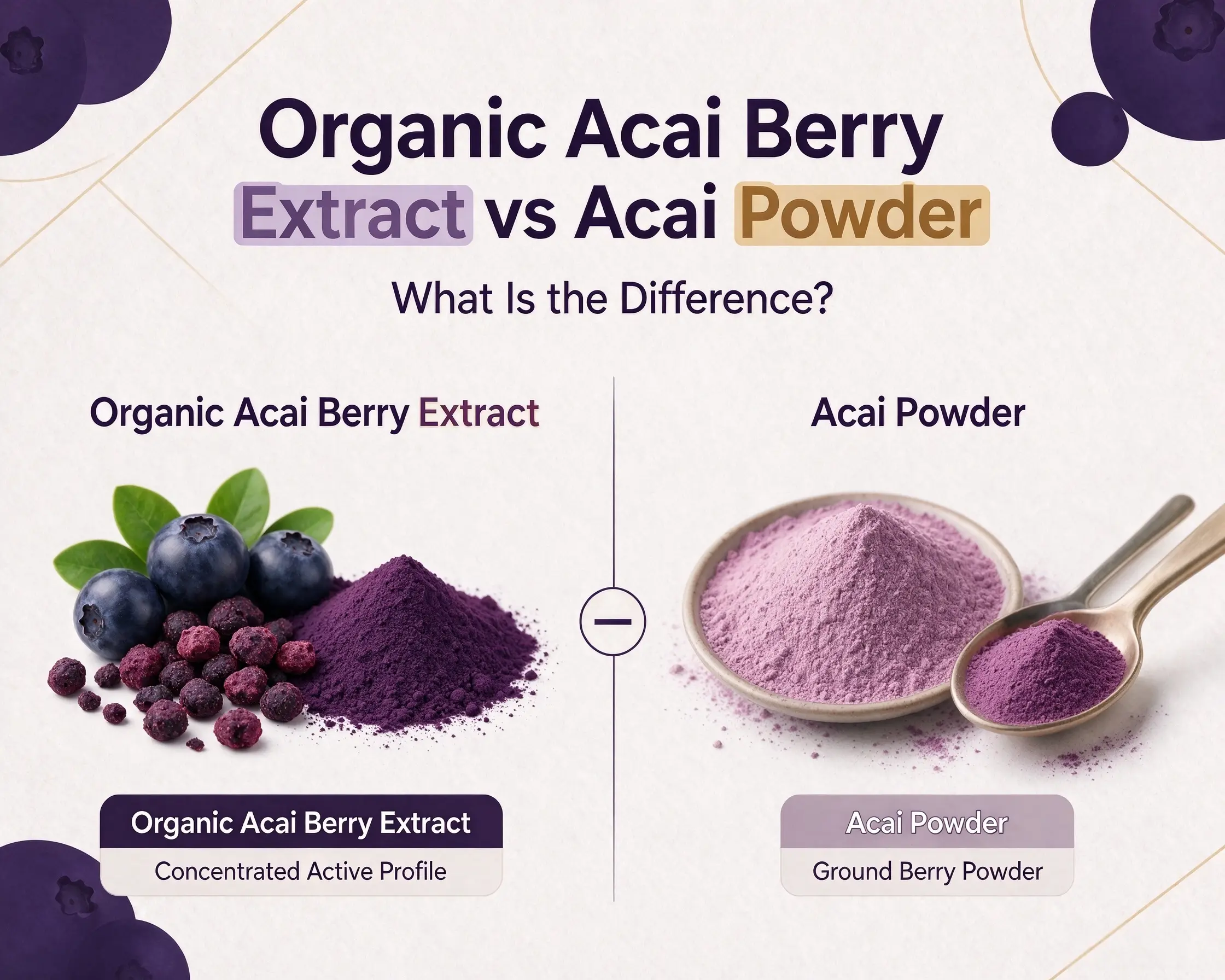
For B2B buyers, this difference matters. Organic Acai Berry Extract is usually selected for concentrated botanical positioning, higher active compound density, and smaller serving size. Acai powder is often selected for whole-fruit nutrition, natural color, flavor, and food-style applications.
I work with buyers who compare these two materials for capsules, tablets, sachets, gummies, smoothies, beverages, and private-label superfood blends. The right choice depends on your formula, label claim, cost target, dosage form, and document requirements.
Below is a practical buyer guide to help you compare them clearly.
What Is Organic Acai Berry Extract?
Organic Acai Berry Extract is a concentrated ingredient made from the fruit of the acai palm, commonly identified as Euterpe oleracea Mart. The fruit is processed, extracted, concentrated, dried, milled, and tested according to the target specification.
In B2B sourcing, acai berry extract is usually used when the buyer wants a more concentrated botanical ingredient than standard fruit powder.
Common commercial forms include:
- Organic acai berry extract powder
- Acai berry extract ratio powder
- Acai extract standardized for polyphenols
- Acai extract standardized for anthocyanins
- Water-soluble acai extract
- Spray-dried acai extract powder
The key idea is simple: extract powder is more concentrated than whole fruit powder. It may support lower inclusion rates in capsules, tablets, powder sticks, and premium supplement blends.
Common product positioning
Organic Acai Berry Extract often fits:
- Antioxidant supplement formulas
- Superfood capsules
- Beauty-from-within blends
- Functional beverages
- Gummies and chewables
- Powder sachets
- Organic wellness products
- Private-label botanical supplements
Buyers usually choose it when they need a stronger ingredient story and a more technical specification.
What Is Acai Powder?
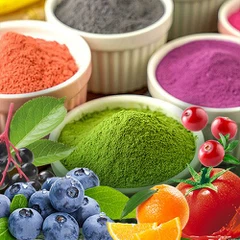
Acai powder is usually made from acai fruit pulp or juice. The material may be freeze-dried or spray-dried into a powder.
Unlike extract powder, acai powder is closer to the original fruit matrix. It may contain fruit solids, natural sugars, fiber fractions, organic acids, pigments, and flavor compounds.
Common forms include:
- Organic acai fruit powder
- Freeze-dried acai powder
- Spray-dried acai powder
- Acai juice powder
- Acai pulp powder
- Acai powder with carrier
Acai powder often works well when you want a whole-fruit identity. It can add color, taste, and "superfruit" appeal to food and beverage products.
Common product positioning
Acai powder often fits:
- Smoothie mixes
- Superfood powders
- Beverage blends
- Nutrition bars
- Yogurt mixes
- Breakfast powders
- Gummies
- Functional foods
- Natural color applications
If your product needs visible food value and fruit character, acai powder may work better than extract.
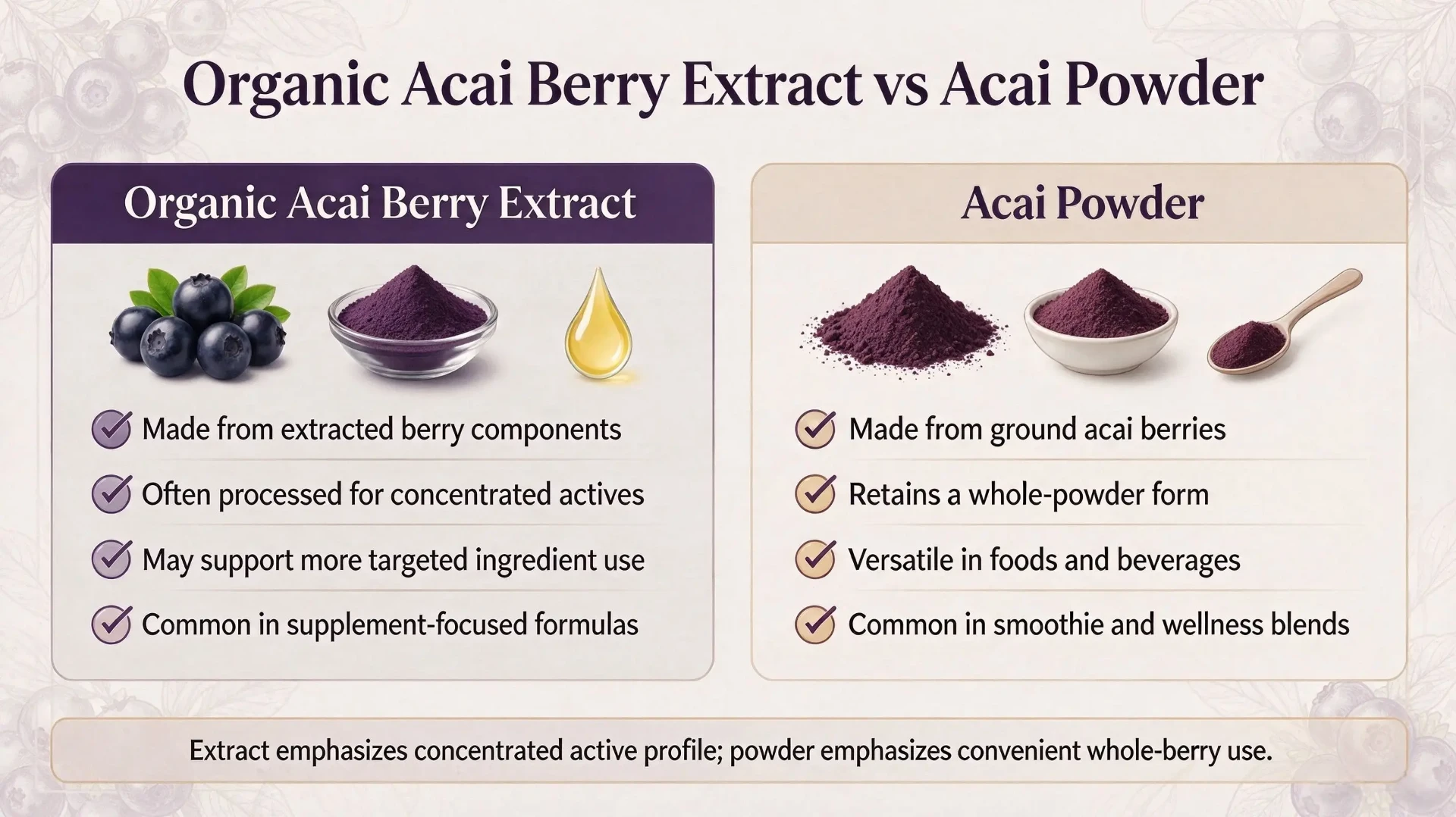
Organic Acai Berry Extract vs Acai Powder: Main Differences
The easiest way to compare the two materials is to focus on concentration, application, taste, and documentation.
| Item | Organic Acai Berry Extract | Acai Powder |
|---|---|---|
| Main Identity | Concentrated botanical extract | Whole-fruit or juice-based powder |
| Typical Source | Acai berry fruit | Acai pulp, juice, or fruit solids |
| Concentration | Higher | Lower |
| Use Level | Usually lower | Usually higher |
| Taste Impact | Less fruity, more extract-like | More fruity and food-like |
| Color Impact | Strong purple to dark purple | Purple, reddish-purple, or dark berry tone |
| Active Marker | Polyphenols or anthocyanins may be tested | Often based on fruit powder quality |
| Best Use | Capsules, tablets, gummies, premium blends | Smoothies, beverages, foods, superfood powders |
| Cost Per kg | Often higher | Often lower or mid-range |
| Cost Per Serving | Can be efficient due to lower use level | Depends on serving size |
| Label Positioning | Botanical extract, antioxidant-positioned ingredient | Whole fruit powder or superfood ingredient |
Both ingredients can be valuable. They just serve different product strategies.
Why Buyers Compare Organic Acai Berry Extract and Acai Powder
Buyers often compare these two ingredients because they target similar consumer trends.
Acai has strong market appeal because consumers connect it with:
- Superfoods
- Deep purple berry color
- Plant-based nutrition
- Antioxidant positioning
- Smoothie bowls
- Beauty nutrition
- Clean-label wellness
- Organic products
Yet B2B decisions need more than trend appeal. You need to know which material works best in production.
Choose extract when you need concentration
Organic Acai Berry Extract may work better when your product has limited space. Capsules and tablets often need a compact ingredient. A concentrated extract helps reduce fill weight.
Choose powder when you need fruit character
Acai powder may work better when taste, color, and whole-food identity matter. Smoothie powders and beverages often benefit from the fruit profile.
Choose based on your finished product
A supplement capsule does not need the same material as a smoothie powder. A gummy does not need the same material as a tablet. The best choice starts with the dosage form.
Active Compounds in Acai: What Buyers Should Know
Acai berries are known for their naturally occurring polyphenols, including anthocyanins and other phenolic compounds. These compounds contribute to the berry's dark purple color and antioxidant profile.
Common compound groups in acai include:
- Anthocyanins
- Flavonoids
- Phenolic acids
- Proanthocyanidins
- Plant lipids
- Dietary fiber fractions
- Natural fruit acids
In extract powder, suppliers may focus on polyphenols or anthocyanins as marker compounds. In acai powder, the specification may focus more on fruit identity, color, moisture, microbiology, and sensory quality.
Marker testing matters
When you buy Organic Acai Berry Extract, ask your supplier whether the material has a defined active marker.
Common testing options may include:
- Total polyphenols
- Anthocyanins
- ORAC-related historical data, where applicable
- Moisture
- Ash
- Heavy metals
- Microbiology
- Pesticide residues
- Carrier status
A key note for buyers: ORAC is not accepted as a disease or health claim tool for finished products. It may appear in old literature or technical discussions, but you should not use it as the main marketing claim without regulatory review.
Organic Certification: Why It Matters
Organic positioning can strongly affect acai ingredient selection. Many buyers source organic acai because the finished product targets natural channels, premium supplement brands, or clean-label food markets.
When buying Organic Acai Berry Extract, check more than the word "organic" on a quote.
Ask your supplier for:
- Organic certificate
- Scope of certification
- Product name on certificate
- Certification standard
- Transaction certificate, where required
- Country of origin statement
- Non-GMO statement
- Pesticide residue testing, where needed
Organic rules can differ by market. A document suitable for one country may not meet the needs of another buyer.
Organic extract vs organic powder
| Question | Why It Matters |
|---|---|
| Is the raw acai organic? | Supports organic product positioning |
| Is the extraction process covered? | Important for extract certification |
| Is a carrier used? | Carrier must meet label and organic needs |
| Is the certificate valid for export? | Importers may need market-specific proof |
| Is pesticide testing available? | Helps support premium market review |
For B2B buyers, organic compliance is a document issue as much as an ingredient issue.
Carrier Status: A Hidden Difference Buyers Often Miss
Both acai extract and acai powder may contain carriers. This matters for label declaration, assay value, taste, texture, and price.
Common carriers may include:
- Maltodextrin
- Gum arabic
- Tapioca maltodextrin
- Rice fiber
- Other food-grade carriers
A spray-dried acai powder often uses a carrier to improve drying and powder stability. Some extract powders may also use a carrier to improve flowability or standardize the active content.
Why carrier status matters
Carrier content can affect:
- Organic compliance
- Finished product label
- Active compound concentration
- Color intensity
- Taste
- Solubility
- Powder flow
- Cost per active unit
Do not compare quotes until you know the carrier status.
A low-cost acai powder with high carrier content may not deliver the same fruit content as a premium freeze-dried acai powder.
Solubility and Formulation Behavior
Acai ingredients can behave very differently in the final product. You should test samples before scale-up.
Organic Acai Berry Extract
Organic Acai Berry Extract may offer stronger color and higher active density. It often works well in:
- Capsules
- Tablets
- Gummies
- Powder sticks
- Beauty supplement blends
- Functional beverage premixes
Yet extract powders can have a stronger botanical taste. Some grades may disperse better than they dissolve.
Acai powder
Acai powder can offer a more natural fruit taste and smoother food identity. It often works well in:
- Smoothies
- Superfood blends
- Breakfast powders
- Nutrition bars
- Drink mixes
- Yogurt applications
- Snack products
Yet acai powder may need a higher use level. It may also bring more sugar, acidity, fiber, or carrier into the formula.
Formulation comparison
| Factor | Organic Acai Berry Extract | Acai Powder |
|---|---|---|
| Capsule Filling | Very suitable | Possible, but higher fill weight |
| Tablets | Suitable with excipients | May need flow support |
| Gummies | Suitable after taste testing | Suitable, but dose may be higher |
| Beverages | Depends on solubility | Often suitable for fruit-style drinks |
| Smoothies | Good in small amounts | Very suitable |
| Bars | Suitable | Very suitable |
| Color Strength | Often strong | Moderate to strong |
| Taste | Concentrated, less fruity | Fruity, tart, berry-like |
| Use Level | Lower | Higher |
The right sample can save weeks of reformulation work.
Cost Comparison: Price Per kg Is Not Enough
Many buyers compare acai ingredients by kilogram price. That can lead to the wrong decision.
You should compare:
- Cost per serving
- Active content
- Fruit solids level
- Carrier percentage
- Organic document status
- Color strength
- Taste impact
- Use level
- Processing performance
- Wastage during production
Organic Acai Berry Extract may cost more per kilogram, but it may cost less per serving if the use level is low.
Acai powder may cost less per kilogram, but you may need more of it to achieve color, flavor, or label value.
Better cost question
Do not ask only: What is the price per kg?
Ask: What is the cost to achieve my target serving, label claim, color, and sensory profile?
That question gives you a more useful answer.
Which Ingredient Works Better for Your Product?
Your dosage form should guide your choice.
- Capsules
Choose Organic Acai Berry Extract when you need a concentrated ingredient with a lower fill weight. It can support a premium botanical supplement position.
- Tablets
Extract powder usually works better because tablets need controlled dose, compression support, and lower bulk volume.
- Gummies
Both options can work. Extract powder gives stronger color and lower dose. Acai powder gives a more fruit-like identity. Test heat stability and taste before scale-up.
- Smoothie powders
Acai powder often works better because consumers expect fruit flavor, color, and whole-food value.
- Functional beverages
Acai powder works well in fruit-style drinks. Extract may work in lower amounts when color and active density matter.
- Nutrition bars
Acai powder can support taste and label value. Extract may support a stronger antioxidant-positioned formula.
- Beauty-from-within products
Organic Acai Berry Extract often works well in capsules, sachets, and gummies because it supports botanical and polyphenol positioning.
B2B Quality Checklist Before Buying
Before you order Organic Acai Berry Extract or acai powder, use this checklist.
Identity and source
- What is the botanical source?
- Is the plant identified as Euterpe oleracea Mart.?
- Which part is used?
- Is it fruit, pulp, juice, or extract?
Specification
- Is it an extract or fruit powder?
- Is there an extract ratio?
- Are polyphenols or anthocyanins tested?
- What method is used?
- Is the material water soluble or dispersible?
- What is the mesh size?
Organic and compliance
- Is organic certification available?
- Does the certificate cover the material you are buying?
- Is a transaction certificate needed?
- Is the carrier organic-compliant?
- Can pesticide testing be provided?
Safety and quality
- Heavy metals
- Microbiology
- Pesticide residues
- Residual solvents, where applicable
- Allergen status
- Non-GMO status
- Mycotoxins, where required
Production performance
- Taste
- Color
- Flowability
- Bulk density
- Solubility
- Heat stability
- Moisture behavior
- Packaging stability
This review helps protect your brand and your customer relationship.
Documents Buyers Should Request
A professional supplier should provide clear documents before bulk order approval.
Ask for:
- Certificate of Analysis
- Specification sheet
- Technical data sheet
- Safety data sheet
- Organic certificate
- Allergen statement
- Non-GMO statement
- Country of origin statement
- Process flow chart
- Heavy metals report
- Microbiology report
- Pesticide residue report
- Carrier declaration
- Residual solvent statement, where applicable
- Third-party test report, where needed
For organic acai ingredients, document alignment matters. Make sure the product name, batch number, and certification scope match your purchase.
Common Buying Mistakes
Acai ingredient sourcing can go wrong when buyers rely on short quotes.
Watch out for these mistakes:
- Treating extract and powder as the same ingredient
- Comparing only price per kilogram
- Ignoring carrier content
- Assuming all purple acai powders have equal fruit content
- Choosing extract without checking taste
- Choosing powder without checking use level
- Missing organic certification scope
- Forgetting pesticide testing for premium markets
- Skipping solubility tests for beverages
- Accepting generic COA documents
- Building label claims without regulatory review
A strong supplier will help you avoid these issues early.
Why Work With Jiuyuan Bio?
Jiuyuan Bio supports B2B buyers with botanical extracts, fruit and vegetable powders, organic ingredients, and custom formulation support.
Our company was founded in 2012 near the Qinling Mountains in China. We operate a 70,000 m² production facility with 10 production lines and 6,000+ tons of annual capacity. We serve clients in more than 30 countries across dietary supplements, functional foods, cosmetics, and related ingredient markets.
For organic acai ingredient projects, our team can support:
- Organic Acai Berry Extract sourcing
- Specification matching
- Sample evaluation
- COA and document review
- Custom blend support
- Packaging guidance
- Bulk order planning
- Export-ready documentation
B2B buyers need more than a powder. You need a supplier who understands formulation, compliance, and repeat supply.
FAQ About Organic Acai Berry Extract vs Acai Powder
1. What is Organic Acai Berry Extract?
Organic Acai Berry Extract is a concentrated ingredient made from acai berry fruit. It is used in supplements, gummies, tablets, capsules, powder blends, and functional wellness products.
2. Is Organic Acai Berry Extract the same as acai powder?
No. Organic Acai Berry Extract is a concentrated extract. Acai powder is usually closer to whole fruit, pulp, or juice powder.
3. Which is better for capsules?
Organic Acai Berry Extract usually works better for capsules because it needs a lower use level and takes less capsule space.
4. Which is better for smoothies?
Acai powder often works better for smoothies because it gives more fruit taste, color, and whole-food appeal.
5. Does acai extract contain anthocyanins?
Acai berries naturally contain anthocyanins and other polyphenols. Extract grades may be tested for anthocyanins or total polyphenols, depending on the specification.
6. Can acai powder contain a carrier?
Yes. Many spray-dried acai powders contain carriers. Always request a carrier declaration before ordering.
7. Is freeze-dried acai powder better than spray-dried acai powder?
Freeze-dried powder may offer stronger fruit identity and sensory quality. Spray-dried powder may offer better cost and flowability. The best option depends on your formula.
8. What documents should I request for organic acai ingredients?
Request COA, specification sheet, organic certificate, SDS, TDS, carrier declaration, allergen statement, non-GMO statement, pesticide report, heavy metals report, and microbiology report.
9. Can Organic Acai Berry Extract be used in gummies?
Yes, but you should test taste, color, heat stability, moisture behavior, and active retention before scale-up.
10. How should I compare supplier quotes?
Compare cost per serving, carrier status, active markers, organic certification scope, testing method, taste, solubility, and batch documentation.
Buyer Takeaway
The choice between Organic Acai Berry Extract and acai powder depends on your product goal. Use Organic Acai Berry Extract when you need concentration, smaller serving size, stronger botanical positioning, and marker-based quality control. Use acai powder when you need fruit taste, whole-food identity, smoothie appeal, and higher inclusion levels.
Both ingredients can support strong organic wellness products. The best decision comes from matching the ingredient to your formula, label, target market, and production process.
Jiuyuan Bio supplies Organic Acai Berry Extract and botanical ingredient solutions for supplement brands, functional food companies, importers, distributors, and contract manufacturers. For samples, specifications, or bulk quotation support, contact info@jiuybiotech.com.
References
- Schauss, A. G., et al. "Antioxidant Capacity and Other Bioactivities of the Freeze-Dried Amazonian Palm Berry, Euterpe oleracea Mart." Journal of Agricultural and Food Chemistry, 2006.
- Kang, J., et al. "Bioactivities of Acai (Euterpe oleracea Mart.) Fruit Pulp, Superior Antioxidant and Anti-Inflammatory Properties." Journal of Agricultural and Food Chemistry, 2010.
- Pacheco-Palencia, L. A., Mertens-Talcott, S., and Talcott, S. T. "Chemical Composition, Antioxidant Properties, and Thermal Stability of a Phytochemical Enriched Oil from Acai." Journal of Agricultural and Food Chemistry, 2008.
- Heinrich, M., Dhanji, T., and Casselman, I. "Acai (Euterpe oleracea Mart.): A Phytochemical and Pharmacological Assessment of the Species' Health Claims." Phytochemistry Letters, 2011.
- United States Pharmacopeia. Food Chemicals Codex: General Tests and Assays for Food Ingredients.
- European Food Safety Authority. Guidance on Safety Assessment of Botanicals and Botanical Preparations Intended for Use in Food Supplements.