


If you are sourcing Lotus Leaf Extract Powder, you may see two common options on supplier quotes: lotus leaf extract 10:1 and nuciferine extract. At a quick glance, they may look like different strengths of the same ingredient. In real B2B sourcing, they serve different formulation goals, cost structures, label positions, and quality control needs.
For supplement brands, contract manufacturers, and ingredient distributors, this difference matters. A 10:1 ratio extract does not mean the same thing as a nuciferine-standardized extract. A high nuciferine assay does not always fit every formula. The right choice depends on your product concept, dosage form, target market, testing method, and claim strategy.
In this guide, I will walk you through the practical differences, the buyer risks, and the key documents you should request before placing a bulk order.
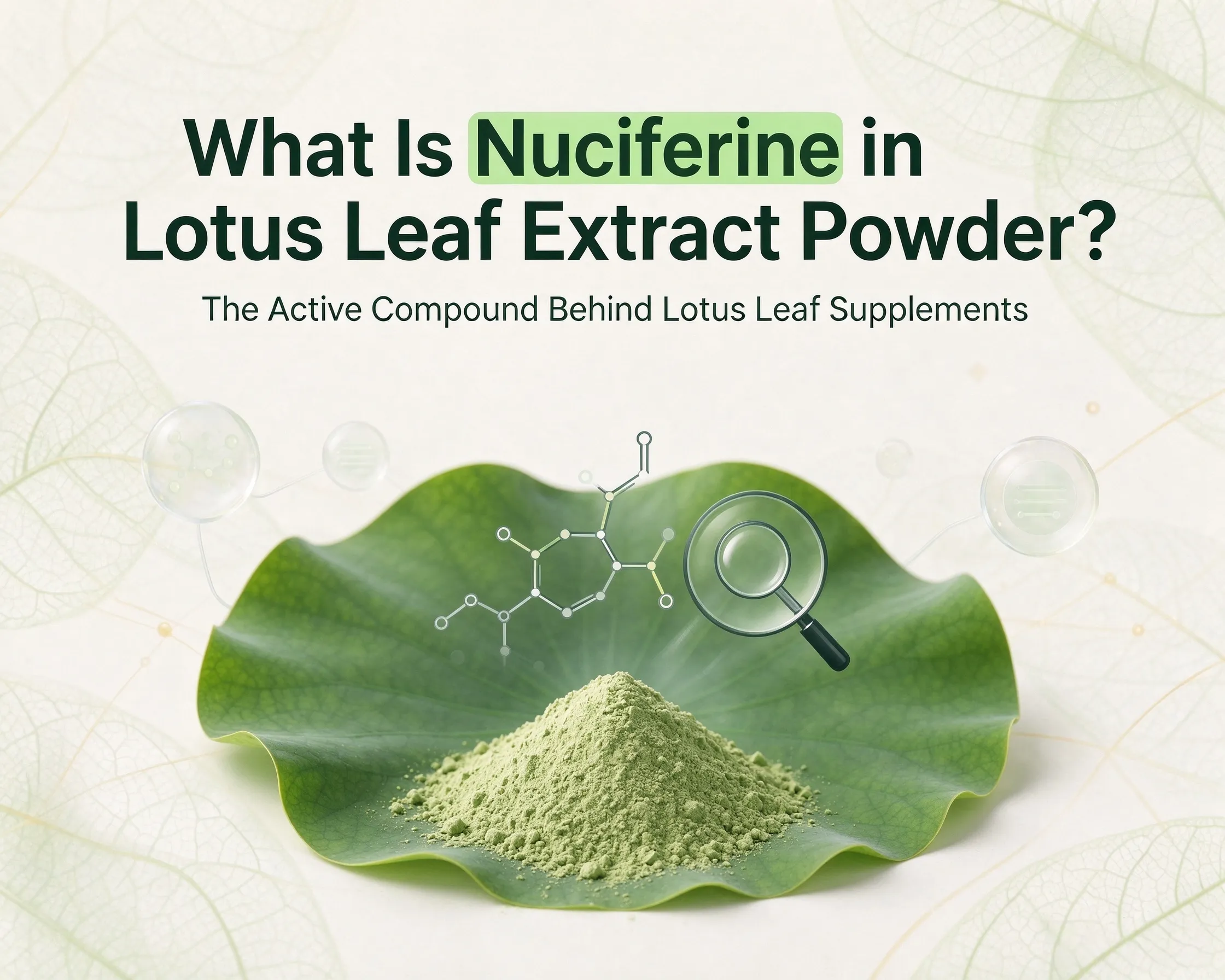
What Is Lotus Leaf Extract Powder?
Lotus Leaf Extract Powder is made from the dried leaves of Nelumbo nucifera Gaertn. The leaf is extracted, concentrated, dried, milled, and tested according to the target specification.
In commercial ingredient sourcing, lotus leaf extract may appear in several forms:
- Ratio extract, such as 10:1 or 20:1
- Nuciferine-standardized extract, such as 2%, 5%, 10%, or higher
- Total flavonoid extract, often used in botanical blends
- Dual-marker extract, where nuciferine and flavonoids are both controlled
The lotus leaf naturally contains several groups of compounds. These include aporphine alkaloids, flavonoids, and polyphenolic compounds. Among them, nuciferine often serves as a marker compound because suppliers can test it by HPLC.
That said, nuciferine is not the whole story. A ratio extract may contain a broader botanical matrix. A high-purity nuciferine extract may focus on one compound. Both can be useful, but not for the same project.
Lotus Leaf Extract 10:1: What the Ratio Really Means
A 10:1 lotus leaf extract means the manufacturer uses about ten parts of raw lotus leaf material to produce one part of extract powder. It describes the input-to-output ratio during extraction.
It does not automatically mean the extract contains 10% nuciferine. This point causes many sourcing mistakes.
What buyers should understand about 10:1 extract
A 10:1 ratio extract usually works well when you want:
- A fuller botanical profile
- A more traditional plant extract identity
- A cost-effective ingredient for multi-herb formulas
- A botanical extract for capsules, tablets, powders, or tea-style blends
- A product positioned around lotus leaf as a whole plant ingredient
A 10:1 extract may contain nuciferine, flavonoids, and other leaf compounds. The exact level depends on the raw material, extraction solvent, process control, and test method.
What 10:1 does not tell you
The ratio alone does not confirm:
- Nuciferine content
- Total flavonoid content
- Extraction yield quality
- Solvent residue status
- Heavy metal limits
- Pesticide compliance
- Microbiological quality
- Batch-to-batch consistency
This is why I always recommend treating "10:1" as a process specification, not a potency claim.
What Is Nuciferine Extract?
Nuciferine extract is a lotus leaf extract standardized to a defined nuciferine level. Nuciferine is an aporphine alkaloid naturally found in Nelumbo nucifera leaves.
In B2B sourcing, nuciferine extract may appear as:
- Nuciferine 2%
- Nuciferine 5%
- Nuciferine 10%
- Nuciferine 20%
- High-purity nuciferine grades
Suppliers usually verify nuciferine by HPLC, which helps buyers compare batches with a clearer analytical marker. This matters when your finished product needs a defined active marker on the specification sheet.
When nuciferine extract makes sense
A nuciferine-standardized extract may fit your project when you need:
- A clear active marker
- Stronger specification control
- More consistent batch release
- A formula centered on metabolic wellness positioning
- A higher-potency botanical ingredient
- A technical file that supports premium product development
A higher nuciferine percentage may allow lower dosage in capsules or tablets. It may also help when your formula has limited space.
Yet a high assay can bring new questions. You need to review taste, solubility, carrier, residual solvent, and regulatory positioning.
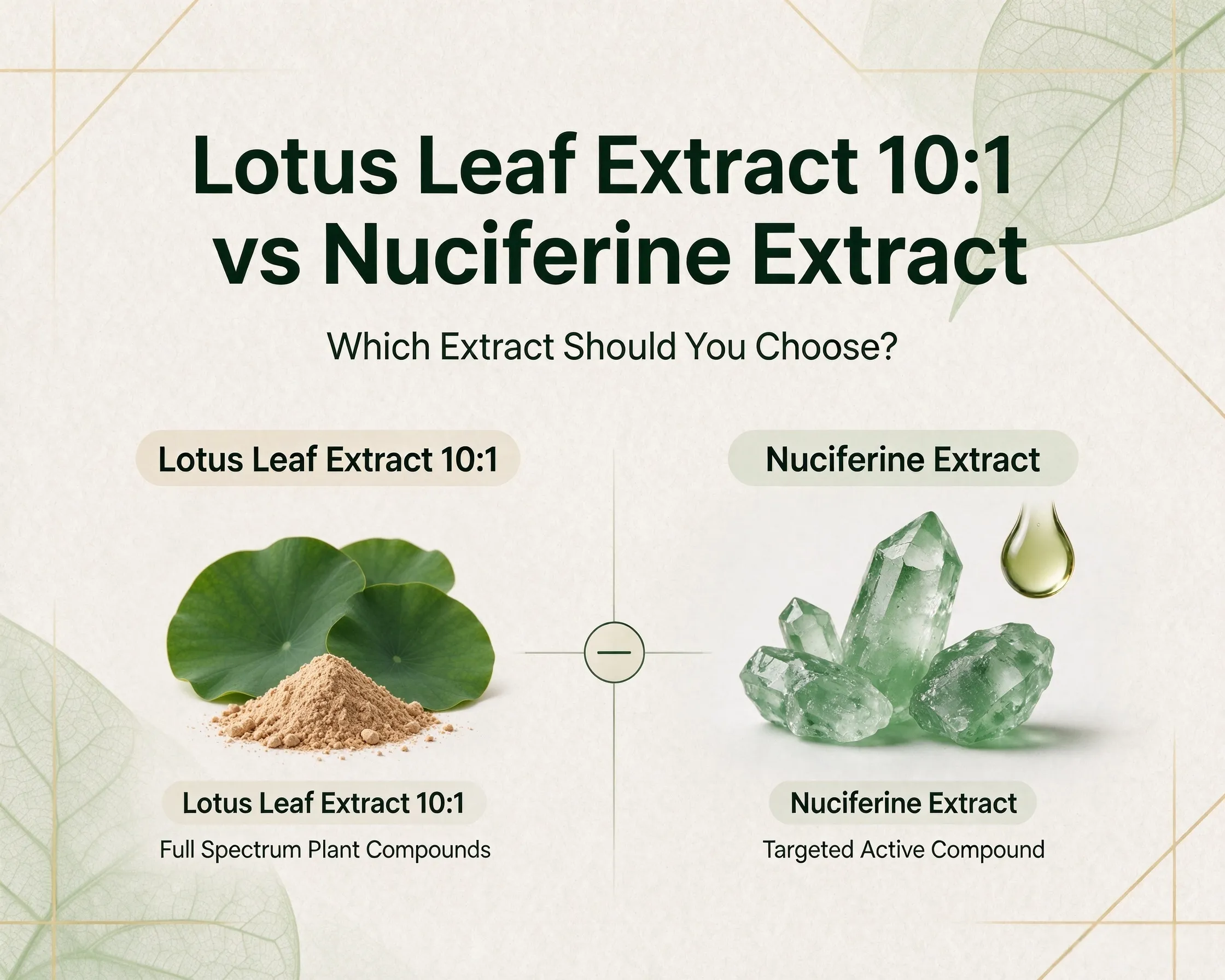
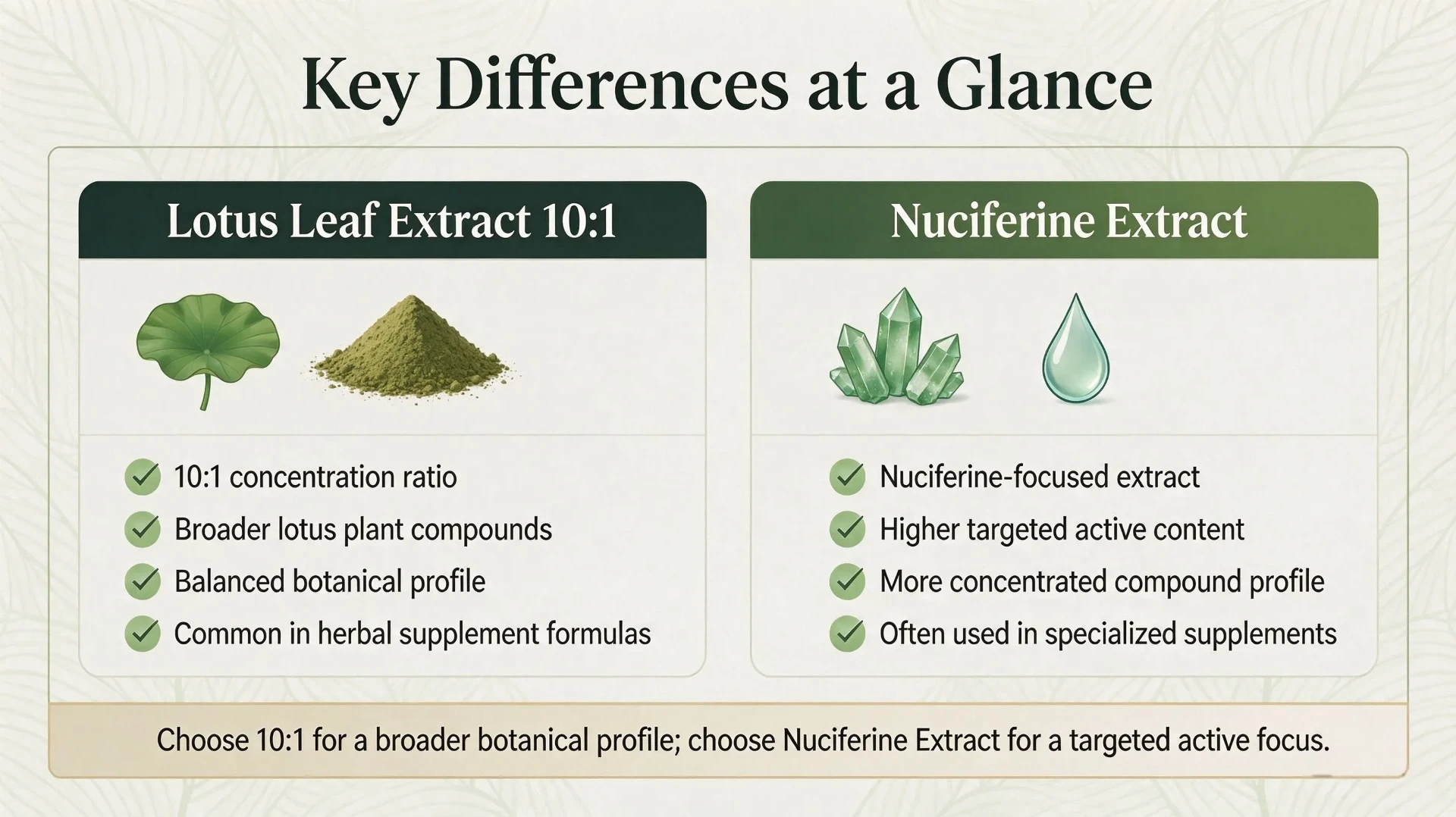
Lotus Leaf Extract 10:1 vs Nuciferine Extract: Key Differences
The easiest way to compare these ingredients is to look at how they behave in real purchasing decisions.
|
Item |
Lotus Leaf Extract 10:1 |
Nuciferine Extract |
|---|---|---|
|
Main Meaning |
Ratio extract based on raw material input |
Standardized extract based on nuciferine content |
|
Marker Control |
May or may not include nuciferine testing |
Nuciferine level is defined |
|
Typical Testing |
Production record, physical tests, optional markers |
HPLC assay for nuciferine |
|
Botanical Profile |
Broader plant matrix |
More focused alkaloid profile |
|
Cost Level |
Usually more cost-effective |
Usually higher, depending on assay |
|
Best Use |
Multi-herb blends, general lotus leaf formulas |
Marker-based formulas, premium supplements |
|
Label Positioning |
Whole botanical extract |
Standardized active marker extract |
|
Buyer Risk |
Ratio may be misunderstood as potency |
High assay may not fit every formula |
Both can be valid. The better choice depends on what your customer expects from the finished product.
Why Buyers Confuse 10:1 Extract with Nuciferine Percentage
This confusion happens often because supplier quotes sometimes place ratio and active content in the same line.
You may see something like:
Lotus Leaf Extract 10:1, Nuciferine 2%
That can be accurate if the batch has both a ratio specification and a nuciferine assay. But when the quote only says:
Lotus Leaf Extract 10:1
you should not assume any fixed nuciferine percentage.
What to ask your supplier
Before you compare prices, ask these points:
- Is the material a ratio extract or standardized extract?
- What is the botanical source?
- Which plant part is used?
- Is nuciferine tested by HPLC?
- What is the declared nuciferine percentage?
- Is the extract made with water, ethanol, or both?
- Does the powder contain a carrier?
- Can you provide a batch-specific COA?
- Can third-party testing be arranged?
This short checklist prevents many costly mistakes.
Which Type Works Better for Supplements?
Most supplement projects can use either type, but the right choice depends on dosage form and product concept.
Capsules and tablets
Capsules and tablets usually work well with both 10:1 extract and nuciferine extract.
Choose lotus leaf extract 10:1 when you want:
- A broader botanical ingredient
- A lower cost per kilogram
- A traditional lotus leaf positioning
- A multi-ingredient formula
Choose nuciferine extract when you want:
- A defined active marker
- Lower fill weight
- More precise batch release
- A stronger technical specification
Powder blends
Powder blends may use ratio extracts more often because taste, cost, and broad botanical identity matter.
A high nuciferine extract may taste stronger. It may also need more careful blending.
Gummies and chewables
Gummies create extra challenges. Lotus leaf extracts can bring bitterness, herbal notes, and color impact.
Before using either material in gummies, you should test:
- Heat exposure
- Taste masking
- Color stability
- Active retention
- Moisture behavior
- Ingredient interaction with acids and sweeteners
Functional beverages
Beverages need more attention to solubility. Some lotus leaf extracts disperse rather than dissolve.
Ask for a sample and test it in the final beverage system. Do not rely only on the COA.
Why Testing Method Matters
A professional buyer should never compare lotus leaf extracts by price alone. The testing method shapes the meaning of the specification.
For nuciferine, HPLC gives a more specific assay than broad colorimetric methods. HPLC can separate and identify target compounds better than general tests.
For flavonoids, suppliers may use UV-Vis methods. This can support a total flavonoid specification, but it does not identify every single flavonoid.
Ask for method clarity
Request these details:
- Assay method
- Reference standard
- Sample preparation method
- Chromatogram, where available
- COA for the exact batch
- Third-party report, where needed
If a quote shows a very high active content at a very low price, ask more questions. Serious buyers protect their brand by checking the method, not just the number.
B2B Quality Risks Buyers Should Watch
Lotus leaf extract can look simple on paper. In practice, several quality risks deserve attention.
Botanical identity risk
The product should come from Nelumbo nucifera Gaertn. leaves. Plant part matters. Leaf extract is different from seed, plumule, flower, or rhizome extract.
Marker mismatch
A ratio extract may not match a nuciferine-standardized extract. If your formula needs nuciferine, request HPLC testing.
Solvent and residue concerns
Lotus leaf extract may use water, ethanol, or a water-ethanol system. If ethanol is used, residual solvent review may matter for your market.
Heavy metals and pesticides
Botanical materials can carry trace contaminants from soil, water, and agricultural handling. Ask for heavy metal and pesticide data based on your target market.
Microbiological quality
Powdered botanical extracts need microbial control. Confirm limits for total plate count, yeast and mold, E. coli, and Salmonella.
Carrier declaration
Some extract powders contain maltodextrin or other carriers. This affects label declaration, assay calculation, flowability, and price.
How to Choose the Right Specification
You can use this practical guide before ordering.
|
Your Goal |
Better Starting Point |
Why It Fits |
|---|---|---|
|
Cost-effective multi-herb blend |
Lotus leaf extract 10:1 |
Broad botanical profile and easier pricing |
|
Marker-based supplement |
Nuciferine extract |
Defined active compound |
|
Premium metabolic wellness formula |
Nuciferine 2%–5% |
Clearer active marker control |
|
Traditional botanical positioning |
10:1 or 20:1 extract |
Supports whole leaf extract concept |
|
Small capsule size |
Higher nuciferine extract |
Lower dosage may fit better |
|
Functional beverage |
Water-compatible grade |
Solubility and taste matter most |
|
Gummy product |
Tested sample only |
Heat, taste, and moisture need validation |
No single specification wins every time. Your formula, label, and regulatory market should guide the choice.
Documentation Buyers Should Request
A reliable supplier should support your purchasing process with clear documents. This is even more important for importers and contract manufacturers.
Ask for:
- Certificate of Analysis
- Specification sheet
- Technical data sheet
- Safety data sheet
- Process flow chart
- Allergen statement
- Non-GMO statement
- Country of origin statement
- Heavy metals report
- Microbiology report
- Pesticide residue report, where needed
- Residual solvent statement, where applicable
- HPLC assay report for nuciferine grades
A complete file saves time during supplier approval. It also helps your customer review the ingredient with more confidence.
Why Supplier Capability Matters
When you buy Lotus Leaf Extract Powder, the supplier's technical system matters as much as the product name.
At Jiuyuan Bio, we focus on factory-direct botanical extract supply. The company was founded in 2012 near China's Qinling Mountains. Our facility covers 70,000 m² and runs 10 production lines. We support clients in dietary supplements, functional foods, cosmetics, and pharmaceutical-related ingredient markets across more than 30 countries.
For lotus leaf extract projects, buyers often need more than a quote. You may need help with:
- Specification matching
- Sample comparison
- Nuciferine grade selection
- COA review
- Packaging options
- Export documents
- Repeat batch planning
This is where a technical supplier can reduce your sourcing risk.
What I Recommend for Different Buyer Types
Different buyers care about different details. A brand owner may focus on positioning. A contract manufacturer may focus on flowability and documents. An importer may focus on compliance and shipment stability.
Supplement brands
Choose your specification based on your label promise. If your product claims a standardized marker, select nuciferine extract and keep the method clear.
Contract manufacturers
Request bulk density, mesh size, flowability, and carrier status. These details affect production efficiency.
Ingredient distributors
Carry both 10:1 extract and nuciferine-standardized grades if your customers serve different formulation needs.
Functional food brands
Start with a sample. Test taste, color, solubility, heat stability, and mouthfeel before selecting the final grade.
Private-label companies
Ask for a repeatable commercial specification. Do not build a label around a sample unless the supplier can reproduce it.
Common Mistakes When Buying Lotus Leaf Extract
Many purchasing problems start with small assumptions. These are the ones I see most often.
- Assuming 10:1 means 10% nuciferine
- Comparing prices without checking assay methods
- Ignoring carrier content
- Skipping pesticide review for premium markets
- Buying high nuciferine extract for a formula that needs a mild herbal profile
- Forgetting taste testing for gummies or drinks
- Using supplier claims that the finished product cannot legally support
- Accepting generic COA documents instead of batch-specific reports
A good ingredient purchase starts with clear questions. It does not start with the lowest price.
FAQ: Lotus Leaf Extract 10:1 vs Nuciferine Extract
What is Lotus Leaf Extract Powder?
Lotus Leaf Extract Powder is a botanical extract made from the leaves of Nelumbo nucifera Gaertn. It is used in dietary supplements, functional foods, powder blends, capsules, tablets, and wellness formulas.
Is lotus leaf extract 10:1 the same as nuciferine 10%?
No. A 10:1 extract describes the raw material to extract ratio. Nuciferine 10% describes the active marker content. They are different specifications.
What is nuciferine?
Nuciferine is an aporphine alkaloid found in lotus leaves. Suppliers often use it as a quality marker for standardized lotus leaf extract.
Which is better, 10:1 lotus leaf extract or nuciferine extract?
Neither is always better. A 10:1 extract fits broad botanical formulas. A nuciferine extract fits marker-based supplements and premium products.
How should buyers verify nuciferine content?
Ask for HPLC testing, a batch-specific COA, and method details. A chromatogram can provide extra confidence for technical review.
Can lotus leaf extract be used in gummies?
Yes, but you should test taste, heat stability, color, active retention, and moisture behavior before scale-up.
Does lotus leaf extract contain a carrier?
Some grades may contain a carrier, depending on drying and standardization needs. Ask your supplier for carrier declaration before ordering.
What documents should importers request?
Importers should request COA, specification sheet, SDS, TDS, process flow chart, origin statement, allergen statement, heavy metals report, microbiology report, and pesticide data where needed.
Final Buyer Takeaway
The difference between lotus leaf extract 10:1 and nuciferine extract is not just a technical detail. It affects your formula cost, label positioning, testing plan, dosage design, and customer approval process.
If you need a broad botanical ingredient, a 10:1 or 20:1 extract may fit well. If you need a clear active marker, a nuciferine-standardized extract gives you better assay control. Smart buyers check plant part, extraction solvent, assay method, carrier status, contaminants, and batch documents before comparing price.
Jiuyuan Bio supplies Lotus Leaf Extract Powder for supplement brands, contract manufacturers, importers, distributors, and functional food companies. For samples, specifications, or bulk quotations, contact us at info@jiuybiotech.com.
References
- Deng, H. et al. "Study on the Vasodilatory Activity of Lotus Leaf Extract and Its Main Alkaloids." Molecules, 2022.
- Mukherjee, P. K. et al. "The Sacred Lotus (Nelumbo nucifera)-Phytochemical and Therapeutic Profile." Journal of Pharmacy and Pharmacology, 2009.
- Chinese Pharmacopoeia Commission. Pharmacopoeia of the People's Republic of China, Lotus Leaf Monograph.
- United States Pharmacopeia. USP General Chapter on Botanical Extracts and Dietary Supplement Quality Control.
- International Council for Harmonisation. ICH Q3C Guideline for Residual Solvents.
- European Food Safety Authority. Guidance on Safety Assessment of Botanicals and Botanical Preparations Intended for Use in Food Supplements.