If you source ingredients for dietary supplements, you already know that yellow turmeric powder sits near the top of the global demand list. The turmeric market reached approximately USD 4.7 billion in 2026 and continues to grow - with B2B direct contract procurement accounting for over 56% of total market share. That tells you something important: supplement brands, contract manufacturers, and private-label formulators are actively looking for reliable, specification-grade turmeric at scale.
This guide breaks down everything you need to know about using yellow turmeric powder in capsules, tablets, and powder blends - from curcuminoid specs and bioavailability strategies to what B2B buyers should verify before placing a bulk order.
What Makes Yellow Turmeric Powder a Supplement Staple
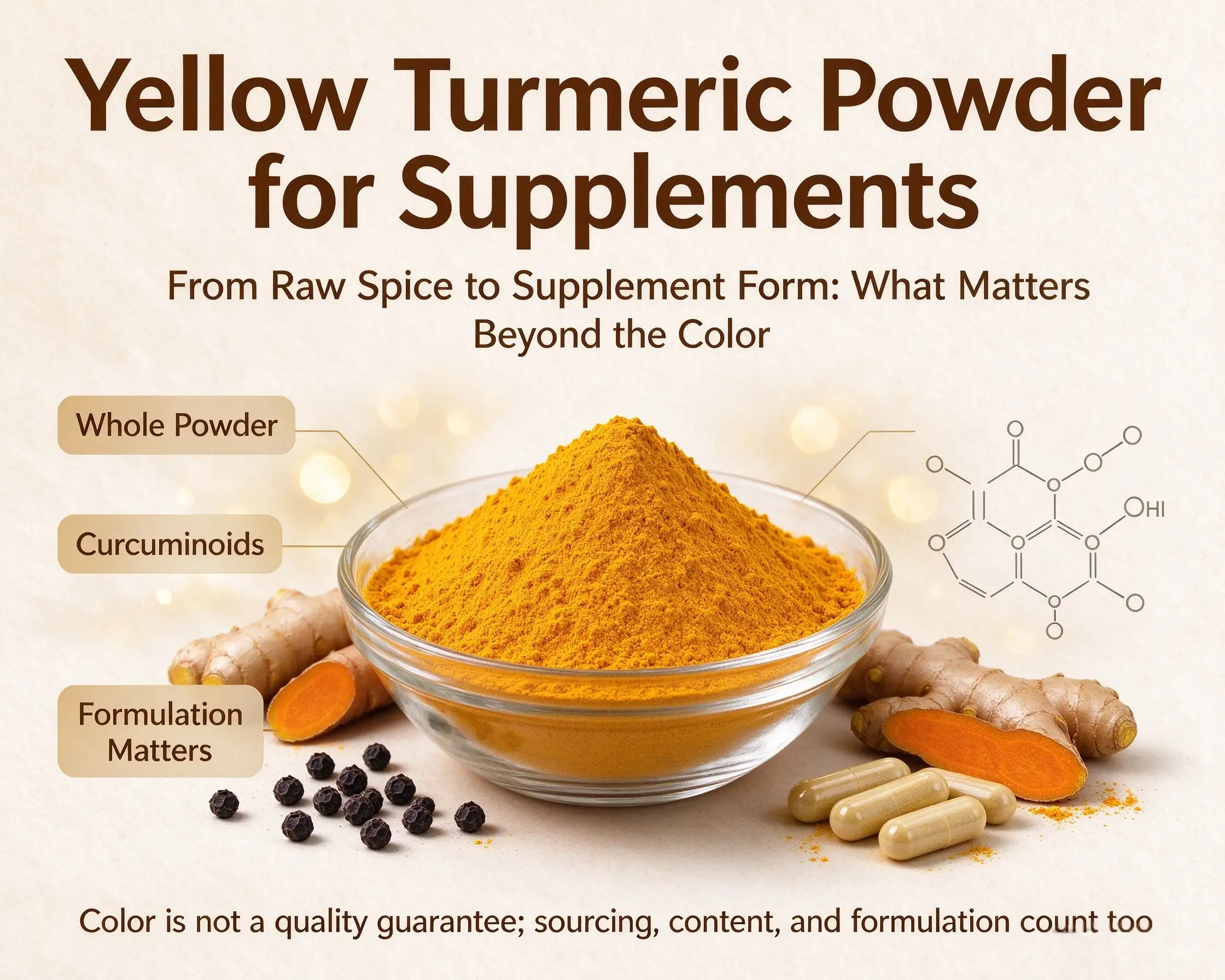
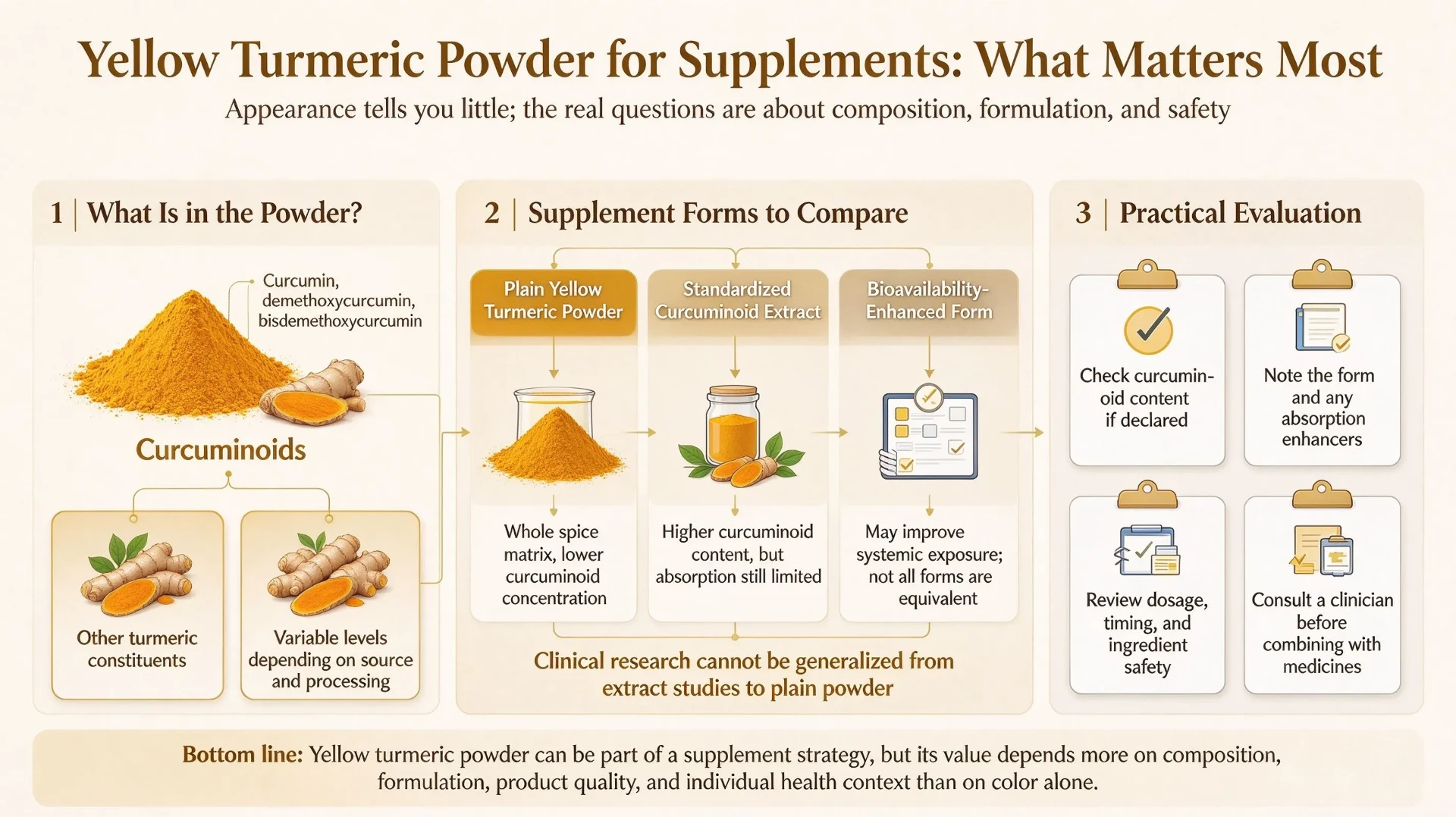
Yellow turmeric powder comes from the dried, ground rhizomes of Curcuma longa L. Its signature orange-yellow color comes from a group of polyphenolic compounds called curcuminoids - primarily curcumin, demethoxycurcumin, and bisdemethoxycurcumin.
These three compounds are not interchangeable terms, and precision matters in B2B procurement:
- Turmeric powder - whole rhizome material, ground to a fine mesh
- Curcumin - one specific curcuminoid compound (CAS No. 458-37-7)
- Curcuminoids - the broader group of related compounds
- Turmeric extract - concentrated and standardized to a declared curcuminoid level
- Turmeric oleoresin - a distinct preparation with different composition and application behavior
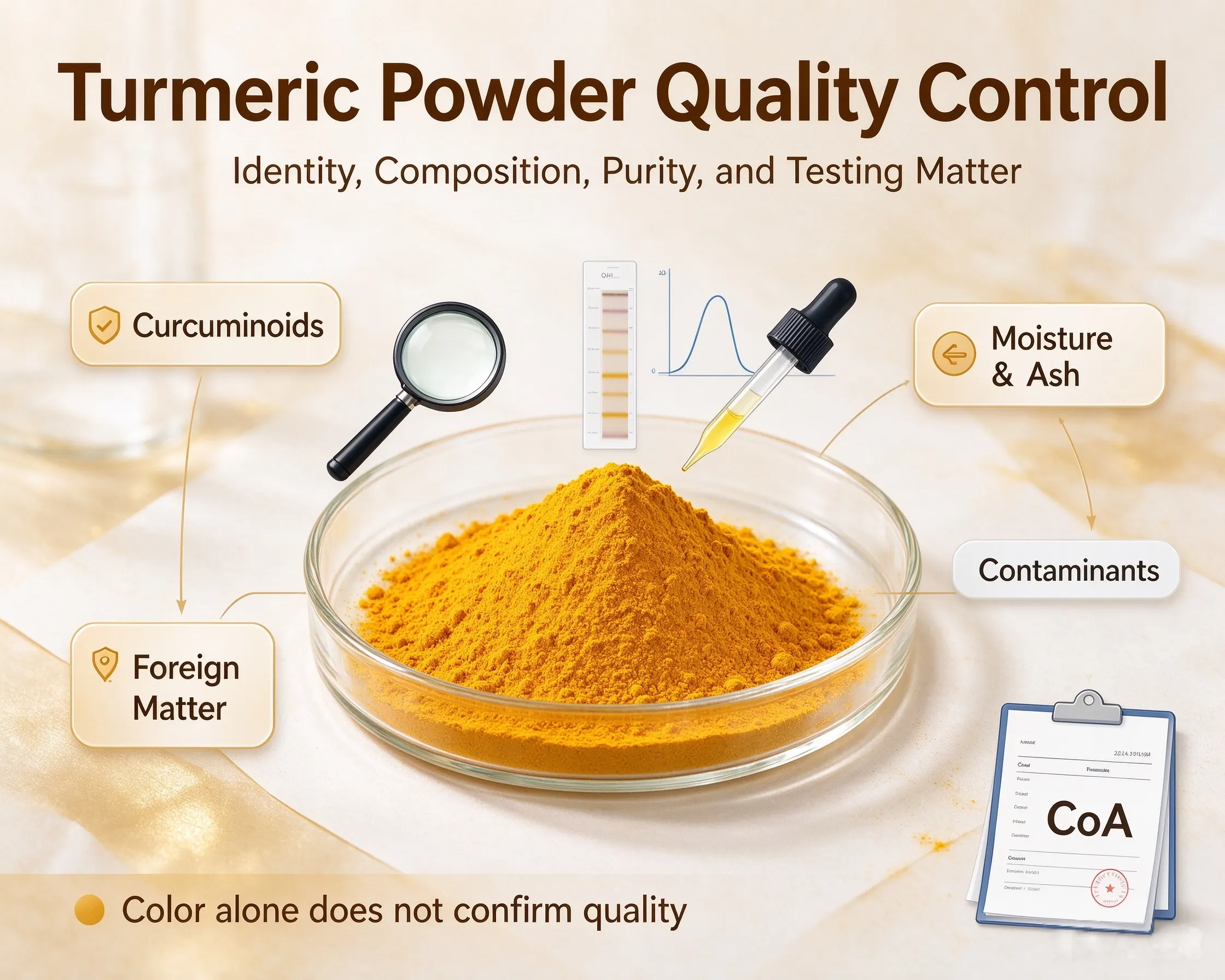
When you request a quote, always specify which format and which assay level you need. A reputable supplier will provide a batch-specific Certificate of Analysis (COA) with declared curcuminoid content, analytical method, and reporting basis.
The global curcumin market was estimated at around half a billion USD in 2016 and has been registering a compound annual growth rate (CAGR) of approximately 13% since then. That growth is driven largely by supplement applications - and capsules, tablets, and powder blends are the three dominant delivery formats.
Capsules, Tablets, and Powder Blends: Choosing the Right Format
Each delivery format has distinct formulation requirements. Understanding them helps you match the right turmeric ingredient spec to the right finished product.
Capsule Formulations
Capsules - both hard-shell gelatin and vegetarian HPMC - are the most common format for turmeric supplements. Here's what matters for your ingredient selection:
- Particle size: 80 mesh or finer ensures consistent fill weight and uniform capsule density
- Moisture content: Keep below 5.0% to prevent clumping and caking during encapsulation
- Curcuminoid assay: Most supplement-grade capsule formulas specify ≥95% curcuminoids by HPLC
- Flow properties: Fine powder with low ash content (ideally <5.0%) improves machine throughput
A high-quality yellow turmeric powder at ≥95% curcuminoids, 80-mesh particle size, and moisture below 5% is production-ready for most capsule lines without additional processing.
Tablet Formulations
Tablets require additional consideration around compressibility and binding. Pure curcumin powder has poor direct compression properties, so most tablet formulas use:
- Microcrystalline cellulose (MCC) as a binder/filler
- Magnesium stearate as a lubricant
- Colloidal silicon dioxide for flow improvement
The curcuminoid content in tablet blends typically ranges from 200 mg to 500 mg per tablet. Standardized turmeric extract at ≥95% curcuminoids gives formulators precise dosing control - critical for label claims and regulatory compliance.
Powder Blends and Functional Foods
Powder blends are the most flexible format. Yellow turmeric powder integrates well into:
- Greens blends and superfood powders
- Joint support formulas combined with boswellia, ginger, or black pepper extract
- Protein powders and meal replacement formulas
- Functional beverage mixes (golden milk, turmeric lattes)
For powder blends, color consistency matters as much as curcuminoid content. The characteristic orange-yellow hue is a visual quality marker that end consumers associate with potency and freshness.
The Bioavailability Challenge - and How Formulators Solve It
Here's a fact every supplement formulator needs to know: raw curcumin has poor oral bioavailability. Studies show rapid metabolism, poor gut absorption, and fast systemic elimination when curcumin is taken without enhancement strategies.
Research published in ACS Omega (2023) confirmed that curcumin formulations with bioavailability enhancers showed dramatically improved absorption compared to unformulated curcumin. One study reported formulated curcumin bioavailability up to 185-fold higher than the unformulated compound. _bio
The most widely used enhancement strategies in supplement manufacturing include:
- Piperine (BioPerine®): Black pepper extract at 5–20 mg per serving. Piperine inhibits metabolic enzymes and increases curcumin absorption significantly.
- Lipid-based delivery systems: Phospholipid complexes (phytosome technology) improve fat-soluble curcuminoid absorption
- Nanoparticle formulations: Nanoemulsions and solid lipid nanoparticles increase surface area and dissolution rate
- Micellar formulations: Water-dispersible curcumin for beverage and powder blend applications
When you source yellow turmeric powder for supplement use, ask your supplier whether their extract is compatible with these enhancement systems. A well-characterized COA - covering assay, heavy metals, solvents, and microbiology - gives you the data you need to build a stable, effective formula.
What B2B Buyers Must Verify Before Ordering
Procurement managers and formulation teams working with turmeric extract suppliers should run through this checklist before committing to a bulk order.
Certifications That Matter
Not all certifications carry equal weight across markets. Here's what to look for based on your target region:
|
Certification |
Market Relevance |
What It Covers |
|
cGMP |
US, Global |
Manufacturing process controls |
|
FDA Registration |
United States |
Facility compliance |
|
ISO 9001 / ISO 22000 |
Global |
Quality & food safety management |
|
FSSC 22000 |
EU, Global |
Food safety system certification |
|
HALAL / KOSHER |
Middle East, Global |
Religious dietary compliance |
|
USDA / EU Organic |
US, Europe |
Organic sourcing and processing |
A supplier holding all of these certifications eliminates multiple qualification steps in your supply chain audit. _cert
Key Specification Points to Confirm
Before signing a purchase order, verify these data points with your supplier:
- Curcuminoid assay method - HPLC is the gold standard; UV spectrophotometry may overreport
- Heavy metals panel - Total heavy metals <10 ppm; As, Pb <2.0 ppm; Cd <1.0 ppm; Hg <0.01 ppm
- Microbiology - Total plate count <1,000 CFU/g; E. coli and Salmonella negative
- Particle size - 95% pass 80 mesh for capsule and tablet applications
- Moisture - <5.0% for stable shelf life (24 months standard)
- Country of origin and traceability - Field-to-COA documentation preferred
These aren't just compliance checkboxes. They directly affect your finished product's stability, label accuracy, and regulatory standing in the US, EU, and other key markets.
MOQ and Lead Time Considerations
For B2B buyers scaling up production:
- Minimum order quantities (MOQ) for supplement-grade turmeric extract typically start at 1 kg for sampling and scale to multi-hundred kilogram orders for commercial runs
- Lead times vary by supplier inventory and production schedule - confirm batch availability and production cycle before committing to a launch timeline
- Custom specifications (specific mesh size, curcuminoid percentage, or organic certification) may require additional lead time
Why Vertical Integration Matters in Turmeric Sourcing
The turmeric supply chain has multiple points of vulnerability - adulteration, inconsistent curcuminoid content, and heavy metal contamination are documented industry concerns.
Vertically integrated suppliers - those who control raw material sourcing, extraction, testing, and packaging under one roof - reduce these risks significantly. Key advantages include:
- Direct grower partnerships eliminate broker markups and traceability gaps
- In-house analytical labs (HPLC, GC, UV, AAS, microbiology) mean every batch gets tested, not just sampled
- Consistent curcuminoid content across batches, backed by batch-specific COAs
- Faster issue resolution when a specification deviation occurs
When evaluating a turmeric extract supplier, ask for a facility audit - either in person or via live video tour. A manufacturer with nothing to hide will welcome the scrutiny.
Formulation Tips for Supplement Developers
If you're building a new turmeric-based SKU, these practical points will save you development time:
For joint health formulas:
- Pair yellow turmeric powder with boswellic acid extract and type II collagen
- Use piperine at 5 mg per serving to boost curcumin absorption
- Target 500 mg curcuminoids per daily dose as a common benchmark in clinical research
For antioxidant blends:
- Combine with resveratrol, quercetin, or green tea extract for a synergistic polyphenol profile
- Water-dispersible turmeric formats work best in stick packs and instant drink mixes
For general wellness capsules:
- A simple two-capsule serving of ≥95% curcuminoid extract at 500–1,000 mg total is a clean, label-friendly formula
- Vegetarian capsules (HPMC) broaden your consumer base and support clean-label positioning
Label claim guidance:
- In the United States, structure/function claims are permissible for dietary supplements
- Disease treatment claims require FDA drug approval - always review claim language against DSHEA guidelines and your target market's advertising standards
Summary: Sourcing Yellow Turmeric Powder for Supplement Manufacturing
The supplement industry's demand for yellow turmeric powder - standardized, certified, and traceable - keeps growing. B2B buyers who understand the difference between whole turmeric powder, curcuminoid extract, and oleoresin make better sourcing decisions. Formulators who pair high-assay curcumin with proven bioavailability enhancers build better products. And procurement teams who audit their suppliers' certifications, analytical capabilities, and vertical integration protect their supply chain from the most common quality risks.
The market rewards brands that get the ingredient right at the source.
Work With a Certified Yellow Turmeric Powder Supplier
At Jiuyuan Biotech, we supply supplement-grade yellow turmeric powder standardized to ≥95% curcuminoids by HPLC. Our facility in Xi'an, China holds 12 international certifications - including ISO 9001, ISO 22000, FSSC 22000, cGMP, FDA registration, HALAL, KOSHER, and USDA/EU Organic. Every batch ships with a full COA covering assay, heavy metals, microbiology, and physical characteristics.
We work directly with dietary supplement brands, contract manufacturers, and private-label formulators across 30+ countries. MOQ starts at 1 kg for sampling.
Ready to request specifications or a bulk quote?
📧 Contact us at info@jiuybiotech.com
🌐 View product details at www.jiuyuanbio.com
References
- Tabanelli, R., et al. (2021). "Improving Curcumin Bioavailability: Current Strategies and Future Perspectives." Nutrients, 13(10), 3616. Published via PubMed Central (PMC8540263).
- Hegde, M., et al. (2023). "Curcumin Formulations for Better Bioavailability: What We Know and What Needs to Be Done." ACS Omega, 8(12), 10713–10746.
- Kotha, R. R., & Luthria, D. L. (2019). "Curcumin: Biological, Pharmaceutical, Nutraceutical, and Analytical Aspects." Molecules, 24(16), 2930. Published via PubMed Central (PMC6720683).
- Future Market Insights. (2026). Turmeric Market Size, Share & Trends Report 2036. Future Market Insights Inc.
- Fortune Business Insights. (2025). Turmeric Market Size, Share & Industry Report 2026–2034. Fortune Business Insights Ltd.
- National Center for Complementary and Integrative Health (NCCIH), U.S. Department of Health & Human Services. Turmeric and Curcumin: What You Need to Know. NCCIH Publication.