1. Growth of the Plant Extract Market and Procurement Challenges
1.1 Market Trends for Plant Extracts in the Global Health Industry
The global plant extracts industry has entered a phase of sustained growth driven by rising health consciousness and consumer preference for natural, transparent, and minimally processed ingredients. Organic and conventional botanical extracts are now widely used across dietary supplements, functional foods and beverages, cosmetics, and personal care applications. According to recent market research forecasts, the global plant extracts market has already reached a valuation in the tens of billions of U.S. dollars, with significant projected growth through 2032, supported by ongoing consumer demand for natural and "clean-label" solutions that move away from synthetic additives and chemical inputs [1][9]. Consumers increasingly prioritize ingredient transparency, sustainability, and perceived health benefits, shifting industry innovation toward high-quality plant-based functional ingredients.
In functional food and beverage categories, plant extracts are no longer merely flavoring or coloring agents; they are positioned as key functional components with documented biological activities such as antioxidant support, anti-inflammatory effects, immune modulation, and sleep support. This trend is especially prominent in energy bars, botanical teas, and functional beverages targeting active lifestyles. Similarly, in the nutraceutical and dietary supplement sector, standardized plant extracts provide convenient, modern delivery forms of traditional herbal ingredients, increasingly gaining regulatory and consumer acceptance globally. This broad application spectrum offers substantial growth opportunities for extract suppliers but simultaneously raises the bar on raw material quality, safety assurance, and documentation standards among B2B buyers and product developers.
1.2 Core Procurement Challenges: Choosing Between Organic and Conventional Extracts
Amid this market expansion, procurement professionals, industry analysts, and product development teams face a recurring strategic decision: whether to source organic plant extracts or conventional plant extracts. These two categories of material present fundamental differences in raw material sourcing, agricultural practices, certification requirements, production processes, chemical composition, regulatory risk, cost structure, and market positioning.
Organic extracts cater to premium market segments and health-oriented consumers with a value proposition centered on "natural purity and environmental stewardship." However, they also bring challenges such as higher input costs, natural variability in phytochemical content, and more stringent certification protocols that influence supply chain complexity.
Conventional extracts benefit from mature supply chains, cost-efficient production, and the ability to achieve standardized active content suitable for large-scale manufacturing. Yet concerns remain around pesticide residues, solvent utilization, and environmental impact-all of which are increasingly scrutinized by regulators and consumers alike.
For B2B procurement decision-makers, weighing organic versus conventional is not simply a cost comparison. It demands a strategic evaluation of brand positioning, target consumer expectations, regulatory requirements, supply chain stability, and long-term product value to ensure competitive advantage and commercial success.

2. Definitions and Certification: Fundamental Differences Between Organic and Conventional
2.1 Organic Plant Extracts: Definition and Certification Standards
Organic plant extracts are concentrated botanical materials derived from raw plant sources cultivated under certified organic agricultural systems. The essence of organic extraction lies not only in the absence of synthetic chemicals but in adherence to a comprehensive set of standards designed to protect ecosystems, maintain biodiversity, and minimize contamination throughout cultivation and processing.
Organic certification provides independent verification and market credibility for these practices, offering B2B buyers and end customers assurance that the product's entire supply chain-from soil to final extract-meets internationally recognized criteria.
2.1.1 Key Organic Certification Systems (USDA Organic, EU Organic, JAS)
Major organic certification frameworks include:
USDA Organic (United States): Overseen by the U.S. Department of Agriculture's National Organic Program (NOP), this certification requires that products contain at least 95% certified organic ingredients and prohibits synthetic pesticides, chemical fertilizers, genetically modified organisms (GMOs), and other excluded practices in both crop production and handling. The NOP's Organic Standards also define labeling criteria for "100% Organic," "Organic" (≥95%), and "Made with Organic Ingredients" (≥70%) product categories.
EU Organic (European Union): Governed by Regulation (EU) 2018/848, this standard emphasizes sustainable agriculture and restricts synthetic inputs in crop cultivation and processing. It also places strict controls on permitted processing aids and solvents used in organic product manufacture.
JAS (Japan Agricultural Standards Organic): A respected certification system in Japan that aligns with international organic principles and maintains strict limits on pesticides, chemical fertilizers, and GMOs. USDA and JAS also have established equivalence arrangements for certain plant and plant-based products, simplifying cross-border organic recognition when criteria are met.
For B2B buyers, sourcing extracts with these certifications signals cross-border regulatory compliance, broader market acceptance, and easier access to export markets such as North America, Europe, and Asia.
2.1.2 Organic Farming Principles: Key Attributes
Organic cultivation is based on principles that collectively maintain a healthy, balanced agricultural ecosystem:
No synthetic pesticides: Organic farming forbids artificial chemical pesticides, instead favoring physical, biological, and cultural pest management methods that reduce chemical residues in plant biomass.
No synthetic chemical fertilizers: Soil fertility is maintained through natural organic inputs such as compost, cover crops, and green manures, which support biodiversity and microbial soil health.
Non-GMO: Organic standards prohibit the use of genetically modified seeds, aligning with consumer expectations for natural products.
These foundational practices explain why organic plant extracts are widely perceived as "cleaner" and more sustainable compared to conventional counterparts.
2.2 Conventional Plant Extracts: Definition and Characteristics
Conventional plant extracts are derived from plant materials produced using conventional agricultural methods that may include regulated use of synthetic pesticides, chemical fertilizers, and GMOs. The primary goal of conventional farming is to maximize yield and ensure supply chain reliability while maintaining basic food and safety regulatory compliance.
Conventional cultivation enables greater control over crop output and uniformity, supporting standardized extraction processes that yield consistent active ingredient profiles desirable in high-volume industrial manufacturing. However, the use of synthetic inputs can lead to measurable residues in plant tissues, which requires rigorous testing for pesticide and chemical residues to meet regulatory thresholds and customer specifications.
3. Production and Process Differences: From Field to Extract
3.1 Differences at the Cultivation Stage
The root of the differences between organic and conventional extracts lies in their agricultural practices:
Organic systems emphasize ecological balance, soil health, and biodiversity using crop rotation, cover cropping, and natural nutrient inputs, which may influence the phytochemical profile of the harvested plants due to stress responses and micro-ecological effects.
Conventional systems typically use synthetic fertilizers and pesticides to ensure uniform growth and yield, which can simplify processing and standardization but may introduce environmental concerns and potential residues that need mitigation during post-harvest processing.
These agricultural practices impact not just yield and cost, but also the biochemical composition and purity profile of raw botanical materials.
3.2 Differences in Extraction Technology and Processing
Once harvested, plant raw materials enter the extraction phase, where organic and conventional pathways diverge:
Organic extraction methods generally restrict or exclude synthetic solvents, favoring water, ethanol (certified organic), supercritical CO₂, and other green technologies to meet organic standard requirements. This can preserve natural compound integrity and support eco-friendly positioning [turn0search5].
Conventional extraction methods may utilize a broader range of solvents (e.g., ethanol, methanol, ethyl acetate) depending on target compounds. While effective for high yields and targeted active enrichment, solvent management and residual control must align with pharmacopeia and food safety standards for downstream applications.
The choice of extraction solvents and conditions influences yield, purity, cost, and suitability for regulatory claims such as "organic," "natural," or "clean-label."
3.3 Quality Control and Standardization Differences
Quality assurance systems differ between organic and conventional extracts:
Organic extracts often focus on residue avoidance and traceability, with Certificates of Analysis (COAs) highlighting organic certification, residue absence, and non-GMO status.
Conventional extracts rely on COAs that emphasize active ingredient standardization, residual solvent limits, and compliance with regulatory MRLs (maximum residue limits) for pesticides and other inputs.
Irrespective of category, analytical methods such as HPLC, GC-MS, and LC-MS/MS are critical to verify active components, impurity profiles, and compliance benchmarks.
4. Composition & Bioactive Differences - Practical Implications for Procurement and R&D
4.1 Overview - why composition matters for B2B decisions
The biochemical profile of a botanical extract (its "phytochemical fingerprint") determines product claims, dose selection, formulation behavior and regulatory strategy. Differences in agricultural practice, harvest timing, post-harvest handling and extraction method cause measurable variation in both desirable bioactives (e.g., polyphenols, terpenoids, alkaloids) and undesirable residues (pesticides, solvent traces, heavy metals). Procurement and R&D teams must therefore treat "organic vs conventional" as a set of upstream variables that cascade into specification, testing, and commercial risk.
4.2 Active-component levels and natural variability
4.2.1 Typical patterns observed in the literature
Organic crops tend to show higher concentrations of certain antioxidants / secondary metabolites in many comparative studies and meta-analyses; meta-analytic estimates report modest but consistent increases in antioxidant-related compounds for organic crops versus conventional ones. This is attributed in part to plant stress responses and soil microbial dynamics under organic management.
Geography and season often outweigh farming system as sources of variation. Multivariate studies show that harvest year, climate and geographic origin are frequently the largest contributors to phytochemical differences; farming system (organic vs conventional) is significant but not always dominant. For procurement this means origin control and multi-batch data are essential.
4.2.2 Practical consequences for spec writing and R&D
Do not specify a single fixed value for every marker on the first contract. For organic "full-spectrum" extracts, specify a measured range (e.g., "marker X: 0.8–1.4% w/w") derived from historical multi-batch testing rather than a single tight point value. For conventional standardized extracts where active enrichment steps are used, tighter ranges are reasonable.
Require multi-batch COAs (≥3–6 batches) during supplier qualification. Use these to calculate realistic mean ± SD and to set acceptance ranges and reanalysis frequency.
4.3 Purity, contaminants and safety profiles
4.3.1 Pesticide residues
Organic production greatly reduces the probability of synthetic pesticide residues, but "zero risk" is not automatic. Official surveillance and EFSA reporting show lower frequencies and levels of quantifiable pesticide residues in organic samples compared with conventional ones, yet occasional detections (trace contamination, drift, or inputs allowed in some organic systems) do occur. Procurement policy should therefore require explicit pesticide multi-residue screening on COAs.
4.3.2 Heavy metals and environmental contaminants
Heavy-metal uptake depends strongly on soil history and local contamination, not simply on organic label. While organic soil management can reduce some uptake risks, strict soil testing and supplier soil-history documentation are still necessary-especially for roots and rhizomes that bioaccumulate metals.
4.3.3 Residual solvents
Conventional extraction processes that use organic solvents require solvent-residue control (ICH Q3C limits where relevant). Organic extracts processed with water, certified food-grade ethanol or supercritical CO₂ generally have lower solvent-residue risk, but COAs must still document solvents used and measured residues.
4.4 Functional / efficacy differences (nutritional and bioactivity signals)
4.4.1 Antioxidant and polyphenol content
Several systematic reviews and meta-analyses report higher antioxidant metrics (total phenolics, DPPH/FRAP/ORAC results) in many organic samples versus conventional counterparts; absolute effect sizes vary by crop and method. For formulators, higher polyphenol content can mean stronger antioxidant claims or altered sensory/solubility behavior.
4.4.2 "Full-spectrum" versus isolated activity
Organic, minimally processed extracts often retain a broader suite of minor constituents that can contribute to synergistic or "matrix" effects; conventional standardized extracts may deliver higher concentrations of a single known active but lack the same breadth of minor components. The choice should align with the intended claim: broad-support / wellness branding favors full-spectrum organic extracts; targeted pharmacological claims favor standardized conventional extracts.
4.5 Analytical and standardization approaches that mitigate variability
4.5.1 Recommended test battery for procurement COAs
At minimum, require the following analyses on each supplier COA (and on incoming batches during qualification):
- Quantitative assay of declared marker(s) - HPLC/UPLC with validated method and system suitability.
- Full chromatographic fingerprint (HPLC or LC-MS) for identity/consistency checks (fingerprint similarity score).
- Multi-residue pesticide screen - LC-MS/MS + GC-MS/MS multiresidue panel.
- Heavy metals panel - ICP-MS for Pb, Cd, As, Hg.
- Microbial limits - total aerobic count, yeast & mold, E. coli, Salmonella, etc.
- Residual solvents (if solvent extraction used) - GC headspace or GC-MS per ICH Q3C.
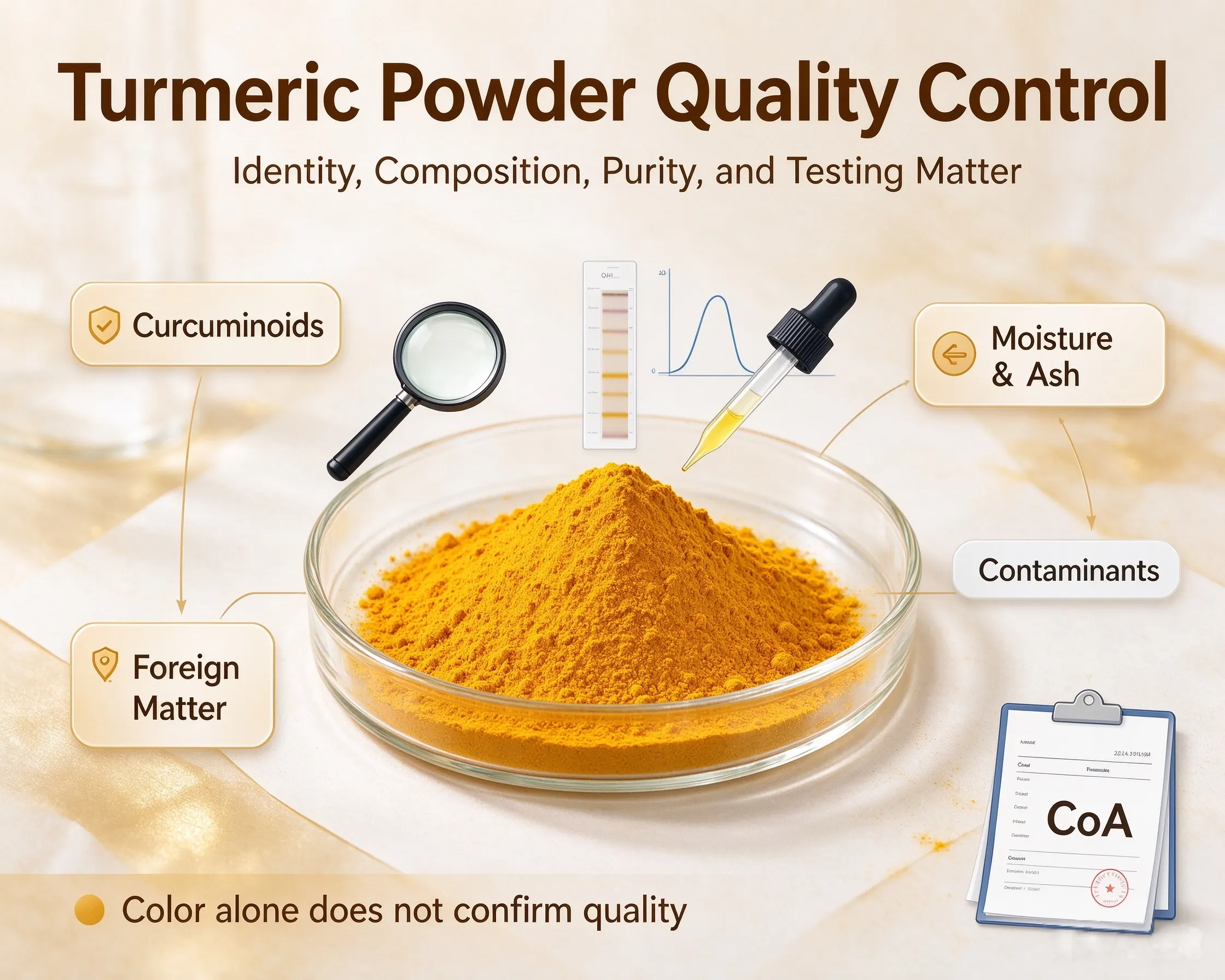
- Moisture, loss on drying, ash, and foreign matter per pharmacopeial norms.
4.5.2 Statistical quality control for botanical extracts
Use multi-batch statistics (mean, SD, %RSD) to set acceptance ranges and determine sample size for ongoing QC. Require suppliers to provide at least 3–6 consecutive batch COAs during qualification and to supply trend data annually. This reduces false rejections of organically variable but acceptable material.
4.5.3 Specification templates (suggested)
Organic full-spectrum extract (example): identification (HPLC fingerprint); marker A: measured 0.5–1.5% w/w (based on supplier multi-batch mean ± 2 SD); pesticide multi-residue ND by validated method (LOQ ≤ 0.01 mg/kg for priority analytes); heavy metals Pb ≤ 2 mg/kg, Cd ≤ 0.3 mg/kg; microbial limits per USP <61>/<62>.
Conventional standardized extract (example): identification; marker B: 10.0–11.5% w/w; solvent residues (ethanol ≤ ICH Class 3 limits); pesticide residues ≤ target market MRLs; heavy metals per pharmacopeia.
4.6 Procurement & formulation actions - checklist
For procurement teams and R&D, adopt a decision checklist:
- Define claim and market (clean-label / organic marketing vs. standardized therapeutic claim).
- Set realistic analytical specifications using supplier multi-batch COAs.
- Require full-panel COA (see 4.5.1) on qualification and spot-test on incoming batches.
- Assess origin, harvest season and processing history - require traceability documentation.
- If using organic extract, allow wider active ranges but require fingerprint consistency and multi-batch validation.
- If using conventional standardized extract, specify tight active ranges and solvent controls.
- Include contract clauses for out-of-spec actions, corrective steps and replenishment lead times.
4.7 Short summary for decision makers
Organic extracts: typically lower pesticide residues, often higher levels of some antioxidant metabolites, and broader phytochemical matrices - attractive for premium positioning, but demand multi-batch validation and flexible spec ranges.
Conventional extracts: offer tighter standardization of specific actives and supply stability - optimal for formulations requiring precise dosing and for cost-sensitive scale production, but require robust residue and solvent control.
5. Regulatory & Market Considerations: Global Frameworks and Procurement Strategy
5.1 Core Regulatory Frameworks for Organic Plant Extracts
5.1.1 USDA National Organic Program (NOP) - United States
The USDA Organic regulations (7 CFR Part 205) define how agricultural products - including botanical raw materials used for extracts - must be produced, handled, and certified to make organic claims. To be labeled "organic" in the U.S., a product must contain at least 95% organic ingredients (excluding water and salt) and comply with all production and processing rules outlined under the program. Authorized certifying agents accredited by USDA verify compliance through inspections and audits.
The Strengthening Organic Enforcement (SOE) rule requires that every imported organic product, including botanical extracts, must be accompanied by an NOP Import Certificate to establish traceability and authenticity at U.S. ports of entry. This helps prevent fraudulent or misrepresented "organic" claims and reinforces supply chain integrity.
Implication for Procurement: For any botanical extract to be marketed as organic in the U.S., the entire supply chain - cultivation through processing - must be documented and traceable, and certifications must be current and auditable. Failing to meet NOP requirements can expose the product to import refusal, seizure, or downgrading to conventional status.
5.1.2 European Union Organic Regulation
The EU's organic production and labeling framework is established under EU Regulation 2018/848 and associated implementing acts. It sets detailed rules for organic farming, processing, control systems, and labeling. EU organic standards aim to ensure resource conservation, soil and water quality, biodiversity, and restricted inputs, consistent with consumer expectations of organic integrity. usda-eu.org
Under this regime, organic claims and use of the EU organic logo must comply with the full regulation. Pending regulatory changes, equivalence arrangements may evolve, and products exported under equivalence (e.g., USDA organic from the U.S.) must still meet EU labeling and compliance terms.
Implication for Procurement: Extracts intended for the EU market must either be certified under an EU-recognized system or meet equivalence terms. Procurement teams must monitor evolving EU organic policy, especially emerging requirements for input substances, traceability, and documentation for imports.
5.2 Organic Equivalence and International Trade
5.2.1 Organic Equivalence Arrangements
Organic equivalence agreements allow products certified under one national standard to be accepted in another market without requiring dual certification, reducing costs and duplicative audits.
Key arrangements include:
U.S.–EU equivalence: USDA-certified organic can be marketed in the EU as organic (and vice versa) when certain conditions are met, including production or final processing within the certifying territory and issuance of required import certificates. ams.usda.gov
U.S.–Japan equivalence: USDA organic and Japan Agricultural Standards (JAS) are recognized as equivalent for plant-based products, facilitating trade under a single certification scheme.
Similar arrangements exist for Canada, South Korea, Switzerland, Taiwan, and others.
Implication for Procurement: Leveraging equivalence arrangements can dramatically simplify regulatory compliance and market access for organic extracts. However, buyers must understand the specific terms of each arrangement, including where final processing occurs, how import certificates are generated, and labeling rights (e.g., whether both the USDA and local organic logos can be used).
5.2.2 Labeling and Content Claims
In the U.S., products that use the "organic" label must follow strict definitions and may only display the USDA organic seal if certified. For example, products containing at least 95% organic ingredients may use the organic claim and seal, while lower percentages (e.g., "made with organic ingredients") have more restricted labeling rules.
In the EU, organic labeling is governed by EU Regulation 2018/848 and related controls; interpretation and enforcement can vary slightly between member states, especially for processed products that combine organic and non-organic components.
Implication for Procurement: For botanical extract products destined for multiple markets, procurement and marketing teams should align formulations with labeling rules in each jurisdiction - ensuring ingredient percentages, allowable non-organic inputs, and labeling claims are correct to avoid regulatory action.
5.3 Export Market Access Strategies
5.3.1 Harmonizing Supplier Documentation
To support export into regulated markets, suppliers should provide complete documentation packages including:
Certified organic certificates from recognized authorities (e.g., USDA, EU control bodies, JAS).
Organic import certificates (e.g., NOP import certificate).
Traceability documentation linking raw material lots to finished extract lots.
Procurement protocols should specify these requirements and incorporate them into supplier scorecards to minimize risk. ams.usda.gov
5.3.2 Monitoring Regulatory Changes and Special Cases
Regulatory landscapes are dynamic. For example, recent court rulings in the EU may affect how organic logos are applied to fortified or processed products, or how equivalence is applied in practice.
Similarly, national measures such as updated organic labeling requirements in the UK highlight the importance of understanding local food regulations for market entry and compliance.
Implication for Procurement: Regulatory monitoring should be integrated into supplier management processes so that changes in organic labeling, equivalence arrangements, or import documentation are tracked and acted upon promptly.
5.4 Conventional Extracts - Regulatory Context and Compliance
While organic regulations focus on production practices and labeling claims, conventional plant extracts fall under broader regulatory frameworks depending on application (e.g., food additive regulations, dietary supplement rules, cosmetic ingredient restrictions).
Procurement teams must ensure that:
- Residue limits for pesticides and heavy metals comply with target market laws (e.g., FDA/FSIS tolerances, EU pesticide MRLs).
- Solvent residues adhere to acceptable limits such as ICH Q3C for solvent classes, where applicable.
- Ingredient listings and functional claims are compliant with food, dietary supplement or cosmetic regulations in each jurisdiction.
Compliance with these regulations affects market access, labeling permissions, and consumer safety assurances.
5.5 Strategic Recommendations for B2B Procurement
To manage global regulatory and market risks effectively:
- Map target markets early and align organic certification and equivalence strategies accordingly.
- Standardize documentation requirements (certificates, lot traceability, import certificates) across suppliers.
- Incorporate labeling constraints into specifications to prevent misbranding in foreign markets.
- Monitor regulatory developments - including equivalence updates, consumer protection cases, and organic policy changes.
- Coordinate with regulatory affairs teams to ensure extract specifications and product claims are legally defensible in each market.
6. Quality Control, Testing & Specification Management
6.1 Quality Control Philosophy: Organic vs. Conventional Extracts
The quality control logic of plant extracts differs fundamentally between organic and conventional systems.
For organic plant extracts, quality management focuses on process integrity and compliance:
- Verification of certified organic raw materials
- Full traceability from farm to finished extract
- Strict monitoring of pesticide residues, heavy metals, and microbiological contamination
- Compliance with organic processing restrictions on solvents and processing aids
In contrast, conventional plant extracts prioritize quantitative consistency:
- Tight control of target bioactive marker levels
- Batch-to-batch reproducibility
- Alignment with pharmacopeial or internal specification ranges
This difference explains why organic extracts often emphasize compliance and safety first, while conventional extracts emphasize measurable potency and performance.
6.2 COA Interpretation: What Buyers Should Expect
A Certificate of Analysis (COA) serves different roles depending on the extract type.
Organic Extract COA Typically Emphasizes:
- Organic certification status and transaction certificate reference
- Multi-residue pesticide screening results (often "ND" across panels)
- Heavy metals and microbiological limits
- Identification tests (botanical authenticity)
Active ingredient data may be reported as:
- Informational or typical values
- Broad ranges rather than fixed specifications
Conventional Extract COA Typically Emphasizes:
- Defined active marker specifications (e.g., ≥10% flavonoids)
- Analytical methods aligned with pharmacopeias
- Residual solvent limits
- Stability and assay repeatability
For B2B buyers, misinterpreting an organic COA using a conventional extract mindset is a common procurement error.
6.3 Analytical Testing Differences
| Aspect | Organic Extracts | Conventional Extracts |
|---|---|---|
| Marker Standardization | Limited | Core requirement |
| Pesticide Testing | Extensive, multi-panel | Targeted, risk-based |
| Solvent Residue | Usually minimal | Must meet defined limits |
| Testing Objective | Compliance & safety | Potency & consistency |
Organic extracts are tested to prove absence of risk, while conventional extracts are tested to prove presence of defined actives.
7. Sustainability, Consumer Perception & Brand Value
7.1 Sustainability as a Core Value Driver
Organic plant extracts are increasingly evaluated not only as raw materials, but as strategic sustainability assets.
Key sustainability contributions include:
Reduced chemical input into soil and water systems
Enhanced soil fertility and biodiversity through organic farming practices
Lower long-term environmental footprint compared to intensive agriculture
For brands, organic extracts provide credible evidence of environmental responsibility, supporting ESG reporting and sustainability claims.
7.2 Consumer Trust and Organic Label Recognition
Consumer trust in organic labeling is a critical market driver.
Research consistently shows that organic certification functions as a trust proxy:
- Reduces perceived safety risk
- Simplifies purchasing decisions
Enhances willingness to pay a premium
From a behavioral perspective:
- High-trust consumers rely heavily on organic certification as a value signal
- Low-trust consumers prioritize price and basic attributes
This trust differential explains why organic ingredients are particularly effective in:
- Infant and maternal nutrition
- Functional foods positioned for long-term wellness
- Premium personal care and nutraceutical brands
7.3 Brand Premium and Market Positioning
Organic extracts enable brands to:
- Enter premium and regulated markets
- Build narratives around transparency and traceability
- Differentiate beyond pure functional claims
In markets where consumers are increasingly skeptical of exaggerated health claims, organic certification offers a defensible, regulation-backed positioning strategy.
For B2B buyers, organic extracts should be viewed not merely as higher-cost inputs, but as brand equity multipliers.
8. Conclusion & B2B Procurement Decision Framework
8.1 Summary of Key Differences
| Dimension | Organic Extracts | Conventional Extracts |
|---|---|---|
| Primary Value | Safety, sustainability, trust | Potency, consistency, cost efficiency |
| Active Ingredient Control | Naturally variable | Highly standardized |
| Regulatory Focus | Organic compliance | Pharmacopeial compliance |
| Market Position | Premium, clean-label | Mass-market, performance-driven |
8.2 Strategic Procurement Recommendations
8.2.1 Choose Based on Product Positioning
Select organic extracts for premium, sustainability-driven, or organic-certified products
Select conventional extracts for performance-driven formulations requiring tight potency control
8.2.2 Evaluate Total Cost of Ownership (TCO)
Procurement decisions should consider:
- Testing and compliance costs
- Risk of regulatory rejection
- Market access and pricing power
- Lower unit cost does not always translate to lower overall commercial risk.
8.2.3 Align with Regulatory and Market Requirements
Before finalizing sourcing decisions, buyers should assess:
- Target market regulatory expectations
- Certification requirements
- Consumer perception trends
Organic extracts reduce regulatory and reputational risk in highly scrutinized markets, while conventional extracts maximize efficiency where specifications dominate purchasing decisions.
Final Takeaway
There is no universally "better" option between organic and conventional plant extracts.
The optimal choice depends on:
- Regulatory context
- Product positioning
- Target consumer expectations
- Long-term brand strategy
Successful procurement balances scientific rigor with market reality, aligning raw material strategy with both compliance and commercial objectives.
About Shaanxi Jiuyuan Biotechnology
Shaanxi Jiuyuan Biotechnology Co., Ltd. is a specialized manufacturer of plant extracts and botanical ingredients, with over 13 years of experience serving the global food, nutraceutical, and health ingredient markets. The company focuses on organic-certified extracts, conventional standardized extracts, and whole plant powders, supported by large-scale production capacity, in-house quality control, and internationally recognized certifications. Jiuyuan Bio works closely with B2B partners to deliver compliant, traceable, and application-oriented botanical solutions tailored to different regulatory and market requirements.
For technical inquiries, sourcing discussions, or partnership opportunities, please contact:
Email: elsa.marketing@jiuybiotech.com
WhatsApp: +86 18502983097
Website: www.jiuyuanbio.com
References
1. United States Department of Agriculture (USDA)
USDA Organic Regulations (7 CFR Part 205)
https://www.ecfr.gov/current/title-7/subtitle-B/chapter-I/subchapter-M/part-205
2. European Commission – Directorate-General for Agriculture and Rural Development
EU Organic Regulation (EU) 2018/848
https://agriculture.ec.europa.eu/farming/organic-farming/organic-legislation_en
3. Ministry of Agriculture, Forestry and Fisheries of Japan (MAFF)
Japanese Agricultural Standards (JAS) for Organic Products
https://www.maff.go.jp/e/policies/standard/jas/
4. International Council for Harmonisation of Technical Requirements for Pharmaceuticals for Human Use (ICH)
ICH Q3C (R8): Impurities – Guideline for Residual Solvents
https://www.ich.org/page/quality-guidelines
5. World Health Organization (WHO)
WHO Guidelines on Good Agricultural and Collection Practices (GACP) for Medicinal Plants
https://www.who.int/publications/i/item/WHO-EDM-TRM-2003.1
6. United States Pharmacopeia (USP)
USP–NF General Chapters on Botanical Extracts and Dietary Supplements
https://www.uspnf.com
7. European Pharmacopoeia (Ph. Eur.)
Herbal Drugs and Herbal Drug Preparations – Quality Standards
https://www.edqm.eu/en/european-pharmacopoeia-ph-eur
8. Japanese Pharmacopoeia (JP)
General Tests and Botanical Drug Standards
https://www.pmda.go.jp/english/rs-sb-std/standards-development/jp/
9. FAO & WHO (Codex Alimentarius Commission)
Guidelines for the Production, Processing, Labelling and Marketing of Organically Produced Foods (CAC/GL 32-1999)
https://www.fao.org/fao-who-codexalimentarius
10. European Food Safety Authority (EFSA)
Guidance on the Safety Assessment of Botanicals and Botanical Preparations
https://www.efsa.europa.eu/en/topics/topic/botanicals
11. Global Market Insights, Inc.
Herbal Extracts Market Size, Share & Trends Analysis Report
https://www.gminsights.com/industry-analysis/herbal-extract-market
12. Organic Trade Association (OTA)
U.S. Organic Industry Survey & Market Analysis
https://ota.com/market-analysis
13. IFOAM – Organics International
Principles of Organic Agriculture
https://www.ifoam.bio/why-organic/principles-organic-agriculture
14. OECD
Safety Evaluation of Traditional Herbal Medicines
https://www.oecd.org/chemicalsafety
15. European Medicines Agency (EMA)
Guideline on Quality of Herbal Medicinal Products / Traditional Herbal Medicinal Products
https://www.ema.europa.eu/en/human-regulatory/herbal-products