If you're developing a supplement capsule and considering broccoli seed extract as your active ingredient, you're working with one of the most clinically substantiated botanical actives in the nutraceutical market today. The science behind it is compelling. The formulation challenges are real. And the decisions you make at the ingredient selection stage will determine whether your finished product delivers on its label claims - or quietly underperforms on the shelf.
This guide walks you through everything a formulator needs to know: the biochemistry, the stability trade-offs, the dosing benchmarks, and the supplier criteria that separate a defensible product from a liability.
What Makes Broccoli Seed Extract Scientifically Credible
Not every botanical ingredient earns its place in a supplement formula through rigorous science. Broccoli seed extract has.
The bioactivity of broccoli seed extract centers on a single, well-defined biochemical cascade:
- Glucoraphanin - the stable glucosinolate precursor found in high concentrations in broccoli seeds
- Myrosinase - the enzyme that converts glucoraphanin to sulforaphane
- Sulforaphane - the active isothiocyanate that triggers the Nrf2 cytoprotective pathway
When sulforaphane reaches the cell, it reacts with cysteine residues on the Keap1 repressor protein. This releases Nrf2 to translocate into the nucleus, where it upregulates a battery of Phase II detoxification and antioxidant enzymes - including NQO1, HO-1, and glutathione S-transferase.
This is not a diffuse, multi-compound botanical effect. It is a mechanistically precise, target-validated pathway. That clarity is exactly what makes broccoli seed extract so commercially defensible in regulated markets.
Why this matters for formulators:
- You can build structure/function claims around a defined molecular mechanism
- Clinical trial data maps directly to the ingredient - not a vague "whole plant" effect
- Regulatory reviewers respond better to mechanism-backed claims than to traditional use narratives
Published research confirms that sulforaphane is a more potent Nrf2 activator than widely used phytochemicals including curcumin, resveratrol, and silymarin. That is a meaningful competitive positioning statement for a supplement brand.
Glucoraphanin vs. Sulforaphane - The Decision That Defines Your Formulation
This is the most consequential choice you will make when formulating with broccoli seed extract. Most formulators get it wrong - not because they lack information, but because the trade-offs are genuinely counterintuitive.
Sulforaphane (active form):
- Biologically active immediately upon absorption
- Highly volatile and reactive - degrades rapidly under heat, humidity, and oxidative conditions
- Challenging to stabilize in standard capsule manufacturing environments
- Short shelf life without specialized encapsulation technology
- Requires cold-chain handling in many cases
Glucoraphanin (precursor form):
- Thermally stable - survives standard manufacturing conditions intact
- Converts to sulforaphane in vivo via gut microbial myrosinase activity
- Urinary dithiocarbamate recovery of 70%–90% documented in published bioavailability studies
- Longer shelf life under standard storage conditions
- More practical for commercial-scale capsule manufacturing
The practical reality is this: glucoraphanin-standardized broccoli seed extract is the preferred choice for most commercial capsule formulations. It delivers predictable, measurable bioavailability without the stability engineering overhead that sulforaphane-standardized material demands.
A clinical study published in PMC confirmed that broccoli-based glucoraphanin preparations successfully generate sulforaphane in vivo, with measurable plasma sulforaphane levels and urinary metabolite excretion consistent with effective conversion.
Bioavailability Strategies Every Formulator Should Know
Choosing glucoraphanin over sulforaphane solves the stability problem - but bioavailability optimization requires additional formulation strategy. Here is what the evidence supports:
1. Myrosinase Co-inclusion
Adding exogenous myrosinase enzyme to your capsule formulation alongside glucoraphanin dramatically improves conversion efficiency. Research shows that myrosinase-containing preparations achieve sulforaphane conversion rates 5–8 times higher than enzyme-free extracts. This is particularly valuable for consumers with compromised gut microbiome diversity - a population that may have reduced endogenous myrosinase-like activity.
2. Vitamin C (Ascorbic Acid) as a Conversion Stabilizer
Ascorbic acid protects sulforaphane from nitrile formation during the glucoraphanin conversion process. A clinical trial design published on ClinicalTrials.gov used 385 mg broccoli seed extract with 100 mg vitamin C - a combination that supports cleaner sulforaphane yield from glucoraphanin hydrolysis.
3. Enteric Coating Consideration
Standard gelatin or HPMC capsules release their contents in the stomach. Enteric-coated capsules delay release to the small intestine and colon - where gut microbial myrosinase activity is highest. For glucoraphanin-standardized formulations, enteric coating can meaningfully improve in vivo conversion efficiency.
4. Avoid Co-formulation with Crucifer-Derived Epithiospecifier Protein (ESP)
ESP diverts glucoraphanin hydrolysis toward nitrile products rather than sulforaphane. Raw broccoli seed material can contain ESP. Ensure your extract supplier has validated that ESP activity is controlled in their finished extract.
Dosing Benchmarks from Clinical Research
Dosing is where many supplement formulations drift from the clinical evidence base. Here are the numbers that matter:
|
Application |
Glucoraphanin Dose |
Sulforaphane Equivalent |
Study Type |
|
General antioxidant / Nrf2 activation |
30–60 mg/day GR |
~10–20 mg SFN |
Multiple RCTs |
|
Liver enzyme improvement (ALT/γ-GTP) |
~30 mg/day GR |
~10 mg SFN |
Published RCT |
|
Detoxification support |
40–100 mg/day GR |
~15–35 mg SFN |
Clinical intervention trials |
|
Chemopreventive research doses |
100–200 mg/day GR |
~35–70 mg SFN |
Phase I/II trials |
A published RCT confirmed that glucoraphanin supplementation significantly improved serum ALT and γ-GTP levels in male participants with dyslipidemia - a clinically meaningful outcome for liver health positioning.
The "Chinese Dietary Reference Intakes 2023" established a Tolerable Upper Intake Level (TUL) for sulforaphane at 30 mg/day - the first time a national dietary reference body has set a quantified upper limit for this compound. This enables milligram-level precision dosing with a documented safety ceiling.
Practical capsule dosing guidance:
- A standard 500 mg capsule of 13% glucoraphanin extract delivers approximately 65 mg glucoraphanin
- At a 70% in vivo conversion rate, this yields approximately 45 mg sulforaphane equivalent
- Most commercial products use 1–2 capsules per daily serving
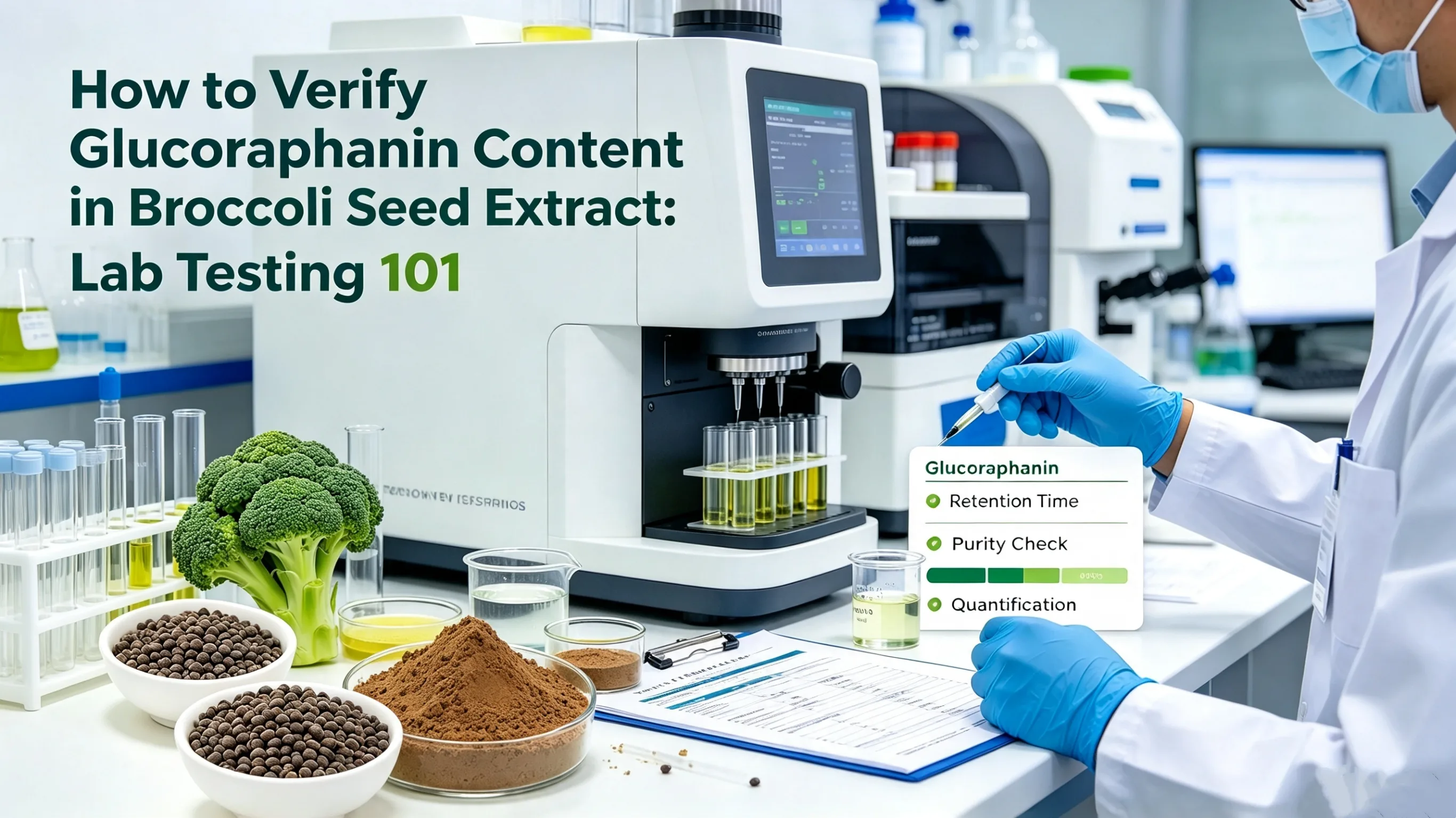
- Always verify your extract's HPLC-confirmed glucoraphanin content - not colorimetric assay estimates
Stability in Capsule Manufacturing - The Practical Checklist
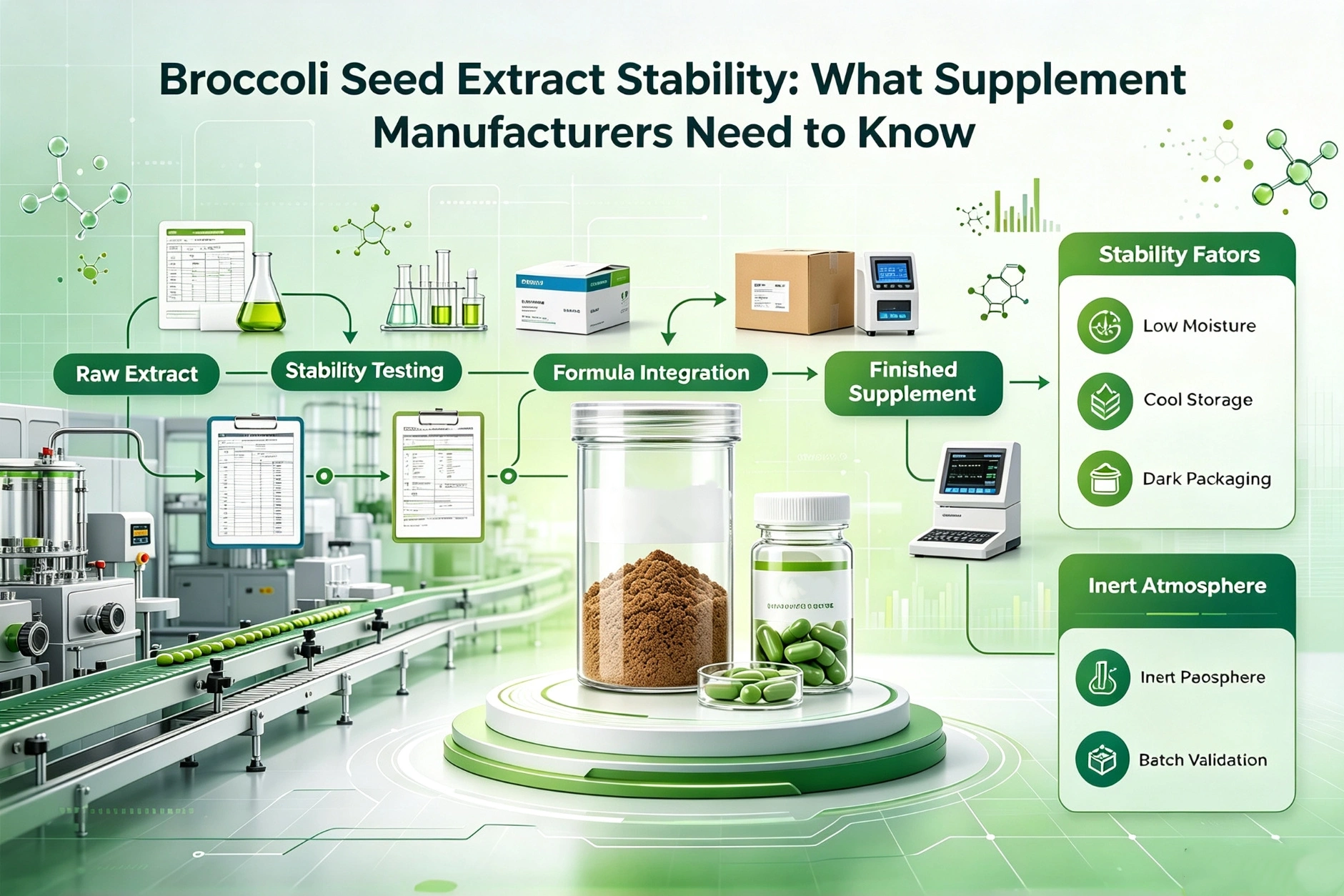
Broccoli seed extract is more stable than raw sulforaphane - but it still requires careful handling during capsule manufacturing.
Temperature controls:
- Keep blending and encapsulation environments below 40°C
- Avoid steam sterilization processes - use dry heat or irradiation alternatives
- Cold-chain storage for finished capsules is advisable for sulforaphane-standardized grades
Moisture management:
- Target water activity (Aw) below 0.4 for finished capsule blends
- Use desiccant sachets in finished product packaging
- HPMC capsules are preferred over gelatin for moisture-sensitive actives
Oxidation protection:
- Nitrogen-flush blending and encapsulation environments where possible
- Use oxygen-barrier blister packaging or amber HDPE bottles with induction seals
- Avoid co-formulation with highly oxidative excipients
Accelerated stability testing benchmark:
High-quality glucoraphanin extract should demonstrate >95% potency retention after 90 days at 37°C / 75% RH under accelerated stability conditions. Request this data from your supplier before committing to a formulation. If a supplier cannot provide it, that is a significant quality signal.
What to Look for in a Broccoli Seed Extract Supplier
Supplier qualification is where B2B buyers make or break their product quality. These are the non-negotiable criteria:
HPLC verification - not colorimetric assay
Colorimetric assays measure total glucosinolates - they cannot distinguish glucoraphanin from other glucosinolates. A supplier reporting glucoraphanin content based on colorimetric data is giving you a number that cannot be defended in a third-party audit. Demand HPLC quantification against certified reference standards.
Myrosinase activity documentation
If you are purchasing a myrosinase-active extract, verify that myrosinase activity is quantified per batch - not just declared. Enzyme activity degrades over time and under adverse storage conditions.
Hydrolysis conversion rate data
Ask for in vitro conversion rate data under simulated gastric conditions. A high-quality extract with myrosinase co-inclusion should achieve conversion rates significantly above enzyme-free material. Published benchmarks suggest 55%+ conversion in 120 minutes of artificial gastric fluid digestion for premium-grade material.
Clinical trial ingredient traceability
The most credible suppliers can demonstrate that their specific extract material has been used as the intervention ingredient in published clinical trials. This is the highest level of ingredient substantiation available - and it is the standard that regulatory reviewers and sophisticated brand buyers increasingly expect.
GMP and regulatory certifications to verify:
- ISO 9001:2015
- GMP certificate (FDA-equivalent or EU GMP)
- HACCP
- Full COA with HPLC chromatogram per batch
- Residual solvent and pesticide residue reports
- Non-GMO declaration
Formulation Compatibility - What Works Well with Broccoli Seed Extract
Broccoli seed extract pairs well with several complementary actives in supplement formulations:
Synergistic combinations:
- Vitamin C - protects sulforaphane from nitrile diversion during conversion; supports overall antioxidant positioning
- Selenium - synergistic Nrf2 pathway support; well-documented in detoxification formulas
- Quercetin - complementary Nrf2 activation; anti-inflammatory positioning
- Piperine (black pepper extract) - improves bioavailability of co-formulated actives; widely used in botanical supplement blends
- Zinc - supports Phase II detoxification enzyme activity
Combinations to approach carefully:
- Raw crucifer powders - may contain ESP activity that diverts glucoraphanin to nitrile products
- High-dose iron - pro-oxidant potential may accelerate sulforaphane degradation
- Strongly alkaline excipients - can accelerate glucosinolate hydrolysis during manufacturing
Labeling and Claims Guidance for Regulated Markets
Getting your label claims right protects your brand and your buyers. Here is what the evidence supports:
Substantiated structure/function claims (US DSHEA):
- "Supports antioxidant defense" - well-supported by Nrf2 mechanism data
- "Supports healthy detoxification" - supported by Phase II enzyme induction data
- "Supports liver health" - supported by published RCT data on ALT/γ-GTP improvement
Claims requiring caution:
- Cancer prevention claims - require FDA-approved health claim substantiation; structure/function claims cannot reference disease treatment or prevention
- Specific clinical outcome claims - must be supported by trials using your specific formulation
EU market considerations:
- EFSA has not yet approved a specific health claim for sulforaphane under Regulation (EC) No 1924/2006
- General antioxidant and detoxification positioning is used widely in EU markets under traditional use frameworks
- Novel Food status should be verified for high-concentration extract grades in your specific product format
Why Broccoli Seed Extract Belongs in Your Next Formulation
The supplement market is saturated with botanical ingredients that carry more marketing weight than scientific substance. Broccoli seed extract is the exception.
It offers:
- A mechanistically defined, target-validated bioactivity pathway (Nrf2/Keap1)
- A growing body of published RCT data across liver health, detoxification, and antioxidant applications
- A thermally stable precursor form (glucoraphanin) that survives commercial manufacturing
- Documented bioavailability with quantified urinary recovery
- A defined safety ceiling (TUL 30 mg SFN/day) that enables precision dosing
The formulation challenges are manageable. The science is real. And the market opportunity - particularly in liver health, detoxification, and cellular protection categories - is growing.
If you are building a supplement capsule that needs to stand up to scientific scrutiny and deliver measurable results for your customers, broccoli seed extract deserves a serious look at your formulation bench.
Ready to Source Broccoli Seed Extract for Your Capsule Formula?
Jiuyuan Bio supplies HPLC-verified Broccoli Seed Extract in multiple specifications - including Glucoraphanin 13%–20%, Sulforaphane 0.1%–10%, and combination grades - manufactured under GMP-certified conditions with full analytical documentation per batch.
Our extract material has been used as the intervention ingredient in published clinical trials across North America, Europe, Japan, and China - the level of substantiation that sophisticated supplement brands and regulatory reviewers increasingly require.
👉 View full product specifications: https://www.jiuyuanbio.com/standard-plant-extract-powder/broccoli-seed-extract.html
📧 Contact our technical team: info@jiuybiotech.com
We provide samples, HPLC-verified COA, stability data, and clinical trial documentation for qualified buyers.