


Product Overview
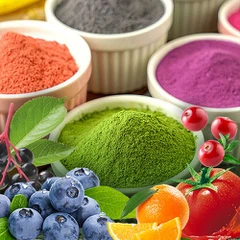
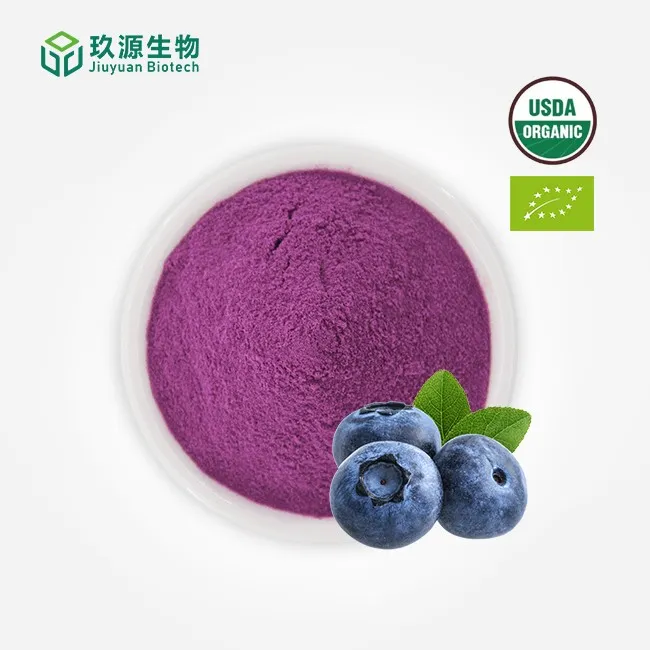
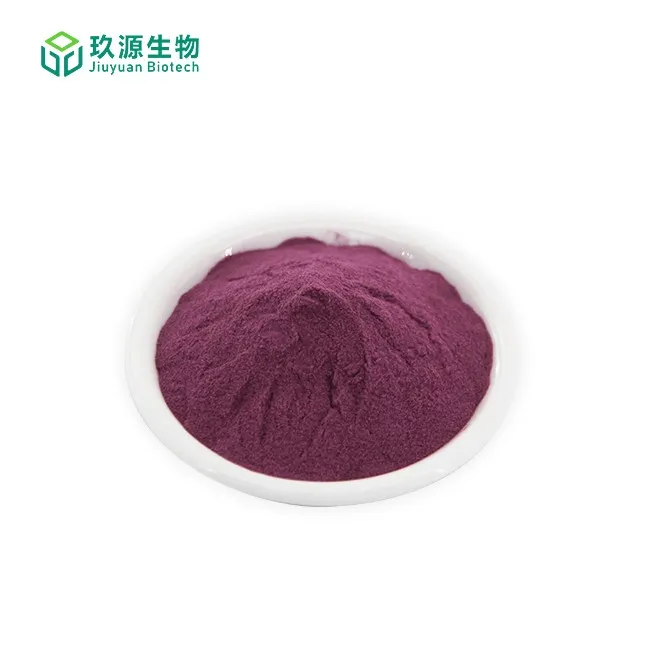
Organic Freeze Dried Blueberry Powder from JiuYuan Bio is produced from certified organic Vaccinium corymbosum (highbush blueberry) whole fruit, harvested at peak ripeness and freeze-dried without carriers, fillers, or anti-caking agents. The result is a 100% whole-fruit powder that reconstitutes with the flavor, color, and phytochemical profile of fresh blueberries - in a format that is shelf-stable for 24 months, free-flowing, and directly scalable into capsule, gummy, beverage, and functional food applications.
When blueberries are spray-dried, the process exposes the fruit matrix to inlet air temperatures typically ranging from 150°C to 200°C. Anthocyanins - the pigmented flavonoids responsible for blueberry's color and the majority of its documented bioactivity - are heat-labile chromophores. The consequence is measurable and well-documented: spray drying reduces individual anthocyanidin content in blueberry by 50% to 70% relative to the fresh fruit baseline. Freeze drying, by contrast, removes moisture through sublimation under vacuum at sub-zero temperatures, preserving the fruit's phytochemical matrix with minimal thermal insult. Research has confirmed that freeze-dried powders retain anthocyanins at approximately 1.5 times higher levels than their spray-dried counterparts.
For B2B buyers, the central sourcing question in this category is not whether to use freeze-dried over spray-dried - the quality case is settled. The question is whether your supplier can deliver consistent anthocyanin retention, verified organic chain-of-custody, and the microbiological safety profile that premium finished product brands demand. Those three variables are where supplier quality diverges most sharply in the organic blueberry powder market.
Certificate of Analysis
|
Item |
Specification |
Result |
Method |
|
Basic Product Information |
|||
|
Latin Name |
Vaccinium Spp |
Conform |
/ |
|
Part of the Plant |
Fruit |
Conform |
/ |
|
Country of Origin |
China |
Conform |
/ |
|
Marker Compounds |
|||
|
Assay |
≥25% |
Conform |
TLC |
|
Organoleptic Data |
|||
|
Appearance |
Fine Powder |
Conform |
Organoleptic |
|
Color |
Purple |
Conform |
Organoleptic |
|
Odor |
Characteristic |
Conform |
Organoleptic |
|
Process Data |
|||
|
Method of Processing |
Solvent Extraction |
Conform |
/ |
|
Drying Method |
Vacuum freeze drying |
Conform |
/ |
|
Physical Characteristics |
|||
|
Particle Size (80 mesh) |
95% pass 80 mesh |
Conform |
/ |
|
Moisture |
≤5.0% |
Conform |
GB 5009.3 |
|
Ash Content |
≤5.0% |
Conform |
GB 5009.4 |
|
Heavy Metals |
|||
|
Total Heavy Metals |
<10ppm Max. |
Conform |
GB 5009.74 |
|
As |
<1.2ppm Max. |
Conform |
GB 5009.11 |
|
Pb |
<2ppm Max. |
Conform |
GB 5009.12 |
|
Cd |
<2ppm Max. |
Conform |
GB 5009.15 |
|
Hg |
<2ppm Max. |
Conform |
GB 5009.17 |
|
Microbiology |
|||
|
Total Plate Count |
10,000cfu/g Max |
Conform |
GB 4789.2 |
|
Total Yeast & Mold |
1,000cfu/g Max |
Conform |
GB 4789.15 |
|
E.Coli |
Negative |
Negative |
GB 4789.38 |
|
Salmonella |
Negative |
Negative |
GB 4789.31 |
|
Shelf Life |
24 months under the conditions above and in its original packaging. |
||
|
Storage |
Store in a cool & dry place, keep away from strong light and heat. |
||

Manufacturing Process
Freeze drying is a more capital-intensive, slower, and energy-demanding process than spray drying - which is precisely why it is reserved for applications where phytochemical integrity justifies the cost premium. Here is how JiuYuan Bio's production pipeline is structured to protect that integrity at every stage.
Stage 1 - Certified Organic Sourcing & Harvest Blueberries are sourced from certified organic farms operating under USDA NOP and EU EC 848/2018 standards. Harvest timing is calibrated to peak anthocyanin accumulation - which in Vaccinium corymbosum occurs at full ripeness, when the berry surface transitions from red-pink to deep blue-black. Premature harvest yields lower anthocyanin content; over-ripe fruit introduces microbiological risk. Both are screened at intake.
Stage 2 - Incoming Inspection & Sorting Received berries undergo visual and instrumental sorting to remove damaged, unripe, or moldy fruit. Incoming lots are tested for pesticide residues, heavy metals, and mycotoxins before processing. Organic chain-of-custody documentation is verified at this stage.
Stage 3 - Washing & Pre-Treatment Sorted berries are washed with food-grade water and optionally subjected to a brief blanching step (where required for microbiological load reduction) under time-temperature conditions validated to minimize anthocyanin loss. For premium grades, blanching is omitted and cold-water washing alone is used to preserve the full phytochemical profile.
Stage 4 - Pre-Freezing Washed berries or berry slurry are rapidly pre-frozen to approximately -40°C (-40°F) using blast freezing. Rapid freezing is essential - slow freezing generates large ice crystals that rupture cell walls and compromise the powder's reconstitution texture and color uniformity.
Stage 5 - Primary Drying (Sublimation) Pre-frozen material is loaded into the freeze dryer and subjected to vacuum conditions (typically below 0.1 mbar). Under these conditions, ice sublimes directly to water vapor without passing through a liquid phase - the defining feature of lyophilization. Chamber shelf temperature is gradually raised from -40°C to approximately 20–30°C over 18–36 hours, driving sublimation while maintaining the product in a frozen state throughout primary drying.
Stage 6 - Secondary Drying (Desorption) After primary drying removes bulk ice, a secondary drying phase at slightly elevated temperature (25–35°C) under continued vacuum removes residual bound moisture, achieving the target water activity of ≤ 0.30.
Stage 7 - Milling, Sieving & Packaging Freeze-dried blueberry cake is milled to target particle size under low-humidity conditions to prevent moisture reabsorption, sieved to specification, and immediately packaged under nitrogen flush in foil-laminated, moisture-barrier containers with desiccant sachets.
Active Compounds & Phytochemical Profile
Blueberry's nutritional and functional reputation rests on one of the most comprehensively studied polyphenol profiles in the entire fruit kingdom. The phytochemical matrix of Vaccinium species is genuinely complex - and freeze drying is the only commercial drying method that preserves it with meaningful fidelity.
Anthocyanins - The Primary Bioactive Fraction
Blueberry anthocyanins are predominantly glycosides of five aglycone bases: cyanidin, delphinidin, malvidin, peonidin, and petunidin - a structural diversity that distinguishes blueberry from most other anthocyanin-rich fruits, which typically feature one or two dominant aglycones. This diversity is associated with a broader spectrum of bioactivity than single-aglycone sources.
|
Anthocyanin Subclass |
Dominant Species |
Primary Documented Activity |
|
Delphinidin glycosides |
Delphinidin-3-galactoside |
Anti-inflammatory, antioxidant, cardiovascular |
|
Malvidin glycosides |
Malvidin-3-glucoside |
Neuroprotective, antioxidant |
|
Cyanidin glycosides |
Cyanidin-3-galactoside |
Anti-inflammatory, antiviral |
|
Peonidin glycosides |
Peonidin-3-glucoside |
Antioxidant, anti-proliferative |
|
Petunidin glycosides |
Petunidin-3-galactoside |
Antioxidant, vascular protective |
The Full Polyphenol Matrix
|
Compound Class |
Key Constituents |
Bioactivity |
|
Flavonols |
Quercetin, Myricetin, Kaempferol |
Anti-inflammatory, antioxidant, cardioprotective |
|
Flavan-3-ols |
Catechin, Epicatechin, Proanthocyanidins |
Vascular health, antioxidant, gut microbiome modulation |
|
Hydroxycinnamic acids |
Chlorogenic acid, Caffeic acid |
Antioxidant, glucose metabolism |
|
Resveratrol (trace) |
Trans-resveratrol |
Sirtuin activation, anti-aging |
|
Pterostilbene |
Pterostilbene |
Neuroprotective, antioxidant (more bioavailable than resveratrol) |
|
Vitamins |
Vitamin C, Vitamin K, Vitamin E |
Immune, coagulation, antioxidant |
|
Minerals |
Manganese, Copper, Potassium |
Enzymatic cofactors, electrolyte |
Why Freeze Drying Matters for Phytochemical Retention
The anthocyanin retention advantage of freeze drying over spray drying is not merely quantitative - it is qualitative. Spray drying not only reduces total anthocyanin content by 50–70%, it also preferentially degrades more heat-labile anthocyanin species, altering the relative composition of the anthocyanin profile. Freeze-dried blueberry powder retains the full five-aglycone anthocyanin diversity of the fresh fruit, which is the profile that clinical research on blueberry bioactivity has been conducted against. A spray-dried powder with a degraded and compositionally altered anthocyanin profile is not a functionally equivalent substitute - regardless of what the total polyphenol number on the CoA says.
Main Effects And Functions

Enhance immunity
Rich in vitamin C and other immune-enhancing ingredients, blueberries help improve the body's resistance.

Improve vision
Anthocyanins in blueberries help protect the eyes and improve vision, especially for people who use electronic screens for a long time.

Antioxidant effect
Antioxidants such as anthocyanins help fight free radicals, slow down the aging process, and protect cell health.

Cardiovascular health
The antioxidants and fiber in blueberries help maintain cardiovascular health and reduce the risk of heart disease.

Promote digestion
The dietary fiber in organic blueberry powder helps improve digestive health and prevent constipation.

Control calories
Compared to fresh blueberries, organic blueberry powder provides rich nutrition while reducing calorie intake.
Application Matrix
|
Application Sector |
Product Format |
Key Functional Claim |
Formulation Notes |
|
Antioxidant Supplements |
Capsules, tablets, softgels |
Polyphenol antioxidant support |
High anthocyanin density per capsule |
|
Cognitive Health / Nootropics |
Capsules, powder blends |
Memory, brain aging, neuroprotection |
Pterostilbene + anthocyanin synergy |
|
Cardiovascular Health |
Capsules, functional blends |
Vascular integrity, blood pressure support |
Proanthocyanidin + flavonol contribution |
|
Eye Health Formulas |
Capsules, softgels |
Visual acuity, retinal antioxidant defense |
Anthocyanin affinity for retinal tissue |
|
Functional Beverages |
RTD drinks, smoothie powders, effervescent |
Natural color, authentic flavor, antioxidant |
Excellent water dispersibility |
|
Gummy Supplements |
Pectin or gelatin gummies |
Natural color + flavor, antioxidant |
pH-stable color in acidic gummy matrix |
|
Functional Foods |
Granola bars, yogurt, baked goods, cereals |
Organic, whole-fruit, clean-label |
True-to-fruit flavor contribution |
|
Sports Nutrition |
Recovery blends, protein powders |
Oxidative stress reduction, muscle recovery |
Pairs well with tart cherry, beetroot |
|
Children's Nutrition |
Chewable tablets, gummies, sachets |
Organic, natural, antioxidant |
Familiar flavor; clean-label organic |
|
Healthy Aging / Longevity |
Capsules, powder blends |
Cellular antioxidant, cognitive aging |
Pterostilbene + proanthocyanidin stack |
Formulation note on color stability: Blueberry anthocyanins are pH-sensitive - exhibiting vibrant red-purple at pH < 3.5, shifting to violet-blue at pH 4–6, and degrading toward colorless/brown above pH 7. For neutral or alkaline formulation matrices (e.g., protein shakes, alkaline beverages), color shift should be anticipated and managed through pH adjustment or encapsulation. In acidic matrices (gummies, RTD beverages), color is stable and visually appealing without additional stabilization.
Comparison: Processing Methods & Supplier Quality
Freeze Drying vs. Spray Drying vs. Air Drying
This comparison is the most commercially important technical decision in the blueberry powder category - and it is frequently obscured by suppliers who conflate different processing methods under the generic label "blueberry powder."
|
Parameter |
Freeze Dried (JiuYuan Bio) |
Spray Dried |
Air / Drum Dried |
|
Processing Temperature |
-40°C to +30°C (sublimation) |
150–200°C inlet air |
60–80°C |
|
Anthocyanin Retention |
~95% vs. fresh |
30–50% vs. fresh |
20–40% vs. fresh |
|
Flavor Fidelity |
True-to-fruit |
Cooked/caramelized notes |
Significantly altered |
|
Color Vibrancy |
Deep violet, vivid |
Muted, brownish |
Dull, brownish |
|
Reconstitution |
Excellent - near-fresh texture |
Good |
Poor |
|
Carrier Required |
No - 100% whole fruit |
Usually yes (maltodextrin) |
Sometimes |
|
Water Activity |
≤ 0.30 (microbiologically stable) |
0.20–0.35 |
0.40–0.60 (higher risk) |
|
Cost |
Premium |
Low–mid |
Low |
|
Best Application |
Premium supplements, functional foods |
Cost-sensitive applications |
Industrial food processing |
JiuYuan Bio vs. Typical Market Alternatives
|
Evaluation Criterion |
JiuYuan Bio |
Generic Commodity Supplier |
Premium Western Brand |
|
Processing Method |
Freeze drying (verified) |
Often spray-dried, labeled ambiguously |
Freeze drying |
|
Organic Certification |
USDA + EU (dual, full chain) |
Rarely dual-certified |
Usually one market |
|
Anthocyanin Specification |
HPLC, per batch |
Often absent or colorimetric |
HPLC |
|
Water Activity Testing |
Per batch |
Rarely performed |
Yes |
|
Carrier-Free |
Yes - 100% whole fruit |
Often contains maltodextrin |
Usually carrier-free |
|
MOQ |
1 kg |
5–25 kg |
10–50 kg |
|
Price Positioning |
Competitive mid-range |
Low (quality variable) |
Premium |
|
Custom Mesh Sizes |
Yes |
Rarely |
Limited |
|
Nutritional Panel |
Available per batch |
Rarely provided |
Available |
Quality Control
Organic Freeze Dried Blueberry Powder present a distinct QC profile compared to botanical extracts. The primary concerns are water activity management, anthocyanin oxidative stability, microbiological safety of a whole-food matrix, and organic certification integrity.
Incoming Raw Material Controls
● Botanical identity and variety verification
● Organic chain-of-custody documentation review
● Pesticide multi-residue screen: GC-MS/MS, EU Reg. 396/2005
● Heavy metals: ICP-MS (Pb, As, Cd, Hg)
● Mycotoxin panel: Aflatoxins, Ochratoxin A
● Brix and pH measurement for ripeness assessment
● Anthocyanin spot-check by UV-Vis on incoming lots
In-Process Controls
● Pre-freeze temperature and rate logging
● Chamber pressure and shelf temperature monitoring throughout lyophilization cycle
● Primary drying endpoint determination by comparative pressure rise test
● Secondary drying endpoint by water activity measurement
● Milling humidity control (target RH < 30% in milling area)
Finished Product Release Panel
● Anthocyanins: HPLC-UV (primary specification)
● Total polyphenols: Folin-Ciocalteu
● Moisture: Karl Fischer titration
● Water activity: Calibrated water activity meter (critical specification)
● Color: CIE Lab* colorimetry (batch-to-batch consistency)
● Microbiological: TPC, Y&M, E. coli, Salmonella, S. aureus
● Heavy metals: ICP-MS
● Pesticide residues: GC-MS/MS
● Particle size distribution: Sieve analysis

Why Choose Jiuyuan Biotech
1. Advanced production equipment: We have state-of-the-art equipment to ensure efficient production processes and superior product quality.
2. Strict quality control: A comprehensive quality management system, from procurement to packaging, every link is strictly monitored and tested to ensure that the product meets the highest food safety and quality standards.
3. Customized production capabilities: According to the specific needs of customers, customized freeze-dried blueberry powder products are provided, including different specifications, packaging, and formulations.
4. Environmental protection: Energy-saving and emission reduction measures are taken during the production process to reduce waste and emissions, and we are committed to achieving green production.
5. Global market experience: Our production and management teams have experience in serving the global market and can meet the regulatory requirements and consumer preferences of different countries and regions.

Certificates & Documents
|
Document / Certification |
Status |
|
USDA Organic Certificate |
Certified - NOP compliant |
|
EU Organic Certificate |
Certified - EC 848/2018 compliant |
|
ISO 9001:2015 |
Certified |
|
cGMP (Current Good Manufacturing Practice) |
Compliant |
|
HACCP |
Certified |
|
Non-GMO Verification |
Available |
|
Kosher Certificate |
Available |
|
Halal Certificate |
Available |
|
Certificate of Analysis (CoA) |
Issued per batch |
|
MSDS / SDS |
GHS-compliant, English |
|
Heavy Metal Test Report |
Per batch |
|
Pesticide Residue Report |
Per batch |
|
Mycotoxin Test Report |
Per batch |
|
Water Activity Test Report |
Per batch |
|
Allergen Declaration |
Available (free from major allergens) |
|
Nutritional Panel (per 100g) |
Available for label development |
|
Third-Party Lab Verification |
Available upon request |
Our organic certification covers the complete supply chain from certified organic farm through finished powder - providing unbroken chain-of-custody documentation for your own organic product certification applications in the US, EU, and other markets.

Our transportation

ByAir
100 kg- 1000 kg, 5- 7 days
Airport-to-airport service professional
clearance broker needed

BySea
Over 300 kg, Around 30 Days
Port-to-port service professional
clearance broker needed

Express
Under 100kg, 3- 5 days
Door-to-door service easy to pick up the goods
FAQ
Q1: What is the actual anthocyanin content of freeze-dried blueberry powder, and how does it compare to fresh blueberries?
Fresh blueberries contain approximately 163–487 mg of anthocyanins per 100 g fresh weight, depending on variety, growing conditions, and ripeness at harvest. Because freeze drying removes approximately 85–90% of the water content, the resulting powder is a concentrated whole-fruit product. A well-produced freeze-dried blueberry powder retains approximately 90–95% of the fresh fruit's anthocyanin content on a dry weight basis - translating to roughly 0.3%–0.5% anthocyanins (300–500 mg/100g) in the finished powder. This compares favorably to spray-dried alternatives, which typically retain only 30–50% of fresh fruit anthocyanins due to thermal degradation during processing.
Q2: Why does freeze-dried blueberry powder cost more than spray-dried alternatives?
The price differential reflects genuine process economics, not marketing positioning. Freeze drying requires: (1) capital-intensive lyophilization equipment with high energy consumption; (2) processing cycles of 18–48 hours per batch, versus minutes for spray drying; (3) lower throughput per unit of floor space; and (4) more rigorous moisture and water activity management post-drying. The result is a product with substantially higher anthocyanin retention, superior flavor fidelity, and better reconstitution characteristics. For premium supplement brands and functional food applications where label claims, flavor performance, and ingredient quality are commercially differentiating, the cost premium is routinely justified by the formulation outcome.
Q3: Is organic freeze-dried blueberry powder hygroscopic? How should it be handled during manufacturing?
Yes - freeze-dried fruit powders are characteristically hygroscopic due to their high sugar content and the large surface area created by lyophilization. Exposure to ambient humidity above approximately 40–50% RH will cause the powder to absorb moisture, increasing water activity, promoting caking, and accelerating anthocyanin degradation. During manufacturing, the following precautions are recommended: (1) work in a humidity-controlled environment (target RH < 40%); (2) keep containers sealed until immediately before use; (3) use nitrogen purging when resealing partially used containers; (4) avoid prolonged exposure to open air during blending or encapsulation operations. For high-humidity manufacturing environments, consider encapsulating the blueberry powder in a moisture-barrier capsule shell or co-processing with a flow agent such as silicon dioxide.
Q4: What is the difference between highbush (Vaccinium corymbosum) and lowbush (Vaccinium angustifolium) blueberry powder?
Both species are commercially used for freeze-dried powder production, but they differ in berry size, flavor profile, and phytochemical composition. Lowbush (wild) blueberries are smaller, more intensely flavored, and generally contain higher anthocyanin concentrations per unit fresh weight than cultivated highbush varieties - a consequence of their smaller berry size (higher skin-to-pulp ratio, as anthocyanins are concentrated in the skin). Highbush varieties are more widely cultivated, more commercially scalable, and more consistent in size and flavor. JiuYuan Bio's standard grade uses highbush blueberry for supply consistency; lowbush (wild) blueberry powder is available as a custom order. Buyers should specify their preference when requesting samples, as the two products differ in color intensity, flavor profile, and anthocyanin content.
Q5: Can organic freeze-dried blueberry powder be used in hot-processed food applications such as baked goods?
Yes, with the understanding that baking temperatures will cause some anthocyanin degradation - a limitation shared by all anthocyanin-containing ingredients, regardless of the drying method used to produce the powder. In typical baked goods (cookies, muffins, bars) with internal temperatures reaching 90–100°C, anthocyanin losses of 20–40% during baking should be anticipated. The powder's flavor and color contribution will still be meaningful, and the remaining polyphenol fraction (flavonols, phenolic acids, proanthocyanidins) is more thermally stable than anthocyanins. For applications where maximum anthocyanin retention is the priority, cold-process formats (no-bake bars, smoothie powders, capsule fills, gummies) are preferable.
Q6: What is the regulatory status of organic freeze-dried blueberry powder in major markets?
USA: Whole blueberry powder is a conventional food ingredient with no pre-market authorization requirement. Marketed as a dietary supplement ingredient under DSHEA with established history of safe use. USDA Organic certification enables organic label claims under NOP regulations.
EU: Blueberry (Vaccinium myrtillus and V. corymbosum) has a long history of food use in the EU and is not classified as a Novel Food. EU Organic certification enables organic claims under EC 848/2018.
Canada: Recognized as a food ingredient and natural health product ingredient. Organic claims governed by the Canada Organic Regime (COR).
UK: Established food ingredient; not subject to Novel Food authorization. Organic claims governed by UK Organic Regulations post-Brexit.
Australia/NZ: Standard food ingredient under FSANZ Food Standards Code.
Q7: How does pterostilbene in blueberry powder differ from resveratrol, and why does it matter for formulation?
Pterostilbene is a dimethylated analogue of resveratrol naturally present in blueberries at trace concentrations. The structural difference - two methoxy groups replacing two hydroxyl groups - confers significantly greater lipophilicity and oral bioavailability compared to resveratrol. Published pharmacokinetic studies have reported pterostilbene bioavailability of approximately 80% in animal models, versus approximately 20% for resveratrol. While the absolute pterostilbene content in freeze-dried blueberry powder is modest (typically 0.1–0.5 mg/100g), its presence contributes to the ingredient's neuroprotective and antioxidant profile and is a meaningful differentiator for cognitive health and healthy aging formulations. Brands seeking to amplify this aspect of blueberry's bioactivity can consider co-formulating with a dedicated pterostilbene ingredient.
Q8: Does JiuYuan Bio offer custom mesh sizes or blueberry powder blends?
Yes. Beyond our standard 40–80 mesh grade, we can produce coarser granulations (20–40 mesh) for texture applications in granola, trail mix coatings, and cereal inclusions, or finer powders (100+ mesh) for beverage and capsule fill applications. Custom blends - for example, a blueberry-acai-pomegranate polyphenol blend, or a blueberry-spinach greens complex - are available as OEM/ODM formulation projects. Contact our technical sales team with your target specification and application brief for a feasibility assessment and quotation.
Request a Sample or Commercial Quote
Jiuyuan Biotech supplies Organic Freeze Dried Blueberry Powder to food manufacturers, supplement brands, and contract formulators across North America, Europe, and the Asia-Pacific region. Our technical team - not a generic sales inbox - handles every inquiry.
Email: info@jiuyuanbio.com
Website: www.jiuyuanbio.com
Request: Sample (500g–1kg) | Bulk Quote | CoA & Spec Sheet | Custom Carrier Ratio
Standard response time: within 1 business day. Please include your target application and annual volume estimate for the most relevant technical recommendation.
Hot Tags: Organic Freeze Dried Blueberry Powder, freeze dried blueberry bulk, Vaccinium corymbosum powder, anthocyanin ingredient, USDA organic blueberry powder, functional food ingredient, antioxidant raw material, wholesale blueberry powder supplier


