Product Overview
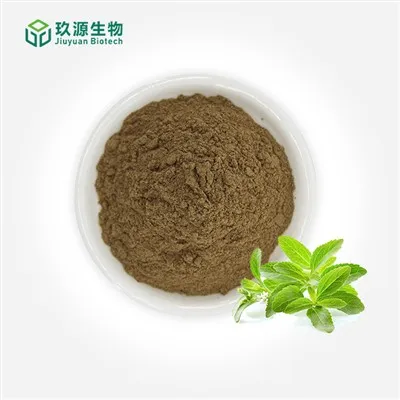
Jiuyuan Biotech's Organic Strawberry Juice Powder is produced from certified organic Fragaria × ananassa fruit harvested at peak ripeness - the stage at which anthocyanin concentration, vitamin C content, and ellagic acid levels are measurably highest. The juice is cold-concentrated, then spray-dried under controlled inlet temperatures to minimize thermal degradation of heat-sensitive polyphenols. The result is a powder that retains the characteristic pink-red hue, the clean top-note aroma, and a meaningful phytonutrient payload - not just a flavoring agent dressed up with an organic certificate.
This ingredient is designed for formulators who need organic compliance, clean-label positioning, and genuine functional credibility in a single material.
Technical Specification
|
Item |
Specification |
Result |
Method |
|
Basic Product Information |
|||
| Botanical Source | Fragaria ananassa |
Conforms |
/ |
|
Part of the Plant |
Fruit |
Conforms |
/ |
|
Marker Compounds |
|||
|
Assay |
>98% |
Conforms |
HPLC |
|
Organoleptic Data |
|||
|
Appearance |
Fine Powder |
Conforms |
Sensory |
|
Color |
Pink |
Conforms |
Sensory |
|
Odor |
Characteristic |
Conforms |
Sensory |
|
Process Data |
|||
|
Method of Processing |
Extraction and concentration |
/ |
/ |
|
Drying Method |
Spraying drying |
/ |
/ |
|
Physical Characteristics |
|||
|
Particle Size |
100% pass 80 mesh |
100% pass |
AOAC973.03 |
|
Moisture |
≤5.0% |
3.4% |
GB/T5009.3 |
|
Ash Content |
≤5.0% |
4.1% |
CP2010 |
|
Heavy Metals |
|||
|
Total Heavy Metals |
<10ppm Max. |
Conforms |
GB 5009.74 |
|
As |
≤1.0 ppm |
0. 11ppm |
GB/T5009. 11 |
|
Pb |
≤0.5 ppm |
0.31ppm |
GB/T5009. 12 |
|
Cd |
≤0.5 ppm |
0. 12ppm |
GB/T5009. 15 |
|
Hg |
≤0.05 ppm |
0.012ppm |
GB/T5009. 17 |
|
Microbiology |
|||
|
Total Plate Count |
≤10000 cfu/g |
1800cfu/g |
GB/T4789.2 |
|
Total Yeast & Mold |
≤200 cfu/g |
40cfu/g |
GB/T4789. 15 |
|
E.Coli |
Negative/ 10g |
Negative/ 10g |
SN0169 |
|
Salmonella |
Negative/ 10g |
Negative/ 10g |
GB/T4789.4 |
|
Shelf Life |
24 months under the conditions above and in its original packaging. |
||
|
Storage |
Store in a cool & dry place, keep away from strong light and heat. |
||
Freeze-Dried Grade (Available on Request)
For applications requiring maximum color retention and aroma intensity - premium RTD beverages, high-end confectionery, or clinical nutrition products - our freeze-dried strawberry powder variant preserves a broader volatile aromatic profile and higher anthocyanin retention compared to spray-dried material. Available in 80–100 mesh. Pricing and lead time upon request.

Production Process
Production Process
● Organic Strawberry Procurement and Cleaning: Harvesting fresh, ripe organic strawberries, followed by thorough cleaning and sorting.
Pre-treatment: Hulling, slicing, or pulping.
● Drying (Low-Temperature/Freeze-Drying): The most common method is Vacuum Freeze-Drying (Lyophilization). In this process, the strawberries are frozen at low temperatures, and then water is removed through vacuum sublimation.
● Grinding and Sieving: Grinding the dried strawberry pieces into fine powder and sieving to achieve the required particle size.
Packaging: Airtight packaging in a low-humidity environment to maintain product freshness and stability.
Process Characteristics
● Low-Temperature Drying (Especially Freeze-Drying): Maximally retains heat-sensitive nutrients (such as Vitamin C, Anthocyanins) and the natural color and flavor of the strawberries.
● High Concentration: After removing water, the nutrients and flavor substances are highly concentrated, meaning a small amount of powder can provide significant efficacy.

Active Compounds & Functional Profile
Strawberry's nutritional identity is built on a layered phytochemical architecture - not a single "hero" compound. Understanding this matrix helps formulators make more defensible label claims and choose the right ingredient grade for their application.
Primary Bioactives
● Anthocyanins
The dominant pigment class in strawberry, primarily pelargonidin-3-glucoside (Pg3G), which accounts for roughly 75–90% of total anthocyanin content in ripe Fragaria × ananassa. These compounds are responsible for the characteristic red color and have been studied for their antioxidant and anti-inflammatory properties. Anthocyanin content peaks at full ripeness and degrades rapidly under heat, light, and alkaline pH - which is why processing conditions matter enormously.
● Ellagic Acid & Ellagitannins
Strawberry is one of the richest dietary sources of ellagic acid among commonly consumed fruits. Present primarily as ellagitannin conjugates (agrimoniin, sanguiin H-6) that hydrolyze to free ellagic acid during digestion. Research published in Food Quality and Safety documents the concentration variability across cultivars and processing methods - a key reason why sourcing from a defined cultivar base matters for label consistency.
● Vitamin C (L-Ascorbic Acid)
Fresh strawberry contains approximately 104 mg vitamin C per 100g fresh weight - one of the highest concentrations among non-citrus fruits. Processing losses are inevitable; our cold-press and low-temperature drying protocol is specifically designed to minimize ascorbic acid oxidation, targeting ≥150 mg/100g in the finished powder on a dry-weight basis.
● Quercetin & Kaempferol
Minor but functionally relevant flavonols present in the achene (seed) fraction. Contribute to the overall antioxidant capacity and provide additional label claim support for polyphenol-rich positioning.
● Organic Acids
Citric acid (dominant), malic acid, and trace levels of succinic acid contribute to the characteristic tartness and influence the pH of finished formulations - relevant for beverage formulators managing flavor balance and preservative efficacy.
Application Matrix
|
Application Sector |
Delivery Format |
Recommended Use Level |
Functional Positioning |
|
Functional Beverages |
RTD, powder sachet, effervescent |
3–8% w/w |
Natural color, vitamin C source, antioxidant |
|
Sports Nutrition |
Pre-workout powder, recovery drink |
2–5% w/w |
Natural flavor, antioxidant recovery support |
|
Dietary Supplements |
Capsule, tablet, softgel |
500 mg–2g/serving |
Polyphenol complex, vitamin C, ellagic acid |
|
Infant & Toddler Nutrition |
Organic puree blend, porridge mix |
1–3% w/w |
Organic fruit content, natural flavor |
|
Bakery & Confectionery |
Mochi, gummies, fruit bars, macarons |
2–6% w/w |
Natural color, flavor, clean label |
|
Dairy & Plant-Based Dairy |
Yogurt, smoothie mix, oat milk blend |
2–5% w/w |
Flavor, color, fruit content declaration |
|
Cosmetic / Topical |
Face mask powder, serum base |
0.5–2.0% w/w |
Antioxidant, brightening, ellagic acid |
|
Pet Nutrition |
Functional treat, supplement chew |
0.5–2% w/w |
Natural flavor, antioxidant support |
Formulator's note on color stability: Anthocyanins in strawberry powder are pH-sensitive - they display optimal red hue at pH 3.0–4.0 and shift toward purple/blue above pH 5.0. For neutral-pH applications (e.g., dairy, capsule fill), consider encapsulated variants or combine with acidulants to maintain visual appeal.
Quality Control
Organic certification creates a compliance floor - it doesn't guarantee ingredient performance. Our QC framework is built to go well beyond what certification audits require.
Raw Material Qualification:
● Farm-level audit and certification verification before each harvest season
● Incoming lot testing: Brix, color (CIE Lab*), pesticide screen (LC-MS/MS, 500+ compounds), and heavy metals before production release
In-Process Controls:
● Juice Brix monitored at extraction and post-concentration
● Inlet/outlet temperatures logged continuously during spray drying
● Moisture checked every 2 hours during production run
● Color measurement (spectrophotometric) on every production batch
Finished Product Release Panel:
● Full nutritional analysis (proximate + micronutrients)
● Anthocyanin quantification (pH differential method)
● Vitamin C by HPLC
● Ellagic acid by HPLC
● Pesticide residue screen (EU MRL panel, 500+ compounds)
● Heavy metals: Pb, As, Hg, Cd individually by ICP-MS
● Full microbiological panel per USP <61>/<62>
● Water activity (Aw ≤0.35 for stability assurance)
Stability Program:
Real-time stability studies at 25°C/60% RH and accelerated studies at 40°C/75% RH. Anthocyanin retention and color stability are tracked as primary stability-indicating parameters - because a strawberry powder that turns brown on the shelf is a formulation liability, not just an aesthetic issue.
certifications
|
Document |
Availability |
|
Certificate of Analysis (CoA) |
Per batch; issued within 24h of shipment |
|
USDA Organic Certificate |
✅ Current |
|
EU Organic Certificate (EC 834/2007) |
✅ Current |
|
Kosher Certificate |
✅ Certified |
|
Halal Certificate |
✅ Certified |
|
ISO 9001:2015 |
✅ Certified |
|
cGMP (21 CFR Part 111) |
✅ Compliant |
|
Non-GMO Declaration |
✅ Available |
|
Allergen Statement |
✅ Available (strawberry is a declared allergen in EU) |
|
Pesticide Residue Report (LC-MS/MS) |
Third-party, per batch |
|
Heavy Metal Report (ICP-MS) |
Third-party, per batch |
|
Nutritional Analysis (Proximate) |
Per batch |
|
MSDS / SDS (GHS-compliant) |
✅ Available |
|
Certificate of Origin |
Per shipment |
|
Prop 65 Compliance Statement |
✅ Available |
EU allergen note: Under EU Regulation 1169/2011, strawberry is not classified as one of the 14 major allergens requiring mandatory declaration. However, for products marketed to allergy-sensitive consumers, voluntary disclosure is recommended. We provide a full allergen cross-contamination statement covering our facility's production environment.

Buyer's Guide - Navigating the Organic Strawberry Powder Market
Buying Organic Strawberry Juice Powder for a commercial formula involves more due diligence than most ingredient categories. Here are the questions that separate informed procurement from costly mistakes:
1. What is the fruit-to-carrier ratio, and is it disclosed?
This is the single most important question for nutritional label accuracy. Our standard formulation uses a fruit solids-to-carrier ratio that is fully disclosed on the CoA. We do not blend to a fixed ratio without buyer knowledge.
2. Which organic certification applies - USDA, EU, or both?
For US market products, USDA NOP certification is required. For EU distribution, EC 834/2007 (now transitioning to EU 2018/848) certification is needed. We hold both. Certificates are current and available for download.
3. Can you match a specific color specification?
Yes. We can provide CIE Lab* color data for each production batch. For buyers with tight color tolerances (e.g., confectionery, cosmetics), we can work to a target color range with advance specification agreement.
4. What's the minimum order for organic-certified material?
MOQ is 25 kg for standard spray-dried grade. Freeze-dried grade: 10 kg. Samples (500g–1 kg) available for qualified buyers with signed NDA.
5. How do you handle pesticide compliance for the EU market?
Every batch is screened against the EU MRL panel (500+ compounds) by an accredited third-party laboratory. Reports are provided with each shipment. We do not rely solely on farm-level organic certification for pesticide compliance - we verify analytically.
6. What incoterms and shipping options are available?
FOB Qingdao/Shanghai, CIF, DDP. Cold-chain shipping available for temperature-sensitive markets. We work with freight forwarders experienced in food ingredient export documentation (FSVP, EU entry requirements).
7. Is strawberry powder subject to any import restrictions?
No specific import restrictions in the US, EU, or AU for processed strawberry powder. Standard food ingredient import documentation applies (FSVP for US, health certificate for EU). We provide full export documentation packages.
Product Comparison
|
Parameter |
Jiuyuan Biotech Organic |
Conventional Spray-Dried |
Low-Cost Broker Material |
|
Organic Certification |
USDA + EU Organic |
None |
Often uncertified |
|
Raw Material Base |
Defined cultivar, peak-ripeness harvest |
Mixed cultivar, variable ripeness |
Unknown origin |
|
Juice Brix at Concentration |
≥45° Brix |
30–40° Brix (estimated) |
Undisclosed |
|
Anthocyanin Content |
≥80 mg/100g (verified) |
40–60 mg/100g (variable) |
Rarely tested |
|
Vitamin C (dry basis) |
≥150 mg/100g |
80–120 mg/100g |
Not guaranteed |
|
Pesticide Testing |
500+ compounds, LC-MS/MS |
Basic screen or none |
Rarely available |
|
Carrier Transparency |
Disclosed on CoA |
Often undisclosed |
Not available |
|
Third-Party Testing |
Every batch |
Selective |
Rarely |
|
Freeze-Dried Option |
✅ Available |
Rarely |
Not available |
|
Color Stability (6-month) |
Tracked, data available |
Not monitored |
Unknown |
The carrier-to-fruit ratio is one of the most commonly obscured variables in strawberry powder sourcing. A product listed as "strawberry powder" may contain 50–70% maltodextrin by weight - which directly affects your label's fruit content declaration and nutritional panel. We disclose the carrier ratio on every CoA.
|
|
|
|


Delivery Methods
 |
 |
 |
|
Express Under 100kg, 3-5Days Door-to-door service easy to pick up the goods |
By Sea Over300kg, Around 30 Days Port-to-port service professional clearance broker needed |
By Air 100kg-1000kg, 5-7Days Airport-to-airport service professional clearance broker needed |
Frequently Asked Questions
Q1: What's the difference between strawberry juice powder and strawberry fruit powder?
This distinction matters more than most buyers realize. Juice powder is derived from pressed juice - it captures the water-soluble compounds (vitamin C, anthocyanins, organic acids, sugars) but excludes the insoluble fiber and some seed-associated compounds like ellagitannins. Fruit powder (whole or pulp-based) retains fiber and a broader range of phytochemicals but typically has a coarser texture and lower solubility. For beverage applications and clean-dissolving supplement formats, juice powder is generally preferred. For fiber-enriched or whole-food-positioned products, fruit powder is the better fit.
Q2: How do I prevent color degradation in my finished product?
Anthocyanin stability in strawberry powder is influenced by four primary factors: pH, light exposure, oxygen, and temperature. Practical mitigation strategies include: formulating at pH ≤4.0 where possible, using opaque or UV-blocking packaging, incorporating antioxidant co-ingredients (vitamin C, rosemary extract), and storing finished product below 20°C. For products where color stability is mission-critical, our freeze-dried grade offers meaningfully better retention over a 12-month shelf life.
Q3: Is this ingredient suitable for infant formula or baby food applications?
Our organic strawberry juice powder meets the heavy metal and pesticide standards required for infant food applications in both the US and EU. However, regulatory compliance for infant formula is category-specific and jurisdiction-dependent. We recommend consulting your regulatory affairs team and reviewing applicable standards (EU Regulation 609/2013; FDA 21 CFR Part 107) before formulating for this category. We can provide additional testing data (e.g., nitrate levels, ochratoxin A) upon request.
Q4: What carrier is used, and can I request a carrier-free version?
Our standard grade uses organic tapioca maltodextrin (DE 10–20) or organic acacia gum as a drying carrier. Both are non-GMO and organically certified. A carrier-free (no added excipient) version is technically feasible via freeze-drying but results in a more hygroscopic powder with reduced flowability. We offer this for specialty applications - contact our technical team for feasibility assessment based on your target use.
Q5: How does organic certification affect pricing and lead time compared to conventional?
Organic-certified material typically carries a 20–40% price premium over conventional equivalents, reflecting higher raw material costs, certification overhead, and segregated production requirements. Lead time is generally comparable (7–14 business days for standard orders) but may extend during peak harvest seasons. We recommend establishing a forward purchase agreement if your production schedule requires consistent monthly volumes - this protects both price and availability.
Q6: Can this powder be used in topical cosmetic formulations?
Yes, with appropriate formulation considerations. The ellagic acid and anthocyanin content make organic strawberry powder a credible active in brightening and antioxidant-positioned skincare. Recommended use level is 0.5–2.0% w/w in mask powders, exfoliants, or as a dry-blend component in serum bases. Note that the natural sugars in the powder can affect product water activity and microbial stability in aqueous cosmetic systems - preservative system adjustment is advisable.
Q7: What documentation do I need for importing into the United States?
For US import of organic food ingredients, you will need: (1) USDA NOP organic certificate from an accredited certifier, (2) Foreign Supplier Verification Program (FSVP) compliance documentation, (3) standard FDA Prior Notice for food shipments, and (4) a commercial invoice and packing list. We provide a complete export documentation package with every shipment and can support your FSVP supplier verification process with facility audit reports and third-party test data.
Request a Sample or Commercial Quote
Jiuyuan Biotech supplies certified Organic Strawberry Juice Powder to food manufacturers, supplement brands, and contract formulators across North America, Europe, and the Asia-Pacific region. Our technical team - not a generic sales inbox - handles every inquiry.
Email: info@jiuyuanbio.com
Website: www.jiuyuanbio.com
Request: Sample (500g–1kg) | Bulk Quote | CoA & Spec Sheet | Custom Carrier Ratio
Standard response time: within 1 business day. Please include your target application and annual volume estimate for the most relevant technical recommendation.
Hot Tags: organic strawberry juice powder, strawberry powder bulk supplier, USDA organic strawberry powder, freeze dried strawberry powder, strawberry powder for food manufacturing, natural strawberry powder, organic fruit powder B2B, strawberry powder nutraceutical ingredient, Fragaria ananassa extract powder