










Product Description
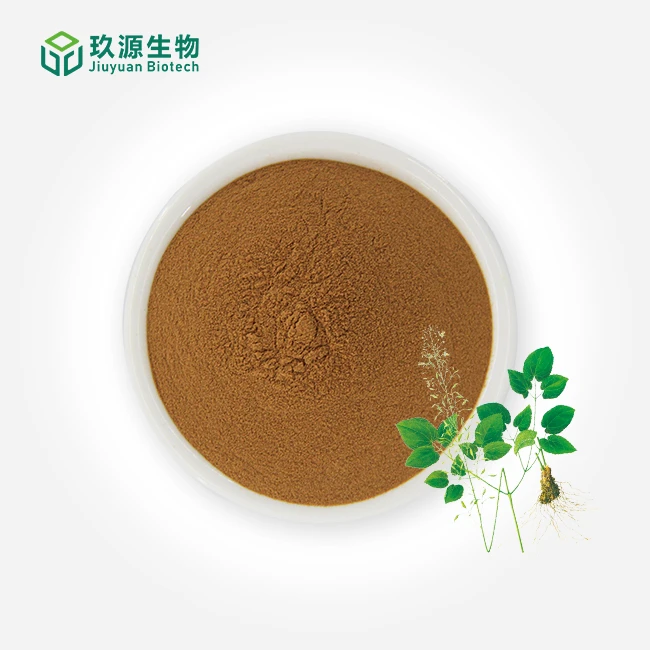
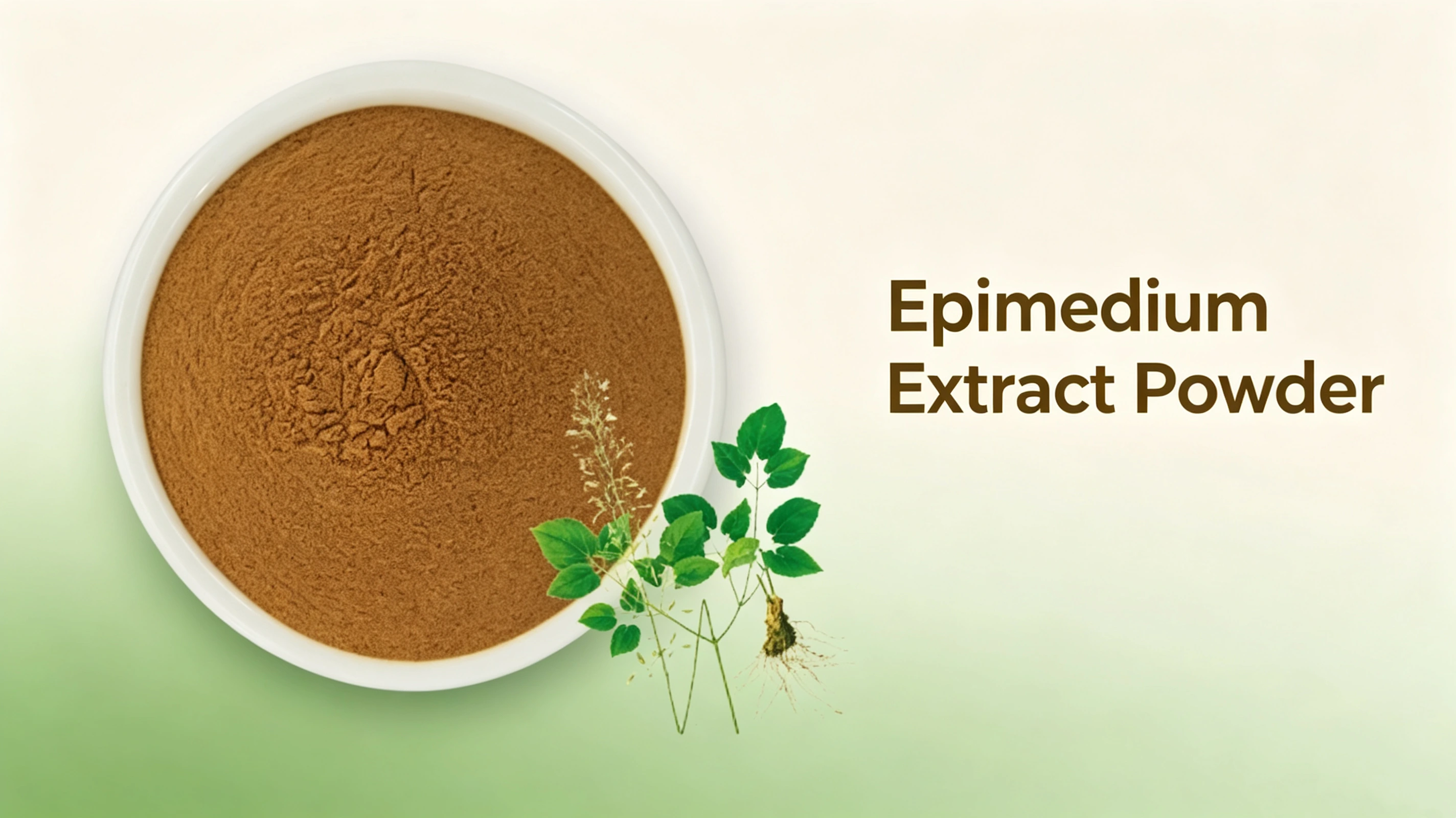
Epimedium Extract Powder occupies a peculiar commercial position: it is one of the top-selling men's health botanical ingredients globally, yet it is also one of the most technically misunderstood. The confusion starts with the plant itself - the genus Epimedium contains over 50 recognized species, and icariin content varies dramatically across species, plant part, harvest season, and altitude. It extends to the chemistry: icariin is not the only bioactive flavonoid in Epimedium, and for some applications, its metabolites icariside II and icaritin may be more pharmacologically relevant than the parent compound. And it culminates in the QC: HPLC quantification of icariin against a certified reference standard is the only defensible method, yet UV-based assays remain common in the commodity market.
At Jiuyuan Bio, we source aerial parts from authenticated Epimedium species - primarily E. brevicornu and E. sagittatum, the two species with the most extensive pharmacological documentation and the highest icariin density - from cultivation bases in Shaanxi and Guizhou provinces. Our extraction and standardization process is validated by HPLC against certified icariin reference standards (USP or equivalent), and we maintain full species-level botanical identity documentation for every batch.
This page is written for formulators, procurement managers, and R&D directors who need to navigate the Epimedium market with precision - understanding not just what icariin is, but which grade, which species, and which documentation package their specific application demands.
Certificate of Analysis
|
ITEM |
SPECIFICATION |
RESULT |
TEST METHOD |
|
Physical Description |
|||
|
Appearance |
Brown Powder |
Conforms |
Visual |
|
Odor |
Unique smell of Epimedium |
Conforms |
Organoleptic |
|
Taste |
Unique taste of Epimedium |
Conforms |
Olfactory |
|
Bulk Density |
Slack Density |
36.89g/100ml |
USP616 |
|
Tight Density |
68.86g/100ml |
USP616 |
|
|
Particle Size |
95%Through 80 Mesh |
Conforms |
CP2015 |
|
Chemical Tests |
|||
|
Icariin |
≥40.0% |
40.18% |
HPLC |
|
Moisture |
≤5.0% |
3.21% |
CP2015 (105 oC, 4 h) |
|
Ash |
≤5.0 % |
1.06% |
CP2015 |
|
Total Heavy Metals |
<10 ppm |
Conforms |
CP2015 |
|
Microbiology Control |
|||
|
Aerobic Bacterial Count |
≤1,000 CFU/g |
Conforms |
GB4789.2 |
|
Yeast |
≤100 CFU/g |
Conforms |
GB4789.15 |
|
Mold |
≤100 CFU/g |
Conforms |
GB4789.15 |
|
Escherichia Coli |
<3.0MPN/g |
Conforms |
GB4789.38 |
|
Salmonella |
Not Detected |
Conforms |
GB4789.4 |
|
Staphylococcus Aureus |
Not Detected |
Conforms |
GB4789.10 |
|
Conclusion |
Conforms to Specification |
||
Manufacturing Process
The icariin content of Epimedium aerial parts is highly variable - ranging from under 1% to over 5% by dry weight depending on species, harvest timing, and growing conditions. This variability means that achieving consistent high-grade output requires both careful raw material selection and a well-controlled extraction process. Here is how we approach it.
Stage 1 - Raw Material Qualification & Species Authentication
Incoming aerial parts undergo rigorous identity verification: macroscopic examination of leaf morphology, TLC fingerprinting against Pharmacopoeia of the People's Republic of China (ChP 2020) reference standards, and HPLC icariin pre-screening to verify that incoming material meets the minimum potency threshold for the target grade. Species-level authentication is documented for every batch - a non-negotiable requirement given the prevalence of species substitution in the Epimedium commodity market.
Harvest timing is a critical variable. Icariin concentration in Epimedium leaves peaks during the pre-flowering stage (typically late spring to early summer in Shaanxi Province). Our contracted cultivation partners harvest within this window; material harvested outside this period is rejected regardless of price.
Stage 2 - Extraction
Dried, milled aerial parts are extracted using food-grade ethanol-water mixtures at optimized ratios and temperatures. The ethanol-aqueous system is necessary because icariin's moderate lipophilicity makes it poorly extractable by water alone, while pure ethanol co-extracts excessive chlorophyll and wax fractions that complicate downstream purification. Extraction parameters (solvent ratio, temperature, time, solid-to-liquid ratio) are standardized per grade and documented in batch records.
Stage 3 - Concentration & Purification
The crude extract is filtered, concentrated under reduced pressure at ≤60 °C, and subjected to macroporous resin adsorption chromatography (D101 or AB-8 type resin) for selective enrichment of flavonoid fractions. This step is what separates a genuine 40% icariin extract from a spray-dried crude extract with an inflated UV reading - the resin selectively retains prenylated flavonoids while allowing sugars, amino acids, and other polar impurities to pass through.
For the 98% pharmaceutical grade, additional column chromatography (silica gel or preparative HPLC) is employed to achieve high-purity icariin isolation.
Stage 4 - Spray Drying
The purified, concentrated extract is spray-dried under controlled inlet temperature conditions. For lower-grade powders, a food-grade carrier (maltodextrin or silicon dioxide) may be incorporated to improve flowability. The 60% and 98% grades are carrier-free to maximize specific icariin content per gram.
Stage 5 - QC Release & Packaging
Every batch is quarantined pending full analytical release. Finished powder is packaged in double-layer polyethylene bags inside fiber drums (25 kg net) or aluminum foil bags (1 kg, 5 kg) under nitrogen flush. The characteristic yellow color of icariin-rich powders is susceptible to light-induced degradation; opaque, light-excluding packaging is standard.
Active Compounds
Epimedium species contain a structurally rich array of prenylated flavonoids - a subclass of flavonoids distinguished by the presence of a prenyl (3,3-dimethylallyl) group that significantly enhances membrane permeability and receptor binding affinity relative to non-prenylated analogues. Understanding the relationships between these compounds is essential for formulators targeting specific biological endpoints.
Icariin - The Primary Commercial Marker
Icariin (CAS 489-32-7) is a prenylated flavonol glycoside - specifically, the 3-O-rhamnosyl-7-O-glucosyl derivative of kaempferol with an 8-prenyl group. It is the most abundant flavonoid in most commercial Epimedium preparations and serves as the standard marker compound for extract standardization.
Key documented mechanisms:
● PDE5 inhibition: Icariin has demonstrated inhibitory activity against phosphodiesterase type 5 (PDE5) in vitro - the same enzyme targeted by sildenafil. This mechanism is frequently cited in the context of male sexual health applications. The IC₅₀ values reported for icariin against PDE5 are substantially higher than for pharmaceutical PDE5 inhibitors, which is relevant for calibrating label claims.
● Bone metabolism: Multiple preclinical studies have demonstrated icariin's stimulatory effects on osteoblast differentiation and proliferation, and inhibitory effects on osteoclast activity. A meta-analysis published in Osteoporosis International (2014) reviewed animal model data and concluded that icariin supplementation was associated with significant improvements in bone mineral density markers.
● Testosterone modulation: Icariin has been shown to stimulate the expression of steroidogenic enzymes in Leydig cell models, with downstream effects on testosterone biosynthesis in preclinical studies. Human clinical data in this area remains limited.
Neuroprotection: Emerging preclinical evidence suggests icariin may attenuate neuroinflammation and β-amyloid-induced neurotoxicity through NF-κB pathway modulation - an area of active research interest.
Icariside II (Baohuoside I)
The primary intestinal metabolite of icariin, formed by hydrolysis of the rhamnosyl group. Pharmacokinetic studies have consistently shown that icariside II achieves higher plasma concentrations than intact icariin following oral administration in animal models, suggesting that much of icariin's in vivo activity may be mediated through this metabolite. For formulators prioritizing bioavailability, icariside II-standardized grades represent a more pharmacologically direct approach.
Icaritin
The aglycone form of icariin, produced by complete hydrolysis of both sugar moieties. Icaritin has demonstrated the highest potency among the three compounds in receptor binding assays and has attracted significant pharmaceutical interest - a semi-synthetic icaritin derivative (SNG1153) has been investigated in clinical trials for hepatocellular carcinoma in China. Its poor aqueous solubility presents formulation challenges that must be addressed through lipid-based delivery systems or nanoparticle encapsulation for oral supplement applications.
Epimedin A, B & C
Three additional prenylated flavonoid glycosides present in Epimedium aerial parts. Their individual pharmacological profiles are less characterized than icariin, but they are present in whole-spectrum extracts (10%–40% grades) and may contribute to the overall biological activity through additive or synergistic mechanisms. Some researchers have proposed that the ratio of epimedin A:B:C:icariin serves as a species authentication fingerprint - a useful tool for detecting adulteration.
Sagittatoside A & B
Minor prenylated flavonoids found predominantly in E. sagittatum. Their presence in an HPLC fingerprint can help confirm species identity and distinguish authentic Epimedium material from potential adulterants.
Application Matrix
|
End Market |
Recommended Grade |
Typical Inclusion Rate |
Key Functional Role |
|
Men's health / sexual wellness |
20%–40% icariin |
250–500 mg/serving |
PDE5 modulation, testosterone support |
|
Bone health / osteoporosis support |
20%–40% icariin |
200–500 mg/serving |
Osteoblast stimulation, bone density |
|
Sports performance / testosterone support |
40% icariin |
300–600 mg/serving |
Androgen modulation, recovery |
|
Healthy aging / longevity blends |
20%–40% icariin |
200–400 mg/serving |
Antioxidant, neuroprotective, hormonal balance |
|
Cognitive support formulations |
20%–40% icariin |
200–400 mg/serving |
Neuroinflammation modulation |
|
TCM / traditional herbal blends |
10% icariin |
300–600 mg/serving |
Authentic Yin Yang Huo formula |
|
Pharmaceutical API intermediates |
98% icariin / Icaritin 98% |
Per formulation |
Precision pharmacological research |
|
Veterinary supplements |
10%–20% icariin |
Per species formulation |
Bone and reproductive support |
Regulatory Positioning by Market
● United States: Marketed as a dietary supplement ingredient under DSHEA. Epimedium has a documented history of use; no novel food restrictions. Ensure NDI notification is evaluated for new formulations, particularly for high-potency grades.
● European Union: Epimedium is not currently on the EU novel food catalogue as a restricted ingredient, but regulatory status varies by member state. Traditional herbal medicinal product (THMP) pathway under Directive 2004/24/EC may be applicable. Verify with regulatory counsel for your specific target market.
● Canada: Natural Health Product (NHP) classification; Epimedium is listed in the Health Canada Natural Health Products Ingredients Database (NHPID). Monograph review recommended.
● Australia: Listed medicine ingredient under TGA; ARTG listing pathway applicable.
Important regulatory note: Claims relating to PDE5 inhibition or explicit erectile dysfunction treatment are pharmaceutical claims in all major markets and are not permissible for dietary supplement or food ingredient labeling. Label claims should be framed around general men's health, vitality, or traditional use language. Consult regulatory counsel for your specific jurisdiction.
Quality Control
Epimedium extract presents three QC challenges that are specific to this ingredient and that experienced buyers consistently flag as their primary sourcing concerns.
1. Species substitution and adulteration - The Epimedium genus contains over 50 species, and icariin content varies enormously across them. Some lower-cost species contain negligible icariin and are occasionally substituted for higher-value species in commodity supply chains. HPLC fingerprinting against authenticated reference standards - not just single-compound icariin quantification - is the only reliable method for detecting substitution.
2. UV vs. HPLC quantification discrepancy - UV spectrophotometry at 270 nm measures total UV-absorbing flavonoids, not icariin specifically. A UV-based "40% icariin" extract may contain substantially less actual icariin than an HPLC-quantified 40% grade, because other flavonoids absorb at the same wavelength. We use HPLC exclusively for icariin quantification; UV is used only for rapid in-process screening.
3. Icariside II and icaritin contamination in icariin grades - During extraction and storage, icariin undergoes partial enzymatic and acid-catalyzed hydrolysis to icariside II and icaritin. A poorly controlled process or improperly stored extract can show elevated icariside II levels that inflate the apparent total flavonoid content while the actual icariin assay value is lower than labeled. Our HPLC method resolves icariin, icariside II, and icaritin as separate peaks, allowing us to report each compound independently.
In-Process Controls
● Species authentication (TLC + HPLC fingerprint) before extraction
● Icariin pre-screening of incoming raw material
● Solvent concentration and temperature monitoring at each processing stage
● In-process HPLC checks at the concentration step to verify yield trajectory
● pH and temperature monitoring during resin adsorption and elution
Finished Product Testing
Every released batch is accompanied by a Certificate of Analysis covering:
● Icariin assay (HPLC, with icariside II and icaritin resolved separately)
● Botanical identity (TLC + HPLC fingerprint)
● Physical characteristics (appearance, color, odor, particle size, moisture)
● Microbial enumeration (TPC, Y&M, E. coli, Salmonella, Staphylococcus aureus)
● Heavy metals (ICP-MS: Pb, Cd, As, Hg)
● Pesticide residues (GC-MS/MS, EU MRL compliant)
● Solvent residues (GC headspace, ICH Q3C)
Instrumentation
|
Instrument |
Application |
|
HPLC (Agilent 1260 series) |
Icariin, icariside II, icaritin quantification & fingerprinting |
|
UV-Vis Spectrophotometer |
Rapid in-process screening |
|
ICP-MS |
Heavy metal quantification |
|
GC-MS/MS |
Pesticide & solvent residue screening |
|
Karl Fischer Titrator |
Moisture determination |
|
TLC Scanner |
Botanical identity verification |
Comparison
Grade-to-Grade Comparison
|
Feature |
10% |
20% |
40% |
60% |
98% |
|
Icariin Content |
≥10% |
≥20% |
≥40% |
≥60% |
≥98% |
|
Flavonoid Breadth |
Broad |
Moderate |
Focused |
Highly concentrated |
Isolated compound |
|
Epimedin Retention |
High |
Moderate |
Low |
Minimal |
None |
|
Label Claim Strength |
Limited |
Moderate |
Strong |
Very strong |
Pharmaceutical |
|
Cost Index |
$ |
$$ |
$$$ |
$$$$ |
$$$$$ |
|
Best For |
TCM blends |
General men's health |
Nootropic / bone stacks |
Premium formulations |
Pharma / research |
Epimedium Extract Powder vs. Comparable Men's Health & Bone Support Botanicals
|
Ingredient |
Primary Mechanism |
Key Application |
Water Solubility |
Clinical Evidence Level |
|
Epimedium (Icariin) |
PDE5 inhibition, osteoblast stimulation, androgen modulation |
Men's health, bone density |
Low–moderate |
Moderate (preclinical strong; human data growing) |
|
Tongkat Ali (E. longifolia) |
LH stimulation, SHBG reduction |
Testosterone support |
Moderate |
Moderate |
|
Ashwagandha (KSM-66®) |
HPA axis modulation, cortisol reduction |
Stress, testosterone |
Low |
High |
|
Fenugreek Extract |
Aromatase inhibition, 5α-reductase modulation |
Testosterone, libido |
Moderate |
Moderate |
|
Black Cohosh Extract |
Estrogen receptor modulation |
Women's hormonal health |
Low |
Moderate–High |
|
Boron (as amino acid chelate) |
Testosterone bioavailability, bone mineralization |
Bone health, hormonal |
High |
Moderate |
Epimedium's distinguishing profile is the combination of a well-characterized molecular target (PDE5), a robust preclinical bone metabolism literature, and a dual men's health / bone density application matrix that no other single botanical ingredient replicates at comparable cost. Its primary limitation - moderate water solubility - can be addressed through lipid-based delivery systems or co-formulation with bioavailability enhancers such as piperine or phospholipid complexes.
why choose us
- Advanced Extraction Technology – Ensures consistent active ingredient content and high clarity of extract.
- Flexible Product Forms – Powdered extracts can be customized by mesh size and bulk density for diverse applications.
- Comprehensive Testing – COA includes Icariin content, flavonoid profile, microbial limits, heavy metals, and pesticide residues.
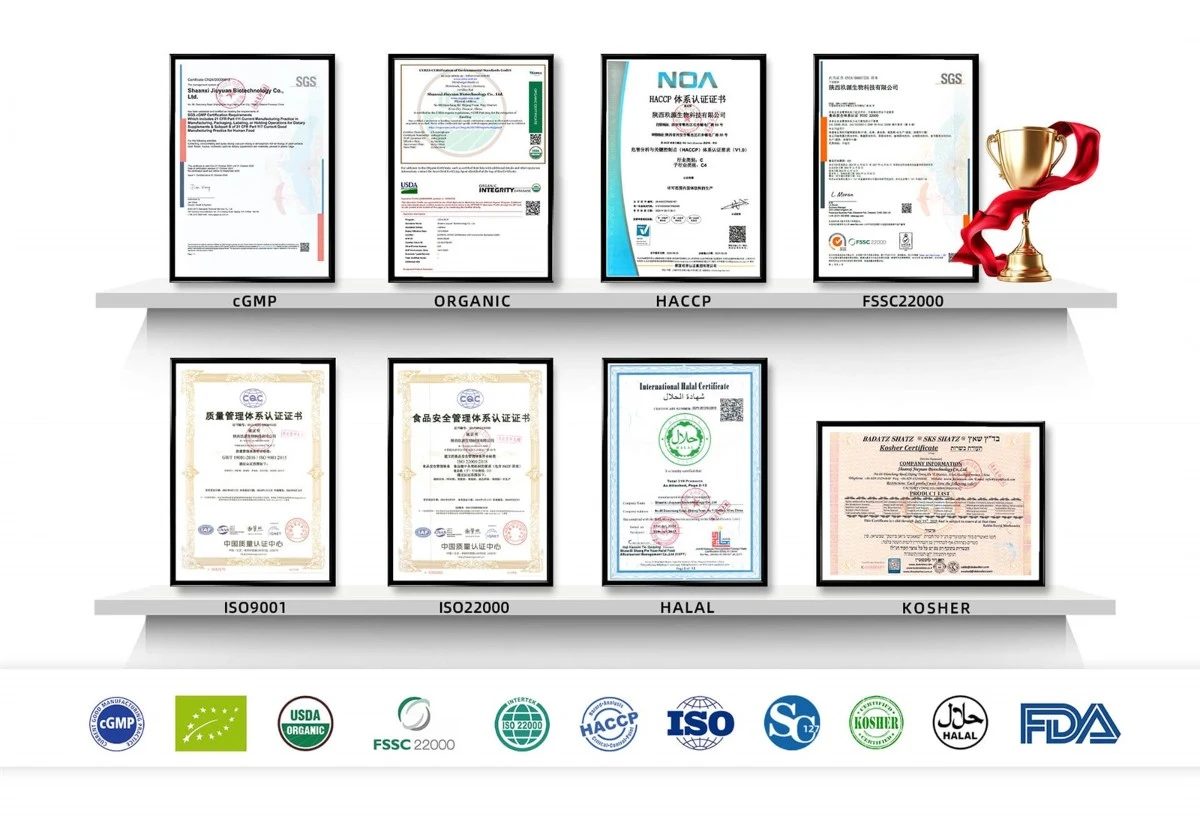
- Full Certifications – cGMP, HACCP, ISO, FSSC22000, HALAL, and KOSHER to meet global market requirements.

packing and delivery
We can provide packaging according to customer demand. Below are our general packaging and delivery methods.
 |
 |
 |
|
Express Under 100kg, 3-5Days Door-to-door service is easy to pick up the goods |
By Sea Over300kg, Around 30 Days Port-to-port service professional clearance broker needed |
By Air 100kg-1000kg, 5-7Days Airport-to-airport service professional clearance broker needed |
Buyer Guide
Sourcing Epimedium Extract Powder for a regulated supplement product requires a level of botanical and analytical due diligence that goes beyond what most commodity ingredients demand. Here is what separates a well-qualified sourcing decision from a costly mistake.
1. Always Specify HPLC Quantification - and Request the Chromatogram
This cannot be overstated. UV-based icariin figures are unreliable for the reasons described in the QC section above. When requesting a COA, ask specifically for the HPLC chromatogram showing the icariin peak, its retention time, and the reference standard used. A supplier who cannot provide this - or who provides a chromatogram that shows a single broad peak rather than resolved individual flavonoid peaks - is not using a validated HPLC method.
2. Request Species Authentication Documentation
Ask your supplier to specify which Epimedium species the material is derived from, and to provide TLC or HPLC fingerprint data confirming species identity. E. brevicornu and E. sagittatum are the preferred species for icariin-standardized extracts. If a supplier cannot identify the species, the material is almost certainly a mixed-species commodity blend with unpredictable icariin content.
3. Understand the Icariin / Icariside II / Icaritin Relationship
Ask your supplier whether their HPLC method resolves icariin from icariside II and icaritin. If the method reports "total icariin" without distinguishing between these three compounds, the assay value may be inflated. This is particularly relevant for extracts that have been stored for extended periods or that have been processed at elevated temperatures.
4. Evaluate the Regulatory Risk Profile for Your Target Market
The PDE5 inhibition mechanism of icariin places Epimedium extract powder in a regulatory gray zone in several markets. In the EU, some member states have restricted or scrutinized Epimedium-containing products more closely than others. In the US, the FDA has issued warning letters to companies making explicit erectile dysfunction claims for Epimedium products. Ensure your label claims are reviewed by regulatory counsel before product launch.
5. Minimum Order Quantities & Lead Times
|
Order Size |
Lead Time |
|
Samples (≤100 g) |
3–5 business days |
|
Small commercial (1–10 kg) |
7–10 business days |
|
Bulk (≥25 kg) |
15–20 business days |
|
Custom grades (icariside II, icaritin) |
Add 15–20 business days |
6. Pricing Drivers
Icariin concentration is the primary cost driver. The 98% grade requires multiple chromatographic purification steps and achieves low yields per kilogram of raw material, which is reflected in the price premium. Icariside II and icaritin grades carry additional premiums due to the enzymatic or chemical hydrolysis steps required. Volume commitments of ≥10 kg/month typically unlock tiered pricing.
Frequently Asked Questions
Q1: How many Epimedium species are used commercially, and does species selection affect icariin content?
The genus Epimedium contains over 50 recognized species, but commercial extract production is dominated by four species listed in the Pharmacopoeia of the People's Republic of China (ChP 2020): E. brevicornu, E. sagittatum, E. pubescens, and E. koreanum. Icariin content varies significantly across these species - E. brevicornu and E. koreanum generally yield higher icariin concentrations than E. sagittatum or E. pubescens, though growing conditions and harvest timing also play substantial roles. For high-grade extracts (≥40% icariin), raw material selection at the species level is a critical upstream quality control step.
Q2: What is the difference between icariin, icariside II, and icaritin, and which is most bioavailable?
These three compounds represent a metabolic cascade: icariin (the parent glycoside) → icariside II (mono-glycoside, formed by intestinal rhamnosidase activity) → icaritin (aglycone, formed by further glycosidase activity). Pharmacokinetic studies in rodent models have consistently shown that icariside II achieves higher peak plasma concentrations than intact icariin following oral dosing, suggesting that the intestinal conversion step is rate-limiting for icariin absorption. Icaritin has the highest intrinsic potency in receptor binding assays but the poorest aqueous solubility, making it the most challenging to formulate for oral delivery. For most nutraceutical applications, icariin-standardized extracts remain the commercial standard; icariside II grades are gaining traction in premium formulations where bioavailability is a primary concern.
Q3: Is there human clinical evidence for Epimedium extract powder in bone health applications?
The bone health evidence base is more developed than most formulators realize, though it is still primarily preclinical. A systematic review and meta-analysis published in Osteoporosis International (2014) examined animal model data and found consistent positive effects of icariin on bone mineral density and bone microarchitecture markers. Human clinical data is more limited - several small-scale studies from Chinese clinical literature have examined Epimedium-containing traditional formulas in postmenopausal women, with generally positive results on bone turnover markers, but these studies have methodological limitations. The evidence is not yet at the level required for a structure/function claim in EU pharmaceutical submissions, but it is sufficient to support a general bone health structure/function claim under DSHEA in the US when framed appropriately.
Q4: Can icariin interact with pharmaceutical medications?
Two interaction categories warrant attention. First, the PDE5 inhibitory activity of icariin means that co-administration with pharmaceutical PDE5 inhibitors (sildenafil, tadalafil, vardenafil) could theoretically produce additive hypotensive effects. Second, in vitro data suggests that icariin may inhibit CYP3A4 enzyme activity, which could affect the metabolism of drugs that are CYP3A4 substrates. The clinical relevance of these interactions at typical supplement doses is not well characterized, but formulators should include appropriate label warnings for products targeting populations on cardiovascular medications.
Q5: How does icariin's water solubility affect formulation strategy?
Icariin's log P value is approximately 1.5–2.0, placing it in a moderate lipophilicity range - more soluble than many terpenoids and carotenoids, but substantially less soluble than polysaccharide-based ingredients. In capsule and tablet formats, this is generally not a significant problem. For functional beverage applications, icariin's limited water solubility at neutral pH can cause turbidity or sedimentation. Strategies to address this include: microencapsulation with cyclodextrins (β-cyclodextrin inclusion complexes have been studied for icariin), phospholipid complexation (phytosome technology), and use of co-solvents or emulsifiers. We can provide technical guidance on solubility enhancement strategies for specific formulation matrices upon request.
Q6: What is the typical effective dose range for icariin in nutraceutical formulations?
This is a question where intellectual honesty is important. The preclinical literature spans a wide dose range, and direct translation of animal model doses to human equivalents is complicated by species differences in intestinal metabolism. The most commonly cited human supplement doses in the published literature range from 200 mg to 600 mg per day of a standardized extract (typically 20%–40% icariin), corresponding to approximately 40–240 mg of actual icariin per day. There are no large-scale, dose-finding RCTs in humans that would allow precise dose-response characterization. Formulators should base their inclusion rates on the available literature, consult with their regulatory counsel on appropriate label claims, and avoid implying clinical equivalence to pharmaceutical PDE5 inhibitors.
Q7: Do you offer icariside II-standardized grades, and what are the production requirements?
Yes. Icariside II-standardized extracts are produced by controlled enzymatic hydrolysis of icariin-rich intermediate extracts using rhamnosidase enzymes under defined pH and temperature conditions. The process requires careful monitoring to avoid over-hydrolysis to icaritin. Our standard icariside II grade is 20% by HPLC; higher concentrations are available upon request with extended lead times. The MOQ for icariside II grades is 5 kg due to the additional processing steps involved.
Q8: What documentation do you provide for EU regulatory submissions?
For EU-bound shipments, we routinely provide: full COA with HPLC chromatograms (icariin, icariside II, and icaritin resolved separately), botanical identity report (TLC + HPLC fingerprint with species authentication), heavy metal and pesticide residue reports (EU MRL compliant), solvent residue report (ICH Q3C), allergen and GMO declarations, and manufacturing process description. For traditional herbal medicinal product (THMP) submissions under Directive 2004/24/EC, we can provide traditional use evidence documentation and stability data packages. Regulatory status varies by EU member state for Epimedium-containing products; we strongly recommend engaging a local regulatory consultant for your specific target market before initiating a submission.
Request a Sample or Commercial Quote
Jiuyuan Biotech supplies Epimedium Extract Powder to food manufacturers, supplement brands, and contract formulators across North America, Europe, and the Asia-Pacific region. Our technical team - not a generic sales inbox - handles every inquiry.
Email: info@jiuyuanbio.com
Website: www.jiuyuanbio.com
Request: Sample (500g–1kg) | Bulk Quote | CoA & Spec Sheet | Custom Carrier Ratio
Standard response time: within 1 business day. Please include your target application and annual volume estimate for the most relevant technical recommendation.
Hot Tags: epimedium extract powder, China epimedium extract powder manufacturers, suppliers, factory


