









Product Overview
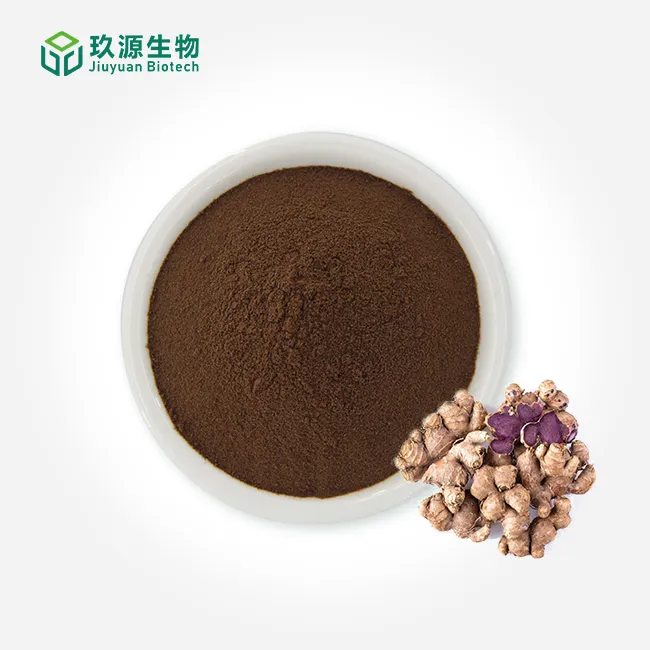
K. parviflora is a rhizomatous plant in the Zingiberaceae family, native to Thailand and Laos, where it has been used in traditional medicine for centuries under the name "Krachai Dam" (black ginger). It is visually distinctive - the rhizome flesh is deep purple-black, in stark contrast to the pale yellow of common ginger - and chemically distinctive in a way that matters enormously for formulators: its primary bioactives are polymethoxyflavones (PMFs), a structurally unusual class of flavonoids that are essentially absent from common ginger (Zingiber officinale) and that have attracted serious pharmacological attention for their effects on PDE5 inhibition, mitochondrial biogenesis, and vasodilation.
Black Ginger Extract Powder has moved from a niche Thai traditional medicine ingredient to a credible sports nutrition and men's health ingredient over the past decade, driven by a growing body of human clinical trials - an evidence base that is unusually strong for a botanical of this relative obscurity in Western markets. A randomized, double-blind, placebo-controlled trial published in Journal of the International Society of Sports Nutrition (2015) demonstrated significant improvements in physical performance parameters in healthy volunteers following K. parviflora supplementation. Subsequent work has examined its effects on erectile function, energy metabolism, and body composition.
At Jiuyuan Bio, we source K. parviflora rhizomes from contracted cultivation bases in Yunnan Province, with Thailand-origin raw material available for buyers who require geographic provenance documentation for specific markets. Our extraction process is optimized to preserve the full PMF profile - not just 5,7-dimethoxyflavone (5,7-DMF), the most studied individual compound, but the broader polymethoxyflavone complex that characterizes authentic K. parviflora extract. Every batch is standardized by HPLC against certified reference standards.
Product Specifications (Typical)
|
Item |
Specification |
|
Basic Product Information |
|
|
Latin Name |
Kaempferia parviflora Wall. ex Baker |
|
Part of the Plant |
Root |
|
Country of Origin |
China |
|
Marker Compounds |
|
|
Total Fatty acids |
|
|
Organoleptic Data |
|
|
Appearance |
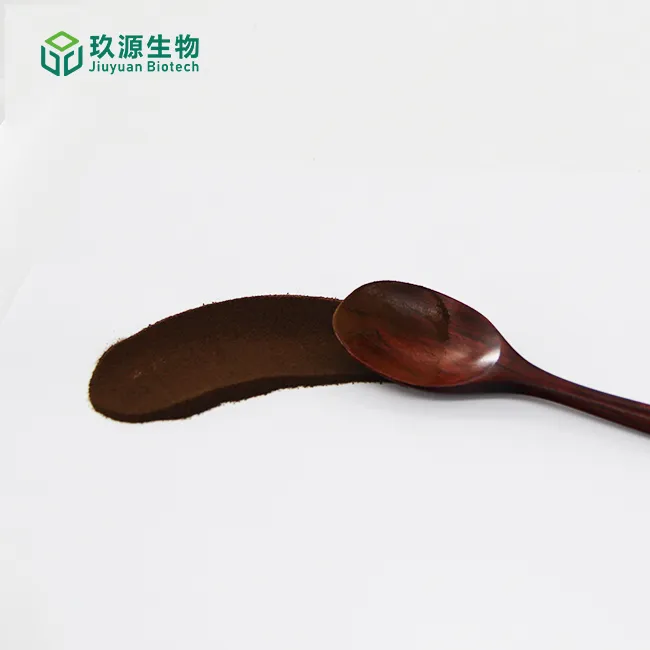
Fine Powder |
|
Color |
Brown to Dark Brown |
|
Odor |
Characteristic |
|
Process Data |
|
|
Method of Processing |
Extraction |
|
Drying Method |
Spraying drying |
|
Physical Characteristics |
|
|
Particle Size (80 mesh) |
98%pass 80mesh |
|
Moisture |
<5.0% |
|
Ash Content |
<5.0% |
|
Heavy Metals |
|
|
Total Heavy Metals |
<10ppm |
|
As |
<2.0ppm |
|
Pb |
<2.0ppm |
|
Cd |
<1.0ppm |
|
Hg |
<0.5ppm |
|
Microbiology |
|
|
Total Aerobic Bacteria Count |
<1,000cfu/g |
|
Total Yeast and Mould Count |
<100cfu/g |
|
E. Coli |
Negative |
|
Salmonella |
Negative |
|
Shelf Life |
24 months under the conditions above and in its original packaging |
|
Storage |
Store in cool & dry place, keep away from strong light and heat. |

Active Compounds
Kaempferia parviflora rhizomes contain a structurally distinctive array of polymethoxyflavones - flavones with multiple methoxy substituents on the A and B rings - that are largely absent from other members of the Zingiberaceae family. This phytochemical uniqueness is both the source of the plant's pharmacological interest and the basis for its authentication: a genuine K. parviflora extract has a characteristic PMF fingerprint that is readily distinguishable from adulterants by HPLC.
5,7-Dimethoxyflavone (5,7-DMF) - The Principal Studied Compound
5,7-DMF (CAS 18956-16-6) is the most abundant and most extensively studied individual PMF in K. parviflora. It is a flavone with methoxy groups at the 5 and 7 positions of the A ring, giving it moderate lipophilicity and good membrane permeability.
Key documented mechanisms:
● PDE5 inhibition: 5,7-DMF has demonstrated inhibitory activity against phosphodiesterase type 5 (PDE5) in vitro, with downstream effects on cyclic GMP (cGMP) levels and smooth muscle relaxation. This mechanism underpins its relevance to erectile function and vasodilation applications. A study published in Journal of Natural Medicines (2011) characterized the PDE5 inhibitory activity of individual K. parviflora PMFs, with 5,7-DMF identified as a primary contributor.
● Mitochondrial biogenesis: Preclinical evidence suggests that K. parviflora extract and 5,7-DMF specifically can activate AMP-activated protein kinase (AMPK) and upregulate PGC-1α expression - a pathway associated with mitochondrial biogenesis and enhanced oxidative phosphorylation capacity. This mechanism is directly relevant to the physical performance effects observed in human clinical trials.
● Vasodilation: Beyond PDE5 inhibition, 5,7-DMF has demonstrated direct vasodilatory effects in isolated vessel preparations, potentially through calcium channel modulation. This contributes to both the performance and cardiovascular health applications of the extract.
● Anti-adipogenic activity: In vitro studies have demonstrated that 5,7-DMF inhibits adipocyte differentiation and lipid accumulation in preadipocyte cell lines, providing a mechanistic basis for the body composition effects observed in some clinical studies.
3,5,7-Trimethoxyflavone
A tri-methoxylated congener present in significant concentrations in authentic K. parviflora extracts. It shares structural similarities with 5,7-DMF and has demonstrated PDE5 inhibitory activity in vitro, though its individual pharmacokinetic profile is less characterized. Its presence in the HPLC fingerprint is an important authenticity marker.
5,7,4'-Trimethoxyflavone
Another trimethoxylated PMF found in K. parviflora. Preclinical data suggests anti-inflammatory activity through NF-κB pathway modulation, which may contribute to the recovery and anti-inflammatory effects associated with the extract in sports nutrition contexts.
3,5,7,3',4'-Pentamethoxyflavone (Sinensetin)
A highly methoxylated flavone present in smaller concentrations. Sinensetin has attracted independent research interest for its anti-inflammatory and anti-proliferative properties, and its presence in K. parviflora extract contributes to the overall biological activity of the whole-extract PMF complex.
The PMF Complex - Why the Ratio Matters
One of the most important - and most frequently overlooked - aspects of K. parviflora extract quality is the ratio of individual PMFs within the total PMF pool. Authentic rhizomes produce a characteristic PMF fingerprint with defined relative proportions of each congener. Extracts produced from adulterated raw material, or from extraction processes that selectively enrich one PMF at the expense of others, will show a distorted fingerprint even if the total PMF assay value appears correct. Our HPLC method reports individual PMF concentrations - not just total PMF - allowing buyers to verify fingerprint authenticity, not just total content.
Features of Black ginger extract Powder

Enhanced Exercise Performance
Studies suggest that black ginger extract may improve exercise performance by increasing energy metabolism and utilization of substrates like glucose and fatty acids.

Weight Management
Some research indicates that it may aid in weight management by increasing energy expenditure and reducing fat accumulation.

Antioxidant Properties
It contains compounds with antioxidant properties, which may help protect cells from oxidative damage.

Anti-Inflammatory Effects
It is believed that it may have anti-inflammatory properties, potentially beneficial for conditions like arthritis.

Improved Blood Circulation
Some studies suggest that it may help improve blood circulation, which could be beneficial for overall health.
Application Matrix
|
End Market |
Recommended Grade |
Typical Inclusion Rate |
Key Functional Role |
|
Sports performance / endurance |
Total PMF 20%–40% |
100–300 mg/serving |
Mitochondrial biogenesis, AMPK activation |
|
Men's health / sexual wellness |
Total PMF 20%–40% or 5,7-DMF 3%–5% |
100–300 mg/serving |
PDE5 modulation, vasodilation |
|
Pre-workout formulations |
Total PMF 20%–40% |
100–200 mg/serving |
Energy metabolism, blood flow |
|
Body composition / fat loss |
Total PMF 20%–40% |
150–300 mg/serving |
Anti-adipogenic, metabolic rate support |
|
Healthy aging / longevity blends |
Total PMF 20% |
100–200 mg/serving |
Mitochondrial health, antioxidant |
|
Cardiovascular health products |
Total PMF 20% |
100–200 mg/serving |
Vasodilation, circulatory support |
|
Traditional herbal blends |
Total PMF 10% |
200–400 mg/serving |
Authentic Krachai Dam formula |
|
Pharmaceutical API intermediates |
5,7-DMF 5% or higher |
Per formulation |
Precision PMF research |
Regulatory Positioning by Market
● United States: Marketed as a dietary supplement ingredient under DSHEA. K. parviflora has a documented traditional use history. NDI notification evaluation recommended for new formulations, particularly at higher PMF concentrations.
● European Union: Kaempferia parviflora is listed in the EU Novel Food Catalogue. As of the current regulatory status, it is not authorized as a novel food ingredient in the EU. Formulators targeting EU markets should consult regulatory counsel and verify the current authorization status before product development. Traditional use documentation from Thailand may support future authorization applications.
● Canada: Natural Health Product (NHP) classification; monograph review recommended. Verify current NHPID status with Health Canada.
● Australia: Check current TGA listed ingredient status; regulatory counsel recommended for new product applications.
Quality Control
Black Ginger Extract Powder presents three QC challenges that are specific to this ingredient and that experienced buyers consistently flag as their primary sourcing concerns.
1. Species adulteration - K. parviflora is visually similar to several related Kaempferia species, most notably K. galanga (aromatic ginger or sand ginger), which is far more widely cultivated and significantly cheaper. K. galanga does not contain the PMF profile that characterizes K. parviflora - its primary bioactives are phenylpropanoids (ethyl cinnamate, ethyl p-methoxycinnamate) rather than polymethoxyflavones. HPLC fingerprinting is the only reliable method for distinguishing the two species at the extract level.
2. PMF ratio distortion - As described in the Active Compounds section, the ratio of individual PMFs within the total PMF pool is an authenticity marker. Extracts produced from mixed-species raw material or from poorly controlled processes can show a total PMF value that meets specification while having a PMF fingerprint that does not match authenticated K. parviflora material. Our HPLC method resolves and quantifies individual PMF peaks, not just total PMF.
3. Solvent residue management - Efficient PMF extraction requires ethanol, and residual ethanol management is a routine compliance requirement. We test every batch by GC headspace analysis against ICH Q3C Class 3 solvent limits.
In-Process Controls
● Species authentication (macroscopic + TLC + HPLC fingerprint) before extraction
● PMF pre-screening of incoming raw material
● Temperature and solvent concentration monitoring at each processing stage
● In-process UV/HPLC checks at the concentration step
● Resin adsorption monitoring to verify PMF enrichment trajectory
Finished Product Testing
Every released batch is accompanied by a Certificate of Analysis covering:
● Total PMF assay (HPLC, individual PMF peaks resolved and reported)
● 5,7-DMF content (HPLC)
● Botanical identity (TLC + HPLC fingerprint)
● Physical characteristics (appearance, color, odor, particle size, moisture)
● Microbial enumeration (TPC, Y&M, E. coli, Salmonella, Staphylococcus aureus)
● Heavy metals (ICP-MS: Pb, Cd, As, Hg)
● Pesticide residues (GC-MS/MS, EU MRL compliant)
● Solvent residues (GC headspace, ICH Q3C)
Instrumentation
|
Instrument |
Application |
|
HPLC (Agilent 1260 series) |
Total PMF, 5,7-DMF quantification & fingerprinting |
|
UV-Vis Spectrophotometer |
Rapid in-process screening |
|
ICP-MS |
Heavy metal quantification |
|
GC-MS/MS |
Pesticide & solvent residue screening |
|
Karl Fischer Titrator |
Moisture determination |
|
TLC Scanner |
Botanical identity & species verification |

Comparison
Grade-to-Grade Comparison
|
Feature |
PMF 10% |
PMF 20% |
PMF 40% |
5,7-DMF 5% |
|
Total PMF Content |
≥10% |
≥20% |
≥40% |
Variable |
|
5,7-DMF Content |
~0.8% |
~1.5–2% |
~3–4% |
≥5% |
|
PMF Fingerprint Breadth |
Full complex |
Full complex |
Enriched |
Single-marker focused |
|
Label Claim Strength |
Moderate |
Strong |
Very strong |
Compound-specific |
|
Cost Index |
$ |
$$ |
$$$ |
$$$$ |
|
Best For |
Traditional blends |
Sports / men's health |
Premium stacks |
Research / pharma |
Black Ginger Extract Powder vs. Comparable Performance & Men's Health Botanicals
|
Ingredient |
Primary Mechanism |
Key Application |
Water Solubility |
Human Clinical Data |
|
K. parviflora (PMF) |
PDE5 inhibition, AMPK/mitochondrial activation |
Sports performance, men's health |
Low |
Moderate (RCTs available) |
|
Epimedium (Icariin) |
PDE5 inhibition, osteoblast stimulation |
Men's health, bone density |
Low–moderate |
Moderate (preclinical strong) |
|
Tongkat Ali (E. longifolia) |
LH stimulation, SHBG reduction |
Testosterone support |
Moderate |
Moderate |
|
Maca Root Extract |
Adaptogenic, endocrine modulation |
Libido, energy |
High |
Moderate |
|
Citrulline (from watermelon) |
NO precursor, arginine recycling |
Vasodilation, endurance |
High |
High |
|
Ashwagandha (KSM-66®) |
HPA axis modulation, cortisol reduction |
Stress, testosterone |
Low |
High |
Black ginger's distinguishing profile is the combination of a dual mechanism - PDE5 inhibition and AMPK-mediated mitochondrial activation - that bridges the men's health and sports performance categories in a way that no other single botanical ingredient currently replicates. Its primary commercial limitation is the EU Novel Food regulatory constraint, which restricts its use in EU-marketed products pending authorization. For North American, Australian, and Asian markets, this constraint does not apply.
Why choose Jiuyuan Biotech?
Adhering to a "quality first" principle, JiuYuan exercises stringent control over raw material quality from the source. Through scientific production processes and rigorous quality testing, we ensure the stability and reliability of our products, providing customers with high-quality botanical extracts that meet international standards. Our international certifications, including FSSC 22000, HACCP, ISO 9001, ISO 22000, HALAL, KOSHER, and CGMP, exemplify our unwavering commitment to product quality and safety.
- GMP-compliant manufacturing system
- Integrated extraction, separation, and granulation facilities
- Advanced processing equipment for quality consistency
- Stable supply capacity and specification customization
- Full batch traceability with COA support

Packaging and delivering
We support multiple international payment methods to facilitate smooth and secure transactions for global B2B partners.
Commonly accepted payment terms include:
- T/T (Telegraphic Transfer)
- Alibaba Trade Assurance
Payment terms may vary depending on order value, order frequency, and cooperation history.
Customization & Technical Support
We provide flexible customization services to support different formulation and market requirements:
-
Active compound standardization (PMFs or total flavonoids)
-
Particle size and granulation options
-
Bulk density and flowability adjustment
-
Specification alignment with customer internal standards
Our technical team works closely with customers to ensure the supplied material meets application and processing needs.
Minimum Order Quantity (MOQ)
- Standard MOQ: 25 kg
- Trial orders and mixed shipments may be discussed for first-time cooperation.

FAQ
1. Demand HPLC Fingerprinting - Not Just a Total PMF Number
A total PMF assay value without an accompanying HPLC chromatogram showing individual PMF peaks is insufficient for a credible K. parviflora ingredient. The chromatogram is the fingerprint - it tells you whether the extract has the authentic PMF profile of K. parviflora or whether it is a distorted profile from adulterated raw material. Request the chromatogram with peak identification for every batch you qualify.
2. Clarify Geographic Origin and Raw Material Provenance
K. parviflora is native to Thailand and Laos, and Thai-origin raw material has the longest traditional use history and the most extensive pharmacological documentation. Chinese-cultivated K. parviflora (primarily from Yunnan Province) is increasingly available and can produce high-quality extract when properly authenticated, but geographic origin documentation is important for regulatory submissions in some markets. We can provide both Yunnan-origin and Thailand-origin raw material options - specify your requirement when requesting a quotation.
3. Understand the EU Novel Food Constraint Before Committing to Development
This is the single most important regulatory consideration for K. parviflora in the current market. If your primary distribution channel is the EU, verify the current novel food authorization status with a qualified EU regulatory consultant before investing in product development. The regulatory landscape for this ingredient in the EU is evolving, and the status may have changed since this page was last updated.
4. Match the Grade to Your Clinical Reference Study
The human clinical trials that have generated the most compelling performance data for K. parviflora used specific extract preparations with defined PMF profiles. If you are building a product around a specific clinical study, match your extract grade to the PMF specification used in that study - not just the total PMF number, but the individual PMF ratios where available. Our technical team can help you identify the appropriate grade for your target clinical reference.
5. Consider Bioavailability Enhancement for High-Potency Formats
PMFs are moderately lipophilic, and their oral bioavailability from a standard powder capsule is limited by aqueous solubility in the GI tract. For premium formulations where maximizing bioavailability is a priority, consider lipid-based delivery systems (softgel with MCT oil carrier), phospholipid complexation (phytosome technology), or co-formulation with bioavailability enhancers such as piperine. We can provide technical guidance on delivery system options for specific formulation matrices.
6. Minimum Order Quantities & Lead Times
|
Order Size |
Lead Time |
|
Samples (≤100 g) |
3–5 business days |
|
Small commercial (1–10 kg) |
7–10 business days |
|
Bulk (≥25 kg) |
15–20 business days |
|
Custom grades / encapsulated formats |
Add 15–20 business days |
7. Pricing Drivers
PMF concentration is the primary cost driver. The raw material itself - authenticated K. parviflora rhizomes - is more expensive than commodity ginger, and the ethanol extraction and resin purification process adds further cost relative to simple aqueous extracts. Thailand-origin raw material carries a modest premium over Yunnan-origin. Volume commitments of ≥10 kg/month typically unlock tiered pricing.
Request a Sample or Commercial Quote
Jiuyuan Biotech supplies Black Ginger Extract Powder to food manufacturers, supplement brands, and contract formulators across North America, Europe, and the Asia-Pacific region. Our technical team - not a generic sales inbox - handles every inquiry.
Email: info@jiuyuanbio.com
Website: www.jiuyuanbio.com
Request: Sample (500g–1kg) | Bulk Quote | CoA & Spec Sheet | Custom Carrier Ratio
Standard response time: within 1 business day. Please include your target application and annual volume estimate for the most relevant technical recommendation.
Hot Tags: black ginger extract powder, China black ginger extract powder manufacturers, suppliers, factory


