If you source Yellow Turmeric Powder in bulk, price is never just a number on a quotation sheet. You also need to check the curcumin level, particle size, origin, testing method, lead time, packaging, and documents behind that price. A low unit cost may look attractive at the start. Yet it can become expensive when the material fails your incoming inspection, misses your production schedule, or lacks the right export files.
I work with buyers who compare turmeric powder for supplements, food ingredients, natural color systems, and private label products. Most of them ask similar questions: Why do prices vary so much? What MOQ should I expect? How long does production take? Which documents should I ask from the supplier?
This guide gives you a clear B2B view of bulk turmeric sourcing. You will learn how to compare quotes, understand MOQ, plan lead time, and request the right documents before you place an order.
What Is Yellow Turmeric Powder?
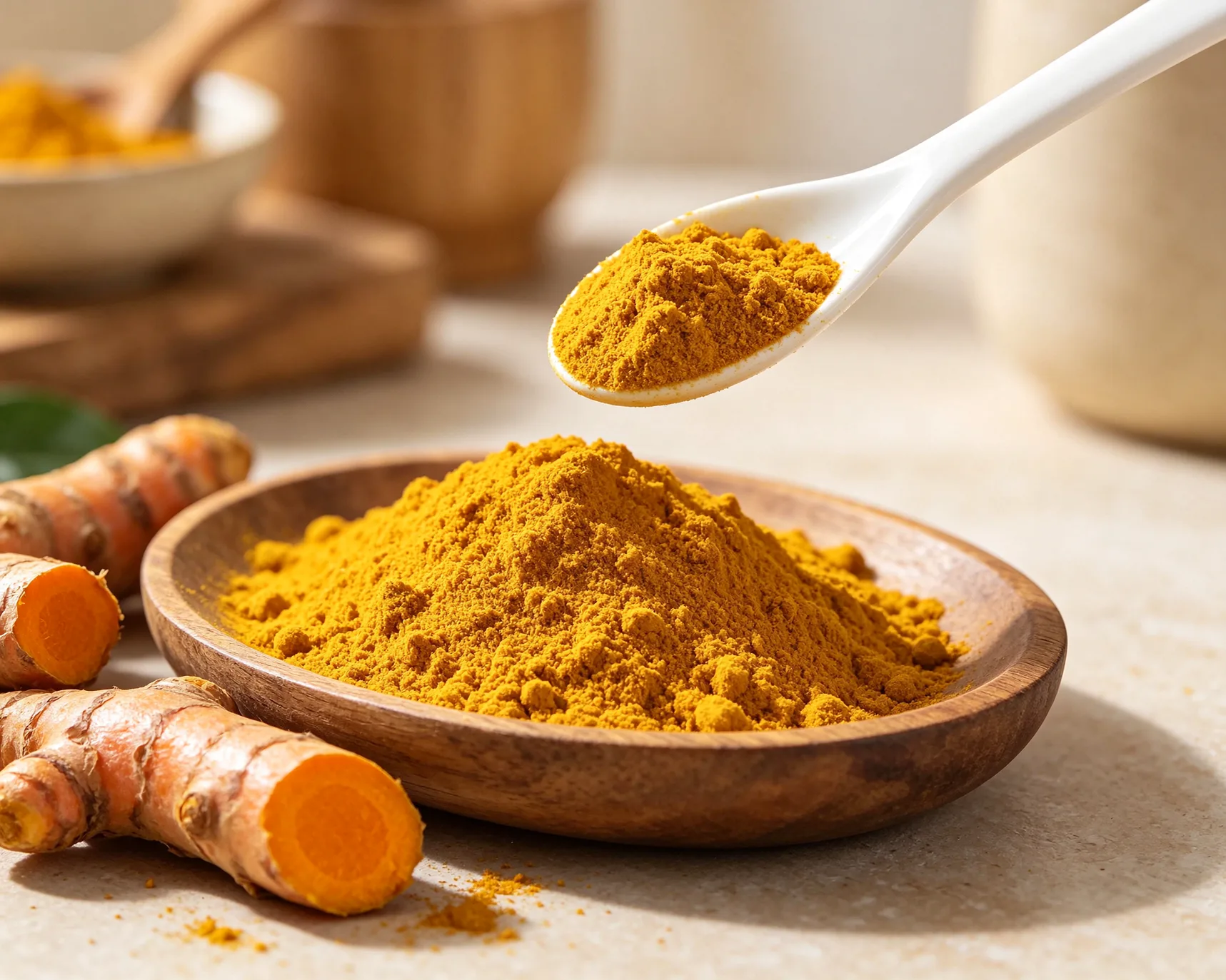
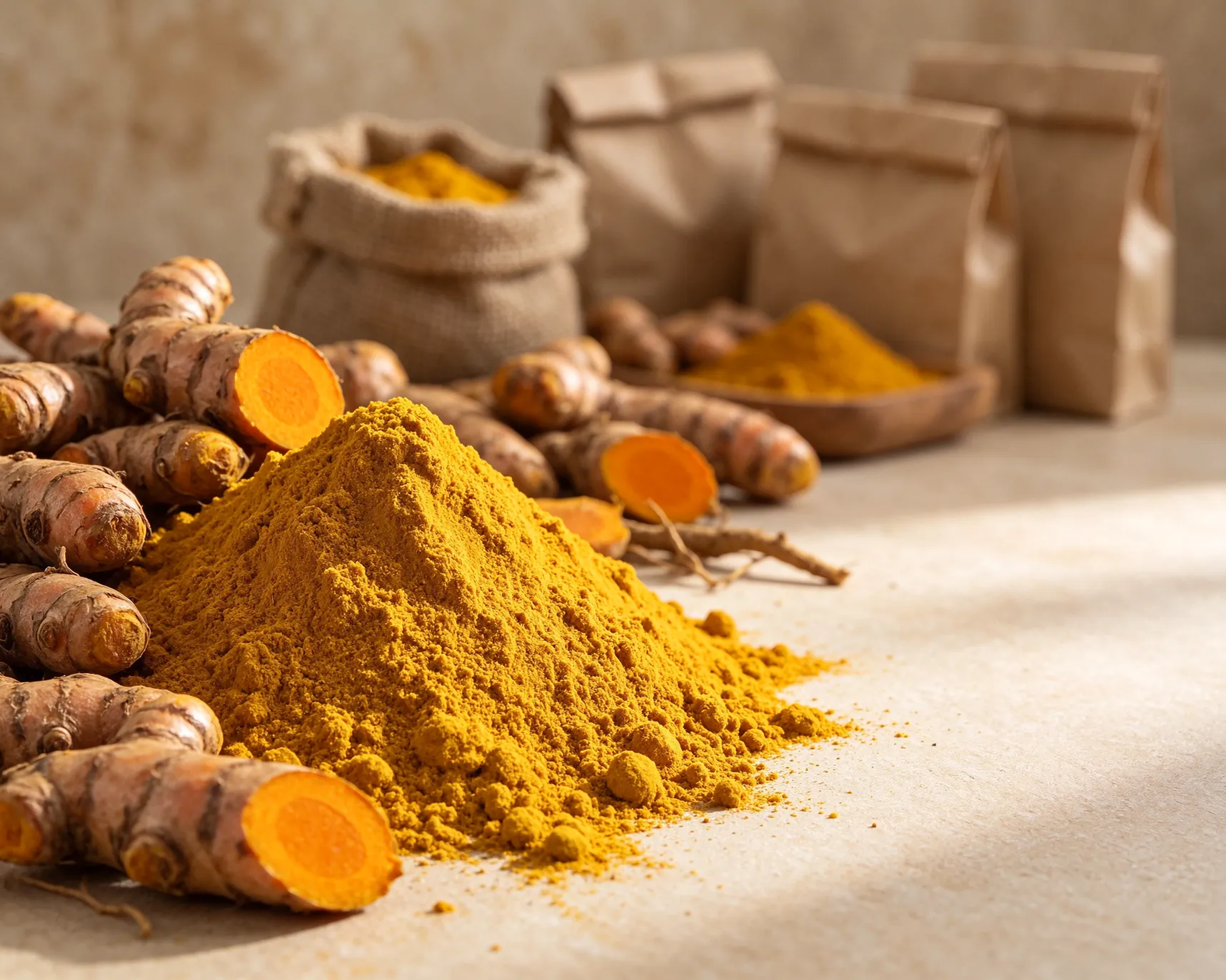
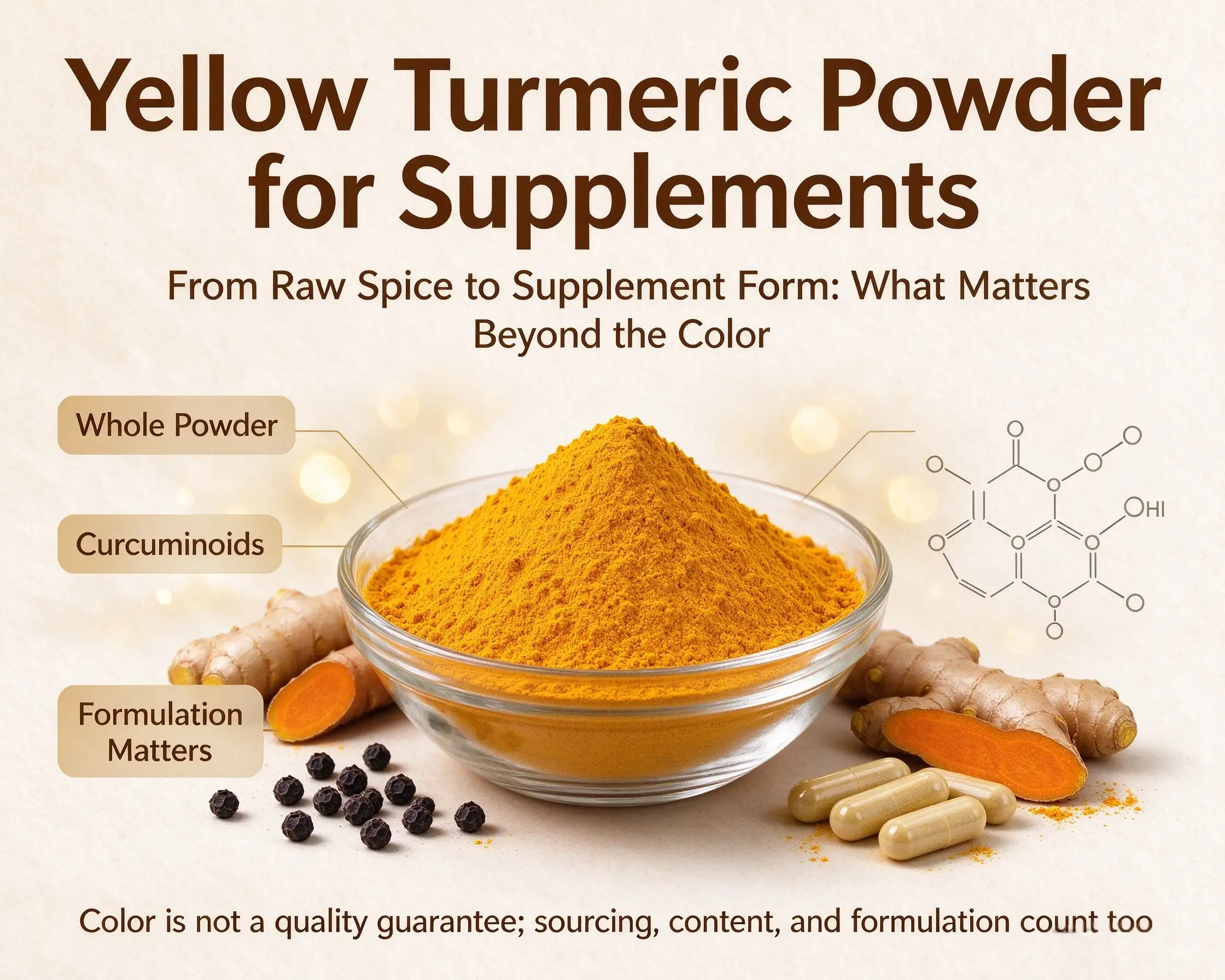
Yellow Turmeric Powder is a powder ingredient made from the rhizome or root of Curcuma longa L. It has a natural yellow to orange-yellow color and a characteristic earthy odor. In food, supplement, and ingredient markets, buyers often use it for color, flavor, and botanical positioning.
Turmeric naturally contains a group of compounds called curcuminoids. Curcumin is the best-known compound in this group. Buyers should not confuse whole turmeric powder, turmeric extract, curcumin, and turmeric oleoresin. They are related, but they are not the same product.
|
Product Type |
What It Means |
Common B2B Use |
|
Yellow Turmeric Powder |
Powder from turmeric rhizome/root |
Foods, spice blends, beverages, supplements |
|
Turmeric Extract |
Concentrated extract from turmeric |
Supplements, functional formulas |
|
Curcumin |
One major curcuminoid |
High-marker formulas |
|
Curcuminoids |
Group of turmeric compounds |
Assay-based extracts |
|
Turmeric Oleoresin |
Resinous extract with color and flavor profile |
Food color, seasoning, sauces |
Jiuyuan Biotech's turmeric product page lists Curcuma longa L. as the Latin source, root as the plant part, orange-yellow powder as the appearance, and 80 mesh as a typical particle size. The page also notes testing items such as curcumin assay by HPLC, moisture, ash, heavy metals, and microbiology.
For a B2B buyer, that information matters because it helps you compare materials on a technical basis, not only by price.
Why Bulk Yellow Turmeric Powder Prices Vary
You may receive three quotes for Yellow Turmeric Powder and see three very different prices. That does not always mean one supplier has a better deal. It may mean the products are not equal.
Bulk turmeric price depends on raw material quality, active marker level, processing method, order size, testing scope, and documentation needs.
Raw Material Quality
Turmeric quality starts with the raw rhizome. Suppliers may use different grades based on:
- Origin
- Harvest season
- Color intensity
- Curcuminoid profile
- Moisture level
- Foreign matter control
- Storage condition
Clean, well-controlled raw material usually costs more than lower-grade material. It also lowers the risk of mold, high moisture, unstable color, or foreign matter.
Curcumin or Curcuminoid Assay
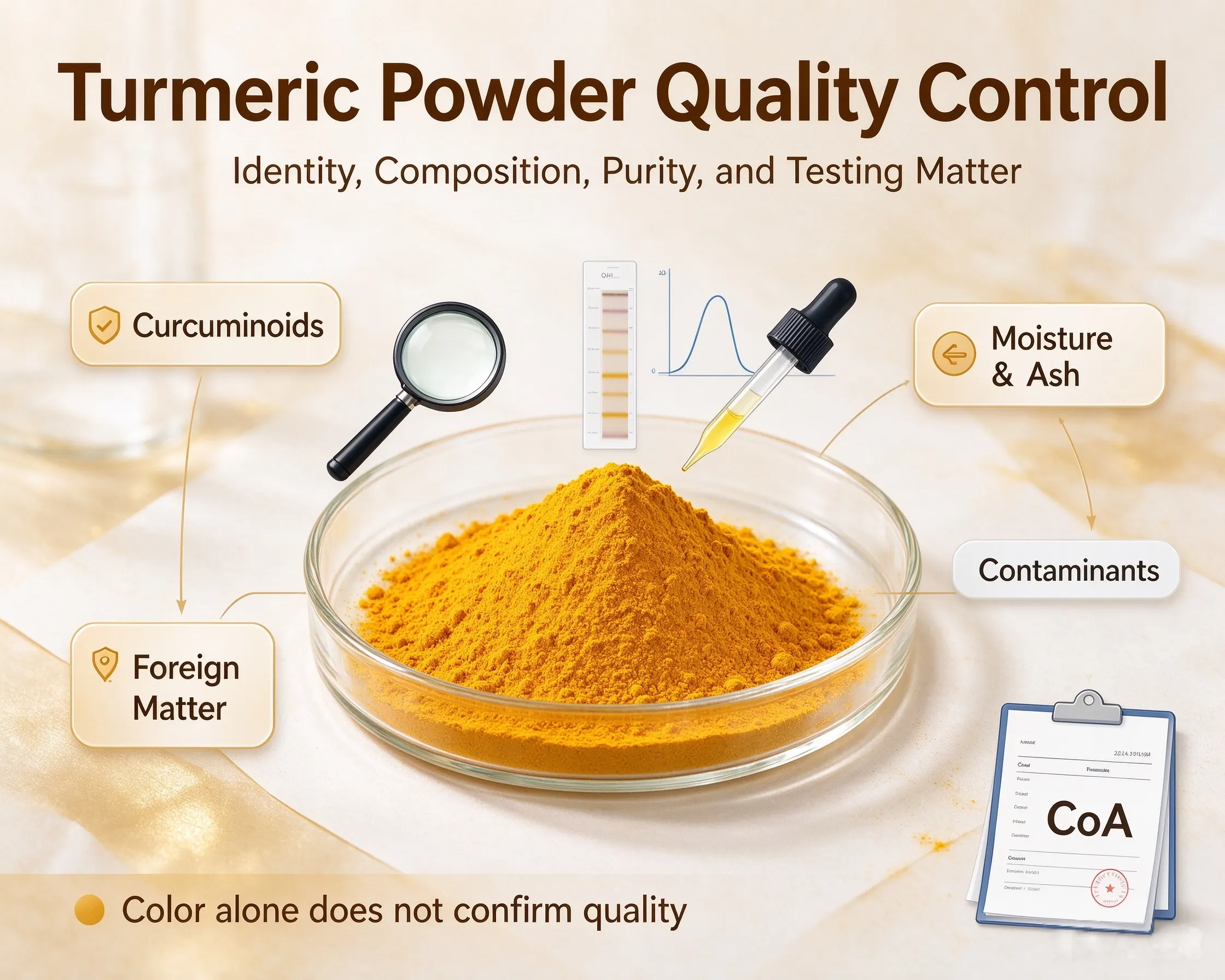
If your product requires a declared curcumin level, you need a clear assay method. HPLC is often used for curcumin or curcuminoid testing in standardized materials.
A product listed as "turmeric powder" may not carry the same active level as a high-curcumin extract. The price changes when you require a higher assay, stricter testing, or a tighter specification.
Before you compare quotes, ask:
- Is this whole turmeric powder or turmeric extract?
- Is curcumin tested?
- Which method is used?
- Is the result shown on the batch COA?
- Is the assay reported as curcumin or total curcuminoids?
Particle Size and Powder Processing
Particle size affects blending, capsule filling, tableting, instant drink performance, and visual texture. Many B2B orders use 80 mesh powder, while some projects require finer grades.
Finer particle size may need extra milling and sieving. That can raise cost and extend production time.
Common particle size questions include:
- Is the powder 80 mesh?
- What percentage passes through the sieve?
- Can the supplier provide finer mesh?
- Does the particle size match your filling or blending process?
Testing Requirements
Testing increases cost, but it also protects your project. For food and supplement ingredients, buyers often ask for:
- Heavy metals
- Arsenic
- Lead
- Cadmium
- Mercury
- Microbiology
- Total plate count
- Yeast and mold
- E. coli
- Salmonella
- Pesticide residues
- Residual solvents, if extraction is used
Jiuyuan Biotech's product information includes heavy metal and microbiological items, with testing methods shown in the COA section. This type of batch testing gives QA teams a stronger base for release decisions.
Packaging and Shipping Terms
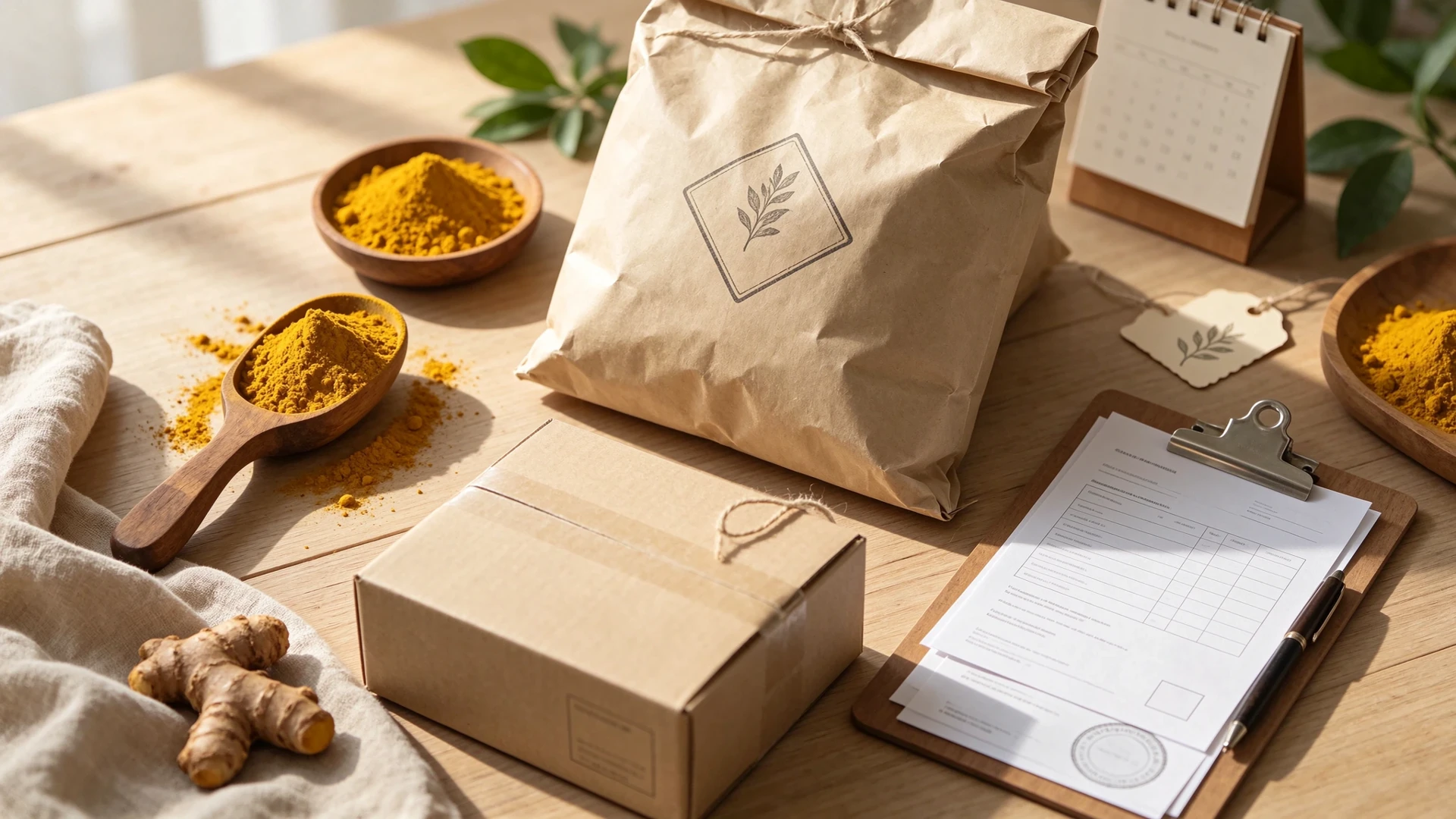
A turmeric quotation can change based on packaging and logistics. Small foil bags cost more per kg than bulk drum packaging. Air freight costs more than sea freight but shortens transit time.
Ask your supplier to clarify:
- Inner bag type
- Drum or carton size
- Net weight per package
- Pallet requirement
- Label format
- Shipping term
- Destination port or address
- Temperature or moisture control needs
A clean quote should separate product cost, packaging, and freight when possible.
MOQ for Bulk Yellow Turmeric Powder
MOQ means minimum order quantity. It affects price, production planning, document support, and shipping cost.
Jiuyuan Biotech's product page lists MOQ: 1 kg for Yellow Powder Turmeric. That can help buyers test samples or run early-stage evaluation. Bulk orders may follow different price levels based on quantity, packaging, and documentation.
Why MOQ Changes by Project
Suppliers set MOQ based on production efficiency, inventory, testing cost, and packaging setup. A low MOQ can help with sample evaluation. A higher MOQ often gives better price stability.
Common MOQ factors include:
- Stock availability
- Custom specification
- Custom particle size
- Custom label
- Extra testing
- Organic or special certification
- Packaging format
- Export document needs
Sample Order vs Bulk Order
A sample order helps you check color, odor, taste, particle size, and basic formula compatibility. A bulk order needs stronger controls because it will enter production or resale.
|
Order Type |
Main Purpose |
Buyer Focus |
|
Sample Order |
Lab testing and formula screening |
Color, odor, mesh, solubility, sensory fit |
|
Trial Order |
Pilot production |
Process behavior, blending, filling, stability |
|
Bulk Order |
Commercial production |
Price, lead time, COA, documents, supply stability |
A smart buyer does not jump from sample approval to a large order without checking batch documents and specification alignment.
How to Ask for a Better MOQ
You can often get a more practical MOQ when you give the supplier more project details.
Share:
- Target application
- Required specification
- Annual estimated volume
- Trial quantity
- Destination country
- Packaging requirement
- Testing requirement
- Delivery schedule
This helps the supplier match stock material or plan production with less risk.
Lead Time: What B2B Buyers Should Expect
Lead time means the time needed to prepare, test, pack, and ship your order. It does not only mean production time.
Bulk Yellow Turmeric Powder lead time can change based on order quantity, stock status, testing scope, packaging, and shipping method.
What Affects Lead Time?
Lead time usually includes several steps:
- Specification confirmation
- Proforma invoice and payment arrangement
- Raw material or stock check
- Production or batch allocation
- Quality testing
- COA preparation
- Packaging
- Export document preparation
- Freight booking
- Customs clearance
- International transit
If the material is in stock and you need standard documents, lead time may be shorter. If you request custom testing, custom packaging, or a large batch, your lead time may extend.
Testing Can Add Time
Many buyers underestimate testing time. Heavy metals and microbiology can take longer than simple sensory checks. Pesticide residue testing may require third-party lab support.
A realistic plan gives your QA team enough time to review:
- COA
- Specification sheet
- MSDS
- Test reports
- Label details
- Packaging photos
- Shipping documents
How to Avoid Delays
You can reduce delays with a clear RFQ.
Send your supplier:
- Full product name
- Required quantity
- Required curcumin level, if any
- Mesh size
- Target application
- Destination country
- Required documents
- Packaging format
- Expected delivery date
When your RFQ is complete, your supplier can quote faster and plan better.
Documentation You Should Request Before Purchase
Documents are not paperwork clutter. They protect your brand, your production schedule, and your customer relationships.
A B2B turmeric supplier should support your internal quality review with clear files.
Core Documents
Ask for these documents before bulk purchase:
- Certificate of Analysis
- Product specification sheet
- MSDS
- Process flow chart
- Allergen statement
- GMO statement
- Heavy metal test data
- Microbiological test data
- Pesticide residue information, if needed
- Packaging information
- Shelf-life and storage statement
Jiuyuan Biotech's turmeric page includes a COA table with batch number, manufacture date, certificate date, expiration date, assay, physical data, heavy metals, and microbiology. This format gives buyers useful batch-level visibility.
COA Review Checklist
When you receive a COA, check more than the product name.
Review:
- Product name
- Batch number
- Manufacture date
- Expiration date
- Latin name
- Plant part
- Country of origin
- Assay item
- Test method
- Result vs specification
- Microbiology
- Heavy metals
- Approved signature or quality release
If any key field is missing, ask the supplier before shipment.
Certification Documents
Many buyers ask for certifications because their internal supplier approval process requires them. Jiuyuan Biotech lists certificates such as ISO9001, cGMP, ISO22000, HACCP, FDA, and Halal on the product page.
Certification needs depend on your market and product type. Food brands, supplement brands, and distributors may not need the same documents.
Ask what certificate is available for:
- Supplier facility
- Product category
- Batch
- Destination market
- Customer audit file
How to Compare Yellow Turmeric Powder Suppliers
A strong supplier does more than quote a low price. A strong supplier helps you reduce quality risk, supply risk, and documentation risk.
When you compare bulk turmeric suppliers, look at both product quality and service quality.
Supplier Evaluation Checklist
Use this checklist during sourcing:
- Does the supplier confirm Curcuma longa L.?
- Does the supplier confirm root or rhizome as the plant part?
- Can the supplier provide a batch COA?
- Is curcumin tested by a clear method when required?
- Are heavy metals and microbiology included?
- Can the supplier support your MOQ?
- Can the supplier meet your lead time?
- Does the supplier offer stable packaging?
- Can the supplier support export documents?
- Does the supplier understand your application?
Questions to Ask Before Placing an Order
- Ask direct questions:
- Is this whole turmeric powder or extract?
- What is the typical curcumin level?
- Can you provide HPLC testing?
- What mesh size is available?
- What is the MOQ for a trial order?
- What is the lead time for 25 kg, 100 kg, or 500 kg?
- Can you provide pesticide residue testing?
- What documents come with shipment?
- Can you ship to my country?
- Can you support repeat orders?
The supplier's answers tell you how ready they are for B2B business.
Application Fit: Food, Supplement, Beverage, and Color Use
Yellow turmeric can work in many formulas, but one grade does not fit every application.
Food Applications
Food buyers usually care about color, taste, mesh size, microbiology, and labeling. Turmeric gives a warm yellow to orange-yellow shade. It can fit spice blends, sauces, seasonings, bakery products, and savory foods.
You should test:
- Heat stability
- Color behavior
- Taste impact
- Dosage level
- Interaction with other ingredients
- Regulatory labeling
Supplement Applications
Supplement buyers often focus on curcumin level, heavy metals, microbiology, particle size, and capsule flow. If your label mentions curcumin, you need to align the assay and documentation.
Check:
- Bulk density
- Flowability
- Mesh size
- Assay method
- COA format
- Heavy metal limits
Beverage Applications
Beverage use needs extra testing. Turmeric powder may not fully dissolve in water. It can create sediment or affect mouthfeel.
Test:
- Dispersibility
- Sediment
- Color uniformity
- Taste
- Stability
- Compatibility with flavors and acids
Natural Color Use
Turmeric is often valued for its yellow color. Yet color stability can change with pH, light, heat, and formula base.
If color performance matters, run a pilot test in your real product system.
Price Negotiation: How to Get a Fair Quote
A fair quote comes from clear specifications. Vague RFQs lead to vague pricing.
Instead of asking only, "What is your best price for Yellow Turmeric Powder?" send a structured request.
Better RFQ Template
Use this format:
- Product: Yellow Turmeric Powder
- Botanical source: Curcuma longa L.
- Plant part: root/rhizome
- Quantity: 25 kg / 100 kg / 500 kg
- Mesh: 80 mesh or custom
- Assay: curcumin test required or not required
- Application: food / supplement / beverage / color
- Destination country:
- Required documents:
- Packaging:
- Expected delivery date:
This gives the supplier enough information to quote accurately.
Watch for Quotes That Look Too Low
Very low pricing may come with hidden risks:
- No batch COA
- Weak testing
- Unclear plant part
- Poor color consistency
- Higher moisture
- Weak packaging
- Slow shipment
- Missing export documents
A slightly higher price may save money if it prevents rejected material or delayed production.
Storage, Shelf Life, and Handling
Turmeric powder needs proper storage to protect color, odor, and quality.
Jiuyuan Biotech's product information lists a shelf life of 24 months under proper storage in original packaging. It also recommends storage in a cool and dry place, away from strong light and heat.
Good storage practice includes:
- Keep packaging sealed
- Avoid direct sunlight
- Avoid high humidity
- Avoid high heat
- Keep away from strong odors
- Use clean storage areas
- Follow FIFO inventory control
Poor storage can affect color, smell, flow, and microbial risk.
FAQ About Bulk Yellow Turmeric Powder
- What is Yellow Turmeric Powder used for?
You can use Yellow Turmeric Powder in foods, spice blends, supplements, beverages, natural color systems, and botanical formulations. The best grade depends on your application.
- Is Yellow Turmeric Powder the same as curcumin?
No. Yellow Turmeric Powder comes from turmeric root or rhizome. Curcumin is one compound found in turmeric. A curcumin extract is more concentrated than whole turmeric powder.
- What affects the bulk price of Yellow Turmeric Powder?
Price depends on raw material quality, curcumin level, mesh size, testing scope, order quantity, packaging, and shipping terms.
- What MOQ should I expect?
MOQ varies by supplier and project. Jiuyuan Biotech lists 1 kg MOQ on its product page, which can support sample evaluation. Bulk MOQ depends on order details.
- What documents should I request?
Request COA, specification sheet, MSDS, flow chart, allergen statement, GMO statement, heavy metal data, microbiology data, and pesticide residue information when needed.
- How long does lead time take?
Lead time depends on stock, order size, testing, packaging, and shipping method. Ask your supplier to separate production time and shipping time.
- Can Yellow Turmeric Powder be used in beverages?
It can be evaluated for beverage use, but you need to test dispersibility, sediment, taste, and stability in your final formula.
- How should I store turmeric powder?
Store it in sealed packaging in a cool, dry place. Keep it away from light, heat, moisture, and strong odors.
Key Takeaway for B2B Buyers
Buying bulk Yellow Turmeric Powder takes more than checking the lowest price. You need to confirm the botanical source, plant part, assay needs, mesh size, testing scope, MOQ, lead time, and documents.
A reliable supplier should help you answer these questions before you pay:
- What exactly am I buying?
- Is it whole powder, extract, or curcumin-rich material?
- Does the COA match my requirement?
- Can the supplier support my market?
- Will the lead time fit my production plan?
- Can I repeat this order with stable quality?
Jiuyuan Biotech supplies Yellow Turmeric Powder from Curcuma longa L. for food, supplement, and ingredient projects. For bulk price, MOQ, lead time, sample support, and documentation, contact info@jiuybiotech.com.
Keyword focus: Yellow Turmeric Powder, bulk turmeric powder, turmeric powder supplier, Curcuma longa powder, turmeric powder MOQ, turmeric powder lead time, turmeric powder COA.
References
- National Center for Complementary and Integrative Health. "Turmeric: Usefulness and Safety."
- United States Pharmacopeia. "Food Chemicals Codex: Identity and Quality Standards for Food Ingredients."
- Codex Alimentarius Commission. "General Standard for Contaminants and Toxins in Food and Feed."
- International Organization for Standardization. "ISO 22000 Food Safety Management Systems."
- Food and Agriculture Organization of the United Nations. "Quality and Safety Standards for Spices and Culinary Herbs."
- Jiuyuan Biotech Product Technical Information. "Yellow Powder Turmeric Certificate of Analysis and Product Specification."