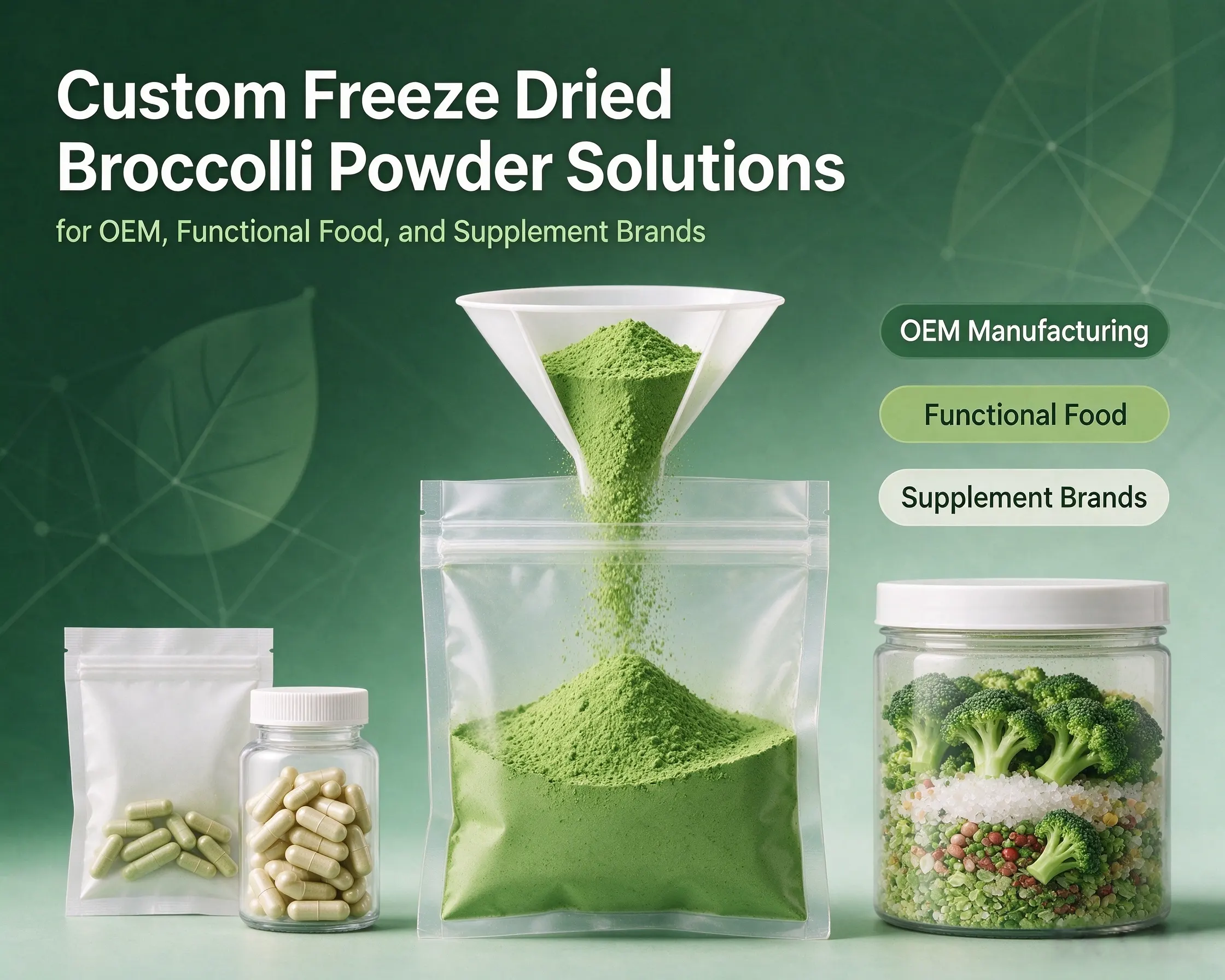
Freeze Dried Broccoli Powder and air dried broccoli powder may look similar on a product list, but they can perform very differently in real formulations. If you buy broccoli powder for dietary supplements, functional foods, green powders, or OEM projects, the drying method affects color, flavor, nutrients, shelf stability, cost, and customer perception.
As a B2B buyer, you do not only compare price per kilogram. You also compare how the ingredient behaves in capsules, tablets, powder blends, beverages, and finished products. A lower-cost powder can become expensive if it causes poor color, weak aroma, high microbial risk, unstable blending, or consumer complaints.
In this guide, I will walk you through the key differences between Freeze Dried Broccoli Powder and air dried broccoli powder, so you can choose the right material for your brand, market, and formulation goal.
What Is Freeze Dried Broccoli Powder?
Freeze Dried Broccoli Powder is made from fresh broccoli that goes through freezing, vacuum drying, and grinding. The process removes moisture at low temperature.
This helps protect the natural green color, vegetable flavor, and heat-sensitive nutrients better than many high-heat drying methods.
How Freeze-Drying Works
Freeze-drying is also called lyophilization. The process usually includes:
- Raw material selection
- Cleaning and cutting
- Blanching when required
- Freezing
- Vacuum drying
- Grinding
- Sieving
- Testing
- Packing
During vacuum drying, frozen water turns into vapor without passing through the liquid stage. This is called sublimation.
Because the process uses low temperature, it reduces heat damage. That makes freeze-drying popular for premium fruit and vegetable powders.
Why Buyers Choose Freeze Dried Broccoli Powder
Many supplement and food brands choose Freeze Dried Broccoli Powder because it offers:
- Brighter green color
- Cleaner vegetable aroma
- Better nutrient retention
- Lower heat damage
- Premium label value
- Good performance in green blends
- Strong fit for clean-label formulas
Broccoli naturally contains fiber, minerals, vitamin C, phenolic compounds, glucosinolates, and other plant compounds. Freeze-drying helps preserve more of the original material quality.
For B2B buyers, that can support better product positioning and stronger consumer trust.
What Is Air Dried Broccoli Powder?
Air dried broccoli powder is made by removing moisture with heated air. The broccoli is dried, then milled into powder.
This method is common because it is simpler and often less expensive than freeze-drying.
How Air Drying Works
Air drying may include:
- Washing
- Cutting
- Blanching
- Hot air drying
- Grinding
- Sieving
- Packing
The key difference is heat. Air drying uses warm or hot air to remove water from broccoli.
The temperature and drying time can vary by factory. Higher temperature and longer drying time may increase nutrient loss and color change.
Why Buyers Choose Air Dried Broccoli Powder
Air dried broccoli powder can work well for price-sensitive applications.
B2B buyers may choose it for:
- Low-cost food blends
- Soup mixes
- Seasonings
- Dry vegetable mixes
- Bakery applications
- Pet nutrition
- Large-volume industrial use
It can offer stable supply and lower cost. Yet it may not match freeze-dried powder in color, flavor, or premium nutrition positioning.
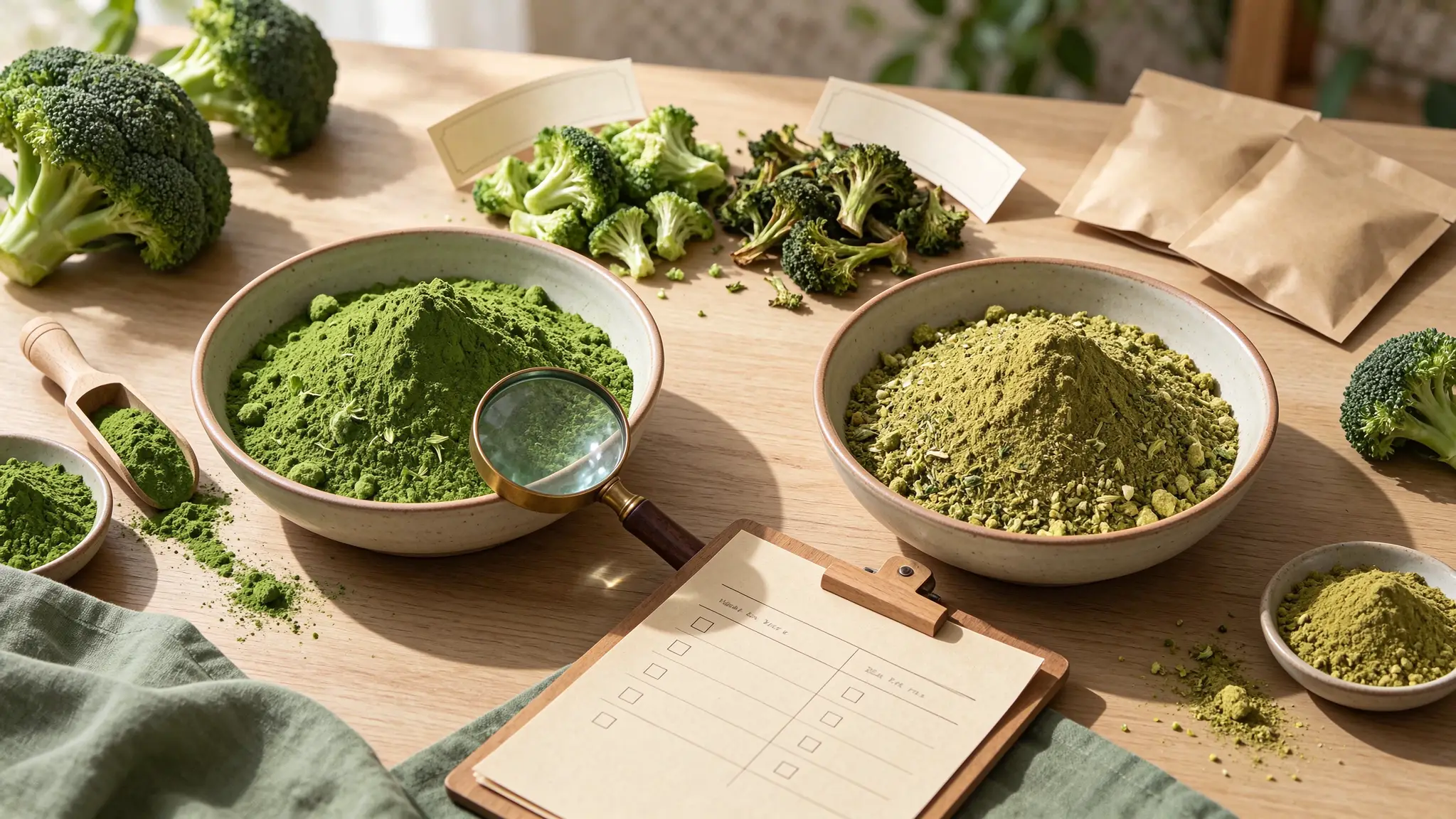
Freeze Dried vs Air Dried Broccoli Powder: Main Differences
The drying method shapes the final ingredient. For B2B buyers, these differences matter during product development and supplier qualification.
Quick Comparison Table
The table below gives a clear view of the main commercial and technical differences.
|
Factor |
Freeze Dried Broccoli Powder |
Air Dried Broccoli Powder |
|
Drying method |
Low-temperature vacuum drying |
Heated air drying |
|
Color |
Brighter green |
Often darker or duller green |
|
Flavor |
Fresher vegetable note |
More cooked or dry vegetable note |
|
Nutrient retention |
Generally better for heat-sensitive compounds |
May lose more heat-sensitive nutrients |
|
Texture |
Light, porous powder |
Denser powder |
|
Cost |
Higher |
Lower |
|
Premium label value |
Strong |
Moderate |
|
Best use |
Supplements, green powders, premium foods |
Seasonings, soups, low-cost blends |
|
Buyer focus |
Quality, color, nutrition, clean label |
Cost, volume, basic vegetable content |
This does not mean one powder is always better. It means each one fits a different business goal.
Color and Appearance: Why It Matters for Finished Products
Color often gives the customer their first quality signal. This matters more than many buyers expect.
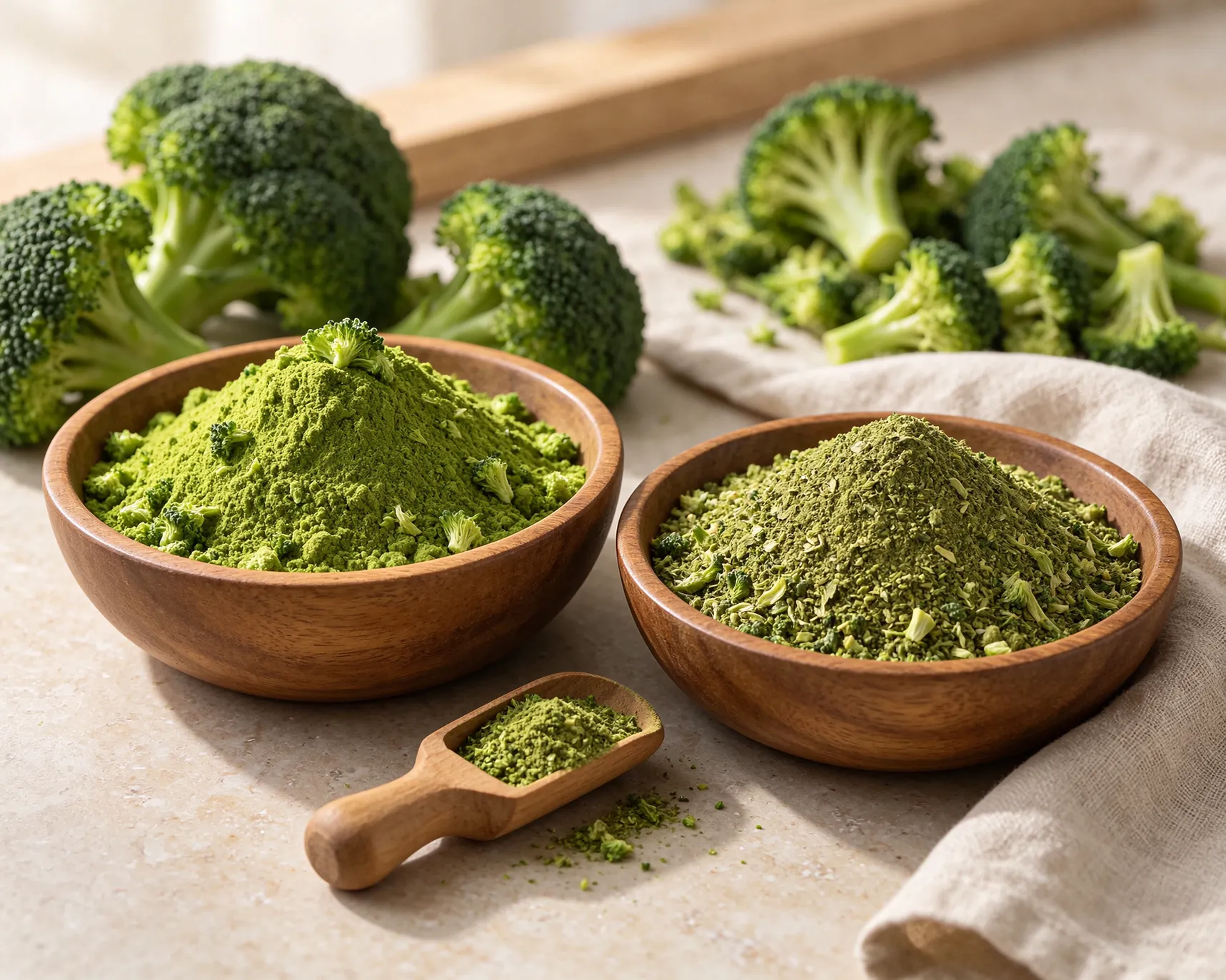
Freeze-Dried Powder Usually Looks Greener
Freeze Dried Broccoli Powder usually keeps a more natural green color because it avoids long exposure to high heat.
This makes it useful for:
- Green superfood powders
- Smoothie mixes
- Capsules with clear marketing images
- Beauty-from-within products
- Premium vegetable blends
- Functional foods with visible green color
A bright green powder can make your product look fresher and more natural.
Air Dried Powder May Look Duller
Air dried broccoli powder may appear darker, yellow-green, or brown-green. This happens because heat can affect chlorophyll and other plant pigments.
That may not matter in some products.
Air dried broccoli powder can still work in:
- Soup powders
- Savory blends
- Seasoning bases
- Dark green formulas
- Products where color is not a selling point
Yet if your brand depends on a clean, fresh green appearance, freeze-dried powder often gives a better visual result.
Flavor and Aroma: A Key Point for Consumer Acceptance
Broccoli has a strong natural taste. The drying method can make it cleaner or more cooked.
Freeze Dried Broccoli Powder Has a Fresher Profile
Freeze-dried broccoli powder often has a fresher vegetable aroma. It may taste closer to real broccoli.
This is helpful in:
- Capsules, where odor still matters
- Powder blends with fruit flavor
- Greens powders
- Smoothies
- Nutrition sachets
- Meal replacement blends
If your product uses natural flavors, a cleaner base ingredient makes flavor masking easier.
Air Dried Broccoli Powder Can Taste More Cooked
Air dried powder may carry a cooked, toasted, or stronger dried vegetable note.
This can fit savory food applications. It may not work as well in sweet green drinks or premium daily nutrition powders.
For B2B buyers, flavor testing is essential. Always test powder in the final formula, not just as a raw material.
Nutrient Retention and Active Plant Compounds
Broccoli is valued because it contains natural nutrients and plant compounds. Drying can affect these compounds.
Why Freeze-Drying Can Support Better Nutrient Protection
Freeze-drying uses low temperature. This helps protect heat-sensitive nutrients such as vitamin C and some natural plant compounds.
Broccoli also contains glucosinolates, including glucoraphanin. These compounds are important in many cruciferous vegetable formulas.
Broccoli may also contain myrosinase, an enzyme linked to the conversion of glucosinolates into bioactive breakdown products. Heat can reduce enzyme activity.
Because air drying uses heat, it may cause more loss of heat-sensitive nutrients and enzymes.
What Buyers Should Confirm
Do not rely on general claims. Ask your supplier for batch data when your formula needs specific performance.
You may request:
- Glucosinolate testing
- Glucoraphanin testing
- Sulforaphane potential testing
- Vitamin C testing
- Moisture testing
- Microbiology testing
- Heavy metal testing
- Pesticide residue testing, when required
If your product makes nutrient-related claims, your specification must support those claims.
Powder Structure, Density, and Processing Performance
Drying affects powder structure. This changes how the powder behaves in production.
Freeze-Dried Powder Is Often Lighter and More Porous
Freeze-dried materials tend to have a porous structure. This can give the powder a lighter feel and better rehydration behavior.
That may help in:
- Powder drink mixes
- Smoothie blends
- Instant nutrition products
- Premium sachet products
- Formulas where mouthfeel matters
Yet a lighter powder may also have lower bulk density. This can affect capsule fill weight and packaging volume.
Air Dried Powder Can Be Denser
Air dried broccoli powder often has a denser structure. This may help when you need more material in a smaller space.
That can be useful for:
- Capsules
- Tablets
- Dry mixes
- Seasoning blends
- Bulk industrial packaging
Yet denser powder may not disperse as nicely in beverages.
What to Test Before Bulk Purchasing
Before placing a bulk order, ask for a sample and test:
- Bulk density
- Tapped density
- Flowability
- Particle size
- Dispersibility
- Blend uniformity
- Capsule fill weight
- Tablet compression
- Packaging fit
A powder that looks good on paper must still work on your production line.
Applications: Which Powder Fits Your Product?
Your final product format should guide your buying decision.
Best Uses for Freeze Dried Broccoli Powder
Freeze Dried Broccoli Powder is often the better choice for premium products where quality is visible and marketable.
It fits:
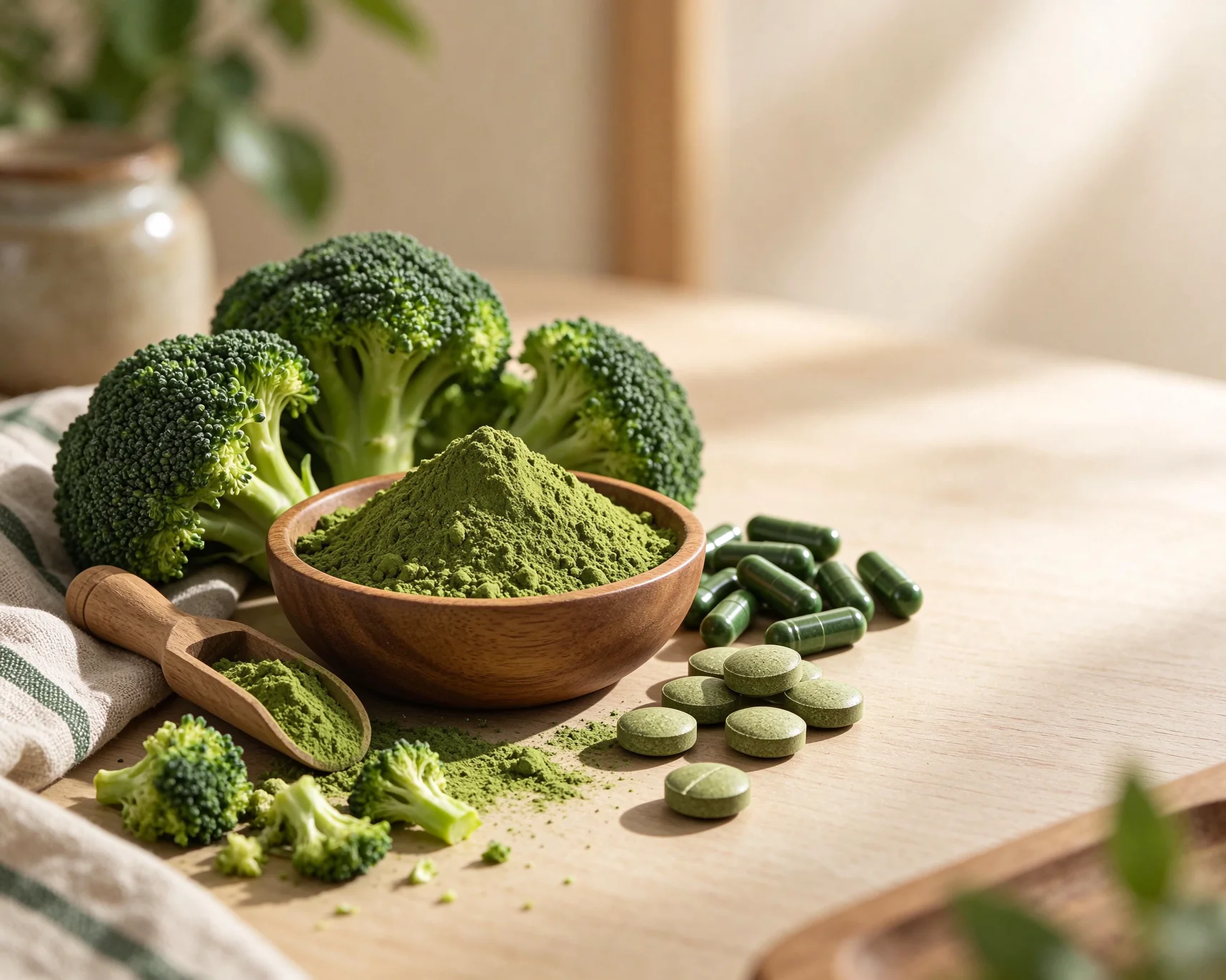
- Dietary supplement capsules
- Green powder blends
- Functional beverages
- Smoothie powders
- Beauty nutrition blends
- Detox support formulas
- Immune support formulas
- Clean-label wellness products
- High-end meal replacement powders
If your customers care about natural color, nutrient retention, and clean-label sourcing, freeze-dried powder gives you a stronger product story.
Best Uses for Air Dried Broccoli Powder
Air dried broccoli powder works better for cost-driven products.
It fits:
- Soup mixes
- Seasoning blends
- Savory dry mixes
- Food service products
- Pet food formulas
- Bakery products
- Large-volume industrial applications
If color and heat-sensitive nutrients are not major selling points, air dried powder may offer better cost control.
Cost Difference: Why Freeze-Dried Powder Costs More
B2B buyers often ask why Freeze Dried Broccoli Powder costs more than air dried broccoli powder.
The answer comes from processing cost, energy use, production time, and yield.
Freeze-Drying Requires More Investment
Freeze-drying needs specialized equipment and longer processing time. It also uses vacuum systems and controlled freezing.
This raises production cost.
Yet the higher cost may bring business value through:
- Better appearance
- Better ingredient story
- Better nutrient protection
- Higher finished product pricing
- Stronger premium positioning
- Lower flavor correction needs
For premium supplement brands, the added cost can make sense.
Air Drying Supports Lower-Cost Production
Air drying uses simpler equipment and shorter processing in many cases. This helps reduce cost.
It suits buyers who need:
- Large volume
- Lower price
- Basic vegetable powder
- Food industry applications
- Less demanding color standards
Cost matters, but it should not be the only decision point.
Quality and Safety Checks for B2B Buyers
Whether you choose freeze-dried or air dried broccoli powder, quality control matters.
Documents You Should Request
A reliable supplier should provide:
- Product specification sheet
- Batch Certificate of Analysis
- Flow chart
- Allergen statement
- GMO statement, when needed
- Heavy metal test report
- Microbiology report
- Pesticide residue report, when needed
- Halal or Kosher certificate, when needed
- Organic certificate, when applicable
- Food safety certification documents
For dietary supplements, batch-level documentation is especially important.
Key COA Items to Review
Your COA should include safety and identity data.
Important items include:
- Appearance
- Color
- Odor
- Botanical source
- Part used
- Particle size
- Moisture
- Ash
- Total plate count
- Yeast and mold
- E. coli
- Salmonella
- Lead
- Arsenic
- Cadmium
- Mercury
Jiuyuan Biotech's Freeze-Dried Broccoli Powder specification includes quality items such as particle size, moisture, ash, heavy metals, and microbiology. This supports B2B purchasing decisions and supplier audits.
Supplier Selection: What Makes a Good Broccoli Powder Manufacturer?
Choosing the right supplier can reduce your risk. It can also save time during product development.
Look for Real Production Capability
A strong supplier should have stable production, testing capability, and quality systems.
Jiuyuan Biotech was founded in 2012 and operates a 70,000 m² facility with 10 production lines. The company serves clients in dietary supplements, functional foods, cosmetics, and pharmaceutical-related fields.
This matters because B2B buyers often need:
- Stable lead time
- Scalable supply
- Custom specifications
- OEM/ODM support
- Technical guidance
- Consistent documentation
- Long-term cooperation
A factory with real production control can often respond faster than a trading company.
Certifications Matter for Global Buyers
Certifications help reduce compliance friction.
For broccoli powder buyers, useful certifications may include:
- ISO 9001
- ISO 22000
- FSSC 22000
- HACCP
- cGMP
- Halal
- Kosher
- Organic certification
Always check certificate validity and scope. A certificate should apply to the relevant facility and product category.
How to Decide Between Freeze Dried and Air Dried Broccoli Powder
Your choice should match your market, product format, and price point.
Choose Freeze Dried Broccoli Powder When You Need Premium Quality
Choose Freeze Dried Broccoli Powder if your product depends on:
- Better green color
- Cleaner flavor
- Higher perceived value
- Better nutrient retention
- Premium supplement positioning
- Smoothie or drink powder use
- Clean-label marketing
- Strong visual appeal
It is a strong choice for health supplement brands and functional food companies that sell quality, not just low price.
Choose Air Dried Broccoli Powder When Cost Is the Main Goal
Choose air dried broccoli powder if your project needs:
- Lower cost
- Large volume
- Savory food use
- Less color sensitivity
- Basic vegetable content
- Industrial dry mix application
It can be a practical choice when the finished product does not rely on premium green appearance or heat-sensitive nutrient positioning.
Use This Buyer Checklist
Before you decide, compare both powders across these points:
- What is the target product format?
- Does color affect consumer purchase?
- Does flavor need masking?
- Are you making nutrient-related claims?
- What is your target price point?
- What certifications do you need?
- What is your required particle size?
- Do you need organic status?
- What microbiology limits apply?
- Can the supplier provide batch COA?
- Can the powder pass your production test?
The best powder is the one that fits your formula and business model.
FAQ: Freeze Dried Broccoli Powder vs Air Dried Broccoli Powder
Is Freeze Dried Broccoli Powder better than air dried broccoli powder?
Freeze Dried Broccoli Powder is often better for premium supplements and green powders because it helps preserve color, flavor, and heat-sensitive nutrients. Air dried powder may work better for cost-sensitive food applications.
Does freeze-drying keep more nutrients?
Freeze-drying uses low temperature and vacuum drying. This can help protect heat-sensitive nutrients better than hot air drying. Actual nutrient levels depend on raw material quality, processing, storage, and testing.
Which broccoli powder is better for capsules?
Both can work in capsules. Freeze-dried powder offers stronger premium positioning. Air dried powder may offer higher density and lower cost. You should test flowability, bulk density, and fill weight.
Which broccoli powder is better for green drinks?
Freeze-dried broccoli powder is usually a better choice for green drinks because it often has a fresher color and cleaner vegetable taste.
Is air dried broccoli powder still useful?
Yes. Air dried broccoli powder works well in soups, savory blends, seasonings, food service products, and cost-sensitive formulas.
What documents should I ask from a broccoli powder supplier?
Ask for a specification sheet, batch COA, heavy metal test, microbiology report, flow chart, allergen statement, GMO statement, and certification documents.
Can Jiuyuan Biotech supply bulk Freeze Dried Broccoli Powder?
Yes. Jiuyuan Biotech supplies Freeze Dried Broccoli Powder for dietary supplements, functional foods, health products, cosmetics, and other B2B applications.
Final Buying Advice for B2B Teams
Freeze Dried Broccoli Powder and air dried broccoli powder serve different product goals. Freeze-dried powder fits premium supplements, green powders, and clean-label wellness products. Air dried powder fits cost-sensitive food and industrial uses.
If your brand sells quality, color, and nutrition value, freeze-dried material often gives you the better story and better formulation base. If your project focuses on volume and price, air dried broccoli powder may be enough.
Jiuyuan Biotech provides Freeze Dried Broccoli Powder with quality documentation, technical support, and B2B supply capability. For specifications, samples, or bulk pricing, contact us at info@jiuybiotech.com.
References
- Ratti, C. "Hot Air and Freeze-Drying of High-Value Foods: A Review." Journal of Food Engineering, 2001.
- Verkerk, R., Schreiner, M., Krumbein, A., Ciska, E., Holst, B., Rowland, I., De Schrijver, R., Hansen, M., Gerhäuser, C., Mithen, R., & Dekker, M. "Glucosinolates in Brassica Vegetables: The Influence of the Food Supply Chain on Intake, Bioavailability and Human Health." Molecular Nutrition & Food Research, 2009.
- Fahey, J. W., Zhang, Y., & Talalay, P. "Broccoli Sprouts: An Exceptionally Rich Source of Inducers of Enzymes That Protect Against Chemical Carcinogens." Proceedings of the National Academy of Sciences of the United States of America, 1997.
- Matusheski, N. V., Juvik, J. A., & Jeffery, E. H. "Heating Decreases Epithiospecifier Protein Activity and Increases Sulforaphane Formation in Broccoli." Phytochemistry, 2004.
- Mahn, A., & Reyes, A. "An Overview of Health-Promoting Compounds of Broccoli." Journal of Food Science and Technology, 2012.
- Jiuyuan Biotech. "Product Specification and Certificate of Analysis for Freeze-Dried Broccoli Powder." Company Product Documentation, 2026.