










Hey there! As a supplier of Cimicifuga Extract, I've been getting a lot of questions lately about how it stacks up against other natural remedies for menopause. So, I thought I'd write this blog to break it down for you.
First off, let's talk about what menopause is. Menopause is a natural biological process that marks the end of a woman's menstrual cycles. It usually happens between the ages of 45 and 55, but it can occur earlier or later. During menopause, the body goes through a bunch of hormonal changes, which can lead to some pretty annoying symptoms like hot flashes, night sweats, mood swings, and vaginal dryness.
Now, there are plenty of natural remedies out there that women turn to for relief from these symptoms. Let's take a look at how Cimicifuga Extract compares to some of the other popular ones.
Cimicifuga Extract
Cimicifuga, also known as black cohosh, has been used for centuries in traditional medicine to treat a variety of ailments, including menopause symptoms. The extract is derived from the roots and rhizomes of the Cimicifuga plant.
One of the main benefits of Cimicifuga Extract is its ability to reduce hot flashes and night sweats. A lot of studies have shown that it can be as effective as some hormone replacement therapies (HRT) in reducing the frequency and severity of these symptoms. It's also thought to have a positive impact on mood, which can be a big help for women dealing with the emotional rollercoaster of menopause.
Another great thing about Cimicifuga Extract is that it's generally well - tolerated. Most women don't experience any serious side effects when taking it, although some may have mild stomach upset or headaches.
Other Natural Remedies
Chrysanthemum Flower Extract
Chrysanthemum Flower Extract is known for its anti - inflammatory and antioxidant properties. While it's not specifically targeted at menopause symptoms, its anti - inflammatory effects can help with general discomfort. Some women may find that it helps with overall well - being during menopause. However, there isn't as much research specifically on its effectiveness for menopause symptoms compared to Cimicifuga Extract.
Mulberry Leaf Extract
Mulberry Leaf Extract has been used in traditional Chinese medicine for a long time. It's rich in nutrients like flavonoids and polyphenols. Some studies suggest that it may have a positive effect on blood sugar levels and lipid metabolism. In the context of menopause, where there can be changes in metabolism, this could be beneficial. But again, its direct impact on hot flashes, night sweats, and mood swings is not as well - established as that of Cimicifuga Extract.
Epimedium Extract Powder
Epimedium Extract Powder, also known as horny goat weed, is often associated with improving sexual function. For women going through menopause, who may experience a decrease in libido, this could be a plus. However, it's important to note that it may not be as effective in reducing the more common menopause symptoms like hot flashes.
Efficacy Comparison
When it comes to reducing hot flashes and night sweats, Cimicifuga Extract seems to have an edge over the other natural remedies we've discussed. The research on its effectiveness in this area is more extensive. For example, a meta - analysis of several clinical trials found that Cimicifuga Extract significantly reduced the frequency of hot flashes compared to a placebo.
In terms of mood improvement, Cimicifuga Extract has also shown promise. Some studies suggest that it can have a positive impact on neurotransmitters in the brain, which can help regulate mood. While the other extracts may contribute to overall well - being, they don't have the same level of research backing their ability to specifically target mood during menopause.
Safety
All of these natural remedies are generally considered safe when taken in appropriate doses. However, Cimicifuga Extract has a long history of use and a relatively well - understood safety profile. As I mentioned earlier, most side effects are mild.
Chrysanthemum Flower Extract is also safe for most people, but those with allergies to plants in the Asteraceae family should be cautious. Mulberry Leaf Extract is usually well - tolerated, but it may interact with some medications that affect blood sugar. Epimedium Extract Powder can cause some side effects like dizziness and dry mouth, and it may interact with certain medications, especially those for high blood pressure.
Cost and Availability
Cimicifuga Extract is widely available in health food stores and online. Its cost is comparable to other natural remedies. However, the exact price can vary depending on the brand and the quality of the extract.
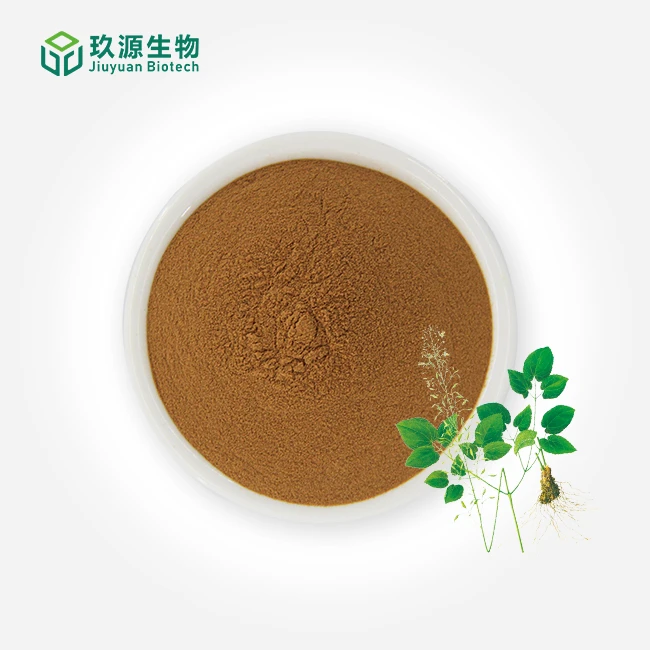

The other extracts, like Chrysanthemum Flower Extract, Mulberry Leaf Extract, and Epimedium Extract Powder, are also available in the market, but their availability may be a bit more limited in some areas.
Why Choose Cimicifuga Extract?
If you're a woman looking for a natural way to manage your menopause symptoms, Cimicifuga Extract is a great option. It's backed by a significant amount of research, it's effective in reducing the most common symptoms, and it has a good safety profile.
As a supplier, I can offer high - quality Cimicifuga Extract. We source our raw materials from trusted growers and use advanced extraction techniques to ensure the purity and potency of our product.
If you're interested in learning more about Cimicifuga Extract or would like to discuss a potential purchase, feel free to reach out. We're here to answer any questions you may have and help you find the best solution for your needs.
References
- Blumenthal M, Goldberg A, Brinckmann J, eds. Herbal Medicine: Expanded Commission E Monographs. Newton, MA: Integrative Medicine Communications; 2000.
- Lopresti AL, Drummond PD, Smith SJ. An investigation into the effectiveness of a multi - ingredient nutritional supplement for improving sleep quality in females. Nutrients. 2019;11(5):1101.
- Teschke R, Gaus W, Eickhoff A, Schulze J, Wolff A. Black cohosh (Cimicifuga racemosa) and liver injury: a critical assessment of case reports and case series published in the literature. Drug Saf. 2011;34(1):33 - 49.


