










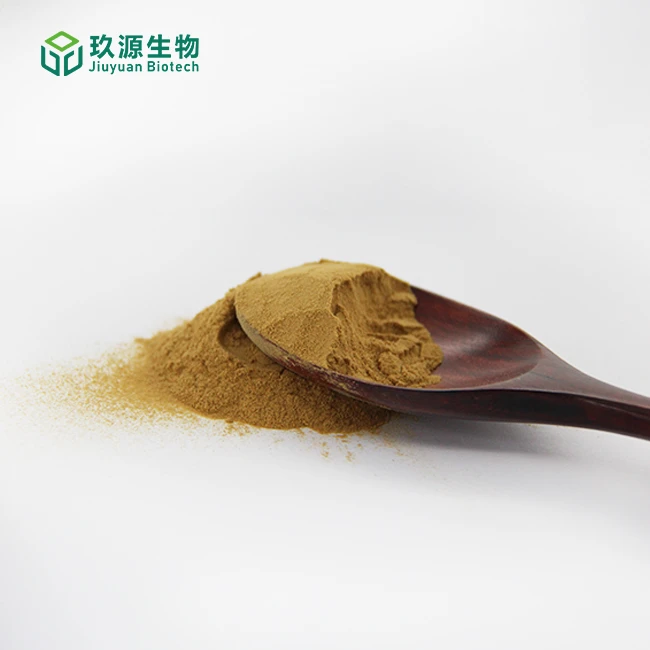
Product Description - Standardized Botanical Ingredient with Verified Phenylethanoid Glycosides
Cistanche Extract Powder is a standardized botanical extract produced from the fleshy stems of Cistanche deserticola and Cistanche tubulosa, two desert plants traditionally used in Asian herbal systems and increasingly studied for their phenylethanoid glycoside profile.
This ingredient is developed as a content-defined extract, with quantified levels of total phenylethanoid glycosides, echinacoside, and acteoside, ensuring batch-to-batch consistency, formulation reliability, and regulatory-aligned documentation for global B2B applications.
At Jiuyuan Biotech, we produce Cistanche Extract Powder from authenticated Cistanche tubulosa stems sourced from contracted cultivation zones in Xinjiang and Inner Mongolia - the two primary commercial growing regions in China. Our extraction and standardization process is designed to deliver consistent, HPLC-verified PhG concentrations batch after batch, with the full documentation stack that EU, US, and Asia-Pacific regulatory submissions require.
Whether you're developing a men's vitality formula, a cognitive health supplement, an anti-aging nutraceutical, or a premium adaptogen blend, our Cistanche Extract Powder delivers the phytochemical depth and supply chain transparency your formulation demands.
Raw Material Origin & Supply Chain Control
Our Cistanche raw materials are sourced from approved cultivation regions in northwestern China, including Inner Mongolia, Xinjiang, Ningxia, Gansu, and Qinghai, where climatic conditions are suitable for stable accumulation of phenylethanoid glycosides.
- Botanical identity verified at raw material intake
- Controlled harvesting and drying conditions
- Full traceability from raw herb to finished extract
Specifications & Active Components
| Dimension | Specification | Notes |
|---|---|---|
| Extract Ratio | 4:1, 10:1, 20:1, 30:1, 40:1 | Indicates concentration of raw material; does not quantify active compounds. |
| Total Phenylethanoid Glycosides (UV/HPLC) | 25% - 85% | Primary quality indicator; represents total phenylethanoid glycosides content. |
| Echinacoside (HPLC) | 8% - 40% | Key single active compound; often co-reported with total glycosides. |
| Acteoside / Verbascoside (HPLC) | 1% -16% | Second major active component; supports overall bioactivity. |
Industry Notes:
Extract ratio reflects concentration, not potency.
Active compounds are quantified by HPLC or UV for consistent efficacy.
Suitable for formulations targeting kidney health, neuroprotection, antioxidant activity, and bowel regulation.
Why Cistanche Extract as a Standardized Ingredient?
1. Clearly Quantified Phenylethanoid Glycosides
Unlike ratio-only extracts, our Cistanche Extract is supplied with measured active content, allowing formulators to work with defined specifications rather than theoretical concentration factors.
-
Total Phenylethanoid Glycosides: up to 85%
-
Echinacoside and Acteoside were individually quantified
-
Tested by UV and HPLC according to validated methods
This standardization supports accurate formulation design, label consistency, and repeatable performance.
2. One Extract, Multiple Application Directions
Cistanche Extract has been widely studied for its association with:
-
Botanical antioxidant systems
-
Research models related to metabolic and immune pathways
-
Traditional formulations focusing on vitality and longevity concepts
From a B2B development perspective, this allows a single ingredient to be positioned across:
-
Dietary supplements
-
Functional food concepts
-
Botanical-based cosmetic formulations
3. Polysaccharides & Glycosides: Complementary Fractions
In addition to phenylethanoid glycosides, Cistanche stems naturally contain desert-adapted polysaccharide fractions, which are frequently evaluated in ingredient research for their role in botanical immune and stress-response studies.
Our extraction parameters are designed to retain both glycoside and polysaccharide fractions, supporting broader formulation flexibility.
4. Suitability for Sports & Performance-Oriented Formulations
Cistanche Extract has appeared in published nutritional research exploring its relationship with exercise-related biochemical markers in experimental models. As a plant-derived ingredient with quantified actives, it is increasingly considered in clean-label, botanical-based performance product concepts.
Formulators typically evaluate this ingredient as part of multi-ingredient systems, rather than as a standalone functional agent.
5. Digestive & Cognitive Research Interest
Modern botanical research has investigated Cistanche extracts in relation to:
Intestinal barrier and mucosal models
Oxidative stress markers in neural tissues
These findings support its continued research interest in gut–brain axis–related formulation concepts, without implying clinical outcomes.
6. Cosmetic & Personal Care Applications
Due to its phenylethanoid glycoside content and antioxidant profile, Cistanche Extract is also supplied in cosmetic-grade specifications for external-use formulations.
Evaluated in antioxidant capacity models
Used in skin-conditioning and barrier-support product concepts
Suitable for creams, serums, and functional cosmetic blends
Applications
Cistanche Extract Powder occupies a well-defined niche in the premium adaptogen and men's health ingredient space, with expanding applications in cognitive health and longevity-focused formulations.
|
Industry Segment |
Recommended Grade |
Typical Dosage Range |
Key Value Proposition |
|
Men's Vitality & Testosterone Support |
20%–40% PhGs |
300–600 mg/serving |
PhG-mediated LH/testosterone pathway support |
|
Cognitive Health & Neuroprotection |
30%–50% Echinacoside |
200–500 mg/serving |
Dopaminergic neuroprotection, memory support |
|
Anti-Aging & Longevity Formulas |
20%–40% PhGs |
300–500 mg/serving |
Antioxidant, cellular protection, vitality |
|
Adaptogen & Stress Support Blends |
10%–20% PhGs |
300–600 mg/serving |
Adaptogenic positioning, energy & resilience |
|
Bone & Joint Health Supplements |
20%–30% Echinacoside |
200–400 mg/serving |
Emerging osteoblast support data |
|
Immune Health Formulas |
10%–20% PhGs + Polysaccharides |
300–500 mg/serving |
Immunomodulatory polysaccharide fraction |
|
Premium TCM-Inspired Formulas |
30%–50% PhGs |
200–400 mg/serving |
Authentic desert ginseng positioning |
|
Sports & Performance Nutrition |
20%–30% PhGs |
300–600 mg/serving |
Vitality, recovery, hormonal support |
|
Functional Beverages & Sachets |
Water-Soluble 10% PhGs |
300–500 mg/serving |
Adaptogen beverage positioning |
Comparison: Cistanche tubulosa vs. Cistanche deserticola
Buyers frequently encounter both species in the market. Understanding the distinction is commercially and regulatorily important.
|
Comparison Factor |
Cistanche tubulosa |
Cistanche deserticola |
|
Primary Growing Region |
Xinjiang, Central Asia |
Inner Mongolia, Northwest China |
|
Host Plant |
Haloxylon ammodendron |
Haloxylon ammodendron, Tamarix spp. |
|
PhG Profile |
Higher echinacoside content |
Comparable PhG profile |
|
Commercial Availability |
More abundant; cultivated at scale |
More restricted; wild-harvested historically |
|
Conservation Status |
Not endangered (cultivated) |
Protected species in China; wild collection restricted |
|
EU Novel Food Status |
Approved as Novel Food (EFSA, 2021) |
Not separately evaluated |
|
Regulatory Preference |
Preferred for EU/US market supply |
Preferred for traditional Chinese medicine market |
|
Typical Market Price |
Moderate |
Higher (supply constraints) |
The EU Novel Food authorization for Cistanche tubulosa water extract (EFSA, 2021) is a significant regulatory milestone - it establishes a defined safety profile and usage conditions for the European market that C. deserticola does not yet have. For EU-destined formulations, C. tubulosa is the commercially and regulatorily appropriate choice.
Quality Control
In-House Laboratory Capabilities
- HPLC-DAD - Primary quantification of echinacoside, acteoside, and total PhGs; identity fingerprinting
- TLC (Thin-Layer Chromatography) - Botanical identity verification and adulteration screening
- UV-Vis Spectrophotometry - Rapid PhG screening and color value assessment
- ICP-MS - Heavy metal quantification (Pb, As, Hg, Cd, and additional elements on request)
- GC - Residual solvent profiling per ICH Q3C
- Karl Fischer Titration - Moisture determination
- Microbiological Plating - TPC, yeast & mold, E. coli, Salmonella per USP/EP methods
Adulteration Awareness
- Cistanche extract is a premium-priced ingredient, which makes it a target for adulteration - most commonly through dilution with inert excipients or substitution with lower-PhG-content material. Our HPLC fingerprinting protocol generates a characteristic chromatographic profile for each batch that can be compared against our reference standard library, providing a meaningful authentication checkpoint beyond simple assay numbers. Buyers sourcing from unfamiliar suppliers should insist on HPLC chromatograms, not just assay values.
Batch Documentation Package
Every commercial shipment includes:
- Certificate of Analysis (COA) - Batch-specific, HPLC-backed
- HPLC Chromatogram - Available on request
- Certificate of Origin (COO)
- Material Safety Data Sheet (SDS)
- Heavy Metal Test Report
- Pesticide Residue Report
- Allergen Declaration
- GMO Status Declaration
- Irradiation Status Declaration

Why Choose Shaanxi Jiuyuan Biotechnology?
Focused on Standardization, Not Just Extraction
At Shaanxi Jiuyuan Biotechnology, Cistanche Extract Powder is developed as a controlled botanical ingredient, not a generic herbal powder. We focus on measurable activities, batch consistency, and application reliability for global B2B customers.
Industrial-Scale Manufacturing with Proven Capacity
-
70,000 m² production base with 6 GMP-compliant workshops
-
10 automated extraction and drying lines
-
Annual capacity > 6,000 metric tons
-
13+ years of experience in plant extract manufacturing
This scale ensures stable supply for long-term contracts and large-volume projects.
Advanced Process & Equipment Advantage
-
Automated plate-frame and disc centrifugation for high extract clarity
-
Controlled low-temperature extraction to protect phenylethanoid glycosides
-
Vacuum drying and dry granulation for improved bulk density and flowability
-
Customizable mesh size from 8–350 mesh based on formulation needs

Active-Driven Quality Control
Every batch of Cistanche Extract Powder is tested and released based on quantified actives, not appearance alone:
-
Total Phenylethanoid Glycosides (UV / HPLC)
-
Echinacoside (HPLC)
-
Acteoside / Verbascoside (HPLC)
-
Full COA includes heavy metals, pesticides, solvents, and microbiological limits in line with USP, AOAC, and GB/T standards.
Global Compliance & Certifications
- cGMP
- ISO9001 / ISO22000
- HACCP / FSSC22000
- HALAL / KOSHER
Designed to support dietary supplement, functional food, and export-oriented brands.
Customization & B2B Support
Multiple specifications: ratio extracts or standardized content extracts
Flexible packaging: bulk bags, fiber drums, or customer-specified formats
Technical support for formulation, specification matching, and documentation
We work as a long-term ingredient partner, not just a supplier.

Buyer Guide
1. Specify Both Echinacoside AND Total PhGs
Specifying echinacoside content alone is insufficient. A supplier could theoretically deliver a high echinacoside number while the broader PhG fraction is depleted. Always specify both echinacoside concentration and total PhG content in your purchase specification, with HPLC as the required test method.
2. Verify Species Authentication
Cistanche tubulosa and Cistanche deserticola are not interchangeable from a regulatory standpoint in all markets. Demand a botanical authentication report (including TLC fingerprint or HPLC chromatogram) confirming the species identity of each lot you receive.
3. Understand the EU Novel Food Framework
For EU market formulations, Cistanche tubulosa water extract is authorized as a Novel Food under EU Regulation 2015/2283, with defined conditions of use (maximum daily intake of 600 mg of the extract, corresponding to specific PhG levels). Ensure your supplier can provide documentation supporting compliance with these conditions.
4. Ask About Mannitol Content
Mannitol is a naturally abundant sugar alcohol in cistanche stems that has no relevant bioactivity at supplement doses but can significantly inflate the apparent weight of a crude extract. High-quality standardized extracts should have mannitol removed or minimized during purification. Ask your supplier for mannitol content data - it's a useful proxy for purification quality.
5. Dosage Reference by Application
|
Application |
Typical Daily Dose |
Echinacoside Delivered (at 20% grade) |
|
Men's vitality / testosterone support |
300–600 mg extract |
60–120 mg echinacoside |
|
Cognitive health / neuroprotection |
200–500 mg extract |
40–100 mg echinacoside |
|
General adaptogen / anti-aging |
300–500 mg extract |
60–100 mg echinacoside |
|
Sports performance blend |
300–600 mg extract |
60–120 mg echinacoside |
6. Regulatory Positioning by Market
USA: Cistanche extract is used in dietary supplements under DSHEA. No pre-market approval required; structure/function claims must be substantiated and notified to FDA.
EU: Cistanche tubulosa water extract is authorized as a Novel Food (EFSA Opinion published 2021). Maximum daily intake and usage conditions apply.
China: Cistanche deserticola is listed in the Chinese Pharmacopoeia (ChP) and approved as a medicinal ingredient (中药材). Cistanche tubulosa is also widely used in health food products with NMPA registration.
7. MOQ & Lead Time Planning
|
Order Size |
Typical Lead Time |
Notes |
|
Sample (≤ 500 g) |
3–5 business days |
Free samples for qualified buyers |
|
Small batch (25–100 kg) |
7–14 business days |
Standard grades typically in stock |
|
Commercial (100–500 kg) |
14–21 business days |
Custom specs may require additional time |
|
Large volume (500 kg+) |
21–35 business days |
Dedicated production scheduling |
FAQ
Q1: What is the difference between Cistanche tubulosa and Cistanche deserticola, and which should I source?
Both species contain phenylethanoid glycosides as their primary bioactive compounds, and both have a long history of use in traditional Chinese medicine. The key practical differences are regulatory and supply-related: C. tubulosa is cultivated at commercial scale, is more consistently available, and holds EU Novel Food authorization - making it the preferred choice for EU and US market formulations. C. deserticola is subject to wild-harvest restrictions in China and carries a higher price premium. For most international B2B buyers, C. tubulosa is the commercially and regulatorily appropriate specification.
Q2: How is echinacoside content verified, and why does the test method matter?
Echinacoside content should always be verified by HPLC with a validated method and authenticated reference standard. UV-Vis spectrophotometry can provide a rapid total PhG estimate but cannot distinguish between individual PhG compounds - meaning a UV-Vis result could be inflated by non-echinacoside phenolic compounds. For any premium formulation or regulatory submission, insist on HPLC data with a chromatogram showing the echinacoside peak identity and purity.
Q3: What are the documented mechanisms behind Cistanche's reputation for male vitality support?
Preclinical research indicates that cistanche PhGs - particularly echinacoside - may support testosterone biosynthesis through stimulation of Leydig cell function and modulation of luteinizing hormone (LH) signaling. Animal studies have demonstrated that Cistanche deserticola extract can shorten erectile latency and prolong erectile duration in castrated rodent models, suggesting a hormonal rather than purely vascular mechanism. It is important to note that robust human clinical trial data in this area remains limited, and structure/function claims should be framed accordingly for regulatory compliance.
Q4: Is Cistanche Extract Powder safe for long-term use in supplement formulations?
The EFSA Novel Food safety assessment for Cistanche tubulosa water extract (2021) concluded that the extract is safe for use in food supplements at a maximum daily intake of 600 mg (corresponding to defined PhG levels), based on available toxicological data including subchronic and genotoxicity studies. No serious adverse effects were identified at the evaluated doses. As with all botanical ingredients, formulators should review the full EFSA opinion and consult regulatory counsel for their specific market and target population.
Q5: Can Cistanche Extract Powder be combined with other adaptogens in a blend?
Yes, and this is one of its most commercially compelling use cases. Cistanche PhGs are chemically and mechanistically distinct from the ginsenosides of panax ginseng, the withanolides of ashwagandha, or the rosavins of rhodiola - making cistanche a genuinely complementary addition to multi-adaptogen formulas rather than a redundant one. Common combination strategies include cistanche + ashwagandha (testosterone + cortisol modulation), cistanche + lion's mane (dual neuroprotection), and cistanche + panax ginseng (traditional vitality synergy).
Q6: What documentation is required for EU Novel Food compliance?
For EU-destined formulations using Cistanche tubulosa extract, you will need: EFSA Novel Food authorization reference (EU 2021/1243), supplier documentation confirming the extract meets the authorized specification (water extract, PhG content per the authorization), batch COA, and evidence that the finished product dose does not exceed the authorized maximum daily intake. Our regulatory affairs team can provide a full EU Novel Food compliance documentation package upon request.
Q7: Do you offer custom PhG concentrations outside your standard grades?
Yes. Custom specifications - including non-standard echinacoside concentrations, specific PhG ratios, polysaccharide-enriched grades, and proprietary blends - are available subject to MOQ and technical feasibility review. Minimum order quantities for custom grades are typically 50 kg. Contact our technical sales team to initiate a custom development discussion.
Q8: What is the flavor and odor profile of Cistanche Extract Powder, and does it affect formulation?
Cistanche Extract Powder has a characteristic slightly sweet, mildly earthy flavor profile - less bitter than many botanical extracts of comparable potency. At typical supplement doses (300–600 mg), flavor impact in capsule or tablet formats is negligible. In functional beverage or sachet applications, the mild flavor profile is an advantage over more intensely bitter adaptogens. High-purity grades (≥ 40% PhGs) may have a slightly more pronounced taste due to the concentrated phenolic content.
Request a Sample or Commercial Quote
Jiuyuan Biotech supplies Cistanche Extract Powder to food manufacturers, supplement brands, and contract formulators across North America, Europe, and the Asia-Pacific region. Our technical team - not a generic sales inbox - handles every inquiry.
Email: info@jiuyuanbio.com
Website: www.jiuyuanbio.com
Request: Sample| Bulk Quote | CoA & Spec Sheet | Custom Carrier Ratio
Standard response time: within 1 business day. Please include your target application and annual volume estimate for the most relevant technical recommendation.
Hot Tags: cistanche extract powder, China cistanche extract powder manufacturers, suppliers, factory


