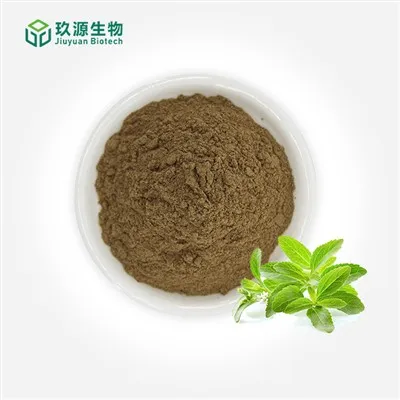
What Is Organic Turmeric Root Extract?
Organic Turmeric Root Extract from Jiuyuan Biotech is intended for brands and contract manufacturers seeking a concentrated ingredient derived from Curcuma longa L. rhizome for dietary supplements, functional nutrition, and selected food applications. It provides a more compact formulation route than whole turmeric powder where a quantified curcuminoid profile, lower inclusion level, or more deliberate active-ingredient strategy is required.
Organic Turmeric Root Extract is a natural botanical ingredient derived from the rhizomes of Curcuma longa L., cultivated under certified organic agricultural systems. The raw turmeric roots are processed using food-grade extraction methods to concentrate naturally occurring bioactive compounds while preserving the plant's original phytochemical profile.
Throughout the entire production chain-from organic farming to extraction and drying-no synthetic pesticides, chemical fertilizers, genetically modified organisms (GMOs), or prohibited solvents are used. This makes it a reliable ingredient for manufacturers seeking clean-label, plant-based, and organically certified formulations.
Technical Specification
Plant Part Used: Root (Rhizome)
Extraction Solvent: Water / Food-grade hydro-ethanol
Organic Certification: USDA-NOP / EU Organic
MOQ: 25 kg
Shelf Life: 24 months (sealed, cool, dry storage)
The following technical framework is designed for B2B qualification. It is intentionally specific about what should be controlled, while not inventing universal numerical limits that may be unsuitable for your market or intended application.
|
Parameter |
Control Requirement |
Why It Matters |
|
Botanical Identity |
Curcuma longa L. rhizome |
Confirms correct plant origin |
|
Extract Type |
Defined in the approved specification |
Distinguishes extract from powder or oleoresin |
|
Extraction Medium |
Declared and agreed |
Supports organic, regulatory, and solvent review |
|
Curcuminoid Assay |
Tested when a standardized grade is specified |
Supports accurate ingredient positioning |
|
Analytical Method |
Agreed method and reporting basis |
Ensures results are comparable |
|
Appearance |
Defined colour range for the selected grade |
Supports batch-to-batch visual control |
|
Particle Size |
Customizable (typically 80–200 mesh) |
Affects blending, tableting, and capsule filling |
|
Moisture / Loss on Drying |
Controlled to an approved limit |
Supports powder stability and flow |
|
Residual Solvents |
Tested where relevant to the process and specification |
Important for extract qualification |
|
Heavy Metals |
Tested against agreed target-market limits |
Supports contaminant-risk control |
|
Pesticide Residues |
Evaluated according to organic and market requirements |
Essential for organic sourcing |
|
Microbiological Quality |
Controlled to agreed limits |
Important for supplement and food safety |
|
Carrier / Excipients |
Fully declared where used |
Required for formulation and labeling review |
|
Allergen and GMO Status |
Documented where applicable |
Supports finished-product compliance |
A note on curcuminoid assays
Curcuminoids commonly refer to curcumin, demethoxycurcumin, and bisdemethoxycurcumin. If your formula requires a specified total-curcuminoid level, define:
1.The target assay range.
2.Whether results are reported on an "as is" or dry basis.
3.The analytical method and acceptance criteria.
4.The permitted carrier system, if any.
5.Testing frequency and lot-release documentation.
These details prevent a recurring procurement problem: comparing extracts with different assay bases, different carriers, or different methods as though they were equivalent.

Production Process & Manufacturing Advantages
1. Organic Raw Material Selection
Only certified organic turmeric roots are used as raw materials. Each batch undergoes incoming inspection to ensure botanical authenticity, cleanliness, and compliance with organic standards.
2. Food-Grade Extraction & Purification
The extraction process employs water or food-grade hydro-ethanolic solutions, followed by multi-stage purification. Advanced plate-frame filtration and butterfly centrifugation systems are used to remove insoluble impurities and ensure high extract clarity.
3. Sterilization & Powder Processing
Instant high-temperature sterilization is applied to ensure microbiological safety. The extract is then concentrated and dried into a fine powder, with customizable mesh sizes to meet different formulation requirements.
This integrated in-house manufacturing approach allows for consistent quality, scalable production, and strong batch-to-batch reliability.

Products Description
Organic Turmeric Root Extract naturally contains a range of plant-derived constituents, including curcuminoids and other phenolic compounds. Rather than fixing a single standardized value, the extract is designed to reflect the natural composition of organic turmeric.
Each production batch can be tested and documented in a Certificate of Analysis (COA), covering:
● Curcuminoids (tested upon request)
● Moisture content
● Heavy metals
● Pesticide residues (organic-compliant)
● Microbiological parameters
This quality-control framework ensures regulatory compliance while maintaining formulation flexibility.

Application
Built for precise dosing and clean formulation architecture
This extract can be considered for applications where turmeric-derived actives are desired in a concentrated botanical format.
|
Application |
Typical Function |
Key Development Question |
|
Hard Capsules |
Standardized botanical active |
What assay, fill weight, and excipient system are required? |
|
Tablets |
Active ingredient in herbal formulas |
Does the powder provide acceptable flow and compressibility? |
|
Sachets and Stick Packs |
Premium wellness or travel-format supplements |
Is flavour masking needed at the intended dose? |
|
Powder Blends |
Active component in functional nutrition formulas |
How does the extract disperse and interact with other ingredients? |
|
Softgels |
Potential use in a suitable delivery system |
Is the ingredient form compatible with the oil-phase formulation? |
|
Gummies |
Turmeric-derived active in a consumer-friendly format |
Are colour, taste, stability, and dose technically achievable? |
|
Functional Foods |
Botanical inclusion where permitted |
Is the use level compliant and organoleptically acceptable? |
|
Beverage Premixes |
Active component in dry mixes |
Does the formula require suspension or solubilization support? |
Formulation reality check
Turmeric extract can bring a noticeable bitter, earthy, and peppery edge, particularly at higher inclusion levels. A successful formula usually considers flavour masking, encapsulation strategy, pH, heat exposure, sweetener choice, and colour interaction early in development-not after the pilot batch disappoints everyone in the meeting room.
Why Source Organic Turmeric Root Extract from Jiuyuan Biotech?
- Certified organic manufacturing under international standards
- Integrated extraction, purification, and powder processing facilities
- Flexible particle size control (8–350 mesh)
- Stable supply capacity for long-term cooperation
- Experienced export support for global markets
Jiuyuan Biotech works closely with formulators and brand owners to provide dependable botanical ingredients tailored to commercial production needs.

Certifications & Compliance
|
|

Organic Turmeric Root Powder vs. Organic Turmeric Root Extract
Understanding the difference between turmeric powder and turmeric extract is essential when selecting the appropriate ingredient for formulation:
| Aspect | Organic Turmeric Root Powder | Organic Turmeric Root Extract |
|---|---|---|
| Processing Method | Physical drying and grinding | Extraction and concentration |
| Active Components | Naturally present, non-concentrated | Naturally enriched through extraction |
| Dosage Efficiency | Relatively low | Higher functional efficiency |
| Application Focus | Food seasoning, beverages | Dietary supplements, functional products |
| Batch Consistency | Variable | More stable and controllable |
Organic turmeric root extract is commonly preferred in supplement and functional formulations where consistent performance, lower dosage, and improved solubility are required.
FAQ
Q1. What is the difference between organic turmeric root powder and organic turmeric root extract?
A: Organic turmeric root powder is made by drying and grinding whole roots. It contains naturally occurring compounds but at lower concentrations.
Organic turmeric root extract is obtained through food-grade extraction, concentrating bioactive compounds while retaining natural phytochemicals. It is often preferred in dietary supplements and functional formulations for efficiency and batch consistency.
Q2. Is the extract standardized for curcuminoids?
A: This product is a general organic turmeric root extract. Curcuminoid content can be tested and reported in the Certificate of Analysis (COA), but fixed standardization is not applied.
Q3. What solvents are used in the extraction process?
A: Only water or food-grade hydro-ethanolic solvents are used, compliant with USDA/NOP and EU organic regulations.
Q4. Is the product vegan, gluten-free, and allergen-free?
A: Yes. The extract is plant-based, free from common allergens, and suitable for vegan formulations.
Q5. What certifications does the product hold?
A: Organic certifications include USDA-NOP and EU Organic. Additional certifications such as ISO22000, HACCP, Halal, and Kosher may be available depending on production batch.
Q6. Can you customize the particle size or mesh of the powder?
A: Yes. Particle size can be customized typically from 80 mesh to 200 mesh, or per customer requirements.
Q7. How is quality controlled for each batch?
A: Every batch undergoes quality testing, and a COA is provided. Key parameters include curcuminoids (tested upon request), moisture content, heavy metals, pesticides (organic-compliant), and microbiological safety.
Q8. How should the product be stored?
A: Store in a cool, dry place, sealed from moisture and direct sunlight. Shelf life is typically 24 months under proper storage conditions.
Q: 9. Can this extract be used in beverages, capsules, and other formulations?
A: Yes. It is suitable for dietary supplements, functional foods, beverages, plant-based wellness products, and sports nutrition formulas.
Q10. Is there a minimum order quantity (MOQ)?
A: Standard MOQ is 25 kg. Larger quantities and long-term supply agreements can be accommodated.
Buyer Guide
How to buy turmeric extract without creating avoidable compliance work
1. Define the claim pathway first
Decide whether the finished product will be positioned as:
A traditional botanical supplement
A curcuminoid-standardized product
An organic wellness product
A food or beverage with turmeric-derived ingredients
A delivery-technology product
The claim pathway determines the evidence and ingredient format you need.
2. Specify the assay and method
Ask for the exact curcuminoid specification, the assay method, the reporting basis, and the lot-specific COA. Avoid terms such as "high potency" unless they are translated into measurable acceptance criteria.
3. Confirm organic compliance route
For U.S. organic claims, confirm conformance with the USDA National Organic Program and the status of the relevant certificate. For EU organic claims, verify alignment with Regulation (EU) 2018/848, along with the documentation needed for the supply chain and final label. ,
4. Review solvent and carrier declarations
A buyer should always know:
The extraction medium used
Whether residual-solvent testing is applicable
Whether a carrier is present
The identity and amount of the carrier
Whether the carrier is compatible with organic and label requirements
5. Test the extract in the intended matrix
A sample should be evaluated in the actual formula for:
Taste and odour
Colour behaviour
Blend uniformity
Tablet compression or capsule filling
Dispersibility or suspension
Storage stability
Interaction with flavours, minerals, proteins, or other botanicals
6. Make the quality agreement operational
Before scale-up, agree on test methods, release limits, change-control expectations, retention samples, deviation reporting, packaging, labeling, and shipment terms. Boring paperwork is often where excellent ingredients become reliable commercial products.
Request a Sample or Commercial Quote
Jiuyuan Biotech supplies Organic Turmeric Root Extract to food manufacturers, supplement brands, and contract formulators across North America, Europe, and the Asia-Pacific region. Our technical team - not a generic sales inbox - handles every inquiry.
Email: info@jiuyuanbio.com
Website: www.jiuyuanbio.com
Request: Sample (500g–1kg) | Bulk Quote | CoA & Spec Sheet | Custom Carrier Ratio
Standard response time: within 1 business day. Please include your target application and annual volume estimate for the most relevant technical recommendation.
Hot Tags: organic turmeric root extract, China organic turmeric root extract manufacturers, suppliers, factory