










Products Description
Organic Baicalensis Root Extract, commonly known as Huang Qin or Chinese Skullcap, is a traditionally valued botanical ingredient widely used in nutraceutical, functional food, and cosmetic formulations.
At Shaanxi Jiuyuan Biotechnology, we produce organic Scutellaria baicalensis extract with a focus on raw material authenticity, controlled extraction, and batch-specific quality verification, rather than unrealistic fixed standardization.
Our Organic Baicalensis Root Extract is standardized to ≥85% baicalin by HPLC, sourced from 3–4 year maturity roots grown in certified organic cultivation zones in Gansu and Inner Mongolia - the regions that produce the highest baicalin-density root material in China. Every batch is extracted, standardized, and released against a full specification panel before it ships.
Specification
|
Item |
Specification |
|
Organoleptic |
|
|
Appearance |
Fine Powder |
|
Color |
Canary yellow |
|
Odor |
Characteristic |
|
Taste |
Characteristic |
|
Extract Solvent |
Water |
|
Drying Method |
Spray drying |
|
Physical Characteristics |
|
|
Particle Size |
100% pass 80 mesh |
|
Loss on Drying |
≤ 5.00% |
|
Ash |
≤ 5.00% |
|
Heavy metals |
|
|
Total Heavy Metals |
≤ 10ppm |
|
Arsenic |
≤1ppm |
|
Lead |
≤1ppm |
|
Cadmium |
≤1ppm |
|
Mercury |
≤1ppm |
|
Microbiological Tests |
|
|
Total Plate Count |
≤1000cfu/g |
|
Total Yeast & Mold |
≤100cfu/g |
|
E.Coli |
Negative |
|
Storage: Preserve in well-closed, light-resistant, and protect from moisture. |
|
What Makes Organic Baicalensis Root Extract Different
Organic Baicalensis Root Extract differs fundamentally from conventional standardized extracts.
Key Characteristics of Organic Extracts
- Derived from certified organic roots, not chemically optimized raw materials
- Subject to natural variation caused by climate, soil, and harvest season
- Produced under organic-compliant extraction conditions, limiting aggressive purification
As a result, organic extracts cannot guarantee fixed active compound levels across all batches, but they offer superior traceability, regulatory acceptance, and market positioning for clean-label formulations.
Why Organic Scutellaria Baicalensis Extract Cannot Be Fully Standardized
Many buyers ask why organic Huang Qin extract cannot be offered with fixed baicalin percentages such as 90% or 98%.
The Practical Reasons
- Agricultural Variability:Organic cultivation prohibits synthetic yield optimization, leading to natural fluctuations in flavonoid content.
- Organic Extraction Limitations: Organic standards restrict solvent types and purification intensity.
- Batch Integrity Over Artificial Adjustment: We do not blend, spike, or chemically modify batches to force artificial consistency.
Our Solution
- Batch-specific COA
- Third-party laboratory verification
- Transparent specification ranges based on real production data
- This approach aligns with both organic integrity and international buyer compliance expectations.
Active Compounds
Scutellaria baicalensis root contains a structurally distinct class of flavonoids - 4'-deoxyflavones - that are largely absent from other botanical sources. This structural uniqueness is what drives the root's specific pharmacological profile and distinguishes it from generic flavonoid extracts.
Primary Flavonoid Triad
|
Compound |
Class |
Content in Extract |
Primary Mechanisms |
|
Baicalin |
Flavone glucuronide |
≥85% |
Anti-inflammatory (NF-κB inhibition), antioxidant, antiviral, neuroprotective |
|
Baicalein |
Flavone aglycone |
≥2% |
Anti-inflammatory, pro-apoptotic in cancer cells, antimicrobial, anxiolytic |
|
Wogonin |
O-methylated flavone |
≥1% |
Anti-neuroinflammatory, anxiolytic (GABA-A modulation), antiviral |
|
Wogonoside |
Flavone glucuronide |
Trace–moderate |
Antioxidant, anti-inflammatory synergist |
The Science Behind the Bioactivity
- Anti-inflammatory mechanisms: Published research confirms that baicalin, baicalein, and wogonin collectively exert anti-inflammatory effects through multiple pathways - including inhibition of NF-κB signaling, suppression of COX-2 and iNOS expression, and reduction of pro-inflammatory cytokine production (TNF-α, IL-1β, IL-6). Critically, the three compounds work synergistically: baicalin modulates upstream signaling, baicalein acts at the aglycone level with higher membrane permeability, and wogonin targets neuroinflammatory pathways specifically.
- Antioxidant activity: Baicalin and baicalein demonstrate potent free radical scavenging activity, with baicalein showing particularly strong inhibition of xanthine oxidase - an enzyme central to uric acid production and oxidative stress in gout and metabolic syndrome. The catechol B-ring structure of baicalein is the primary structural determinant of its radical-scavenging capacity.
- Liver-protective effects: Recent studies have highlighted baicalin's hepatoprotective potential - its antioxidant and anti-inflammatory properties have been shown to attenuate liver injury in preclinical models, with proposed mechanisms including Nrf2 pathway activation and mitochondrial protection.
- Neuroprotective activity: Wogonin's interaction with GABA-A receptors has been documented in multiple studies, suggesting anxiolytic effects without the sedative profile of benzodiazepines. Baicalein has shown neuroprotective effects in models of Parkinson's disease through inhibition of α-synuclein aggregation.
- Antimicrobial spectrum: All three primary flavonoids demonstrate broad-spectrum antimicrobial activity against both gram-positive and gram-negative bacteria, as well as antiviral activity against several respiratory viruses - a property that aligns with the root's traditional use in respiratory infections.
Production Process & Quality Control
Our organic Baicalensis Root Extract is produced in-house using a controlled, scalable process:
1. Organic Root Selection & Cleaning
2. Water or Ethanol Extraction (Organic-Compliant)
3. Plate-Frame + Butterfly Centrifugation
- Ensures high extract clarity
- Reduces insoluble impurities
4. Instant High-Temperature Sterilization
- Effective microbial control
- Alternative to irradiation
5. Concentration & Drying
6. Dry Granulation (Optional)
- Improved flowability
- Better formulation compatibility
7. Particle Size Options
- Customizable from 8–350 mesh according to application requirements
|
|
|

Organic Extract vs. Organic Root Powder
| Aspect | Organic Root Extract | Organic Root Powder |
|---|---|---|
| Processing | Extracted & concentrated | Simply milled |
| Active Compounds | More concentrated | Naturally present only |
| Dosage Control | Higher | Lower |
| Application | Supplements, cosmetics | Foods, teas, blends |
| Cost Structure | Medium–High | Lower |
Both formats are available depending on your formulation strategy.
Typical Applications
Organic Baicalensis Root extract is widely used as a botanical functional ingredient across multiple formulation categories, particularly where clean-label, plant-based positioning is required.
Dietary Supplements & Nutraceuticals
Commonly incorporated into:
-
Botanical complex formulas
-
Antioxidant-focused blends
-
Daily wellness supplements
The extract is typically used as part of multi-ingredient formulations rather than as a single active, allowing flexibility in dosage design while maintaining organic compliance.
Functional Foods & Beverages
Applied in:
-
Herbal functional drinks
-
Plant-based nutrition powders
-
Traditional-inspired wellness beverages
Its botanical origin and compatibility with organic labeling make it suitable for products positioned toward natural and traditional wellness concepts.
Cosmetic & Personal Care Formulations
Frequently used in:
- Soothing and calming skincare products
- Anti-aging and antioxidant cosmetic lines
- Sensitive-skin or botanical-based formulations
The naturally occurring flavonoids are valued for their plant-derived antioxidant properties, supporting clean and minimalist cosmetic ingredient lists.
Botanical Blends & Traditional-Inspired Products
Used as a component in:
- Herbal blends inspired by traditional practices
- Plant extract combinations for regional or cultural markets
- Ingredient systems emphasizing botanical diversity
This application allows manufacturers to leverage the historical use background of Scutellaria baicalensis without relying on isolated compounds.
Formulation Notes
- Suitable for capsules, tablets, powders, and liquid systems.
- Often combined with other botanical extracts or plant powders.
- Batch-specific testing supports formulation consistency without artificial standardization.
Comparison: What Separates a Reliable Extract from a Risk
The baicalin extract market has a well-documented adulteration problem. Because baicalin is a high-value compound, underdeclared content and UV-assay inflation are recurring issues that procurement teams encounter - often only discovered after a failed third-party audit. Here is how our extract compares to what is commonly available on commodity platforms.
|
Parameter |
JiuYuan Organic Extract |
Commodity Platform Extract |
Unverified Bulk Supplier |
|
Assay Method |
HPLC (reference standard) |
Often UV colorimetric |
Often undisclosed |
|
Baicalin Accuracy |
±2% of declared value |
±10–15% variance common |
Unverifiable |
|
Organic Certification |
USDA + EU Organic |
Rarely certified |
None |
|
Pesticide Testing |
EU Reg. 396/2005 (500+ compounds) |
Limited panel or absent |
Absent |
|
Residual Solvent Testing |
ICH Q3C compliant |
Rarely tested |
Absent |
|
COA Transparency |
HPLC chromatogram included |
Numeric values only |
Generic template |
|
Root Maturity Control |
3–4 year verified |
Unspecified |
Unspecified |
|
Batch Traceability |
Full farm-to-powder traceability |
Partial |
None |
|
Retest Support |
Third-party retest welcomed |
Often resisted |
N/A |
|
MOQ |
25 kg |
25 kg |
Variable |
The single most important question to ask any baicalin extract supplier: "Does your COA include the HPLC chromatogram, and what reference standard was used for quantification?" If the answer is a UV assay result or a chromatogram without a reference standard peak, the declared content is not analytically defensible.
Why Choose Jiuyuan Biotech?
1. Industry-Leading Production Capacity & Expertise
● 13+ years of experience in plant extract R&D and nutraceutical ingredient manufacturing
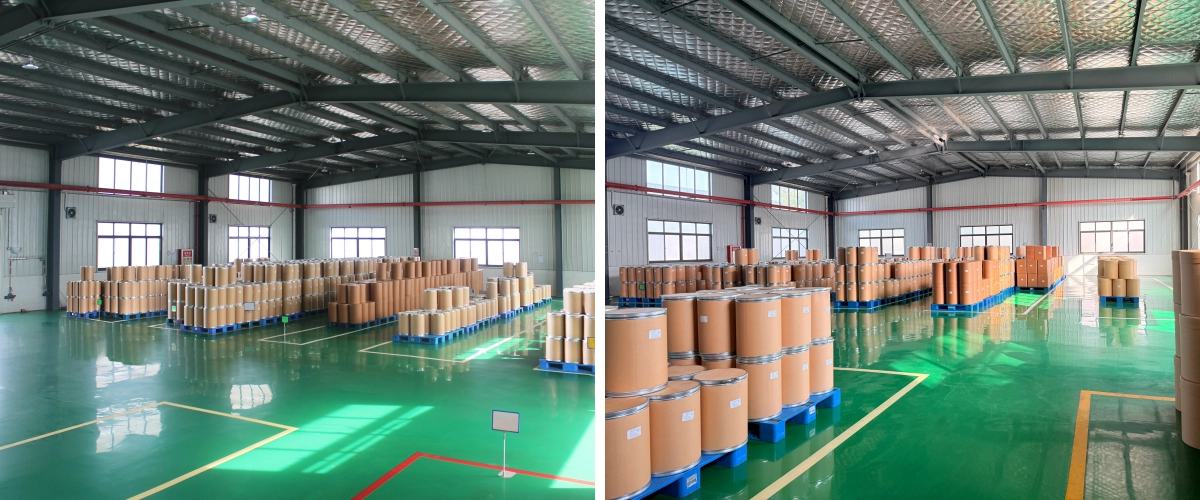
● 6 modern production workshops covering 70,000 m² and 10 automated extraction & purification lines
● Flexible purity (85% standard, 90–98% custom-grade), particle size (80–350 mesh), and custom packaging
2. Advanced Fermentation & Bio-Synthesis Capabilities
● Implements microbial fermentation and engineered bio-synthesis to produce Nervonic Acid
● Reduces seasonal raw material dependency, improving batch-to-batch consistency and bioactivity
● Supports sustainable and eco-friendly production
3. High-Quality & Batch Consistency
● Proprietary purification processes with HPLC, GC, ICP-MS, and moisture analysis
● Certificate of Analysis (COA) provided for every batch
4. Scientific R&D & Formulation Support
● 500 m² R&D center staffed with 12 scientists for formulation guidance, custom blends, and technical consultation
5. Certified & Compliant Production
● Facilities certified cGMP, FSSC 22000, ISO 22000, ISO 9001, HALAL, KOSHER
● Meets international quality standards for global markets

Delivery Methods
|
|
|
|
|
By Air 100kg-1000kg, 5-7Days Airport-to-airport service professional clearance broker needed |
By Sea Over 300kg, Around 30 Days Port-to-port service professional clearance broker needed |
Express Under 100kg, 3-5Days Door-to-door service easy to pick up the goods |


Packages and Payments
Storage: Keep in a cool, dry, and clean place, protect from moisture and direct light.
Bulk Package: 25kg/drum.
Lead Time: 7 days after your order.
Shelf Life: 2 years.
Remark: Customized specifications also can be achieved.
FAQ
Q1: What is the difference between baicalin and baicalein, and which one should I standardize to?
Baicalin is the glucuronide conjugate of baicalein - the form in which the flavonoid is stored in the root. After ingestion, gut microbiota and intestinal enzymes hydrolyze baicalin to baicalein, the aglycone form, which is the pharmacologically active species that crosses cell membranes and exerts the documented biological effects. Standardizing to baicalin (≥85%) is the industry convention for extract characterization because it is the dominant compound in the root and the most analytically precise marker. However, the baicalein content of the extract is equally important - a high-baicalin extract with negligible baicalein may have different bioavailability characteristics than a full-spectrum extract. Our standard grade declares both.
Q2: Is Scutellaria baicalensis the same as American skullcap (Scutellaria lateriflora)?
No - and this distinction matters significantly for both efficacy and regulatory compliance. Scutellaria baicalensis (Chinese skullcap) and Scutellaria lateriflora (American skullcap) are different species with different phytochemical profiles. S. baicalensis root is the primary source of baicalin, baicalein, and wogonin. S. lateriflora contains different flavonoids (primarily scutellarein and scutellarin) at much lower concentrations. Products standardized to baicalin must specify S. baicalensis as the botanical source - the two are not interchangeable. Our extract is sourced exclusively from authenticated Scutellaria baicalensis Georgi, with botanical identity verified by TLC on every incoming lot.
Q3: What is the regulatory status of baicalensis root extract in the US and EU?
In the United States, Scutellaria baicalensis root extract is marketed as a dietary supplement ingredient under DSHEA (Dietary Supplement Health and Education Act, 1994). It is not on the FDA's list of prohibited ingredients, and structure/function claims related to antioxidant activity and general wellness are permissible with appropriate disclaimers. In the European Union, the regulatory pathway is more complex - the ingredient is not currently listed in the EU Novel Food Catalogue as a novel food, and it has a documented history of use in traditional herbal medicine products. For EU-registered traditional herbal medicinal products (THMPs), the ingredient falls under Directive 2004/24/EC. We recommend consulting with your regulatory counsel for your specific market and product format.
Q4: How do I verify that the baicalin content is accurate and not inflated?
Request the HPLC chromatogram from the COA, not just the numeric result. A legitimate HPLC assay will show a clearly resolved baicalin peak with a retention time that matches the certified reference standard, and the peak area calculation will be traceable to the reference standard concentration. UV colorimetric assays - which measure total flavonoid content as a proxy for baicalin - are prone to overestimation due to spectral overlap with other phenolic compounds in the extract matrix. Our COA includes the full HPLC chromatogram, the reference standard lot number, and the calibration curve data.
Q5: What is the recommended dosage for dietary supplement applications?
Published clinical and preclinical research has used a wide range of baicalin doses depending on the target indication. For general antioxidant and anti-inflammatory supplement applications, doses of 200–500 mg of standardized extract (≥85% baicalin) per day are commonly used in commercial products. Integrative medicine practitioners have used higher doses (up to 1,000 mg/day) for specific therapeutic applications. We provide formulation guidance based on your target claim and dosage form - contact our technical team with your product brief. Always confirm dosing with your regulatory and medical advisors for your specific market.
Q6: Does the extract interact with pharmaceutical drugs?
This is a legitimate safety consideration that responsible formulators should address in their product documentation. Published research indicates that baicalin and baicalein can interact with cytochrome P450 enzymes (particularly CYP3A4 and CYP2C9) - the same enzyme system involved in the metabolism of many pharmaceutical drugs. At typical dietary supplement doses, the clinical significance of these interactions is generally considered low, but caution is warranted for consumers taking anticoagulants, immunosuppressants, or other CYP-metabolized medications. We recommend including appropriate advisory language in your product labeling and directing consumers to consult their healthcare provider.
Q7: Can this extract be used in topical cosmetic formulations?
Yes - and this is a growing application area. Baicalin and baicalein demonstrate well-documented anti-inflammatory, antioxidant, and skin-brightening properties in topical applications. Baicalein, as the aglycone, shows superior skin penetration compared to baicalin due to its lower molecular weight and greater lipophilicity. Our cosmetic grade is optimized for topical use - lower color intensity to minimize product discoloration, fine particle size for smooth texture, and confirmed compatibility with common cosmetic preservative systems. Typical use levels in skincare formulations range from 0.1% to 1.0% w/w.
Q8: What is the shelf life, and how should the extract be stored?
Shelf life is 24 months from manufacture date under recommended storage conditions: ≤25°C, relative humidity ≤60%, away from direct light. The extract is packaged under nitrogen atmosphere in moisture-barrier foil to minimize oxidative degradation of baicalin. Once opened, reseal immediately and use within 3 months. Baicalin is relatively stable under these conditions - accelerated stability data (40°C/75% RH, 6 months) showing baicalin retention across the shelf life period is available on request.
Ready to Source Organic Baicalensis Root Extract?
The difference between a botanical extract that performs in your formula and one that fails a third-party audit comes down to three things: verified raw material identity, HPLC-confirmed active content, and a supply chain you can trace. Our organic baicalensis root extract delivers all three - with the documentation to prove it at every step.
JiuYuan Biotech has supplied certified botanical ingredients to manufacturers across 30+ countries since 2012. Our 70,000 m² facility in Shaanxi operates dedicated extraction and purification lines under USDA Organic, EU Organic, FSSC 22000, and cGMP certification - with in-house HPLC, ICP-MS, and GC-MS capabilities that mean your COA reflects what is actually in the drum.
Development samples (1 kg) are available at no charge for qualified buyers.
📧 info@jiuybiotech.com 🌐 www.jiuyuanbio.com
We respond within one business day. Bring your specification - we'll bring the chromatogram.
Looking for a certified, traceable source of organic Baicalensis Root Extract for your next formulation? JiuYuan Biotech is ready to support your development from sample to full-scale supply.
Hot Tags: baicalensis root extract, China baicalensis root extract manufacturers, suppliers, factory


