


Organic Hawthorn Fruit Extract Powder | Certified Organic Supplier
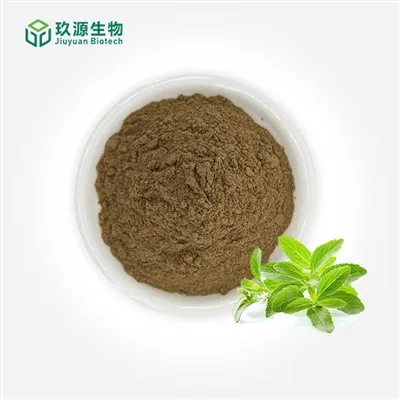
This product is a 100% certified Hawthorn Berry Extract powder, meticulously sourced from the dried, mature fruits of Crataegus pinnatifida Bge., a plant in the Rosaceae family. Our hawthorn fruits are sourced exclusively from strictly certified organic cultivation bases, located at altitudes ranging from 100 to 1500 meters, amidst hillside forest edges and shrublands. These bases are primarily distributed across Northeast China, North China, and Jiangsu Province. We adhere to sustainable cultivation practices, safeguarding the ecological environment and ensuring the purity and natural integrity of our raw materials.
Through controlled water extraction and gentle concentration processes, the product naturally contains bioactive compounds such as flavonoids, organic acids, and polyphenols. Due to the nature of organic agriculture, the active components are present but not standardized.
This ingredient is widely used in dietary supplements, functional foods, and botanical formulations, where organic integrity, traceability, and formulation flexibility are required.
Botanical Source & Organic Compliance
Botanical name: Crataegus pinnatifida / Crataegus spp.
Plant part used: Fruit
Origin: China
Certification: USDA Organic / EU Organic (upon request)
The hawthorn fruits are sourced from certified organic farms and processed in compliance with organic handling regulations. No synthetic solvents, irradiation, or chemical residues are involved.
Extraction Process & Quality Control
|
The extract is produced using a water-based extraction process, followed by filtration, concentration, and spray drying. Key process controls include:
Each batch can be accompanied by a Certificate of Analysis (COA) provided by our internal lab or third-party testing upon request. |
|

Active Compounds: Transparent & Non-Standardized
Organic hawthorn fruit extract naturally contains multiple bioactive substances, including but not limited to:
- Flavonoids
- Organic acids
- Polyphenols
⚠ Important Notice on Specifications
- Due to variations in climate, soil, harvest season, and organic farming conditions, this product is not standardized to a fixed active compound percentage.
- Active compounds are inherently present, but fixed or guaranteed standardized levels are not claimed.
- Custom testing and target ranges may be discussed based on specific application requirements.
Specification
|
Item |
Specification |
|
Maker Compounds |
4:1; 5:1;10:1 |
|
Organoleptic |
|
|
Appearance |
Fine Powder |
|
Color |
Yellow Brown |
|
Odor |
Characteristic |
|
Taste |
Characteristic |
|
Extract Solvent |
Water |
|
Physical Characteristics |
|
|
Particle Size |
100%Through 80 mesh |
|
Loss on Drying |
≤5.00% |
|
Ash |
≤5.00% |
|
Pesticide residues 529 |
|
|
Heavy metals |
|
|
Total Heavy Metals |
≤10ppm |
|
Arsenic |
≤1ppm |
|
Lead |
≤1ppm |
|
Cadmium |
≤1ppm |
|
Mercury |
≤1ppm |
|
Microbiological Tests |
|
|
Total Plate Count |
≤1000cfu/g |
|
Total Yeast & Mold |
≤100cfu/g |
|
E.Coli |
Negative |
|
Storage: Preserve well-closed, light-resistant, and protect from moisture. |
|
Applications & Use Scenarios
1. Dietary Supplements
Used in capsules, tablets, or powder blends where organic status and botanical authenticity are required.
2. Functional Foods & Beverages
Suitable for functional drinks, nutrition powders, and plant-based formulations.
3. Botanical Research & Custom Formulations
Flexible specifications allow formulation developers to define their own quality targets.
|
|
|
|
|


Organic Hawthorn Extract vs. Organic Hawthorn Powder
How to Choose the Right Ingredient for Your Application
Although both products are derived from organically grown hawthorn fruit (Crataegus spp.), organic hawthorn extract and organic hawthorn powder differ significantly in processing method, composition characteristics, and typical use scenarios.
Key Differences at a Glance
| Aspect | Organic Hawthorn Extract | Organic Hawthorn Powder |
|---|---|---|
| Raw material | Organic hawthorn fruit | Organic hawthorn fruit |
| Processing method | Water extraction → concentration → drying | Drying → direct milling |
| Concentration level | Concentrated botanical extract | Whole fruit material |
| Active compounds | Naturally present, relatively enriched | Naturally present at native fruit level |
| Standardization | Non-standardized (no fixed active % claimed) | Non-standardized |
| Solubility | Partial water solubility | Limited solubility |
| Typical appearance | Brown to yellow-brown fine powder | Light brown to reddish powder |
| Application focus | Supplements, functional formulations | Food formulations, whole-food concepts |
Organic Hawthorn Extract: Characteristics & Use
Organic hawthorn extract is produced by extracting water-soluble constituents from hawthorn fruit, followed by concentration and drying.
This process results in a more compact botanical matrix, where naturally occurring flavonoids, polyphenols, and organic acids are present at relatively higher levels compared with whole fruit powder.
Important clarification:
Due to organic farming variability and regulatory considerations, the extract is not standardized to a fixed active compound percentage. Active components are present inherently, and batch-specific COA testing may be provided upon request.
Typical use cases include:
- Dietary supplement formulations (capsules, tablets, blends)
- Functional ingredient systems requiring lower dosage volumes
- Applications where extract form and formulation flexibility are preferred
Organic Hawthorn Powder: Characteristics & Use
Organic hawthorn powder is made by drying and finely milling the whole fruit, preserving the original fruit composition, including fiber, carbohydrates, and naturally occurring micronutrients.
This format emphasizes whole-food integrity rather than concentration and is often selected for applications where fruit identity and minimal processing are key considerations.
Typical use cases include:
- Functional foods and beverages
- Plant-based nutrition products
- Clean-label formulations highlighting whole fruit ingredients
Which One Should You Choose?
Choose Organic Hawthorn Extract if your formulation requires:
- Higher botanical concentration per unit weight
- Better dispersion or integration into supplement systems
- Flexible testing options via COA
Choose Organic Hawthorn Powder if your formulation prioritizes:
- Whole-fruit composition
- Minimal processing perception
- Food-style or nutrition-focused applications
Both products comply with organic processing principles and do not carry authorized health claims. Selection should be based on formulation needs rather than assumed biological equivalence.
Technical & Regulatory Note
- Both organic hawthorn extract and powder naturally contain bioactive compounds.
- However, neither product is supplied as a standardized active ingredient, and no fixed active content is guaranteed.
- Scientific and regulatory background supporting these distinctions can be found in the References section below.
Why Choose Shaanxi Jiuyuan Biotech
- Over 13 years of experience in plant extract manufacturing
- Certified production systems: cGMP, ISO22000, FSSC22000, HACCP
- Dedicated R&D and quality control teams
- Non-irradiation sterilization technology
- Stable bulk supply and customized specifications
- Export experience serving EU, US, and global markets
👉 Learn more about us: [About Jiuyuan Biotech]
|
|
|


FAQ
Q1: Does organic hawthorn fruit extract contain active compounds?
Yes. The extract naturally contains flavonoids, organic acids, and polyphenols derived from hawthorn fruit.
Q2: Why is the active content not standardized?
Organic raw materials are subject to natural variation. To remain compliant with organic principles, fixed standardized active percentages cannot be guaranteed.
Q3: Can you provide a COA?
Yes. A batch-specific Certificate of Analysis can be provided upon request, including microbiological and basic compositional data.
Q4: Is custom testing available?
Yes. Third-party testing and customized analysis parameters can be arranged based on customer requirements.
Q5: What is the difference between organic hawthorn extract and hawthorn powder?
Extract powder is concentrated from the fruit using water extraction, while powder is produced by direct drying and milling of the raw fruit.
Packaging & Logistics
- Packaging: 1 kg / 5 kg aluminum foil bags, 25 kg fiber drums
- Storage: Cool, dry place, sealed and protected from light
- Shelf life: 24 months under recommended storage
- Incoterms: EXW, FOB, CIF, DDP available
|
|
|
|
|
By Air 100 kg- 1000 kg, 5- 7 days Airport-to-airport service professional clearance broker needed |
By Sea Over 300kg, Around 30 Days Port-to-port service professional clearance broker needed |
Express Under 100kg, 3- 5 days Door-to-door service easy to pick up the goods |


Scientific References & Regulatory Context
The following references provide scientific and regulatory background on hawthorn (Crataegus spp.), including its phytochemical composition, extract characteristics, and differences between concentrated extracts and whole fruit preparations:
1. Chang, Q. et al.
Roles and mechanisms of hawthorn and its extracts on cardiovascular health.
Journal of Ethnopharmacology, 2020.
PubMed (NIH): https://pubmed.ncbi.nlm.nih.gov/32153414/
(Review article discussing flavonoids, polyphenols, and organic acids in hawthorn extracts.)
2. Liu, P. et al.
Polyphenol-rich hawthorn fruit extracts and their antioxidant properties.
Food Chemistry, 2016.
PubMed (NIH): https://pubmed.ncbi.nlm.nih.gov/27531227/
(Demonstrates higher phenolic concentration in extract forms compared with non-concentrated fruit materials.)
3. Bahorun, T. et al.
Hawthorn (Crataegus spp.): phytochemistry, pharmacology and safety.
Journal of Food Science and Nutrition, 2023.
PubMed (NIH): https://pubmed.ncbi.nlm.nih.gov/37788786/
(Comprehensive review of hawthorn fruit constituents and traditional uses.)
4. Zhang, Y. et al.
Antioxidant capacity and flavonoid profile of hawthorn fruit extracts.
Journal of Agricultural and Food Chemistry, 2017.
PubMed (NIH): https://pubmed.ncbi.nlm.nih.gov/28284186/
(Laboratory comparison of extract fractions versus whole fruit matrices.)
5. NIH – National Center for Complementary and Integrative Health (NCCIH)
Hawthorn: overview, composition, and research status.
https://www.nccih.nih.gov/health/hawthorn
(Public scientific overview hosted by the U.S. National Institutes of Health.)
6. European Food Safety Authority (EFSA)
Compendium of Botanicals & Botanical Health Claims (Article 13).
https://www.efsa.europa.eu/en/data-report/compendium-botanicals
(Regulatory reference indicating that botanical ingredients such as hawthorn are subject to evaluation and that no authorized EU health claims are currently established.)
where to buy
To inquire or request a sample, contact info@jiuybiotech.com Our team is ready to help you with specifications, pricing, or customs documentation. Trust Shaanxi Jiuyuan Biotech as your supplier and move from curiosity to confidence with a clear supply and documentation promise.
Hot Tags: Hawthorn Berry Extract Powder, China Hawthorn Berry Extract Powder manufacturers, suppliers, factory