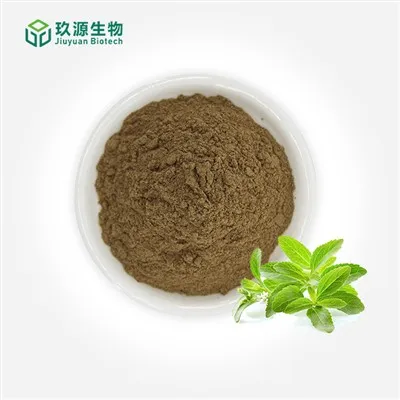
Products Description
Organic Honeysuckle Extract is produced from the dried flowers of Lonicera japonica Thunb., sourced from certified organic farms and processed under strict organic and food-grade standards. The extract naturally contains chlorogenic acids, flavonoids, and phenolic compounds, which are widely used in organic dietary supplements, functional foods, cosmetics, and herbal formulations. As a premier manufacturer, Shaanxi Jiuyuan Biotechnology presents our premium Organic Honeysuckle Flower Extract, meticulously crafted for discerning international wholesalers, including brand owners, manufacturers, and private label businesses.
Due to the nature of organic raw materials and organic processing regulations, this product is supplied as a non-standardized organic extract, preserving the natural phytochemical profile of the plant.
Botanical Name: Lonicera japonica Thunb.
Common Name: Honeysuckle Flower
Plant Part Used: Flower
Origin: China
Extraction Solvent: Water / Food-grade organic ethanol (as applicable)
Active Compounds & Specification Policy
Organic Honeysuckle Flower Extract naturally contains bioactive compounds, including:
- Chlorogenic acids
- Flavonoids
- Phenolic acids
However, standardized active compound specifications cannot be guaranteed for certified organic extracts.
Why Organic Extracts Are Not Standardized
In accordance with USDA and EU organic regulations:
- No artificial concentration or adjustment of active compounds is allowed
- No isolated or synthetic compounds are added back
- Batch-to-batch variation is a natural characteristic of organic botanicals
This approach ensures regulatory compliance, clean-label integrity, and transparency for organic applications.
Third-Party Testing Available
For customers requiring quantitative data:
- Third-party testing can be conducted upon request, based on customer-defined parameters
- Typical tests include chlorogenic acid content (HPLC), total polyphenols, and other markers
- Independent laboratory Certificates of Analysis (COA) are provided per tested batch
This solution supports R&D, formulation development, and regulatory documentation without compromising organic compliance.
Typical Specifications
| Item | Description |
|---|---|
| Appearance | Brown-yellow to light yellow fine powder |
| Odor & Taste | Characteristic, mild herbal |
| Particle Size | 80 mesh (customizable) |
| Moisture | ≤5% |
| Heavy Metals | ≤10 ppm |
| Lead (Pb) | ≤3 ppm |
| Arsenic (As) | ≤2 ppm |
| Microbiology | Complies with food-grade standards |
| GMO / Irradiation | Non-GMO, non-irradiated |
| Shelf Life | 24 months |
Note: Active compound content is not standardized. Third-party testing is available upon request.
Ordering Information
MOQ:
25 kg (without third-party testing)
200 kg (with third-party testing)
Lead Time: 7–14 working days
Customization: Particle size, packaging, testing parameters available

Modern Applications of Honeysuckle Extract
With the advancement of phytochemical research and pharmacology, honeysuckle extract is now widely applied in nutraceuticals, functional foods, cosmetics, and pharmaceuticals.
Key Modern Uses
1. Immune Support & Anti-Inflammatory
- Rich in chlorogenic acids, flavonoids, and phenolic compounds with demonstrated antioxidant, antiviral, and anti-inflammatory properties.
- Included in immune-boosting dietary supplements and functional beverages.
2. Skin & Cosmetic Applications
- Incorporated into soothing creams, serums, and masks to reduce irritation, combat oxidative stress, and improve skin health.
3. Oral Health & Hygiene Products
- Added to toothpaste, mouthwash, and throat sprays for antibacterial and anti-inflammatory benefits.
4. Functional Foods & Beverages
- Used in herbal teas, health drinks, and powdered supplements, preserving its natural flavor and phytochemicals.
5. Pharmaceutical Research
- Investigated in modern TCM-inspired drug development, leveraging traditional heat-clearing and detoxifying functions in clinically validated formulations.
Key Notes for You:
- Traditional uses highlight historical safety and multi-functional applications.
- Modern applications emphasize scientific validation, functional efficacy, and product versatility.
- Organic honeysuckle extract retains the natural phytochemical profile suitable for clean-label, functional, or cosmetic formulations.
Comparison
HPLC vs. UV: The Number That Changes Everything
This comparison deserves its own section because it is the most consequential analytical distinction in the honeysuckle extract market - and the one most frequently obscured in supplier communications.
| Criterion | HPLC Quantification (Jiuyuan) | UV Quantification (Common in Market) |
|---|---|---|
| What is measured | 5-O-caffeoylquinic acid specifically | All UV-absorbing compounds at 327 nm |
| Interference compounds | Separated and excluded | Included in reported value |
| Typical overstatement | None (reference standard-based) | 30–60% above true HPLC value |
| Regulatory acceptance | Preferred by EU/US regulators | Accepted but less precise |
| Label claim defensibility | High | Low to moderate |
| Third-party concordance | >96% | Often fails third-party HPLC testing |
When a brand's finished product fails third-party testing for chlorogenic acid content, the root cause is almost always a UV-reported raw material specification that did not survive HPLC scrutiny. This is the single most common quality dispute in the honeysuckle extract supply chain, and it is entirely preventable by specifying HPLC from the outset.
Jiuyuan Biotech vs. Typical Market Suppliers
| Criterion | Jiuyuan Biotech | Typical Trading Company | Spot Market Supplier |
|---|---|---|---|
| Chlorogenic Acid Method | HPLC (primary) | UV (primary) | UV or unspecified |
| Organic Certification Scope | Farm + extraction facility (dual) | Farm only (common gap) | Rarely certified |
| Harvest Stage Control | Pre-anthesis (contracted farms) | Open market (mixed stages) | Unknown |
| Botanical Identity Testing | Macroscopic + TLC + HPLC fingerprint | Macroscopic only | None |
| Pesticide Screening | 300+ compounds, EU MRL | Selective panel | Absent |
| Isochlorogenic Acid Profile | Available on request | Not offered | Not offered |
| Luteolin Co-Standardization | Available | Rarely offered | Not offered |
| Solvent Residue Testing | GC headspace, every batch | Occasional | Absent |
| ChP 2020 Compliance Docs | Available | Rarely available | Not available |
| MOQ | 25 kg | 100–500 kg | Pallet minimum |
| Lead Time | 7–15 business days | 3–6 weeks | Variable |
Quality Control & Purity Assurance
Our Organic Honeysuckle Flower Extract is produced using controlled extraction and purification processes designed to preserve the plant's natural phytochemical profile while minimizing unwanted impurities.
- Quality assurance measures include:
- Controlled extraction parameters to ensure process stability
- Purification techniques to remove non-functional components
- HPLC-based identification and fingerprint analysis
- Heavy metal, pesticide residue, and microbiological testing
Due to organic certification requirements, no artificial standardization or active compound adjustment is applied.
Batch-specific third-party testing is available upon customer request.
 |
 |
Delivery Methods for Your References
 |
 |
 |
|
By Air 100kg-1000kg, 5-7Days Airport-to-airport service professional clearance broker needed |
By Sea Over 300kg, Around 30 Days Port-to-port service professional clearance broker needed |
Express Under 100kg, 3-5Days Door-to-door service easy to pick up the goods |
Packages and Payments

Storage: Keep in a cool, dry, and clean place, protect from moisture and direct light.
Bulk Package: 25kg/drum.
Lead Time: 7 days after your order.
Shelf Life: 2 years.
Remark: Customized specifications also can be achieved.
WHY CHOOSE JIUYUAN BIOTECH?
- Factory Scale:
Shaanxi Jiuyuan Biotechnology Co., Ltd.'s factory covers an area of over 70,000 square meters.
It features 6 production workshops and 10 production lines, with an annual production capacity of over 6,000 tons.
The factory is equipped with a 1,000-square-meter Class 100,000 clean workshop and multiple sets of automated equipment.
- Over 13 years of plant extract manufacturing experience
- Certified organic processing and global compliance
- Flexible specifications and testing support
- Stable supply for international B2B customers
- Professional technical and after-sales service
 |
 |
Jiuyuan Biotechnology serves a broad clientele across domestic and international markets, including 23 countries in Europe, the Americas, and Southeast Asia. We have established long-term partnerships with leading health supplement, food, and cosmetics companies, providing them with high-quality plant extracts and fruit and vegetable powders.

Buyer Guide
The Honeysuckle Extract Market: What to Watch For
Honeysuckle extract is one of the more adulteration-prone botanical ingredients in the global supplement supply chain - not because of deliberate fraud in most cases, but because of structural weaknesses: open-market purchasing of mixed-quality raw material, UV-based quantification that systematically overstates chlorogenic acid, and organic certification that covers the farm but not the processing facility. Here is how to protect your supply chain.
1. Specify HPLC, not UV, for chlorogenic acid quantification - and put it in the purchase order. This is the single most impactful specification change a procurement team can make. If your current supplier's COA does not specify the analytical method used for chlorogenic acid, assume it is UV and request an HPLC retest. The result will tell you everything you need to know about the reliability of that supplier's data.
2. Request a TLC or HPLC fingerprint alongside the standard COA. Botanical identity testing is not standard practice among trading companies, but it is the only reliable way to confirm that you are receiving Lonicera japonica and not a related species. A TLC fingerprint takes minutes to run and is inexpensive - a supplier who cannot provide one is either not testing or not willing to share the results.
3. Verify the organic certification scope before placing an order. Ask to see both the farm-level and facility-level organic certificates and check the scope statement on each. A certificate that covers only the raw herb - but not the extraction and drying facility - does not satisfy EU Organic import requirements for the finished extract.
4. Ask for the pesticide residue panel, not just a statement of compliance. Henan Province honeysuckle has a documented history of pesticide use in conventional cultivation. For organic-certified material, the pesticide panel should confirm this - but the panel should be provided as data, not just a declaration. Ask for the multi-residue report by GC-MS/LC-MS.
5. Clarify solvent residue status for ethanol-extracted grades. For the 15% and 25% chlorogenic acid grades, hydro-ethanolic extraction is typically required. Residual ethanol should be specified (≤ 5,000 ppm per ICH Q3C Class 3 solvent limits) and tested by GC headspace. This is a regulatory requirement for dietary supplement ingredients in both the US and EU.
Grade Selection Guide
| Your Application | Recommended Grade | Key Consideration |
|---|---|---|
| Immune support capsule / tablet | 10%–15% Chlorogenic Acid | Aligns with studied dosing ranges |
| Antioxidant polyphenol blend | 10%–25% Chlorogenic Acid | Higher grade = fewer capsules needed |
| Functional beverage / herbal tea | 5%–10% (water-soluble grade) | Solubility, flavor compatibility |
| Functional food / gummy | 5%–10% Chlorogenic Acid | Flavor, color stability in matrix |
| Cosmetic serum / toner | 5%–10% (liquid extract) | Skin compatibility, color |
| TCM-aligned formulation | 5%–10% Chlorogenic Acid | ChP 2020 alignment |
| High-potency / premium SKU | 25% Chlorogenic Acid | Maximum active per serving |
How to Order from Jiuyuan Biotech
1. Submit inquiry - specify chlorogenic acid grade, quantity, certification requirements (organic or conventional), destination market, and any co-standardization requirements (e.g., luteolin).
2. Receive quotation - within 24 hours on business days, including price, lead time, and available batch COA with HPLC data.
3. Request sample - 100–200g shipped via DHL/FedEx with batch-specific COA including HPLC chromatogram; TLC fingerprint available on request.
4. Technical consultation - our phytochemistry team is available to discuss grade selection, formulation compatibility, and regulatory documentation requirements for your target market.
5. Place order - proforma invoice issued; production scheduled upon deposit confirmation.
6. Shipment - full documentation package dispatched before departure: COA, CO, packing list, commercial invoice, organic certificates, pesticide report, heavy metals report, solvent residue report (if applicable), TLC/HPLC fingerprint.
FAQ
Q1: What is the difference between chlorogenic acid from honeysuckle extract and chlorogenic acid from green coffee bean extract?
Both Lonicera japonica and green coffee bean (Coffea arabica / Coffea canephora) are commercially significant sources of chlorogenic acid. The key differences are: (1) Isomer profile - green coffee bean extract is dominated by 5-O-caffeoylquinic acid with a relatively simple isomer profile, while honeysuckle extract contains a broader array of hydroxycinnamic acid derivatives including isochlorogenic acids A, B, and C. (2) Caffeine content - green coffee bean extract contains caffeine (typically 2–5% in standardized extracts), which is absent in honeysuckle extract. For caffeine-free formulations, honeysuckle is the preferred chlorogenic acid source. (3) Traditional use positioning - honeysuckle carries a distinct TCM heritage that supports immune and anti-inflammatory positioning, while green coffee bean is more closely associated with weight management and metabolic health claims. The two are not interchangeable from a label positioning standpoint, even if the chlorogenic acid content is similar.
Q2: How stable is chlorogenic acid in finished product formulations, particularly in gummies and beverages?
Chlorogenic acid stability in finished products is influenced by pH, temperature, light exposure, and the presence of oxidizing agents. In aqueous solutions, chlorogenic acid is relatively stable at acidic pH (3.5–5.0) but undergoes accelerated hydrolysis and oxidation at neutral to alkaline pH. For beverage applications, formulating at pH 3.5–4.5 and using appropriate antioxidant co-ingredients (e.g., ascorbic acid) significantly improves stability. In gummy matrices, the acidic environment of most gummy formulations (citric acid-buffered) is generally favorable. Light exposure is a significant degradation driver - amber packaging or opaque containers are recommended for finished products containing chlorogenic acid. We can provide accelerated stability data for the bulk extract ingredient upon request; finished product stability testing is the responsibility of the formulator.
Q3: Is your organic honeysuckle extract suitable for use in EU-market dietary supplements, and what regulatory framework applies?
In the European Union, Lonicera japonica flower is not included in the EU list of authorized health claims under Regulation (EC) 1924/2006, meaning that specific health claims (e.g., "supports immune function") cannot be made on finished product labels without prior authorization. However, the ingredient is permitted as a food supplement ingredient in most EU member states under national regulations, and general antioxidant claims supported by the polyphenol content may be permissible depending on the jurisdiction. For traditional herbal medicinal product (THMP) registration under Directive 2004/24/EC, Lonicera japonica does not currently have an EMA Community Herbal Monograph, which limits the THMP pathway. We strongly recommend engaging a regulatory affairs specialist for your specific EU target market. Our documentation package - including organic certificates, COA, allergen declaration, and pesticide report - is designed to support EU supplement notification requirements.
Q4: Can you provide a water-soluble grade suitable for RTD beverage applications?
Yes. Our water-soluble grade is produced by spray-drying the standardized extract with organic maltodextrin as a carrier. This grade disperses readily in cold and warm water without turbidity or sedimentation. The chlorogenic acid content is specified on a carrier-included basis; we provide carrier-free equivalent values for formulation calculations. For RTD beverages, we recommend the 5%–10% chlorogenic acid water-soluble grade, which offers a good balance of active content, solubility, and cost. Color stability in clear beverages should be evaluated during formulation development - chlorogenic acid can develop a greenish-brown tint at neutral pH or under UV light exposure, which may require pH adjustment or light-protective packaging.
Q5: How do you verify that the raw material is harvested at the pre-anthesis stage, and why does this matter analytically?
Pre-anthesis harvest is verified through two mechanisms: (1) Field supervision - our contracted farms are monitored by our quality team during the harvest window (typically late April to early May in Henan), with daily visual assessment to confirm that collection is restricted to the "two-white" bud stage. (2) Incoming HPLC screening - every raw material lot is screened for chlorogenic acid content upon arrival. Open-flower material has a measurably lower chlorogenic acid concentration than pre-anthesis buds; lots that fall below our incoming specification threshold are rejected. The analytical consequence of post-anthesis harvest is significant: chlorogenic acid concentration in fully open flowers can be 30–50% lower than in pre-anthesis buds, meaning that open-flower material requires a proportionally higher extraction ratio to achieve the same standardized output - increasing cost and reducing extract quality.
Q6: What is the recommended dosage range for honeysuckle extract in immune support formulations?
Dosage recommendations for botanical extracts in dietary supplements are not within the scope of our product documentation, as they depend on the specific health claim, target population, and regulatory framework of your market. As a reference point for formulation purposes: traditional Chinese medicine preparations using Jin Yin Hua typically employ 6–15g of dried flower per day in decoction form. At a 10:1 extraction ratio, this corresponds to 600 mg to 1,500 mg of extract per day - a range that is commonly seen in commercial immune support supplement formulations. For specific dosage guidance aligned with your label claims, we recommend consulting a qualified herbalist, clinical nutritionist, or regulatory affairs specialist with expertise in your target market.
Q7: Does your honeysuckle extract contain any compounds that could cause issues with drug testing or regulatory screening?
Lonicera japonica extract does not contain stimulants, controlled substances, or compounds listed on major sports organization prohibited substance lists (WADA, NCAA). Chlorogenic acid, luteolin, and the isochlorogenic acids are not scheduled or restricted compounds in any major jurisdiction. The extract does not contain caffeine. For customers formulating products for professional athletes or military personnel, we can provide a declaration confirming the absence of WADA-listed substances upon request. As with any botanical ingredient, we recommend verifying compliance with the specific prohibited substance list applicable to your customer base.
Q8: Can you supply a dual-standardized extract with both chlorogenic acid and luteolin specifications?
Yes. We offer a co-standardized grade with defined specifications for both chlorogenic acid (typically 10%–15% HPLC) and luteolin (typically ≥ 0.5% HPLC). This grade is produced using an optimized extraction protocol that preserves both the phenolic acid and flavone fractions. The co-standardized grade is preferred for formulations targeting a broader anti-inflammatory or antioxidant profile, where the synergistic activity of chlorogenic acid and luteolin is a formulation rationale. Minimum order quantities for custom co-standardized grades are higher than standard grades - please discuss your requirements with our technical sales team at the inquiry stage.
Request a Sample or Commercial Quote
Jiuyuan Biotech supplies Organic Honeysuckle Extract to food manufacturers, supplement brands, and contract formulators across North America, Europe, and the Asia-Pacific region. Our technical team - not a generic sales inbox - handles every inquiry.
Email: info@jiuyuanbio.com
Website: www.jiuyuanbio.com
Request: Sample| Bulk Quote | CoA & Spec Sheet | Custom Carrier Ratio
Standard response time: within 1 business day. Please include your target application and annual volume estimate for the most relevant technical recommendation.
Hot Tags: organic honeysuckle extract, China organic honeysuckle extract manufacturers, suppliers, factory