



Products Description
Organic Elderberry Extract, derived from the ripe fruit of Sambucus nigra L. - the European black elderberry species with the most extensively documented pharmacological profile - is one of the highest-demand botanical immune ingredients in the global supplement market. Its anthocyanin fraction, dominated by cyanidin-3-glucoside and cyanidin-3-sambubioside, delivers antiviral, immunostimulatory, and antioxidant activity through mechanisms that have been characterized in peer-reviewed research spanning in vitro, animal, and human clinical studies.
At Jiuyuan Biotech, our product is produced under a fully integrated organic supply chain: certified organic cultivation bases, organic-certified extraction and processing lines, and organic-certified finished extract - all covered under a single EU Organic (EC 834/2007) and USDA NOP certification scope. Every batch is standardized by HPLC for cyanidin glycoside content and released with a batch-specific COA that documents actual measured values alongside the organic chain-of-custody documentation your certification body requires.
Whether you are formulating an immune support gummy, a liquid elderberry syrup, a functional beverage, or a premium clean-label capsule, the organic certification integrity of your raw material is the foundation everything else is built on. We built ours to hold up to audit.
Key Commercial Specifications
Botanical Source: Sambucus nigra L. (Elderberry)
Part Used: Fruit
Appearance: Fine purple to dark purple powder
Extract Ratios: 4:1, 8:1, 10:1, 20:1 (most common commercial grades)
Standardization: Non-standardized extract (no guaranteed anthocyanin content)
Marker Testing (Reference Only): Total anthocyanins / polyphenols tested for batch reference, not specification
Solubility: Water-dispersible (application-dependent)
Certifications: USDA Organic, EU Organic, cGMP, ISO9001, ISO22000, FSSC22000, HACCP, Halal, Kosher, Non-GMO
Standardization Grades
| Grade | Active Marker | Assay | Primary Application |
|---|---|---|---|
| Standard Anthocyanin | Total Anthocyanins | ≥ 5% (UV-Vis) | Multi-ingredient immune blends, functional foods |
| Mid Anthocyanin | Total Anthocyanins | ≥ 10% (UV-Vis) | Immune support capsules, gummies, syrups |
| High Anthocyanin | Total Anthocyanins | ≥ 15% (UV-Vis) | Premium immune products, antioxidant formulas |
| Premium Anthocyanin | Total Anthocyanins | ≥ 25% (UV-Vis) | High-potency single-ingredient products |
| Cyanidin-3-Glucoside | Cyanidin-3-Glucoside | ≥ 1% (HPLC) | Research-grade, label-substantiated formulas |
| High C3G Grade | Cyanidin-3-Glucoside | ≥ 5% (HPLC) | Premium antiviral, high-potency immune products |
| Ratio Extract | Whole-fruit equivalent | 4:1 / 10:1 | Entry-level blends, cost-efficient formulas |
Physicochemical Profile
| Test Parameter | Specification |
|---|---|
| Appearance | Dark purple to reddish-purple powder |
| Odor | Characteristic faint berry-like |
| Loss on Drying | ≤ 5.0% |
| Ash Content | ≤ 5.0% |
| Heavy Metals (Pb) | ≤ 2 ppm |
| Arsenic (As) | ≤ 1 ppm |
| Mercury (Hg) | ≤ 0.1 ppm |
| Cadmium (Cd) | ≤ 1 ppm |
| Residual Solvents | Meets ICH Q3C guidelines |
| Pesticide Residues | ND (organic certified; EU MRL compliant) |
| Total Plate Count | ≤ 1,000 CFU/g |
| Yeast & Mold | ≤ 100 CFU/g |
| E. coli | Negative |
| Salmonella | Negative |

Active Compounds & Mechanisms of Action
The bioactivity of Sambucus nigra fruit extract is rooted primarily in its anthocyanin fraction - one of the most extensively studied classes of plant pigments in the nutritional science literature.
Anthocyanin Fraction
● Cyanidin-3-Glucoside (C3G)
The principal anthocyanin in Sambucus nigra fruit, accounting for a significant proportion of total anthocyanin content alongside cyanidin-3-sambubioside. Research published in PMC confirms cyanidin-3-glucoside concentrations of 14–78 mg/g dry weight in elderberry pomace, reflecting the berry's exceptional anthocyanin density relative to most other commercial fruit sources.
C3G's antiviral mechanism has been characterized in peer-reviewed research: it inhibits viral entry into host cells by binding to hemagglutinin proteins on the viral envelope surface, preventing the conformational changes required for membrane fusion. This direct virion-binding mechanism is distinct from - and complementary to - the immunostimulatory activity of the broader polyphenol fraction.
● Cyanidin-3-Sambubioside
The second-most abundant cyanidin glycoside in S. nigra fruit. It carries a sambubioside (2-xylosylglucose) disaccharide at the 3-position rather than a simple glucoside, which affects its polarity, bioavailability, and interaction profile with viral surface proteins. Research documents its independent antiviral and antioxidant activity, contributing to the extract's overall efficacy beyond what cyanidin-3-glucoside alone provides.
Polyphenol & Flavonoid Fraction
● Quercetin & Rutin
Co-occurring flavonoids in elderberry fruit with documented anti-inflammatory activity via NF-κB and COX-2 pathway inhibition. Quercetin has been investigated for direct antiviral activity against multiple respiratory viruses, making it a mechanistically relevant co-constituent in elderberry extracts used for immune and respiratory support applications.
● Chlorogenic Acid & Caffeic Acid
Hydroxycinnamic acid derivatives present in the elderberry fruit matrix. They contribute to the extract's antioxidant capacity and anti-inflammatory profile, and their presence in a full-spectrum elderberry extract contributes activity dimensions beyond the anthocyanin fraction alone.
● Immunostimulatory Activity
Beyond direct antiviral mechanisms, peer-reviewed research documents elderberry extract's capacity to stimulate cytokine production by monocytes - including TNF-α, IL-1β, IL-6, IL-8, and IL-10 - at concentrations achievable through typical supplement dosing. This immunostimulatory profile is the mechanistic basis for elderberry's positioning in immune support formulations targeting both prophylactic and acute-phase applications.
Application Matrix
Organic elderberry extract's combination of documented antiviral mechanisms, strong consumer brand recognition, and organic certification eligibility positions it as one of the most commercially versatile immune ingredients in the current supplement market.
|
Industry Segment |
Typical Application |
Recommended Grade |
Key Regulatory Note |
|
Immune Support Supplements |
Antiviral defense, cold & flu season formulas |
Anthocyanins ≥10%–15% |
Structure/function claims require substantiation |
|
Gummies & Chewables |
Elderberry gummy bears, chewable immune tablets |
Anthocyanins ≥10% |
Color stability in gummy matrix; pH management required |
|
Liquid Syrups & Tonics |
Elderberry syrup, liquid immune shots |
Anthocyanins ≥5%–10% |
Water-soluble; pH-sensitive color stability |
|
Functional Beverages |
Immunity drinks, botanical wellness shots |
Anthocyanins ≥5% |
Check Novel Food status per EU member state |
|
Capsules & Tablets |
Single-ingredient elderberry supplements |
Anthocyanins ≥15%–25% |
Premium positioning; organic label claim |
|
Children's Supplements |
Pediatric immune support (gummies, liquids) |
Anthocyanins ≥5%–10% |
Age-appropriate dosing; consult regulatory counsel |
|
Sports Nutrition |
Recovery antioxidant blends, post-exercise formulas |
Anthocyanins ≥10% |
Growing category; clean-label positioning |
|
Cosmetics & Skincare |
Antioxidant serums, anti-aging actives |
Anthocyanins ≥10% |
Check INCI listing per target market |
|
Functional Foods |
Fortified foods, organic snack bars |
Ratio Extract or ≥5% |
Market-specific regulatory approval required |
Why Organic Elderberry Extract Is Usually Ratio-Based, Not Standardized
In global B2B trade, organic elderberry extract is typically supplied as a ratio-based botanical extract rather than a chemically standardized ingredient. This positioning is not a limitation, but a result of regulatory, agricultural, and formulation realities that experienced buyers recognize.
1. Organic Regulations Prioritize Botanical Integrity
Under USDA and EU organic frameworks, organic plant extracts are expected to preserve the natural phytochemical profile of the raw material. Artificial enrichment, reconstitution, or post-extraction adjustment to lock a fixed anthocyanin percentage is generally inconsistent with organic and clean-label principles.
As a result, organic elderberry extract is commercialized based on extraction ratio (e.g., 4:1, 10:1) rather than guaranteed marker content.
2. Natural Variability of Elderberry Raw Materials
Anthocyanins in Sambucus nigra are highly sensitive to natural variables, including:
- Cultivar and growing region
- Harvest season and maturity
- Climate and annual yield conditions
Even under controlled organic farming, these factors lead to inevitable batch-to-batch variation, making fixed anthocyanin specifications impractical for organic-grade extracts.
3. Manufacturing Constraints in Organic Processing
Organic extraction relies on water or food-grade ethanol, with limited use of fractionation or purification technologies. While internal testing for anthocyanins or polyphenols is conducted for quality reference, these values are not used as contractual specifications.
This approach ensures regulatory compliance while maintaining a whole-plant phytochemical matrix.
4. How Buyers Use Ratio-Based Organic Elderberry Extract
Professional buyers typically select organic elderberry extract based on:
- Extraction ratio and botanical authenticity
- Certification status (USDA / EU Organic)
- Color, aroma, and organoleptic consistency
- Application performance in finished formulations
For brands requiring fixed anthocyanin levels, a non-organic standardized elderberry extract or purified anthocyanin ingredient is usually selected instead.
5. Procurement Advantage of Ratio-Based Positioning
- Ratio-based organic elderberry extract offers:
- Lower regulatory and labeling risk
- Stronger alignment with clean-label and organic claims
- Greater flexibility in formulation storytelling
This is why ratio-based specifications remain the industry norm for certified organic elderberry extract in EU and North American markets.
Quality Control
Anthocyanin stability is the defining quality challenge in elderberry extract production and storage. Cyanidin glycosides are acylium cation-based chromophores that degrade through multiple pathways simultaneously - hydrolysis of the glycosidic bond, nucleophilic attack at the C-2 position, and oxidative ring-opening - all of which are accelerated by heat, light, elevated pH, and the presence of metal ions. A QC system for elderberry extract that does not account for these degradation pathways will produce inconsistent results across batches and across the product's shelf life.
Analytical Testing Capabilities
● UV-Vis pH Differential Method - Total anthocyanin quantification per AOAC 2005.02
● HPLC-DAD - Cyanidin-3-glucoside and cyanidin-3-sambubioside quantification against certified reference standards
● HPLC-MS - Full anthocyanin profile characterization and adulteration screening
● AAS (Atomic Absorption Spectroscopy) - Heavy metal quantification: Pb, As, Hg, Cd
● GC-Headspace - Residual solvent analysis per ICH Q3C
● GC-MS / LC-MS - Pesticide residue screening (ND required for organic certification)
● Microbiology Suite - TPC, yeast & mold, E. coli, Salmonella, Staphylococcus aureus
● Color Stability Testing - pH and temperature stability assessment for formulation guidance
Organic Chain-of-Custody Documentation
Our organic certification covers the complete production scope: raw material cultivation → juice extraction → concentration → purification → spray drying → packaging. Each stage is documented in the organic system plan and subject to annual third-party inspection by our accredited certification body. Organic transaction certificates are issued per shipment.
Batch Traceability & Third-Party Verification
Every production lot carries a unique batch number traceable from berry intake through final packaging. Retention samples are held for 24 months post-shipment. Third-party testing by SGS, Eurofins, Intertek, or your designated laboratory is actively supported.
Why Choose JIUYUAN BIOTE?
For detailed company background, manufacturing capabilities, and quality systems, please visit our About Us page.
- Large-Scale Manufacturing Capacity: 6 production workshops covering 70,000 m² with multiple extraction and drying lines supporting stable bulk supply.
- Proven Industry Experience: Over 13 years of continuous focus on plant extract manufacturing for food, nutraceutical, and functional ingredient markets.
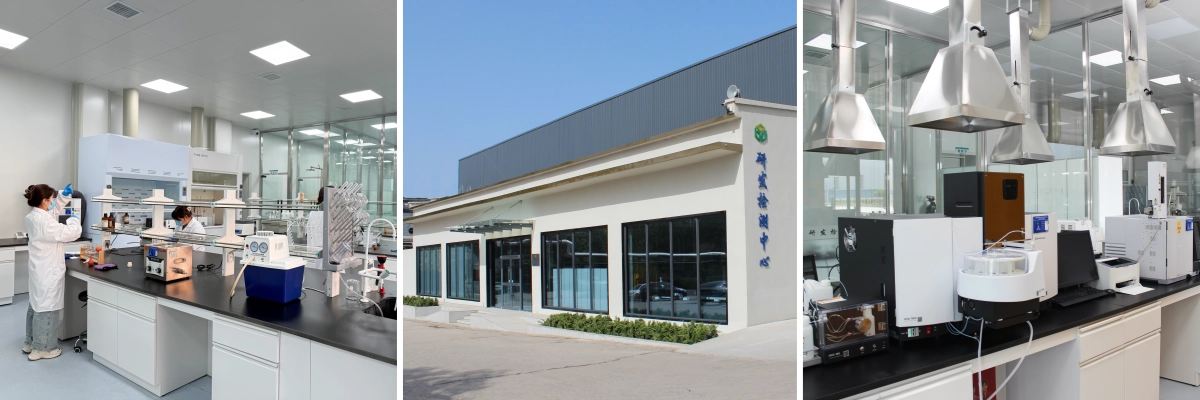
- Professional QC & R&D Team: Dedicated quality control and R&D personnel responsible for raw material evaluation, process optimization, and specification alignment.
- Advanced Testing Capabilities: In-house and third-party testing for identity, ratio verification, microbiology, heavy metals, and pesticide residues.
- Comprehensive International Certifications: USDA & EU Organic, cGMP, ISO9001, ISO22000, FSSC22000, HACCP, Halal, and Kosher.
- Fixed Inventory & Raw Material Reserves: Regular stock maintained for key botanical extracts to support repeat orders and reduce lead times.
- Reliable Delivery & Lead Time Control: Standard production and shipping schedules designed to meet international procurement timelines.
- Flexible Customization Services: Support for extraction ratio selection, particle size adjustment, packaging formats, and OEM/ODM requirements.
- Structured After-Sales Support: Ongoing technical communication, documentation updates, and batch traceability after shipment
- Active Global Market Presence: Continuous participation in major international exhibitions such as CPHI, Vitafoods, and SupplySide, supporting long-term global partnerships.

Packaging & Logistics
Bulk Packaging: 25 kg fiber drums with inner double PE bags
Sample Packaging: 1–5 kg aluminum foil bags
Shelf Life: 24 months under cool, dry storage
Shipping Methods: Sea freight, air freight, and express delivery available
Incoterms: EXW, FOB, CIF, DDP (upon request)
|
|
|
|
|
By Air 100kg-1000kg, 5-7Days Airport-to-airport service professional clearance broker needed |
By Sea Over 300kg, Around 30 Days Port-to-port service professional clearance broker needed |
Express Under 100kg, 3-5Days Door-to-door service easy to pick up the goods |


Frequently Asked Questions
Q1: What is the difference between cyanidin-3-glucoside and total anthocyanins in elderberry extract? Total anthocyanins (measured by UV-Vis pH differential method) captures all anthocyanin pigments in the extract as a single aggregate value, expressed as cyanidin-3-glucoside equivalents. Actual HPLC quantification of cyanidin-3-glucoside measures only the specific compound CAS 7084-24-4. In Sambucus nigra extract, cyanidin-3-glucoside and cyanidin-3-sambubioside together typically account for the majority of total anthocyanin content, but the ratio varies by cultivar, growing conditions, and processing method. For label substantiation purposes, HPLC-verified cyanidin-3-glucoside content is the more defensible specification.
Q2: Is organic elderberry extract safe for use in children's supplements? Sambucus nigra fruit extract has a long history of use in traditional European herbal medicine, including in preparations for children. Peer-reviewed research on elderberry extract safety does not identify specific pediatric contraindications at typical supplement doses. However, raw or unprocessed elderberries contain sambunigrin - a cyanogenic glycoside that is inactivated by heat during processing. Our extract is produced from heat-processed berry material in which sambunigrin is not detectable. Finished product dosing for pediatric applications should be determined in consultation with regulatory counsel for the target market.
Q3: How does organic elderberry extract perform in gummy formulations? Elderberry anthocyanins present specific challenges in gummy matrices: the gelatin or pectin setting process involves elevated temperatures and pH conditions that can accelerate anthocyanin degradation and color shift. Key formulation parameters include maintaining the gummy matrix pH at ≤4.0, minimizing heat exposure during the setting stage, and using opaque or UV-protective packaging. We provide formulation guidance for gummy applications and can supply stability data in a model gummy matrix upon request.
Q4: What is the typical anthocyanin content of raw elderberries, and how does it compare to the extract? Fresh Sambucus nigra berries contain approximately 1,000–3,000 mg total anthocyanins per 100 g fresh weight, depending on cultivar and growing conditions. Research published in PMC documents cyanidin-3-glucoside as the dominant anthocyanin, with concentrations of 14–78 mg/g dry weight in elderberry pomace. Our spray-dried extract at 10% total anthocyanins represents a significant concentration relative to the raw fruit, with the added benefits of standardized potency, extended shelf life, and powder format convenience for supplement manufacturing.
Q5: What regulatory status does elderberry extract have in the EU? Sambucus nigra fruit extract is used in food supplements across EU member states. It is not currently listed as a Novel Food under EU Regulation (EU) 2015/2283, meaning it can be marketed as a food supplement ingredient based on its history of use prior to May 1997. However, specific extract concentrations, product formats, and health claims may be subject to additional national regulations in specific member states. The EFSA has not issued an approved health claim for elderberry extract to date. Formulators should verify the regulatory status for their specific product format and target market.
Q6: Can organic elderberry extract be used in combination with zinc and vitamin C in an immune formula? Yes - and this is one of the most commercially successful formulation combinations in the immune support category. Elderberry anthocyanins, vitamin C, and zinc operate through complementary and non-overlapping mechanisms: elderberry provides antiviral and immunostimulatory activity; vitamin C supports neutrophil and lymphocyte function; zinc modulates multiple immune signaling pathways. There are no known antagonistic interactions between these ingredients at typical supplement doses.
Q7: What is your minimum order quantity for organic-certified elderberry extract, and how is it packaged? Standard MOQ for organic elderberry extract is 1 kg for sample and evaluation orders, with commercial orders typically starting at 5 kg. Bulk material is packaged in double-layer polyethylene bags (inner food-grade, outer protective) inside fiber drums, with desiccant packs and light-resistant outer packaging. Nitrogen flushing is available for all grades and is strongly recommended for anthocyanin ≥15% grades. Each shipment includes a batch-specific COA, organic transaction certificate, and all standard regulatory documentation.
Q8: How do you handle color batch-to-batch consistency for elderberry extract powder? Anthocyanin content - not color alone - is our primary standardization parameter. However, we understand that color consistency matters for finished product aesthetics, particularly in gummy and beverage applications. We measure and document the color profile (CIE Lab* values) of each batch as supplementary data to the anthocyanin assay. Batches with significant color deviation from the established range trigger a root-cause investigation before release. Contact our technical team if your application has specific color consistency requirements.
Ready to Source Organic Elderberry Extract?
Jiuyuan Biotech manufactures and supplies Organic Elderberry Extract - EU Organic and USDA NOP certified, standardized to total anthocyanins and cyanidin-3-glucoside - from our cGMP and ISO 22000 certified facility in China. Every batch ships with a full HPLC-verified COA, organic transaction certificate, pesticide residue report (ND), and heavy metal data. Samples available from 1 kg. Commercial orders fulfilled from 5 kg with 7–14 business day lead time.
Request a Quote or Sample: Contact Us:info@jiuyuanbio.com
Direct Line: +86 029 88215052
Facility: Hu County, Xi'an, Shaanxi Province, China
✅ ISO 9001 · FSSC 22000 · cGMP · FDA Registered · EU Organic · USDA NOP · Halal · Kosher
Jiuyuan Biotech - your fully chain-certified, analytically verified source for bulk Organic Elderberry Extract.
Hot Tags: organic elderberry extract, Sambucus nigra extract, elderberry anthocyanins, cyanidin-3-glucoside powder, bulk elderberry extract supplier, immune support ingredient, organic elderberry powder, elderberry extract manufacturer China


