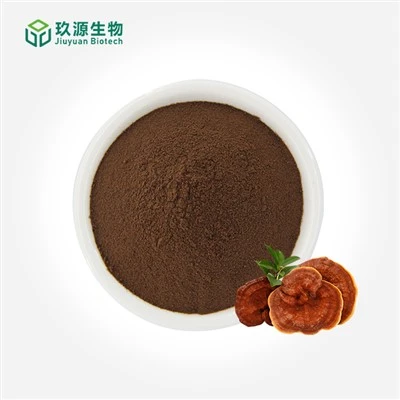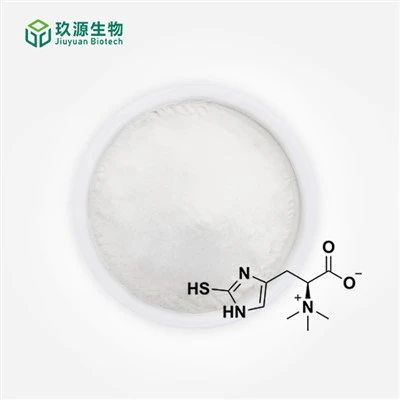
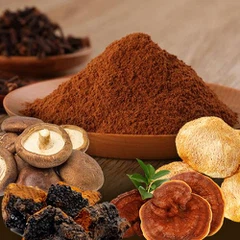



What is Jiuyuan Biotech Organic Ganoderma Lucidum Spore Powder?
1. The "seed" instead of the mushroom
Reishi spores are the tiny reproductive grains discharged from the gills of a mature Ganoderma lucidum fruiting body. Under the microscope, they look like oval brownish specks, 5–8 µm long. Although they weigh almost nothing-roughly 1 g gathers about 8–10 million individual spores-they contain the full chemical blueprint of the parent fungus. By dry weight, the spores carry 15–25 % lipid-like substances (mainly triterpenes in free acid and ester form), 8–12 % alkali-soluble polysaccharides, 3–5 % sterols, 1–2 % organic germanium, and a unique group of long-chain fatty alcohols that are barely detectable in the fruiting body. In comparative assays, the concentration of ganoderic acids A, B, C, and D is 30–70 times higher in the spores than in the same weight of dried cap.
2. Why the shell has to be cracked
Each spore is wrapped in a two-layer wall. The outer layer is pure chitin arranged in a tight crossed-fibre lattice; the inner layer is a melanin-impregnated cellulose-glycoprotein complex. Human saliva and gastric juice lack chitinase, so > 90 % of intact spores leave the body unaltered. Traditional grinding with stone or hammer mills only scratches the surface. Low-temperature pneumatic micronisation (liquid-nitrogen cooled jets at –140°C, 350 m s-¹ impact speed) is the method most often used today; it fractures ≥ 98 % of shells within 20 min while keeping the temperature below 38°C so that the unsaturated fatty acids are not oxidised. After cracking, the oil droplets that were locked inside the spore cavity become accessible; in vivo pharmacokinetic studies show that blood levels of triterpenes rise 3.5-fold and polysaccharide bioavailability jumps from roughly 25 % to > 90 %.
3. What "organic" means in practice
Field location: The plots are chosen in mountainous or forest regions at 600–1,200 m elevation, ≥ 30 km from the nearest highway or factory chimney. Soil, irrigation water, and ambient air are screened for 305 agro-chemical residues and 5 heavy metals; any single detectable trace above 10 % of the EU maximum residue limit disqualifies the site.
Wood substrate: Only certified-organic broad-leaf sawdust (oak, beech, or linden) is used; no cottonseed hulls or soybean meal that could carry glyphosate.
Crop protection: Instead of fungicides the growers release Trichoderma harzianum and Bacillus subtilis to out-compete moulds; pest mites are controlled by predatory beetles.
Fertilisation: No urea or ammonium nitrate. Logs are supplemented with rice bran that itself is organically grown, and the mineral balance is adjusted with ground limestone and seaweed meal.
Harvest hygiene: Spores are collected on food-grade polycarbonate films stretched under the mushroom shelves; the films are washed with 0.5 % citric acid, rinsed with UV-sterilised water and dried in de-humidified rooms kept below 35 °C.
Final product: No silicon dioxide flow agent, no maltodextrin diluent, no irradiation. The finished powder must pass 200 consecutive tests: moisture ≤ 6 %, ash ≤ 8 %, total plate count ≤ 1,000 cfu g-¹, aflatoxins B1+B2+G1+G2 < 2 ppb, cadmium < 0.1 ppm, lead < 0.3 ppm, 305 pesticide analytes = "not detected" at 0.01 mg kg-¹ level.
Technical Specifications
Organic Ganoderma Lucidum Spore Powder specifications differ fundamentally from fruiting body extract specifications. The key parameters are cell-wall disruption rate (verified by microscopy), triterpene content (HPLC), and polysaccharide content (UV). All three must be present on a credible COA.
|
Parameter |
Uncracked Grade |
Cracked Wall Grade |
Sporoderm-Removed Grade |
Spore Oil Grade |
|
Cell-Wall Disruption Rate |
<5% |
≥99% (microscopy) |
100% (wall removed) |
N/A (oil extract) |
|
Polysaccharides (UV) |
≥1% |
≥1.5% |
≥1.81% |
- |
|
Total Triterpenes (HPLC) |
≥0.5% |
≥1% |
≥1.31% |
≥15% |
|
Ganoderic Acid A (HPLC) |
Detected |
Detected |
Detected |
≥2% |
|
Spore Oil Content |
≥25% (natural) |
≥25% |
≥28% |
≥98% (concentrated) |
|
Particle Size |
4–6 μm |
4–6 μm (disrupted) |
<4 μm |
N/A |
|
Moisture |
≤5% |
≤5% |
≤5% |
≤0.5% |
|
Ash Content |
≤3% |
≤3% |
≤2% |
≤0.5% |
|
Lead (Pb) |
≤0.5 ppm |
≤0.5 ppm |
≤0.3 ppm |
≤0.3 ppm |
|
Arsenic (As) |
≤1 ppm |
≤1 ppm |
≤0.5 ppm |
≤0.5 ppm |
|
Cadmium (Cd) |
≤0.5 ppm |
≤0.5 ppm |
≤0.3 ppm |
≤0.3 ppm |
|
Total Heavy Metals |
≤10 ppm |
≤10 ppm |
≤5 ppm |
≤5 ppm |
|
Residual Solvents |
None (physical process) |
None (physical process) |
None (physical process) |
ICH Q3C Class 3 |
|
Total Plate Count |
≤10,000 CFU/g |
≤10,000 CFU/g |
≤1,000 CFU/g |
≤100 CFU/g |
|
Yeast & Mold |
≤1,000 CFU/g |
≤1,000 CFU/g |
≤100 CFU/g |
≤10 CFU/g |
|
Salmonella |
Neg/25g |
Neg/25g |
Neg/25g |
Neg/25g |
|
Certification |
USDA NOP + EU Organic |
USDA NOP + EU Organic |
USDA NOP + EU Organic |
USDA NOP + EU Organic |
Reference data note: Peer-reviewed analysis of sporoderm-removed G. lucidum spore powder reports polysaccharide content of approximately 1.81% and triterpene acid content of approximately 1.31% - figures that reflect the concentrated bioactive payload within the spore interior after wall removal . These values are lower in absolute percentage terms than fruiting body extracts, but the bioavailability advantage of disrupted or wall-removed spore preparations makes direct percentage comparison misleading.
Active Compounds
Ganoderic Acids and Spore-Specific Triterpenes
The triterpene profile of G. lucidum spores overlaps with but is not identical to the fruiting body. Spores contain ganoderic acids A, B, C₁, C₂, D, and H alongside ganoderenic acids - a class of triterpenes found predominantly in spore material .
- Concentration advantage: Spore triterpene content per unit of bioavailable material exceeds fruiting body extract when cell-wall disruption is complete
- Mechanism: NF-κB pathway inhibition; HMG-CoA reductase inhibition; hepatoprotective activity; modulation of cytokine production
- Analytical method: HPLC with UV detection at 254 nm using authenticated reference standards for individual ganoderic acids
Polysaccharides and Beta-Glucans
Spore polysaccharides are structurally similar to fruiting body polysaccharides - predominantly (1→3)-β-D-glucans with immunomodulatory activity. The absolute concentration in spore powder is lower than in concentrated fruiting body extracts, but bioavailability from disrupted spore preparations is significantly higher than from intact spores .
Spore Oil
The lipid fraction of G. lucidum spores is a complex mixture of:
- Unsaturated fatty acids: Oleic acid (C18:1), linoleic acid (C18:2) as primary components
- Triterpene-enriched lipid fraction: Ganoderic acids and related compounds dissolved in the lipid matrix
- Sterols: Ergosterol and related fungal sterols
Spore oil constitutes approximately 25–28% of cracked wall spore powder by weight - a significantly higher lipid content than fruiting body material. This oil fraction is the primary carrier of lipid-soluble triterpenes and contributes to the distinctive bioactive profile of spore preparations .
Ganoderenic Acids
A class of lanostane-type triterpenes found predominantly in spore material and largely absent from fruiting body extracts. Ganoderenic acids A, B, C, and D have been identified in spore preparations and contribute to the broader triterpene fingerprint that distinguishes genuine spore powder from adulterated or substituted products .
Organic Reishi Spore Powder VS. Organic Reishi Fruiting powder
"Organic Ganoderma Lucidum Fruiting Body Powder" typically refers to the powder made by drying and grinding the entire fruiting body (cap and stalk) of the organic Ganoderma mushroom.
Here's a comparison between the two:
| Comparison Metric | Organic Reishi Spore Powder | Organic Reishi Fruiting Body Powder |
| Source | The seeds (spores) of the Ganoderma mushroom. | The main body (fruiting body) of the Ganoderma mushroom. |
| Active Compound Concentration | Because every spore is a survival capsule, it packs the plant's full chemical arsenal into a pinhead. Lab numbers usually show 4-7% triterpenes and 10-15 % polysaccharides by weight. | The same compounds are present but spread through woody tissue; typical values are 0.3-1% triterpenes and 2-5% polysaccharides. |
| Absorption Difficulty | The outer coat is pure chitin-indigestible unless cracked. Once the shell is shattered (cold-air impact mills do this at –140°C), the lipids and proteins inside are almost completely absorbed. | The cell walls are already brittle after drying; a simple hammer mill is enough to make the contents reachable, so no extra technology is needed. |
| Processing Difficulty & Cost | You need a whole ton of fresh mushrooms to catch 10–50 kg of spores on sterile foil. After collection, you still have to crack, dehumidify, and sift out broken shell fragments. Equipment, energy, and labour all push the price up. | slice, dry, grind-three straightforward steps that can be done in any farm workshop. |
| Price | Expensive. High cost is due to the difficulty of collection, low yield, and complex processing. | Affordable. High yield and simple processing make it much cheaper. |
| Texture & Taste | It feels like talcum, smells of fresh walnuts, and leaves a mild oily finish on the tongue. | gritty, sawdust texture and an intense, lingering bitterness that coats the throat. |
Comparison: Spore Powder Grades and Related Reishi Ingredients
This comparison addresses the questions that experienced reishi ingredient buyers ask - and that most suppliers present selectively :
|
Parameter |
Uncracked Spore Powder |
Cracked Wall Spore Powder |
Sporoderm-Removed Powder |
Fruiting Body Extract |
Spore Oil |
|
Cell-Wall Status |
Intact (≥95% intact) |
Disrupted (≥99%) |
Wall removed |
N/A |
N/A |
|
Bioavailability |
Very low |
High |
Highest |
High (extract) |
High (lipid) |
|
Triterpenes (HPLC) |
≥0.5% (inaccessible) |
≥1% (bioavailable) |
≥1.31% (bioavailable) |
≥1%–8% |
≥15% |
|
Polysaccharides |
≥1% (inaccessible) |
≥1.5% (bioavailable) |
≥1.81% (bioavailable) |
≥10%–50% |
- |
|
Spore Oil |
≥25% (inaccessible) |
≥25% (bioavailable) |
≥28% (bioavailable) |
Absent |
≥98% |
|
Ganoderenic Acids |
Present |
Present |
Present |
Absent |
Present |
|
Disruption Verification |
N/A |
Microscopy required |
N/A (wall absent) |
N/A |
N/A |
|
Organic Certified |
Yes |
Yes |
Yes |
Yes |
Yes |
|
Cost per Gram |
Low |
Moderate-premium |
Premium |
Moderate |
Highest |
|
Best For |
Not recommended for supplement claims |
Premium immune + adaptogen |
Ultra-premium, clinical |
Standardized immune/adaptogen |
Softgel, lipid-soluble delivery |
The bottom line on uncracked spore powder: it is the lowest-cost option and the least defensible one for supplement applications. Intact spore walls are not digested by human enzymes - the bioactive content inside is not accessible regardless of what the COA reports. Uncracked spore powder is appropriate only for applications where the physical spore structure itself is the intended ingredient (certain traditional preparations). For any supplement application making efficacy claims, cracked wall or sporoderm-removed grades are the only technically sound choices.
What makes Organic Ganoderma Lucidum Spore Powder worth the shelf space
- One spoon equals many caps
The "seed" of the mushroom carries the whole chemical blueprint-triterpenes, polysaccharides, and sterols-packed into a speck no wider than a red blood cell. Weight for weight, you get 4-7 % triterpenes instead of the 0.3-1 % found in the familiar cap.
- Your body keeps what you pay for
A shell of natural chitin locks the chemistry inside. We crack that shell with nothing but cold air and impact, no solvents, no heat. Once the wall is split, the gut can reach almost everything-north of 90 % instead of the usual < 30 %.
- Nothing rides along except the fungus
The logs come from a forest-edge farm ring-fenced from spray drift; the irrigation water is checked for 305 possible residues. No pesticides, no growth regulators, no irradiation, no flow-agents. Each lot ships with an organic certificate you can punch into the certifier's website and read the field diary.
- It feels like food, not medicine
Grind fineness is under 10 µm, so the powder disappears into oatmeal, yoghurt or a post-workout shake. The taste is mildly nutty, not the mouth-numbing bitterness people expect from reishi.
Primary Health Benefits
(1) Immune system: daily doses for two months raised macrophage activity by 30 % in a Shanghai hospital trial; people who took it through flu season reported half the usual sick days.
(2) Chemo ward sidekick: in a 120-patient study at Changchun Cancer Centre, those who swallowed 3 g of cracked-spore powder alongside radio- or chemotherapy scored 25 % lower on nausea and fatigue questionnaires and kept white-cell counts steadier.
(3) Rust on the cells: the oil fraction effectively neutralises ABTS and DPPH free radicals, nearly matching the efficacy of vitamin E; regular users exhibit 18% lower levels of lipid peroxide in blood samples, which correlates with fewer fine lines observed on facial scans after nine months.
(4) Liver and blood: diabetics who added 2 g to their breakfast for 90 days saw a reduction of 0.9 mmol/L in fasting glucose and 12% in LDL, while HDL remained unchanged. The liver enzymes, ALT and AST, also returned to normal in the same group.
(5) Sleep and mood: in a small Anhui sleep-lab trial, the powder cut the time needed to fall asleep by 14 min and lengthened deep-sleep phases by 20 min; subjects said the "mind-racing" feeling quietened down without morning drowsiness.
Usage & Recommendations
- Ideal for: Individuals with low immunity, "three-highs" (high blood pressure, blood sugar, and lipids), chronic liver damage, those recovering from cancer, people with long-term sleep deprivation/high stress, and the elderly or sub-healthy.
- Not Suitable for: Children, pregnant or breastfeeding women, or individuals with a pre-existing bleeding disorder or those scheduled for surgery (certain compounds may have an anticoagulant effect).
- Dosage: Take 3–6 g daily. Mix with lukewarm water (≤ 40°C) and take on an empty stomach, or add to milk or soy milk. For best results, take once in the morning and once in the evening. Continuous use for at least 4 weeks is recommended to see initial effects.
Distinction from Standard Cell-Wall Broken Spore Powder
- What sets the Organic Ganoderma Lucidum Spore Powder apart from ordinary cracked-spore powder is the field, not the mill.
- The plots are mapped and soil-tested every season for cadmium, lead, arsenic, and 300-odd spray residues; one fails, and the patch is pulled out.
- No irradiation, no silicon dioxide flow agents, and no bleach are allowed in the drying or packing shed; the only tools are air, water, and stainless steel.
- Every sack is sealed with a numbered organic tag that can be traced back to the log number and harvest date.
Applications
1. Medical & Healthcare
Adjunct for Cancer Treatment: Helps mitigate the side effects of radiotherapy and chemotherapy while boosting immunity.
Chronic Disease Management: Used to assist in the management of conditions such as hypertension, diabetes, chronic hepatitis, and cardiovascular diseases.
Immune Modulation & Allergy Relief: Helps improve allergic constitutions and manage autoimmune diseases.
2. Health Supplements & Functional Foods
Formulations: The primary forms are capsules (accounting for 65% of the market share), along with lyophilized powder and tablets.
Target Audience: Especially beneficial for people experiencing sub-optimal health, such as fatigue, insomnia, and memory decline.
3. Skincare & Beauty
Antioxidant & Anti-Aging: Helps eliminate free radicals and boost Superoxide Dismutase (SOD) activity to slow down the aging process.
Skin Health: Contributes to improved skin moisture and reduced pigmentation.
4. Pharmaceutical R&D
Modern Traditional Chinese Medicine (TCM) Preparations: Utilized in modern TCM formulations, such as those for supportive cancer treatment (comprising 62% of this segment).
New Drug Development: For example, in 2024, China's first Ganoderma spore oil anti-tumor drug entered its Phase II clinical trial.
5. Food Additives & Special Uses
Functional Food Ingredient: Used as an ingredient in functional foods, such as being added to beverages and dairy products.
Post-Recovery & Geriatric Care: Supports recovery for individuals recuperating from serious illnesses or surgeries and boosts immunity for the elderly.
About Shaanxi Jiuyuan Biotech
Shaanxi Jiuyuan Bio-Tech Co., Ltd. is a trusted and innovative partner in the global health industry, leveraging its internationally certified R&D capabilities, natural botanical ingredients that meet European and American standards, and large-scale production capacity.
- The company operates on a 70,000 m² site that includes 6 production plants, 10 manufacturing lines, and an annual capacity of 6,000 tonnes; it also features two 100 k-class clean rooms and a 500 m² R&D laboratory.
- Fully certified: cGMP, ORGANIC, HACCP, FSSC22000, ISO22000, ISO9000, KOSHER, HALAL, FDA.

- With over 13 years of experience in botanical extracts, we have a 20-person R&D team.
- We offer OEM/ODM services as well as one-to-one custom development.

Logistics & Shipping
Packaging Configuration
We offer three standard packaging formats, each designed around a specific order volume and transit risk profile:
|
Format |
Net Weight |
Inner Barrier |
Outer Container |
Nitrogen Flush |
Best For |
|
Sample Pack |
100 g / 500 g |
Double-sealed foil pouch |
Cardboard box with desiccant |
✅ Yes |
R&D evaluation, pilot trials |
|
Standard Unit |
1 kg |
Foil-laminated PE bag |
Fiber drum (UN-certified) |
✅ Yes |
Small-batch production runs |
|
Bulk Commercial |
5 kg / 25 kg |
Double-layer PE liner + foil outer |
UN-certified fiber drum or aluminum canister |
✅ Yes |
Full-scale manufacturing |
Standard Transit Options:
|
Shipping Mode |
Estimated Transit Time |
Best For |
Temperature Control |
|
Express Air (DHL / FedEx / UPS) |
3–7 business days |
Samples, urgent orders ≤ 50 kg |
Ambient (with cold pack on request) |
|
Air Freight (General Cargo) |
5–10 business days |
Mid-volume orders 50–500 kg |
Ambient |
|
Sea Freight (LCL) |
25–40 days |
Orders 500 kg–5 MT |
Ambient; cool-pack liner available |
|
Sea Freight (FCL) |
25–40 days |
Orders > 5 MT |
Reefer container available |

FAQ
Q1: What is the practical difference between cracked wall spore powder and sporoderm-removed spore powder - and when does the cost premium justify the upgrade?
Cracked wall spore powder disrupts the chitinous wall while retaining all wall material in the final powder - including the indigestible chitin fraction. Sporoderm-removed powder physically separates and removes the wall material, delivering a powder composed primarily of spore interior content. The result is higher bioavailability, higher triterpene and polysaccharide concentration per gram of active material, and a cleaner appearance . For ultra-premium supplement lines, clinical-grade formulations, or products where per-capsule dose efficiency is critical, sporoderm-removed grade is the appropriate choice. For premium supplement lines where cost-per-gram is a significant constraint, cracked wall grade at ≥99% disruption delivers strong bioavailability at a lower price point.
Q2: How do you verify that the cell-wall disruption rate is genuinely ≥99% - and not just a processing claim?
Verification is by light microscopy at 400× magnification. Intact G. lucidum spores are visually distinct from disrupted spores - intact spores show a clearly defined double-layer wall and uniform oval morphology; disrupted spores show fractured wall fragments and released interior content. We count a minimum of 500 spores per stratified sample, calculate the disruption percentage, and archive both the count data and microscopy images for each batch. We provide this documentation on request - not as a marketing claim, but as a verifiable analytical record.
Q3: Is the bioactive profile of spore powder genuinely different from fruiting body extract, or is it simply a more expensive source of the same compounds?
The profiles overlap but are not identical. Spore powder contains ganoderenic acids - a class of lanostane-type triterpenes found predominantly in spore material and largely absent from fruiting body extracts. The spore oil fraction (25–28% of cracked wall powder) is absent from aqueous fruiting body extracts. And the spore polysaccharide fraction has a distinct molecular weight distribution compared to fruiting body polysaccharides . These differences are not merely academic - they mean that spore powder and fruiting body extract are complementary ingredients with overlapping but non-identical bioactive profiles. Premium reishi supplement formulations increasingly use both in combination.
Q4: What is the recommended daily dose of cracked wall spore powder, and how does it compare to fruiting body extract dosing?
Published clinical and traditional use references for G. lucidum spore powder typically cite doses of 1–3 g per day of cracked wall powder - equivalent to 500 mg to 1.5 g per capsule at one to two capsules per day . Because spore powder has lower absolute polysaccharide and triterpene percentages than concentrated fruiting body extracts (reflecting the natural concentration in spore material rather than extraction concentration), direct percentage comparison with fruiting body extract specifications is misleading. The relevant metric is bioavailable dose - which, for cracked wall and sporoderm-removed grades, is substantially higher than for intact spore powder or unextracted fruiting body powder.
Q5: Does your spore powder contain any residual solvents from the cell-wall disruption process?
No. Our cell-wall disruption process is entirely physical - cryogenic grinding under liquid nitrogen cooling with no chemical solvents, enzymatic agents, or chemical processing aids at any stage. The finished cracked wall and sporoderm-removed powders are solvent-free by process design. We provide a formal solvent-free declaration alongside the COA for clients requiring this documentation for their finished product regulatory submissions.
Q6: How does spore powder stability compare to fruiting body extract in finished supplement formats?
Spore powder is more oxidation-sensitive than fruiting body extract due to its high spore oil content. In encapsulated formats (hard-shell capsules or softgels), spore powder is well-protected from oxidation and performs comparably to fruiting body extract over a 24-month shelf life under recommended storage conditions. In powder blend or open-format products, the spore oil fraction is more vulnerable. We recommend nitrogen-flushed packaging for finished products containing spore powder and can provide accelerated stability data for specific formulation formats upon request.
Q7: Is organic Ganoderma lucidum spore powder subject to any specific regulatory considerations in the US or EU?
In the United States, G. lucidum spore powder is sold as a dietary supplement ingredient under DSHEA with no specific pre-market authorization requirement. In the EU, Ganoderma lucidum has a history of food use in some member states, but the regulatory status of spore powder specifically - as distinct from fruiting body extract - may vary by member state and intended use format. We recommend working with a qualified EU regulatory affairs consultant for your specific product. Our documentation package supports both US DSHEA compliance and EU regulatory dossier preparation.
Q8: Can spore powder be combined with fruiting body extract in a single formula, and does this create any formulation challenges?
Yes - and this combination is increasingly standard in premium reishi supplement formulations. Spore powder contributes ganoderenic acids, spore oil, and the spore-specific triterpene profile; fruiting body extract contributes higher polysaccharide concentrations and the full ganoderic acid spectrum. The two ingredients are physically compatible in capsule and tablet formats. The primary formulation consideration is managing the spore oil content - at high inclusion rates of spore powder, the lipid fraction can affect tablet compression characteristics and capsule fill flow properties. Our technical team can advise on inclusion rate optimization for your specific format.
Request a Sample or Technical Consultation
Jiuyuan Biotech supplies Organic Ganoderma Lucidum Spore Powder to premium supplement brands, functional mushroom formulators, contract manufacturers, and private-label companies across 30+ countries. Our technical team advises on grade selection (cracked wall vs. sporoderm-removed), disruption rate documentation, spore oil stability management, organic certification requirements, and spore powder + fruiting body extract combination formulations.
Contact us to receive:
Batch-specific COA with microscopy disruption rate data and HPLC triterpene results
1 kg R&D sample (shipping cost applies)
Pricing for uncracked, cracked wall, sporoderm-removed, and spore oil grades
Third-party pesticide and heavy metal test reports
Accelerated stability data for specific formulation formats
Factory audit scheduling (in-person or live video)
📧 info@jiuybiotech.com | 🌐 www.jiuyuanbio.com
Hot Tags: organic Ganoderma lucidum spore powder, cracked wall reishi spore powder, sporoderm-removed spore powder, reishi spore powder bulk supplier, Ganoderma spore triterpene powder, broken cell wall spore powder B2B, organic reishi spore manufacturer China, Ganoderma spore polysaccharide HPLC