



Products Description
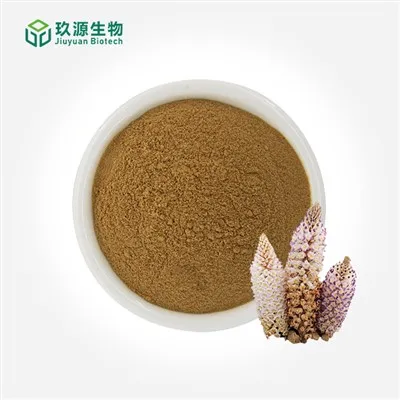
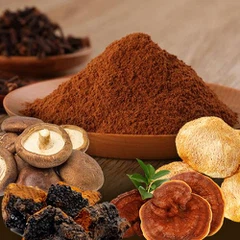
Reishi Mushroom Extract Powder (Ganoderma lucidum) is a natural, high-potency botanical ingredient derived from the fruiting body of mushrooms grown in the pristine Qinling Mountains. Our extract is carefully dual-extracted using purified water and organic alcohol, preserving all active polysaccharides and triterpenes for consistent quality and maximum efficacy. With a clean label and no solvent residue, our extract is perfect for premium dietary supplements, functional foods, and beverages, offering consistent quality and efficacy you can trust.
Core Highlights:
- Polysaccharides ≥10–50%, Triterpenes ≥1–5%
- Dual extraction: Organic alcohol + water
- Lab-verified content & third-party testing
- Bulk & OEM supply ready in 3 weeks
|
|
|


Key Benefits & Functional Claims
Reishi Mushroom Extract is widely used in dietary supplements, functional foods, beverages, skincare, and TCM formulations. Backed by laboratory testing, our extract supports:
• Immune System Modulation: Activates macrophages & NK cells
• Antioxidant Protection: Scavenges free radicals, protects cellular health
• Anti-inflammatory Support: Polysaccharides calm inflammatory mediators
• Liver & Cardiovascular Health: Triterpenes support liver function & lipid metabolism
• Sleep & Relaxation: Mild sedative effects observed in preclinical studies
• Skin Vitality & Anti-aging: Protects skin from oxidative stress
Product Specifications & Quality Control
| Parameter | Specification |
|---|---|
| Product Name | Reishi Mushroom Extract Powder |
| Latin Name | Ganoderma lucidum (Leyss. ex Fr.) Karst. |
| Part Used | Fruiting Body 100% |
| Extract Solvent | Purified Water + Organic Alcohol |
| Active Marker | Polysaccharides ≥10–50% (UV), Triterpenes ≥1–5% (HPLC) |
| Appearance | Fine Brown Powder, 80–100 mesh |
| Moisture | ≤7% |
| Ash | ≤9% |
| Heavy Metals | Pb<0.5 ppm, Cd<0.3 ppm, Hg<0.1 ppm, As<0.3 ppm |
| Pesticides | 268 Items ND |
| Microbiological | TVC<1,000 cfu/g, Mold<100 cfu/g, Salmonella 0/25 g |
| Shelf Life | 24 months unopened |
| Packaging | 1 kg×10 bags/carton; 5–25 kg fiber drum; custom OEM bags |
Quality Assurance:
Third-party testing for polysaccharides & triterpenes
HPLC, ICP-MS, microbiological analysis included
COA, MSDS, and TDS available for each batch
Dual Extraction & Production Process
Dual Extraction Process
- Low-temperature cell disruption
- 80°C graded water extraction
- Membrane concentration & vacuum drying
Performance Improvements:
- Powder Yield ↑17%
- Triterpene Loss ↓31%
- Solvent Residue ND (<0.002 ppm)
Why Our Extract Stands Out
- Wild log cultivation at 800–1,200 m altitude
- Only two harvests over three years for maximum bioactive content
- Clean label: no carriers, flavors, or colors
Product specifications
Product Name: Reishi Mushroom Extract Powder
Latin Name: Ganoderma lucidum (Leyss. ex Fr.) Karst.
Part Used:100 % Fruiting body
Extract Solvent: Purified Water + Organic Alcohol
Active Marker:Polysaccharides ≥10 ~50 % (UV), Triterpenes ≥1~5 % (HPLC)
Appearance: Fine brown powder, 80–100 mesh
Moisture:≤7 %
Ash:≤9 %
Heavy Metals:Pb<0.5 ppm, Cd<0.3 ppm, Hg<0.1 ppm, As<0.3 ppm
Pesticides:268 items ND
Microbiological:TVC<1 000 cfu/g, Mold<100 cfu/g, Salmonella 0/25 g
Shelf Life:24 months in unopened original packaging
Packaging:1 kg×10 bags / carton; 5 kg / 25 kg fiber drum; custom OEM bag
Applications & Recommended Dosage
| Application | Recommended Dosage / Usage | Main Industry |
|---|---|---|
| Dietary Supplements | 300–500 mg per capsule, twice daily | Nutraceuticals & Supplements |
| Functional Beverages | 0.8–1.2 g/L, clarity ≥95%, stable for 3 months at 36°C | Functional Foods & Drinks |
| Topical Skincare | 0.5–2% aqueous solution, antioxidant support | Skincare & Cosmetic Formulations |
| TCM Granules | Combine with astragalus at 5:1 ratio to increase polysaccharide release by 19% | Traditional Chinese Medicine |
| Research / Pharma | Preclinical studies for β-glucans and ganoderic acids | Pharma / Oncology Research |
Quality Control
The Dual-Marker Standard for Reishi
Reishi extract quality control requires verification of two chemically distinct compound classes: beta-glucans (water-soluble, immunomodulatory) and ganoderic acids (alcohol-soluble, triterpene). A COA showing only UV polysaccharide content - without Megazyme beta-glucan data and HPLC ganoderic acid data - is incomplete for reishi .
A particularly common misrepresentation in the reishi ingredient market involves triterpene content reported by colorimetric assay. Colorimetric methods measure all lanostane-type compounds, including non-ganoderic-acid triterpenes and sterol compounds, producing figures that can be 2–3x higher than the actual ganoderic acid content measured by HPLC. We report HPLC triterpene data as the primary specification and provide colorimetric data as a secondary reference on request.
In-Process Controls
|
Control Point |
Parameter |
Method |
|
Incoming raw material |
Triterpene baseline, beta-glucan baseline |
HPLC, Megazyme |
|
Incoming raw material |
Heavy metals, pesticides |
ICP-MS, GC-MS/MS |
|
Hot water extraction |
Temperature, pH, duration |
Continuous logging |
|
Ethanol extraction |
Solvent concentration, temperature |
Continuous logging |
|
Concentration |
Brix, triterpene concentration |
Inline refractometry + HPLC |
|
Spray drying |
Inlet/outlet temperature, moisture |
Continuous logging |
Finished Product Release Panel
|
Test |
Method |
Frequency |
|
Total triterpenes / Ganoderic acids |
HPLC (254 nm) |
Every batch |
|
Beta-glucan assay |
Megazyme AOAC 995.16 |
Every batch |
|
Total polysaccharides |
UV spectrophotometry |
Every batch |
|
Heavy metals (Pb, As, Hg, Cd) |
ICP-MS |
Every batch |
|
Pesticide residues |
GC-MS/MS (200+ compounds) |
Every batch |
|
Residual solvents |
GC headspace |
Every batch |
|
Total plate count |
USP <61> |
Every batch |
|
Yeast & mold |
USP <61> |
Every batch |
|
Salmonella / E. coli |
USP <62> |
Every batch |
|
Moisture |
Karl Fischer |
Every batch |
|
Particle size |
Laser diffraction |
Every batch |
Retained Sample Policy
Every batch is retained for 36 months post-shipment. Split samples are provided on request for independent third-party verification - a request we have never declined.

Comparison: Reishi Extract Grades and Source Forms
This comparison addresses the questions experienced functional mushroom buyers ask - and that most suppliers sidestep :
|
Parameter |
Whole Mushroom Powder |
Hot-Water Extract |
Dual-Extract |
Mycelium Extract |
|
Beta-Glucans (Megazyme) |
2%–5% (natural) |
5%–20% |
15%–20% |
1%–5% (starch-inflated) |
|
Ganoderic Acids (HPLC) |
0.1%–0.3% |
Trace (water-insoluble) |
1%–8% |
Low |
|
Triterpene Colorimetric |
Low |
Low |
2%–10% |
Variable |
|
Polysaccharides (UV) |
5%–15% |
10%–50% |
30%–50% |
20%–50% (starch-inflated) |
|
Starch Content |
Negligible |
Negligible |
Negligible |
High (grain substrate) |
|
Adaptogenic Profile |
Partial |
Partial (no triterpenes) |
Complete |
Incomplete |
|
Organic Certified |
Yes |
Yes |
Yes |
Possible |
|
Extraction Method |
None |
Hot water only |
Water + ethanol |
Variable |
|
Cost per Active Unit |
Low |
Moderate |
Premium |
Appears low; poor value |
|
Best For |
Food fortification |
Immune supplements |
Comprehensive adaptogen formulas |
Not recommended for standardized claims |
The critical distinction: a hot-water-only reishi extract cannot support triterpene-related label claims - ganoderic acids are not water-soluble and are not captured by aqueous extraction alone. If your formula targets adaptogenic, hepatoprotective, or stress-response positioning, dual extraction is the only technically defensible choice.
Certifications & Laboratory Evidence
Certifications:
USDA Organic, EU Organic, ISO 22000, ISO 9001, HACCP, FSSC22000, GMP (US FDA 21 CFR 111), HALAL, KOSHER, SC Food Production License
Laboratory-Grade Evidence:
• Each batch includes three retained samples
• Four-point inspection: HPLC, ICP-MS, Microbiology
• Zero complaints and zero customs rejections in 2024
|
|
|


Packaging & Logistics
| Method | Weight | Lead Time | Notes |
|---|---|---|---|
| Express | <100 kg | 3–5 days | Door-to-door, easy pickup |
| By Air | 100–1,000 kg | 5–7 days | Airport-to-airport, clearance broker needed |
| By Sea | >300 kg | ~30 days | Port-to-port, professional broker required |
 |
 |
 |
Packaging Options: 1 kg foil bags, 5–25 kg fiber drums, custom OEM bags
Storage: Keep in a cool, dry, and clean place. Protect from moisture and direct light.
Lead Time: 7 days after your order.
Shelf Life: 2 years.
Remark: Customized specifications can also be achieved.

Buyer Guide
Require HPLC Ganoderic Acid Data - Not Just Colorimetric Triterpenes
This is the most important quality criterion for reishi extract procurement. Before comparing quotes, ask every supplier:
"What is your ganoderic acid content by HPLC - not colorimetric assay?"
"What is your beta-glucan content by Megazyme - not UV polysaccharides?"
"Is this hot-water extract, ethanol extract, or dual-extracted?"
"Is the source fruiting body or mycelium?"
A credible manufacturer answers all four directly and provides the analytical data without hesitation.
Understand the Fruiting Body vs. Mycelium Distinction
Reishi mycelium grown on grain substrate produces a powder where grain starch constitutes a significant portion of the final product. UV polysaccharide figures for mycelium-on-grain products are substantially inflated by starch content. Megazyme beta-glucan data exposes this discrepancy. Fruiting body extracts consistently outperform mycelium-on-grain products on Megazyme beta-glucan and HPLC ganoderic acid metrics.
Verify the Extraction Solvent for Residual Solvent Compliance
Ethanol-based extraction for triterpene recovery requires residual solvent verification. ICH Q3C Class 3 limits apply for ethanol (≤5,000 ppm in finished product). Our residual solvent analysis by GC headspace is conducted on every dual-extract batch - not periodically.
Confirm Triterpene Specification Method Before Labeling
If your finished product label will carry a triterpene claim, confirm whether the supplier's COA uses HPLC or colorimetric assay. Colorimetric figures are not appropriate for label claims in markets with regulatory scrutiny (US, EU, Australia). HPLC-verified ganoderic acid content is the defensible specification.
MOQ, Lead Time, and Sampling
|
Stage |
Details |
|
R&D Sample |
1 kg, full COA with HPLC and Megazyme data, ships within 5–7 business days |
|
Pilot Batch |
5–10 kg available for formulation confirmation |
|
Commercial Bulk |
25 kg minimum, standard lead time 2–3 weeks |
|
Organic Grades |
USDA NOP + EU Organic available; organic transaction certificate per shipment |
|
Custom Blends |
Reishi + other functional mushroom extracts available |
FAQ
Q1: What is the clinically relevant dose of reishi extract, and how does it translate to grade selection?
Human clinical studies on reishi have used doses ranging from 1.5 g to 9 g per day of dried mushroom equivalent, or 150 mg to 900 mg of concentrated extract (10:1 ratio) . For a 500 mg capsule targeting adaptogenic or immune support positioning, a dual-extract grade with ≥4% triterpenes and ≥15% beta-glucans delivers meaningful concentrations of both active fractions within a practical capsule fill weight. For products targeting specific ganoderic acid doses, the high-potency grade (≥6% triterpenes by HPLC) allows tighter dosing control per serving.
Q2: Why does reishi taste so bitter, and does it affect formulation?
The characteristic bitterness of reishi is primarily attributable to its ganoderic acid content - lanostane-type triterpenes with pronounced bitter taste at low concentrations. This is actually a useful quality indicator: genuine high-triterpene reishi extract should taste noticeably bitter. Extracts with minimal bitterness likely contain low ganoderic acid concentrations regardless of what the colorimetric COA shows . In capsule and tablet formats, bitterness is not a formulation concern. In functional beverages, chocolate or coffee bases effectively mask the bitter note at inclusion rates up to 500 mg per serving.
Q3: Is reishi extract safe for long-term daily use?
Ganoderma lucidum has a documented history of use spanning over 2,000 years in traditional Chinese and Japanese medicine, with a well-established safety profile at conventional supplement doses. The primary safety consideration in modern clinical literature involves potential interactions with anticoagulant medications - ganoderic acids and adenosine in reishi may potentiate antiplatelet effects . Individuals on warfarin or other anticoagulants should consult a healthcare provider before use. At standard supplement doses (1–3 g dried equivalent per day), reishi extract is generally well-tolerated in healthy adults.
Q4: How do you distinguish genuine Ganoderma lucidum from related species like G. sinense or G. tsugae?
Ganoderma is a large genus with over 400 described species, several of which are sold as "reishi" in commercial markets. G. lucidum (red reishi, Lingzhi) is the most extensively studied species and the one with the strongest clinical evidence base. G. sinense (black reishi) has a different triterpene profile. We provide species authentication documentation - macroscopic examination, microscopic hyphal analysis, and HPLC fingerprint comparison against authenticated G. lucidum reference standards - on every batch.
Q5: What is the difference between a 10:1 ratio extract and a percentage-standardized extract?
A 10:1 ratio extract means 10 kg of raw mushroom was used to produce 1 kg of extract - a concentration ratio that says nothing about the actual content of any specific bioactive compound. A percentage-standardized extract specifies the verified content of the target compound (e.g., ≥4% triterpenes by HPLC). Ratio extracts are a legacy specification that predates modern HPLC analysis. They are not appropriate for label claims in regulated markets because they provide no information about actual bioactive content. We supply percentage-standardized extracts with HPLC-verified specifications and can provide ratio equivalents as supplementary information for clients who need them for historical comparison purposes.
Q6: Can reishi extract be combined with other adaptogenic mushrooms in a single formula?
Yes - and this is one of the most commercially successful formulation strategies in the functional mushroom category. Reishi pairs particularly well with lion's mane (cognitive and neurological focus), chaga (antioxidant depth), and cordyceps (energy and athletic performance) in multi-mushroom adaptogen blends. We supply all four species as standardized extracts and offer custom blended powders in specified ratios with combined COAs. The key formulation consideration is ensuring each component is present at a dose that reflects its individual clinical evidence base - not diluted to homeopathic levels for label inclusion purposes.
Q7: What documentation do you provide for US FDA dietary supplement compliance?
Our standard documentation package for DSHEA-compliant ingredient sourcing includes: batch-specific COA with HPLC ganoderic acid data, Megazyme beta-glucan data, and UV polysaccharide data; ICP-MS heavy metal report; GC-MS/MS pesticide residue report (200+ compounds); USP <61>/<62> microbiology panel; ICH Q3C residual solvent analysis; allergen declaration; GMO-free statement; species authentication documentation; and cGMP facility documentation. We can also provide a supplier qualification questionnaire response and facility audit support for brands operating under 21 CFR Part 111.
Q8: Is your reishi extract suitable for vegan and vegetarian supplement formulations?
Yes. Our reishi mushroom extract powder is derived entirely from fungal fruiting body material - no animal-derived processing aids, carriers, or excipients are used at any stage of manufacturing. The product is suitable for vegan and vegetarian formulations and carries Halal and Kosher certification. We can provide a formal vegan suitability statement upon request for brands requiring this documentation for their finished product certification.
Request a Sample or Technical Consultation
Jiuyuan Biotech supplies Reishi Mushroom Extract Powder to adaptogen supplement brands, functional mushroom formulators, contract manufacturers, and private-label companies across 30+ countries. Our technical team advises on grade selection, dual extraction vs. hot-water-only trade-offs, HPLC ganoderic acid specifications, organic certification documentation, and custom mushroom blend formulations.
Email: info@jiuyuanbio.com
Website: www.jiuyuanbio.com
Request: Sample| Bulk Quote | CoA & Spec Sheet | Custom Carrier Ratio
Standard response time: within 1 business day. Please include your target application and annual volume estimate for the most relevant technical recommendation.
Hot Tags: reishi mushroom extract powder, Ganoderma lucidum extract bulk, ganoderic acid powder supplier, reishi beta glucan manufacturer, reishi triterpene extract B2B, organic reishi extract China, reishi polysaccharide powder, functional mushroom extract supplier