









Product Introduction
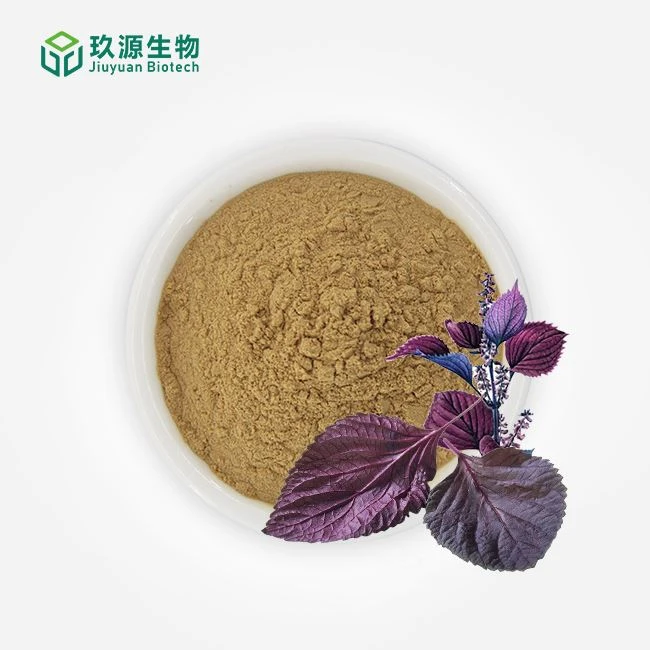
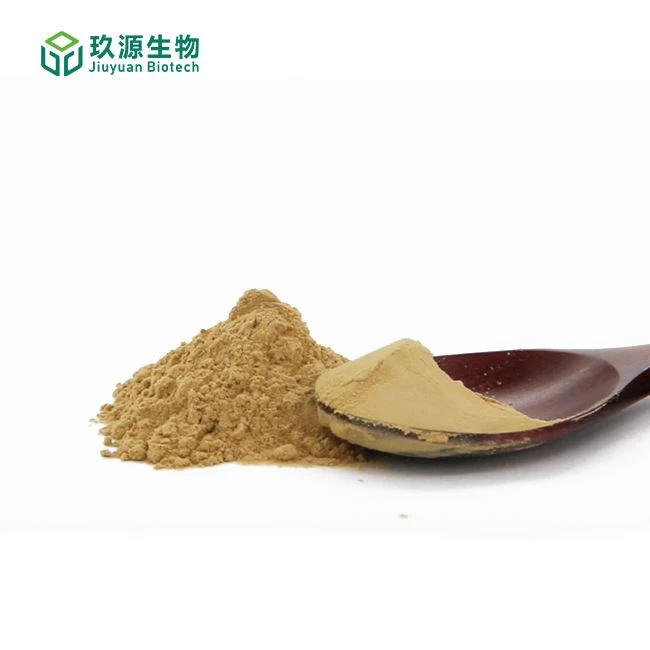
Perilla Frutescens Leaf Extract is a natural botanical essence derived from the dried leaves of the Perilla frutescens plant, a member of the Lamiaceae family. It is produced through a series of modern extraction and concentration processes. As a versatile natural ingredient, it's rich in various bioactive compounds and is widely used in the food, health supplement, cosmetic, and pharmaceutical industries.
Source:The extract comes from the leaves of the Perilla frutescens L. plant. Perilla is native to south-central China and was later introduced to Japan and other regions where it is now widely cultivated. Perilla has a long history of use in China, with its medicinal properties documented as early as the Shennong Ben Cao Jing (The Divine Farmer's Materia Medica).
Certificate of Analysis
|
Item |
Specification |
Result |
Method |
|
Basic Product Information |
|||
|
Latin Name |
Perilla frutescens(L.)Britt. |
Conforms |
/ |
|
Part of the Plant |
Leaf |
Conforms |
/ |
|
Marker Compounds |
|||
|
Assay |
>10% |
Conforms |
TLC |
|
Organoleptic Data |
|||
|
Appearance |
Fine Powder |
Conforms |
Sensory |
|
Color |
Brown |
Conforms |
Sensory |
|
Odor |
Characteristic |
Conforms |
Sensory |
|
Process Data |
|||
|
Method of Processing |
Extraction and concentration |
/ |
/ |
|
Drying Method |
Spraying drying |
/ |
/ |
|
Physical Characteristics |
|||
|
Particle Size |
100% pass 80 mesh |
100% pass |
AOAC973.03 |
|
Moisture |
≤5.0% |
3.6% |
GB/T5009.3 |
|
Ash Content |
≤10.0% |
5.7% |
CP2010 |
|
Heavy Metals |
|||
|
Total Heavy Metals |
<10ppm Max. |
Conforms |
GB 5009.74 |
|
As |
≤0.5 ppm |
0. 11ppm |
GB/T5009. 11 |
|
Pb |
≤1.0 ppm |
0.31ppm |
GB/T5009. 12 |
|
Cd |
≤0.2 ppm |
0. 12ppm |
GB/T5009. 15 |
|
Hg |
≤0.05 ppm |
0.012ppm |
GB/T5009. 17 |
|
Microbiology |
|||
|
Total Plate Count |
≤10000 cfu/g |
1800cfu/g |
GB/T4789.2 |
|
Total Yeast & Mold |
≤200 cfu/g |
40cfu/g |
GB/T4789. 15 |
|
E.Coli |
Negative/ 10g |
Negative/ 10g |
SN0169 |
|
Salmonella |
Negative/ 10g |
Negative/ 10g |
GB/T4789.4 |
|
Shelf Life |
24 months under the conditions above and in its original packaging. |
||
|
Storage |
Store in a cool & dry place, keep away from strong light and heat. |
||
Active Compounds
Rosmarinic Acid - Primary Phenolic Acid
The anchor compound of P. frutescens leaf extract and the primary target for HPLC standardization. Rosmarinic acid is a caffeic acid ester with a well-characterized multi-pathway anti-inflammatory mechanism: it inhibits 5-lipoxygenase (5-LOX), suppresses prostaglandin E₂ synthesis, reduces pro-inflammatory cytokine release (IL-6, IL-1β, TNF-α), and stabilizes mast cells to reduce histamine release.
Luteolin & Apigenin - Flavone Pair
Two structurally related flavones that work in concert with rosmarinic acid across the anti-inflammatory and anti-allergic cascade. Both compounds inhibit NF-κB signaling, reduce mast cell degranulation, and suppress histamine release through mechanisms distinct from - and additive to - rosmarinic acid's 5-LOX pathway.
Luteolin-7-O-diglucuronide is a glycosylated form of luteolin particularly abundant in P. frutescens leaves; analytical data from Semantic Scholar confirms it as the highest-content flavonoid compound in aqueous extracts, with content of 302.22 μg/mL recorded in 0% ethanol (water) extraction conditions.
This glycoside form has improved water solubility compared to free luteolin aglycone, which is relevant for beverage and food applications.
Anthocyanins - Purple-Leaf Fraction
Present specifically in purple-leaf (P. frutescens var. purpurascens) material, anthocyanins - primarily cyanidin-3-(6-p-coumaroyl-glucoside)-5-glucoside (shisonin) and related acylated cyanidin derivatives - contribute antioxidant, anti-neuroinflammatory, and visual health-supporting activity.
Perillaldehyde - Characteristic Volatile
The compound responsible for P. frutescens' distinctive aroma, perillaldehyde (also known as perillartine precursor) has demonstrated antimicrobial activity against a range of food-spoilage and pathogenic organisms in vitro, and antispasmodic properties relevant to digestive wellness applications.
Perillaldehyde content varies significantly by extraction method - ethanol extraction retains more volatile fraction than aqueous extraction; spray-drying reduces volatile content relative to freeze-drying.
Caffeic Acid & Minor Phenolic Acids
Beyond rosmarinic acid, P. frutescens leaves contain free caffeic acid, ferulic acid, and chlorogenic acid derivatives. These contribute to the extract's overall DPPH radical-scavenging capacity and may provide additive antioxidant effects in complex formulations.
Triterpenes & Phytosterols
Minor fractions including ursolic acid and oleanolic acid have been identified in P. frutescens leaf material. These triterpenic acids contribute anti-inflammatory and hepatoprotective activity in preclinical models, though at the concentrations present in leaf extract they represent secondary rather than primary bioactive contributors.
How It Works
The effects of Perilla Frutescens Leaf Extract are primarily based on its rich antioxidant, anti-inflammatory, and anti-allergic compounds.
Anti-Allergic and Anti-Inflammatory Effects:
- Mechanism: The rosmarinic acid and flavonoids in the extract effectively inhibit mast cells from releasing histamine and reduce the production of inflammatory mediators (such as leukotrienes and prostaglandins). This helps alleviate skin itching, redness, and respiratory discomfort caused by allergic reactions.
- Main Benefits: Helps relieve symptoms of seasonal allergies (hay fever), atopic dermatitis (eczema), and hives.
Powerful Antioxidant Effects:
- Mechanism: Phenolic compounds like rosmarinic acid effectively scavenge free radicals in the body, protecting cells from oxidative damage.
- Main Benefits: Helps slow down aging, protects cardiovascular health, and contributes to the prevention of certain chronic diseases.
Antimicrobial and Preservative Effects:
- Mechanism: Volatile oil components like perillaldehyde have an inhibitory effect on various bacteria and fungi.
- Main Benefits: Can be used as a natural preservative in food and cosmetics to extend product shelf life, and also has benefits for oral hygiene.
Production Process
The production of Perilla Frutescens Leaf Extract typically uses a hydro-alcoholic extraction process to ensure maximum retention of its active components:
- Raw Material Selection: Fresh, pesticide-free, high-quality perilla leaves are selected, cleaned, and dried.
- Extraction: The dried perilla leaves are mixed with a specific ratio of water and ethanol and extracted using methods like heat reflux or ultrasonic-assisted extraction.
- Filtration and Concentration: The extract is passed through multiple layers of filtration to remove plant residue, then concentrated under vacuum to remove the solvent.
- Drying: The concentrated liquid is spray-dried or freeze-dried to produce a powdered extract.
- Standardization: The final product is tested for the content of its active compounds to ensure consistent quality.

Application Matrix
|
End Market |
Format |
Recommended Grade |
Key Claim Support |
|
Seasonal Allergy Support |
Capsules, tablets |
PFL-R20 / PFL-R30 |
Rosmarinic acid anti-allergic mechanism |
|
Respiratory Health |
Capsules, lozenges |
PFL-R20 / PFL-DUAL |
Anti-inflammatory, airway support |
|
Immune Modulation |
Capsules, softgels |
PFL-DUAL |
Th2 regulation, mast cell stabilization |
|
Anti-Inflammatory Blends |
Capsules, powders |
PFL-F5 / PFL-DUAL |
Luteolin + rosmarinic acid synergy |
|
Antioxidant Formulas |
Capsules, tablets |
PFL-R20 |
High ORAC value, phenolic matrix |
|
Skin Health / Beauty-from-Within |
Capsules, beverages |
PFL-R10 / PFL-R20 |
UV photoprotection, barrier support |
|
Cognitive Health |
Capsules |
PFL-R30 / PFL-R50 |
Neuroprotective rosmarinic acid |
|
Functional Beverages |
RTD, sachets |
PFL-R10 |
Partial water solubility, clean profile |
|
TCM-Inspired Formulas |
Capsules, tinctures |
PFL-10:1 |
Authentic Zi Su Ye heritage |
|
Pet Supplements |
Chews, powders |
PFL-R10 |
Anti-allergy, anti-inflammatory |
Formulation Compatibility Notes:
- Rosmarinic acid is light-sensitive; finished products should use opaque packaging
- Stable at pH 3.5–6.5 in aqueous matrices; avoid alkaline formulations (pH >7.5) that accelerate ester hydrolysis
- Compatible with quercetin, vitamin C, zinc, and omega-3 fatty acids in anti-allergy combination formulas
- No known antagonistic interactions with common co-ingredients
Unique Product Advantages
- Natural and Safe: Sourced from natural plants, it contains no artificial synthetic ingredients, making it safe for various applications.
- Synergistic Multiple Effects: The various components in the extract work synergistically, providing not just single anti-allergic or antioxidant benefits but comprehensive health advantages.
- Solid Scientific Foundation: Perilla is a traditional plant with a long history of use in both food and medicine, and modern research has extensively verified its mechanisms of action and safety.
- Controllable Quality: Modern, standardized production processes ensure that the content of active ingredients is stable in every batch, meeting the high standards required for different applications.
Quality Control
The most prevalent adulteration risk in the rosmarinic acid extract category is substitution with rosemary (Rosmarinus officinalis) extract - a cheaper and more abundant source of rosmarinic acid that is botanically distinct from P. frutescens. Without species-specific identity testing, a declared "Perilla frutescens extract" may contain rosemary-derived rosmarinic acid, which carries a different regulatory status and a different co-compound profile. Our QC architecture closes this gap through multi-method botanical authentication.
Incoming Raw Material Controls
- Botanical authentication: macroscopic leaf morphology assessment + TLC fingerprint profiling against authenticated P. frutescens reference standard
- Species-specific HPLC fingerprint: the characteristic ratio of rosmarinic acid to luteolin and apigenin is species-specific and distinguishes P. frutescens from rosemary and other Lamiaceae sources
- Pesticide pre-screening: GC-MS/LC-MS, 500+ compound panel against EU MRL database
- Heavy metal pre-qualification: ICP-MS
In-Process Controls
- Rosmarinic acid concentration monitoring at extraction and concentration stages
- pH monitoring throughout extraction to maintain ester bond stability
- Microbial environmental monitoring in drying and milling areas
Finished Product Release Testing
- Rosmarinic acid assay: HPLC with UV detection at 330 nm against certified rosmarinic acid reference standard
- Flavonoid assay (where applicable): HPLC with UV detection against luteolin and apigenin reference standards
- Identity confirmation: TLC and HPLC fingerprint against authenticated P. frutescens reference
- Full heavy metals panel: ICP-MS (Pb, As, Cd, Hg)
- Residual solvents: GC headspace per ICH Q3C guidelines
- Microbiology: USP <61>/<62> compliant panel
- Pesticide residues: 500+ compound screen, EU Reg. 396/2005 limits
Stability Program
- Accelerated stability: 40°C/75% RH, tested at T=0, 1, 3, 6 months
- Long-term stability: 25°C/60% RH, tested at T=0, 6, 12, 24 months
- Rosmarinic acid retention target: ≥95% at 24 months under recommended storage

Comparison: Perilla Frutescens Leaf Extract vs. Competing Anti-Allergy Botanical Ingredients
The anti-allergy supplement ingredient landscape has three dominant players: quercetin, butterbur (Petasites hybridus), and stinging nettle (Urtica dioica). Here is an honest, data-grounded comparison of how P. frutescens leaf extract maps against each.
|
Parameter |
P. frutescens Leaf Extract |
Quercetin |
Butterbur Extract |
Stinging Nettle Extract |
|
Primary Active |
Rosmarinic acid, Luteolin |
Quercetin flavonoid |
Petasin, Isopetasin |
Lectins, Flavonoids |
|
Anti-Allergic Mechanism |
Leukotriene inhibition, mast cell stabilization |
Histamine release inhibition |
Leukotriene + histamine inhibition |
Histamine receptor modulation |
|
Human Clinical Evidence |
✅ Published RCT (rhinoconjunctivitis) |
✅ Multiple RCTs |
✅ Strong RCT data |
⚠️ Limited RCT data |
|
Hepatotoxicity Risk |
✅ None documented |
✅ None at standard doses |
⚠️ PA alkaloid risk (unsaturated PAs) |
✅ None documented |
|
Regulatory Complexity |
�� Low |
�� Low |
🔴 High (PA-free certification required) |
�� Low |
|
Antioxidant Activity |
✅ Strong |
✅ Very Strong |
⚠️ Moderate |
⚠️ Moderate |
|
Anti-Inflammatory Activity |
✅ Strong (NF-κB, COX-2) |
✅ Strong |
✅ Strong |
⚠️ Moderate |
|
Skin Health Application |
✅ Yes (photoprotection) |
⚠️ Limited |
❌ None |
❌ None |
|
Market Saturation |
�� Low (opportunity) |
🔴 Very High |
�� Moderate |
�� Moderate |
|
Flavor Profile |
Mild herbal, manageable |
Neutral |
Neutral |
Grassy |
|
TCM Heritage Narrative |
✅ 1,500+ years |
❌ None |
❌ None |
❌ None |
The most strategically significant column in this table is hepatotoxicity risk. Butterbur extract - arguably the most clinically validated natural anti-allergy ingredient - requires rigorous pyrrolizidine alkaloid (PA) testing and PA-free certification for legal sale in the EU and several other markets. That regulatory burden creates real supply chain complexity and liability exposure. P. frutescens leaf extract carries none of that risk, making it a compelling substitute for formulators serving EU-focused distribution channels.
Why Choose Us
Founded in 2012, Shaanxi Jiuyuan Biotechnology Co., Ltd. is based at the northern foot of the Qinling Mountains in Huyi District, Xi'an City. We are a dynamic high-tech enterprise that integrates the research and development, production, and sales of plant extracts and fruit and vegetable powders. For many years, our company has been committed to delivering high-quality products and services to customers in the health food, food, and cosmetic industries, with a strong drive to lead China's plant extract industry.
We are equipped with state-of-the-art testing equipment, such as HPLC and UV spectrometers, enabling precise analysis of active ingredient content and purity. Our professional testing team provides detailed product analysis reports, ensuring product quality and safety.
We have established long-term, stable partnerships with local farmers to ensure a consistent supply of raw materials. Through contract farming and procurement, we guarantee the quality and quantity of raw materials, providing reliable material assurance to our clients.
We possess comprehensive production and warehousing facilities to meet large-volume client demands. Our factory is equipped with advanced production equipment and automated production lines, enabling efficient production of high-quality products. Our warehousing facilities provide optimal storage conditions, ensuring product quality and stability during storage.

Delivery Methods
 |
 |
 |
|
Express Under 100kg, 3-5Days Door-to-door service easy to pick up the goods |
By Sea Over300kg, Around 30 Days Port-to-port service professional clearance broker needed |
By Air 100kg-1000kg, 5-7Days Airport-to-airport service professional clearance broker needed |
Packages and Storage
We offer three standard packaging formats, each designed around a specific order volume and transit risk profile:
|
Format |
Net Weight |
Inner Barrier |
Outer Container |
Nitrogen Flush |
Best For |
|
Sample Pack |
100 g / 500 g |
Double-sealed foil pouch |
Cardboard box with desiccant |
✅ Yes |
R&D evaluation, pilot trials |
|
Standard Unit |
1 kg |
Foil-laminated PE bag |
Fiber drum (UN-certified) |
✅ Yes |
Small-batch production runs |
|
Bulk Commercial |
5 kg / 25 kg |
Double-layer PE liner + foil outer |
UN-certified fiber drum or aluminum canister |
✅ Yes |
Full-scale manufacturing |

Buyer Guide
Four Questions That Expose Weak Suppliers
1. What is your species authentication method - and can you distinguish P. frutescens from rosemary-derived rosmarinic acid? Rosmarinic acid is present in multiple Lamiaceae species. Without species-specific TLC and HPLC fingerprinting, a declared "Perilla frutescens extract" may be rosemary extract with equivalent rosmarinic acid content but a different regulatory identity and co-compound profile. Demand species-specific authentication data.
2. What is your extraction solvent, and what residual solvent testing do you conduct? Hydroethanolic extraction is standard for rosmarinic acid. The question is whether residual ethanol testing is conducted per ICH Q3C guidelines and whether the COA documents this. Suppliers who cannot answer this question clearly are not manufacturing to pharmaceutical-grade standards.
3. Is your rosmarinic acid assay conducted by HPLC against a certified reference standard? UV-Vis colorimetric methods cannot distinguish rosmarinic acid from other hydroxycinnamic acid derivatives. For any specification above 10%, HPLC with UV detection at 330 nm against a certified rosmarinic acid reference standard is the only analytically defensible method.
4. What is your harvest timing protocol? Rosmarinic acid concentration varies significantly with phenological stage. Suppliers without documented harvest timing protocols cannot guarantee batch-to-batch consistency in raw material potency - which cascades directly into finished extract specification variability.
Ordering Process
- Sample Request - Submit inquiry with target specification, application, and annual volume forecast
- Sample Dispatch - 50–100g samples dispatched within 5 business days with full COA package
- Technical Review - Our formulation team provides grade recommendation, compatibility data, and regulatory documentation
- Commercial Quotation - Volume-tiered pricing based on confirmed annual forecast
- Order Confirmation - PO, proforma invoice, and production scheduling confirmed
- QC Release & Shipment - Batch-specific COA issued before dispatch; DDP, CIF, and FOB Incoterms available
FAQ
Q1: Can you supply a dual-standardized grade combining rosmarinic acid and flavonoid targets for a comprehensive anti-allergy formula?
Yes. Our POE-DUAL grade (Rosmarinic Acid ≥20% + Total Flavonoids ≥5%) is our standard dual-standardized offering, designed specifically for formulators who want to leverage both the leukotriene-inhibitory activity of rosmarinic acid and the histamine-suppressive activity of luteolin and apigenin in a single ingredient. Custom targets outside this specification are available with minimum order quantities starting at 25 kg and development timelines of 4–6 weeks from specification confirmation to first sample.
Q2: Is there human clinical evidence supporting the use of P. frutescens extract for allergy symptoms?
Yes. A published clinical study demonstrated that a P. frutescens extract enriched for rosmarinic acid significantly reduced ocular and nasal symptoms in subjects with seasonal allergic rhinoconjunctivitis compared to placebo, with effects observed at doses of 50–200 mg rosmarinic acid per day. This is one of the few botanical anti-allergy ingredients with published randomized controlled trial data in human subjects - a distinction that directly supports structure/function claim substantiation in US dietary supplement labeling.
Q3: How stable is rosmarinic acid in finished supplement formats?
Rosmarinic acid is a phenolic ester and is susceptible to hydrolysis under alkaline conditions and to oxidative degradation under UV light exposure. In encapsulated formats (hard-shell capsules, softgels) stored in opaque packaging at ≤25°C, our accelerated stability data demonstrates ≥95% rosmarinic acid retention at 24 months. In aqueous beverage formats, stability is pH-dependent: at pH 3.5–5.5, rosmarinic acid is stable for 12+ months under refrigerated storage; at pH >7.0, significant degradation occurs within 3–6 months.
Q4: What regulatory status does Perilla frutescens leaf extract hold in the US and EU?
In the United States, P. frutescens leaf extract is marketed as a dietary supplement ingredient under DSHEA. No pre-market approval is required, but standard dietary supplement labeling and GMP regulations apply. In the European Union, P. frutescens is listed in several national positive lists for botanical food supplements (including Italy and Germany), but EU-level harmonization under the proposed EU botanical list remains incomplete. For novel food assessment support in specific EU jurisdictions, our regulatory team can provide technical dossier documentation.
Q5: Can Perilla frutescens leaf extract be used in pet supplement formulations?
Yes, and this is an increasingly active application area. Rosmarinic acid's anti-allergic and anti-inflammatory mechanisms are not species-specific - the leukotriene inhibition and mast cell stabilization pathways are conserved across mammalian species. Several published veterinary studies have examined P. frutescens extracts for canine atopic dermatitis and feline respiratory allergy applications. We supply PFL-R10 grade specifically for pet supplement applications, with full documentation supporting NASC (National Animal Supplement Council) compliance.
Q6: What is the recommended dosage range for human supplement applications?
Based on published preclinical and clinical literature, effective doses in human supplement applications typically range from 100 mg to 600 mg per day of standardized extract, calculated on rosmarinic acid content. The published clinical trial on seasonal allergic rhinoconjunctivitis used doses delivering 50–200 mg rosmarinic acid per day. For a PFL-R20 grade targeting 100 mg rosmarinic acid per day, this translates to 500 mg extract per serving. We recommend consulting a qualified formulation scientist and reviewing applicable regulatory frameworks before finalizing dosage claims.
Q7: Do you offer organic-certified Perilla frutescens leaf extract?
Yes. We maintain USDA Organic and EU Organic certified supply chains for PFL-R10 and PFL-R20 grades. Organic-certified higher-potency grades (PFL-R30 and above) are available subject to minimum order quantities and extended lead times. Full organic chain-of-custody documentation - farm certificates, processing certificates, and transaction certificates - is provided with each organic batch.
Request a Sample or Commercial Quote
Jiuyuan Biotech supplies Perilla Seed Extract to food manufacturers, supplement brands, and contract formulators across North America, Europe, and the Asia-Pacific region. Our technical team - not a generic sales inbox - handles every inquiry.
Email: info@jiuyuanbio.com
Website: www.jiuyuanbio.com
Request: Sample| Bulk Quote | CoA & Spec Sheet | Custom Carrier Ratio
Standard response time: within 1 business day. Please include your target application and annual volume estimate for the most relevant technical recommendation.
Hot Tags: perilla frutescens leaf extract, China perilla frutescens leaf extract manufacturers, suppliers, factory


