



Product Introduction
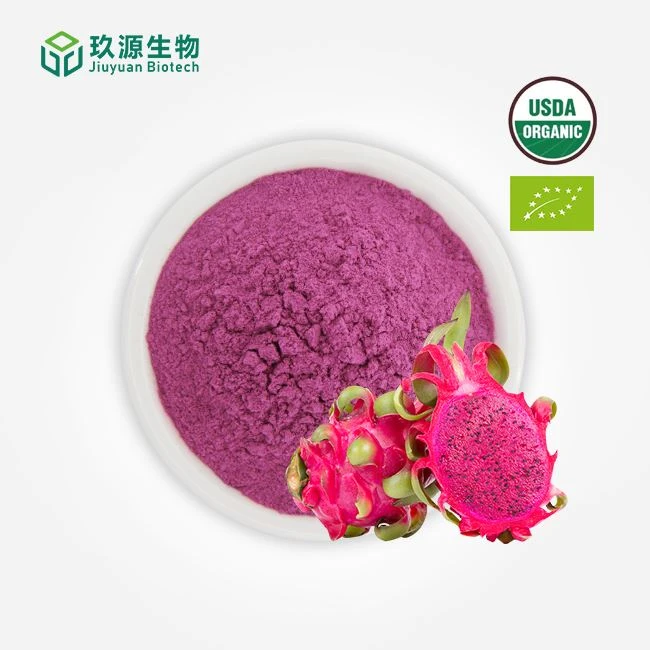
Pitaya Extract is derived from the famous tropical "superfruit"-Red Pitaya, also known as Red Dragon Fruit. It is a natural, highly active functional food ingredient highly favored for its vibrant natural pigment, rich nutritional value, and powerful antioxidant efficacy.
At Jiuyuan Biotech, we produce pitaya extract from contracted Hylocereus polyrhizus cultivars selected for peak betacyanin accumulation. Our 70,000 m² facility in Shaanxi runs dedicated extraction and drying lines with full batch traceability from fruit intake to final COA. Every batch is UV-verified against a defined betacyanin specification before release.
- Product Form: Fine, uniform, easily dispersible deep red/red-violet powder.
- Source: The red flesh of the Hylocereus genus (family Cactaceae), ensuring the use of fresh fruit grown under organic farming standards.Organic certification is granted by international organic certifications such as EU/USDA ORGANIC.
Active Compounds
The bioactive profile of Pitaya Extract is more layered than the color story most suppliers tell. Here is what the peer-reviewed science actually documents.
Betacyanins (Betalain Pigments) - Primary Actives
Betacyanins are nitrogen-containing, water-soluble pigments belonging to the betalain class. They are structurally and biosynthetically distinct from anthocyanins - a distinction that matters for pH stability and regulatory classification.
Key compounds identified in H. polyrhizus:
|
Compound |
Role |
Notes |
|
Betanin |
Primary pigment; dominant antioxidant |
CAS 7654-03-7; most studied betalain |
|
Isobetanin |
Epimer of betanin |
Co-elutes with betanin in UV assay |
|
Phyllocactin |
Minor pigment |
Acylated betacyanin derivative |
|
Hylocerenin |
Minor pigment |
Characteristic of Hylocereus genus |
Documented bioactivity:
- Free-radical scavenging activity confirmed in DPPH and ABTS assay models
- Hepatoprotective functions demonstrated in in vivo models (Food Bioscience, 2025)
- Anti-inflammatory activity via inhibition of pro-inflammatory cytokine expression
- Betacyanin concentration in red-flesh pitaya juice: 82.56–156.82 μg/g dry weight basis
pH stability window: Betacyanins maintain structural integrity between pH 4–7. Below pH 3 or above pH 8, hydrolysis and degradation accelerate significantly. This stability profile is broader than that of most anthocyanins, which degrade rapidly above pH 5.
Vitamin C (Ascorbic Acid)
- Fresh H. polyrhizus fruit: approximately 20–25 mg/100g
- Freeze-dried extract retains ≥85% of fresh-fruit vitamin C content
- Spray-dried extract retains approximately 60–70% depending on inlet temperature and encapsulant system
- Contributes to the ingredient's total antioxidant capacity (ORAC value) and supports skin-health positioning in cosmetic applications
Polyphenols & Flavonoids
- Includes quercetin, kaempferol, and hydroxycinnamate derivatives
- Total polyphenol content: ≥150 mg GAE/100g (spray-dried standard grade)
- Published research identifies polyphenols as a secondary contributor to pitaya extract's anti-inflammatory activity alongside betacyanins
- Polyphenol content varies by cultivar, harvest timing, and processing method
Dietary Fiber Fractions
- Soluble fiber (primarily pectin) and insoluble fiber fractions present in whole-pulp extracts
- Pectin fraction contributes prebiotic activity in gut microbiome models
- Relevant for functional food and digestive health supplement positioning
Mineral Profile
- Measurable calcium, magnesium, phosphorus, and iron
- Iron content in red-flesh H. polyrhizus is notably higher than in white-flesh H. undatus cultivars
- Supports positioning in women's health and sports nutrition formulations
Certificate of Analysis
|
Item |
Specification |
Result |
Method |
|
Basic Product Information |
|||
| Botanical Source | Hylocereus costaricensis |
Conforms |
/ |
|
Part of the Plant |
Fruit |
Conforms |
/ |
|
Marker Compounds |
|||
|
Assay |
>90% |
Conforms |
HPLC |
|
Organoleptic Data |
|||
|
Appearance |
Fine Powder |
Conforms |
Sensory |
|
Color |
Purple |
Conforms |
Sensory |
|
Odor |
Characteristic |
Conforms |
Sensory |
|
Process Data |
|||
|
Method of Processing |
Extraction and concentration |
/ |
/ |
|
Drying Method |
Spraying drying |
/ |
/ |
|
Physical Characteristics |
|||
|
Particle Size |
100% pass 80 mesh |
100% pass |
AOAC973.03 |
|
Moisture |
≤5.0% |
4.1% |
GB/T5009.3 |
|
Ash Content |
≤7.0% |
5.9% |
CP2010 |
|
Shelf Life |
24 months under the conditions above and in its original packaging. |
||
|
Storage |
Store in a cool & dry place, keep away from strong light and heat. |
||
Main Efficacy and Benefits
- Powerful Antioxidant: Effecti vely scavenges free radicals in the body, combats oxidative stress, and helps delay the aging process.
- Gut Health Support: Promotes intestinal peristalsis, improves digestive function, and balances gut microbiota.
- Cardiovascular Health: Betacyanins help lower "bad" cholesterol (LDL), while the rich monounsaturated fats (from the black seeds) and antioxidants are beneficial for heart health.
- Blood Sugar Regulation: Dietary fiber helps slow down glucose absorption; some studies suggest that active components in pitaya may help stabilize blood sugar levels, potentially by aiding in the regeneration of pancreatic cells.
- Natural Coloring: Betacyanins provide a vibrant and stable red-violet hue, making it a natural, clean-label colorant to replace synthetic dyes.
Production Process
The quality of any pitaya extract is determined by decisions made long before the powder reaches a drum. Here is how we approach each stage - and why each step matters.
Stage 1 - Raw Material Qualification
We source Hylocereus polyrhizus from contracted growing regions with documented cultivation records. Every incoming fruit batch undergoes:
- Brix measurement - minimum 12°Brix required for acceptance; higher Brix correlates with higher betacyanin accumulation
- pH verification - target range 4.5–5.5
- Visual and physical inspection - bruising, mold, and overripeness trigger rejection
- Pesticide pre-screening - GC-MS/LC-MS panel before any processing begins
- Betacyanin color value measurement - E10, 1cm at 535 nm on incoming juice concentrate
Fruit failing any incoming threshold is rejected. It is not blended down or reclassified.
Stage 2 - Washing, Peeling & Juice Extraction
Accepted fruit is washed under food-grade sanitizing conditions, peeled mechanically, and pulped. The pulp stream is filtered to remove seeds and fibrous matter. Juice extraction uses mechanical pressing without solvent addition, yielding a clean, homogeneous juice concentrate.
Stage 3 - Concentration
The filtered juice is concentrated under reduced pressure (vacuum evaporation at ≤55°C) to minimize thermal exposure to betacyanins during the concentration step. Betacyanin color value is re-measured at this stage and used to calculate the target drying parameters.
Stage 4 - Drying (Two Pathways)
Spray Drying (Standard Grade)
- Juice concentrate is atomized into a drying chamber (inlet temperature: 160–180°C; outlet temperature: 75–85°C)
- Maltodextrin or approved encapsulant added to protect betacyanin stability during thermal drying
- Resulting powder is sieved, tested, and packed under nitrogen flush
Freeze Drying (Premium Grade)
- Juice concentrate pre-frozen at −40°C to −50°C in blast freezer
- Sublimation drying under vacuum (chamber pressure: 20–50 Pa); no heat above 40°C contacts the product
- Betacyanin and vitamin C retention significantly higher than spray-dried equivalents
- Final powder milled, sieved, and packed in moisture-barrier sealed packaging under controlled humidity (RH ≤40%)
Stage 5 - Proprietary Sterilization
Our facility uses High-Temperature Short-Time (HTST) sterilization at 135–150°C for 2–8 seconds. This eliminates 99.9% of microorganisms while preserving over 95% of active compound potency - a critical advantage over conventional batch sterilization methods that apply sustained heat and degrade betacyanins.
Stage 6 - Quality Hold and Release
Every batch enters a quality hold status upon completion. Release requires full COA sign-off from our in-house QC team. No batch ships without a passed COA.

Application Fields
Pitaya extract's combination of vivid natural color, verified betacyanin bioactivity, and full water solubility makes it one of the most versatile natural colorant-actives in the B2B ingredient market.
|
Industry |
Application Format |
Primary Value Delivered |
|
Dietary Supplements |
Capsules, tablets, sachets, stick packs, softgels |
Antioxidant support, betacyanin content, clean-label appeal |
|
Functional Beverages |
RTD drinks, sports drinks, smoothie mixes, effervescent tablets |
Vivid natural color, vitamin C, electrolyte profile |
|
Functional Foods |
Protein bars, energy bites, granola, yogurt, oatmeal toppings |
Natural colorant, flavor enhancement, fiber contribution |
|
Natural Food Coloring |
Confectionery, icings, gummies, macarons, ice cream |
pH-stable natural magenta pigment; replaces synthetic Red 40 |
|
Cosmetics & Personal Care |
Face masks, serums, lip products, bath bombs |
Betacyanin antioxidant activity, natural pigmentation, brightening positioning |
|
Sports Nutrition |
Pre-workout blends, recovery powders, hydration sachets |
Natural color, antioxidant recovery support, mineral profile |
|
Infant & Maternal Nutrition |
Fortified porridges, nutritional powders |
Clean-label natural fruit content, vitamin C, no artificial colorants |
|
Pet Nutrition |
Premium supplement blends, functional treats |
Natural antioxidant, palatability enhancement |
Recommended Usage Rates:
- Beverages: 0.1–0.5% w/v (extract grade)
- Capsules / Tablets: 100–400 mg per serving
- Food coloring applications: 0.05–0.3% w/w
- Cosmetic formulations: 0.3–1.0% w/w
Unique Advantages
- High Betacyanin Content: The red-fleshed variety is rich in betacyanins, giving it superior antioxidant capacity compared to white-fleshed pitaya and providing a vibrant, stable natural red-violet color.
- Organic & Clean Label: The raw material is organically certified, with no synthetic colors or additives, fully aligning with the global trend towards clean labels and natural ingredients.
- Prebiotic & Fiber Synergy: Naturally contains dietary fiber and oligosaccharides, offering dual support for intestinal health in line with modern nutritional concepts.
- Nutritional Completeness: Not only rich in antioxidants, but also contains Vitamin C, Magnesium, Iron, and Omega-3/9 fatty acids (from the seeds), offering comprehensive nutritional value.
Product Comparison
Pitaya Extract vs. Whole-Fruit Pitaya Powder
This distinction matters more than most buyers realize at the sourcing stage.
|
Parameter |
Pitaya Extract |
Whole-Fruit Pitaya Powder |
|
Active Marker |
Standardized betacyanin (≥1.0%–3.0%) |
Non-standardized; variable betacyanin |
|
Betacyanin Consistency |
Batch-to-batch controlled |
Varies with season and cultivar |
|
Dosage Precision |
High - milligram-level label claims supported |
Low - whole-food positioning only |
|
Color Intensity |
High - concentrated pigment |
Moderate - diluted by non-pigment matrix |
|
Usage Rate in Formula |
Lower (0.1–0.5% w/v) |
Higher (1–3% w/v) |
|
Cost per Unit of Betacyanin |
Lower at equivalent potency |
Higher at equivalent potency |
|
Label Claim Support |
Betacyanin content claim defensible |
Whole-food / fruit content claim |
|
Best Application Fit |
Supplements, cosmetics, natural colorant |
Functional foods, smoothie mixes, whole-food positioning |
Pitaya Extract vs. Beet Root Extract (Natural Red Colorant Comparison)
|
Parameter |
Pitaya Extract |
Beet Root Extract |
|
Primary Pigment |
Betacyanin (betanin, isobetanin) |
Betanin (betalain) |
|
Color Tone |
Vivid pink-magenta |
Deep red-purple |
|
Flavor Profile |
Mild, mildly sweet, tropical |
Earthy, slightly sweet |
|
Vitamin C Content |
≥20 mg/100g (fresh basis) |
Negligible |
|
pH Stability |
Stable pH 4–7 |
Stable pH 4–7 |
|
Clean-Label Consumer Appeal |
Very high (exotic superfruit) |
High (familiar vegetable) |
|
Best Application Fit |
Supplements, cosmetics, premium beverages |
Sports nutrition, functional foods, savory applications |
Pitaya Extract vs. Synthetic Red 40 (Allura Red AC)
|
Parameter |
Pitaya Extract |
Synthetic Red 40 |
|
Source |
Natural (Hylocereus polyrhizus) |
Petroleum-derived azo dye |
|
Regulatory Status |
Natural colorant; clean-label compliant |
Requires declaration; banned in some EU products |
|
Bioactivity |
Antioxidant, anti-inflammatory (documented) |
None |
|
Consumer Perception |
Strongly positive |
Increasingly negative |
|
Color Tone |
Pink-magenta |
Orange-red |
|
Heat Stability |
Moderate (pH-dependent) |
High |
|
Best Application Fit |
Clean-label, premium, supplement, cosmetic |
Cost-driven commodity food applications |
Quality Control
Our quality control system is embedded in every production stage - not applied as a final checkpoint.
Incoming Raw Material Control
- Brix and pH verification on every fruit batch
- Betacyanin color value (E10, 1cm, 535 nm) on incoming juice concentrate
- Pesticide residue pre-screening (GC-MS/LC-MS) before processing begins
- Supplier qualification audit for all contracted growers
In-Process Control
- Vacuum evaporation temperature monitoring (≤55°C target)
- Betacyanin color value re-measured at concentration stage
- Drying temperature and chamber pressure logged throughout each cycle
- Moisture content checked at intermediate and final drying stages
Finished Product Release Testing
Every released batch includes a full panel:
✅ Betacyanin content (UV spectrophotometry, 535 nm)
✅ Betanin content (HPLC, on request)
✅ Moisture content and water activity (Aw)
✅ Heavy metals: Pb, As, Hg, Cd (ICP-MS)
✅ Residual pesticides (GC-MS / LC-MS)
✅ Microbiology: TPC, yeast/mold, E. coli, Salmonella, Staphylococcus aureus
✅ Particle size distribution
✅ Solubility test (60-second dissolution at 25°C)
✅ pH (1% aqueous solution)
Stability Program
We run accelerated stability testing at 40°C / 75% RH following ICH Q1B guidelines (6-month protocol). Betacyanin retention data at 3-month and 6-month intervals is available on request. Real-time stability data (25°C / 60% RH, 24-month) is maintained for all standard grades.
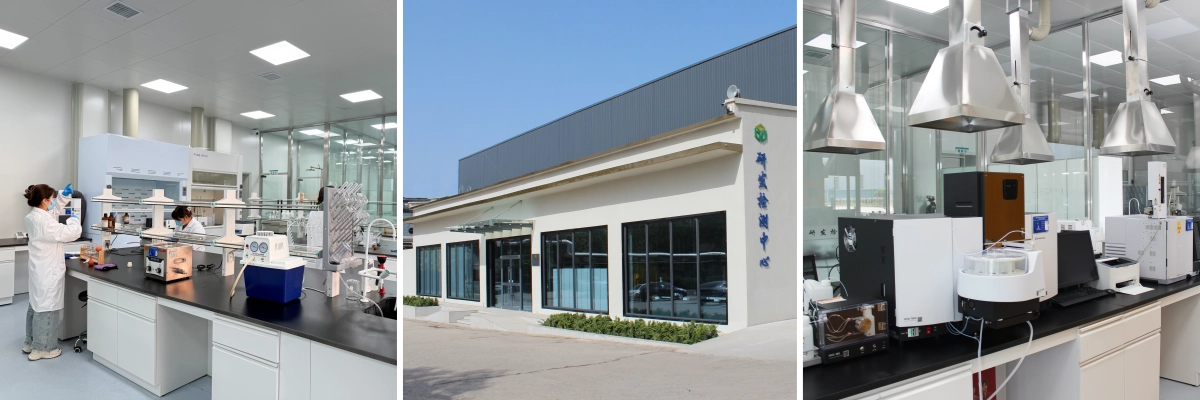
Analytical Instrumentation (In-House)
Our in-house laboratory operates:
- HPLC - compound-specific potency verification
- UV-Vis spectrophotometer - betacyanin and polyphenol quantification
- ICP-MS - heavy metals panel
- GC-MS / LC-MS - pesticide residue screening and residual solvent analysis
- Microbiology suite - TPC, yeast/mold, pathogen testing
Third-Party Verification
We support and actively encourage independent third-party testing. Pre-shipment samples are available for buyer-commissioned laboratory verification before any commercial order ships.
With our advanced production facilities, a state-of-the-art testing and control center, and our complete quality control system, we consistently ensure the safety and stability of our products and services.
Delivery Methods, Packages And Storage
 |
 |
 |
|
Express Under 100kg, 3-5Days Door-to-door service easy to pick up the goods |
By Sea Over300kg, Around 30 Days Port-to-port service professional clearance broker needed |
By Air 100kg-1000kg, 5-7Days Airport-to-airport service professional clearance broker needed |
Buyer Guide
The Four Pain Points We Hear Most Often
Pain Point 1: Betacyanin content that doesn't survive third-party verification
This is the most common issue in the pitaya extract category. It almost always traces back to a supplier using non-specific colorimetric assays that inflate declared betacyanin content. We use UV spectrophotometry at 535 nm - the method most widely cited in published research for this compound class - and disclose the method on every COA. For buyers who require HPLC-based betanin confirmation, we support that on request.
Pain Point 2: Color fades in the finished product
Betacyanin degradation in finished products almost always traces back to one of three causes: thermal processing exposure, oxygen ingress during storage, or pH outside the 4–7 stability window. We address the first through our HTST sterilization protocol and controlled drying parameters. We address the second through nitrogen-flushed, moisture-barrier sealed packaging. Accelerated stability data confirms color retention at 6 months under stress conditions.
Pain Point 3: Batch-to-batch color inconsistency
We measure betacyanin color value (E10, 1cm, 535 nm) at the juice concentration stage - before drying begins - and adjust processing parameters to hit a defined color target. Post-milling color is re-measured and recorded on every COA. Buyers who require a tightly specified color range can include a color value tolerance in their purchase order.
Pain Point 4: Regulatory documentation gaps for target markets
Our standard documentation package is structured to support US, EU, and UK market compliance requirements out of the box. FDA registration, cGMP, FSSC 22000, Halal, Kosher, and both USDA and EU Organic certifications are current and verifiable. For EU Novel Food compliance or US NDI dossier support, contact us directly.
Ordering Process
Request a sample - email info@jiuybiotech.com with your target specification and application
Receive sample + COA - dispatched within 3–5 business days
Independent third-party testing - we support and encourage this step before any commercial commitment
Submit purchase order - standard production-to-shipment lead time: 2–3 weeks
Pre-shipment inspection - final batch COA issued; third-party inspection supported
Shipment - sea freight (FCL/LCL) or air freight; DDP / FOB / CIF terms available
MOQ & Packaging Options
|
Grade |
MOQ |
Packaging |
|
Standard Spray-Dried (≥1.0% betacyanin) |
25 kg |
25 kg fiber drum with double inner liner |
|
Premium Freeze-Dried (≥1.5% betacyanin) |
10 kg |
1 kg foil bags / 10 kg aluminum vacuum bucket |
|
High-Potency Concentrate (≥3.0% betacyanin) |
10 kg |
1 kg foil bags, nitrogen-flushed |
|
Organic Certified Grade |
25 kg |
25 kg fiber drum, organic-compliant inner liner |
|
Custom Specification |
Negotiable |
Per project requirement |
Ready to Source Pitaya Extract for Your Brand?
Whether you're formulating a premium antioxidant supplement, replacing synthetic colorants in a clean-label food product, or developing a natural cosmetic active, Pitaya Extract from Jiuyuan Biotech delivers a specification your brand can defend - standardized betacyanin content, method-disclosed COA, HTST-sterilized for microbiological safety, and a documentation package built for regulated markets worldwide.
Our facility is FDA-registered, cGMP-certified, and FSSC 22000-audited. Every batch ships with a full batch-specific COA. Samples are available within days.
📧 Contact us: info@jiuybiotech.com 📞 Phone: +86 029 88215052 🌐 Website: www.jiuyuanbio.com
Send us your target betacyanin specification, application, and annual volume - we'll respond with a sample offer, full technical dossier, and competitive pricing within 24 hours.
Hot Tags: pitaya extract, pitaya extract powder, dragon fruit extract bulk, betacyanin extract supplier, Hylocereus polyrhizus extract, pitaya betalain powder, natural red colorant extract, pitaya extract manufacturer


