



Application and Value of Organic Blueberry Powder's Natural Antioxidant Components in the B2B Market
Jun 18, 2026
Leave a message
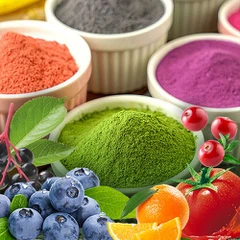
Organic blueberry powder is made from certified organic blueberries through low-temperature dehydration or freeze-drying processes. Compared to regular fruit powder, its biggest advantage isn't its taste, but rather the preservation of the blueberry's active ingredients, such as anthocyanins, polyphenols, and natural vitamins.
In the current B2B raw material market, this type of product is no longer just a food ingredient, but is often considered a "functional nutritional ingredient." Demand is particularly strong in the health supplement and health food sectors.

Why is organic blueberry powder becoming increasingly popular?
In recent years, global customers have shown a significant increase in their focus on "natural sources." Many brands have begun to reduce the use of artificial colors and synthetic additives, directly driving demand for natural plant-based ingredients like blueberry powder.
From a practical application perspective, organic blueberry powder is valued not primarily for its single nutritional component, but rather for its comprehensive value:
Firstly, it contains high levels of anthocyanins, a component frequently used in antioxidant formulations;
Secondly, its natural purple-blue color allows it to be used directly in food coloring, replacing some artificial colors;
Furthermore, its "organic certification" makes it easier to penetrate the high-end markets of Europe and America.
Main uses in the B2B industry
From our experience with clients, the application of organic blueberry powder is already very widespread and increasingly segmented.
In the health supplement industry, it's commonly used in antioxidant capsules, eye care products, and daily nutritional supplement formulations. Many formulators use it as a "basic plant-based source of antioxidants."
In functional foods, such as meal replacement powders, breakfast cereals, or energy bars, it serves two main purposes: nutritional supplementation and a natural flavor source.
Use in the beverage industry is also increasing, especially in powdered drinks and functional fruit and vegetable beverages. Compared to liquid extracts, fruit powder is easier to store and transport, which is one reason for its popularity.
In baking and dairy products, such as yogurt, ice cream, or desserts, it's primarily used as a natural coloring and flavor-enhancing ingredient.
What do customers care about most when making purchases?
In actual foreign trade communication, clients' questions are actually quite focused and not overly complex, mainly concentrating on a few key points.
First is certification, such as whether the product has EU Organic or USDA Organic certification, which directly determines whether the product can enter their market.
Second is testing reports, including heavy metals, pesticide residues, and microbiological indicators; these are basic requirements.
Third is the processing method. Different processes result in significant differences in price and effectiveness. For example, freeze-dried products usually retain color and nutrients better, but are also more expensive.
Another frequently asked question is solubility, especially from beverage clients who are very concerned about whether the product disperses easily and whether it settles.
Typical Specification (COA Reference)
| Item | Specification |
|---|---|
| Appearance | Purple to deep purple fine powder |
| Odor | Natural blueberry aroma |
| Moisture | ≤ 5% |
| Particle Size | 80–120 mesh (customizable) |
| Ash Content | ≤ 5% |
| Heavy Metals | Complies with food-grade regulations |
| Microbiological | Meets export food safety standards |
| Shelf Life | 24 months (sealed, cool, dry, away from light) |

Freeze-drying vs. spray drying (actual procurement differences)
In actual orders, most customers choose between these two processes.
Freeze-drying offers advantages such as higher nutrient retention, more vibrant colors, and less nutrient loss, making it more commonly used in high-end health supplements or gourmet food projects. However, it is relatively more expensive.
Spray drying, on the other hand, is more suited for large-scale production, offering lower costs and making it suitable for the beverage and general food industries. While slightly lower in some metrics, it is sufficient for most applications.
Why is this category still growing?
From a market trend perspective, the growth of organic blueberry powder is not a short-term phenomenon, but rather driven by several long-term factors.
Firstly, the "Clean Label" trend continues to strengthen, with more and more brands seeking to reduce chemical ingredients on their labels.
Secondly, the functional food market is expanding, with consumers increasingly willing to pay for concepts like "antioxidant," "immune support," and "vision health."
Furthermore, the increasing demand from the food industry for natural coloring alternatives makes fruit powder ingredients even more important.
The Importance of Supplier Capabilities
For B2B buyers, choosing a supplier involves more than just price; stability is paramount.
A mature supply chain typically means stable organic farming facilities, standardized production systems (such as GMP or HACCP), and complete export documentation.
Furthermore, many clients also consider OEM services, such as customized formulations, different concentrations, or proprietary packaging, which directly impact the long-term sustainability of the partnership.
Organic blueberry powder has essentially evolved from a "regular fruit powder" into a functional ingredient. Against the backdrop of global health food upgrades, its applications continue to expand.
For suppliers, what truly matters is not just price, but stable supply capacity, compliance, and the reliability of long-term partnerships.
If you are developing health supplements, functional foods, or natural pigment products, this type of ingredient remains a highly worthwhile option to consider.
Customer Inquiry FAQ
Q1: Can you send COA, Organic Certificate, and third-party test reports?
Yes. We can provide full documentation including COA, USDA Organic / EU Organic certificates, and third-party lab test reports such as heavy metals, pesticide residues, and microbiological analysis before order confirmation.
Q2: What is your MOQ for organic blueberry powder?
Our standard MOQ is flexible depending on packaging requirements.
For sample or trial order, 1–5 kg is available.
For bulk production, MOQ usually starts from 25 kg (1 carton or drum).
Q3: Do you offer samples for testing?
Yes, we support sample testing before bulk order.
Most customers request samples for:
Solubility test in beverages
Color performance in formulation
Stability in storage and processing
Sample lead time is usually 3–5 working days.
Q4: What is the difference between freeze-dried and spray-dried powder?
Freeze-dried powder retains better color, aroma, and nutrients, making it suitable for premium supplements and high-end formulations.
Spray-dried powder is more cost-efficient and widely used in beverages and mass food production.
We can recommend the most suitable type based on your application.
Q5: Is it suitable for beverage applications? Does it dissolve well?
Yes, it is widely used in functional drinks and smoothie powders.
We can also adjust particle size to improve dispersibility and reduce sedimentation based on your formulation needs.
Q6: Can you support OEM or private label production?
Yes, we provide OEM/ODM services, including:
Custom formulation support
Different concentration options
Private label packaging (bags, jars, bulk packs)
Export documentation support
Q7: How long is the lead time for bulk orders?
Normally:
Sample orders: 3–5 days
Bulk orders: 7–15 working days depending on quantity and packaging requirements
Q8: What shipping options do you provide?
We support:
Air freight (small urgent orders)
Sea freight (bulk orders)
Express courier (DHL / FedEx / UPS samples)
We can also assist with DDP service depending on destination.
Send Inquiry